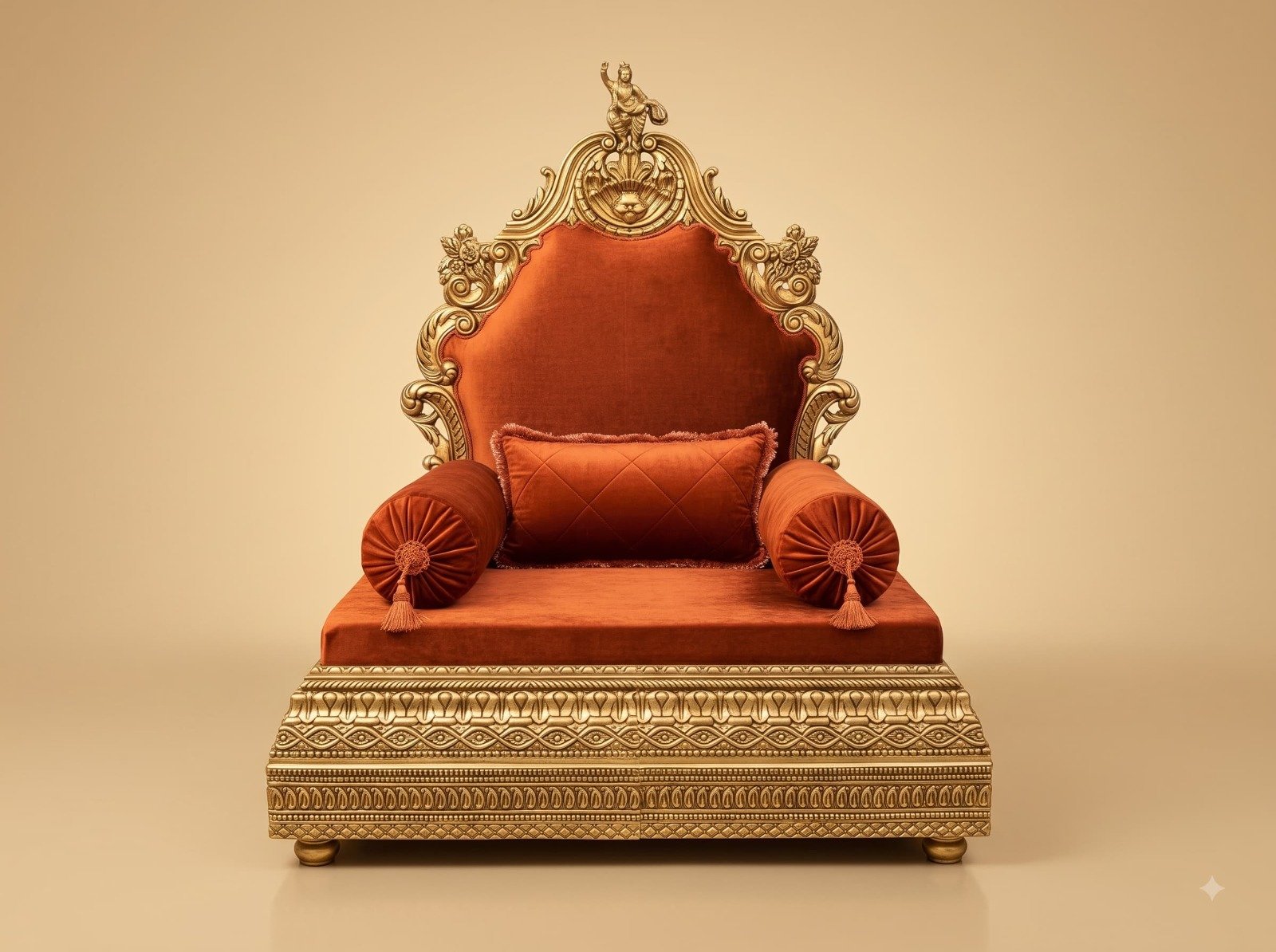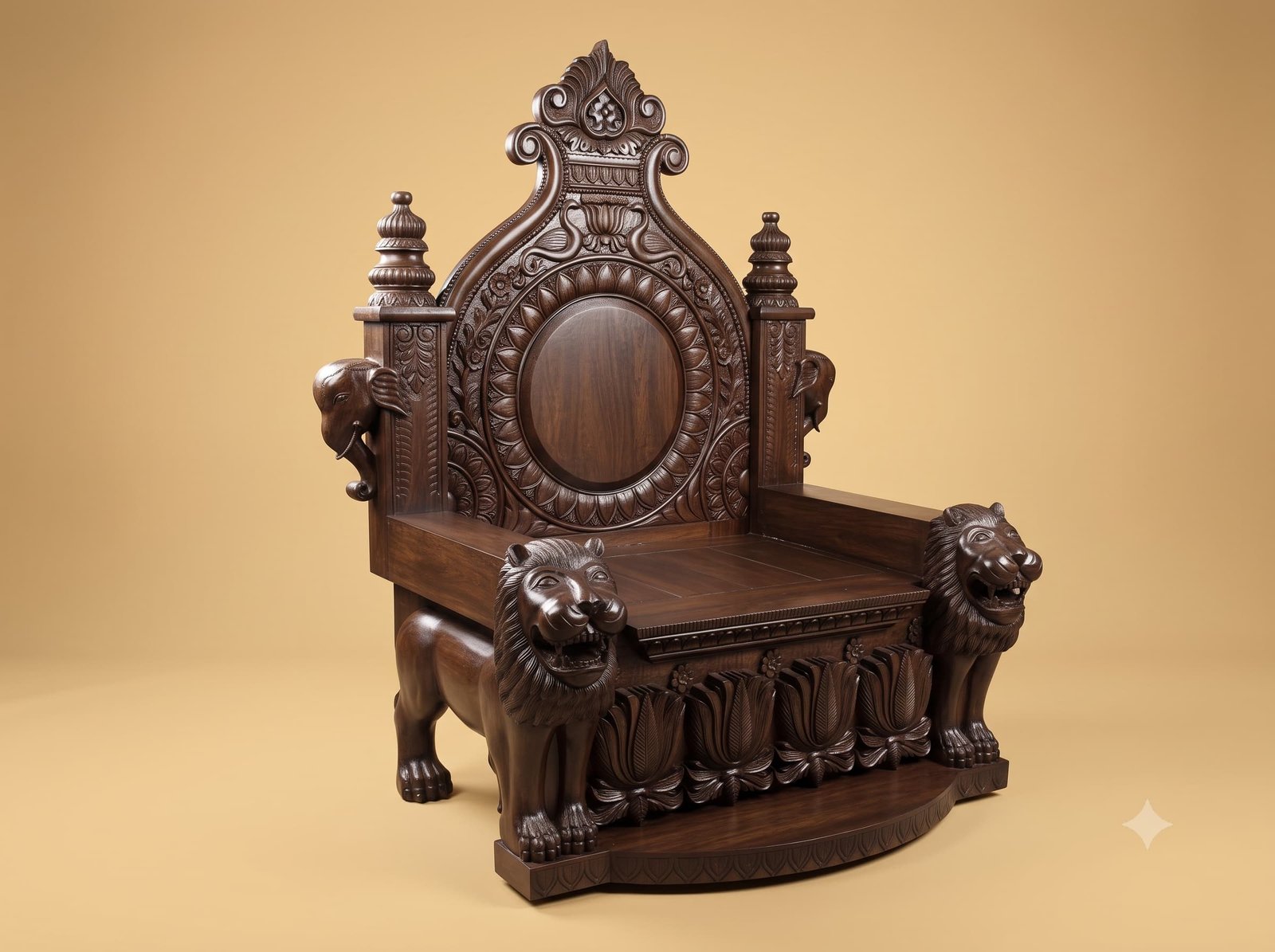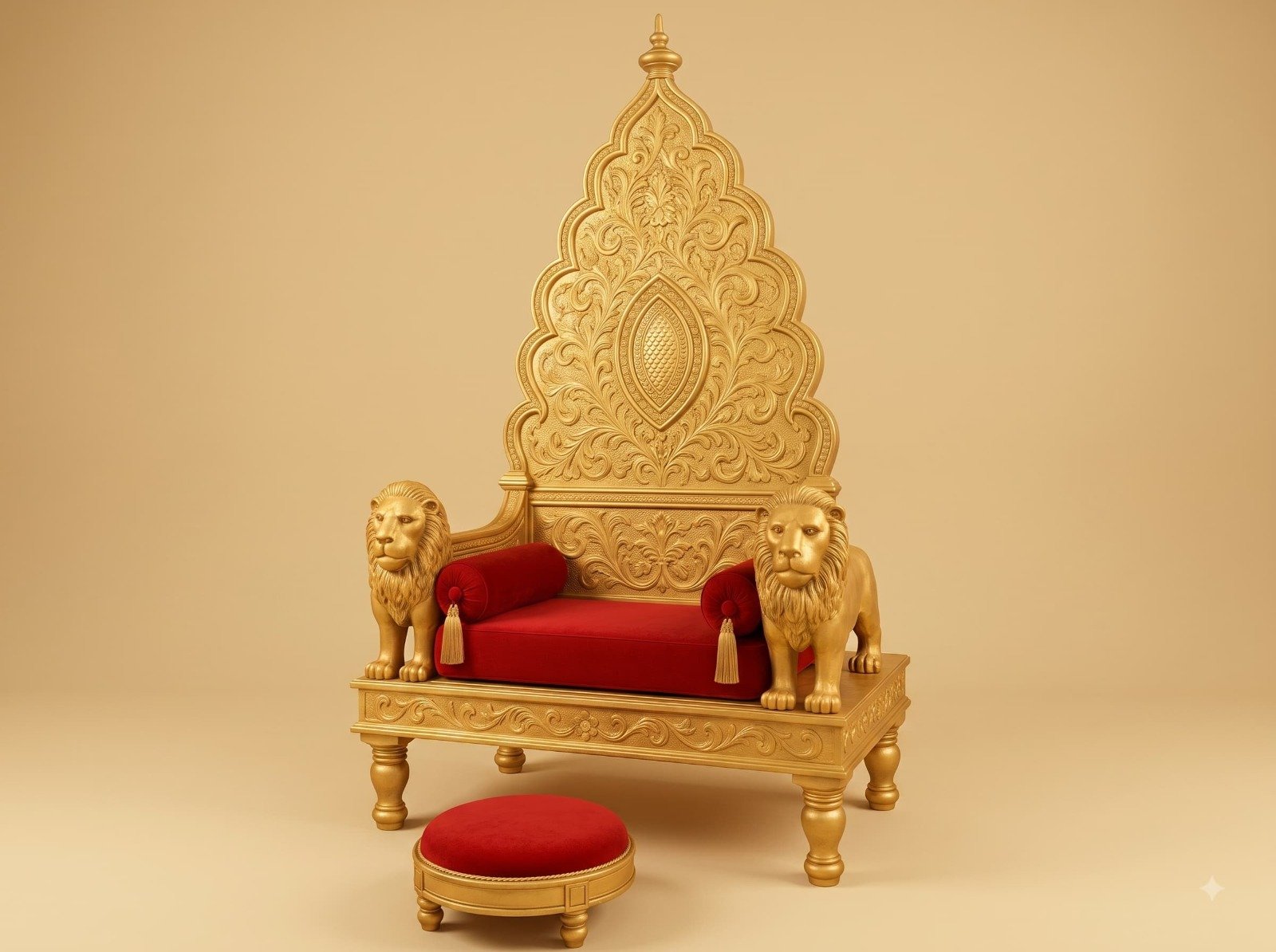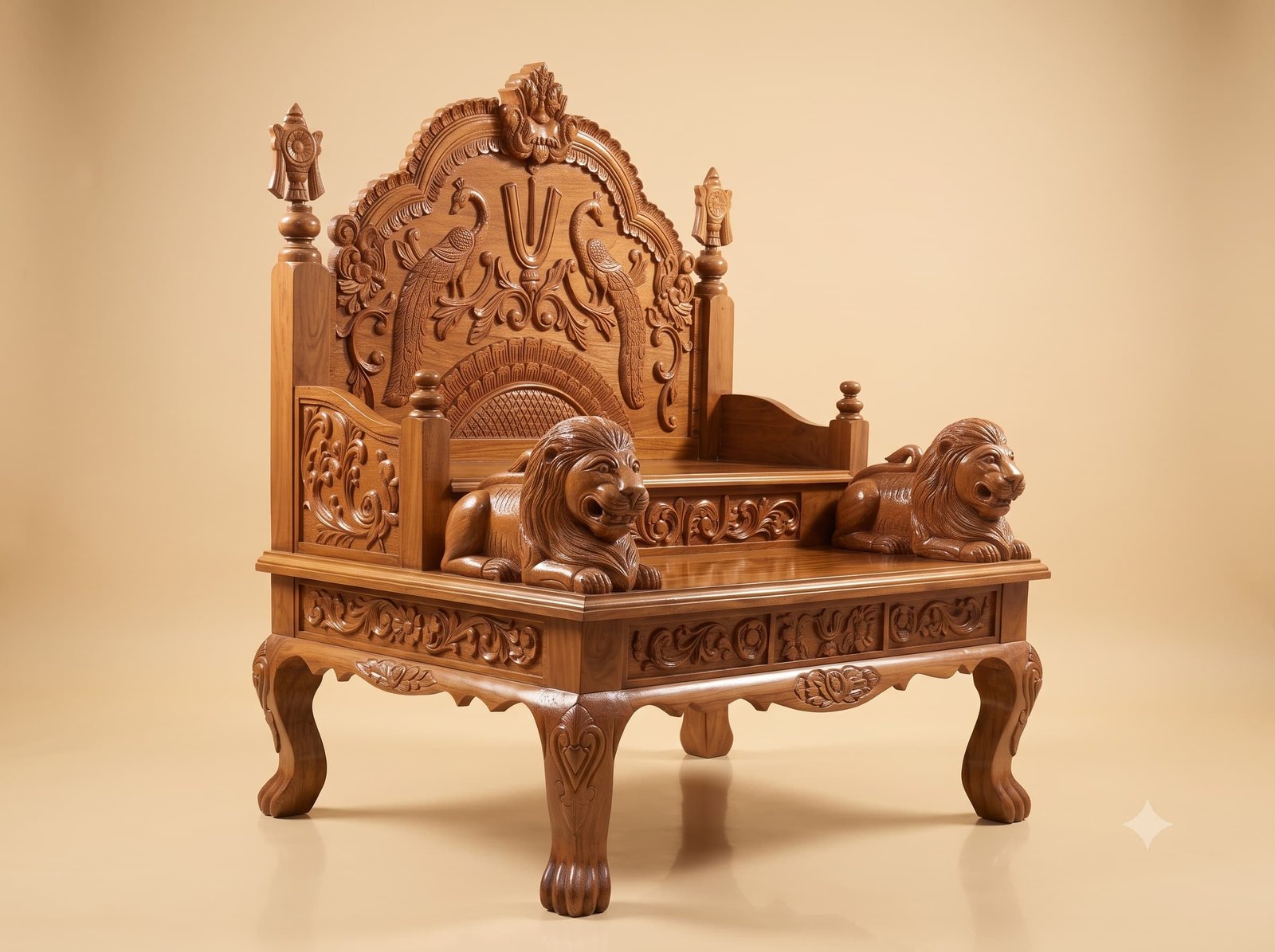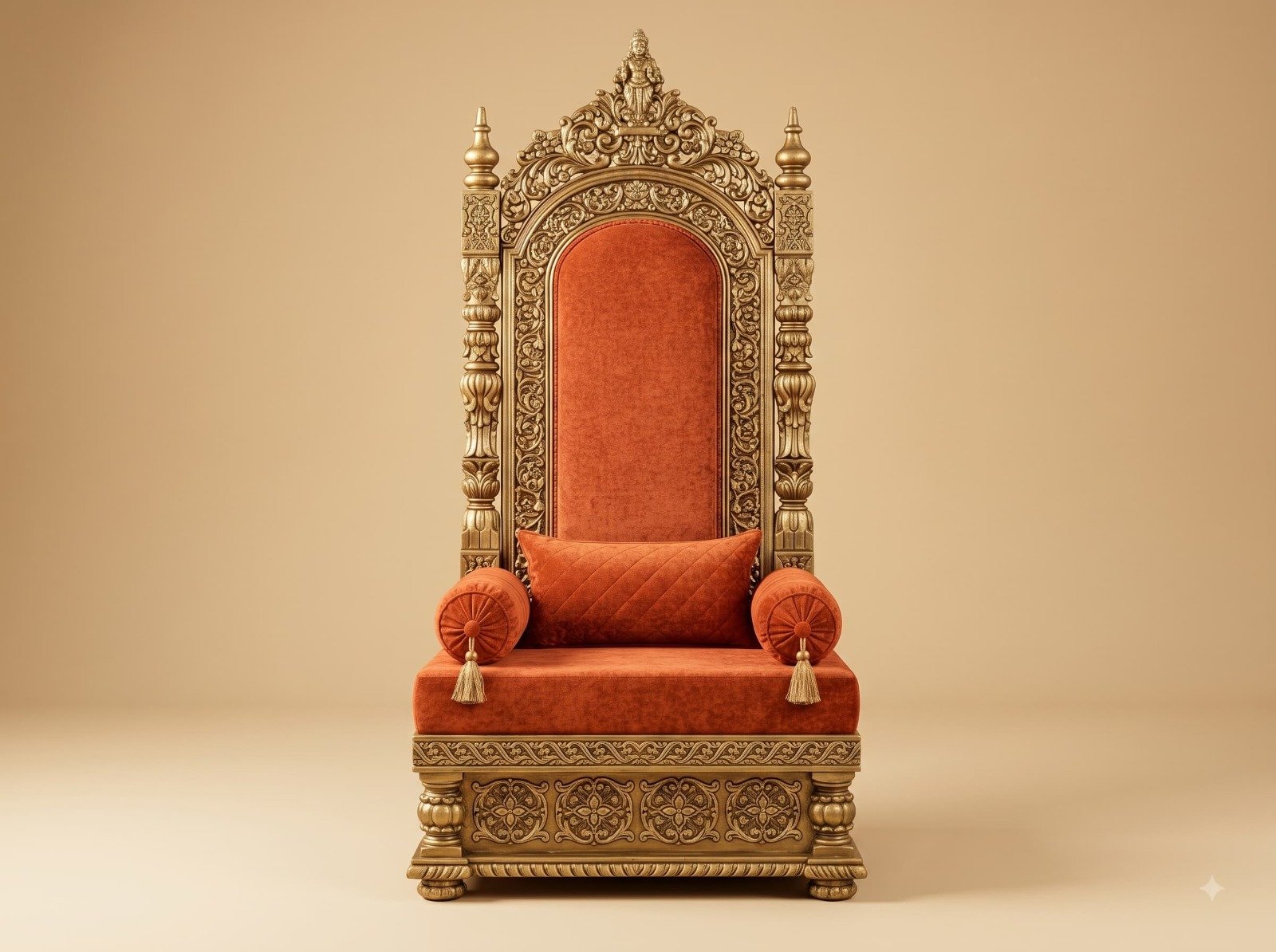
This chair stands on a plinth rather than on legs, and that changes the first thing the workshop has to get right: the base has to be dead flat, and flatter than you would think necessary.
A chair on four legs is forgiving. If one leg is a hair long it rocks slightly and the eye never notices, because a leg is thin and the error stays at the floor. A plinth is different - it is a wide continuous frame, and any twist in it is transmitted straight up into the back. The back on this chair is more than twice the height of the seat, so a twist of a millimetre across the base becomes several millimetres of lean at the top, and the crest visibly points off to one side.
So before the plinth goes anywhere near the rest of the chair, it is checked for wind - two straight sticks laid across it at opposite ends, and the maker sights along their top edges from one end. If the sticks appear parallel, the frame is flat. If one appears tilted against the other, the frame is twisted, and it goes back to be corrected before anything is built on it.
It is a two-minute check with two pieces of scrap wood, done before hours of carving are committed. Skip it, and the error is only visible once the chair is standing on a stage in front of four hundred people.
 Ask Price On WhatsApp