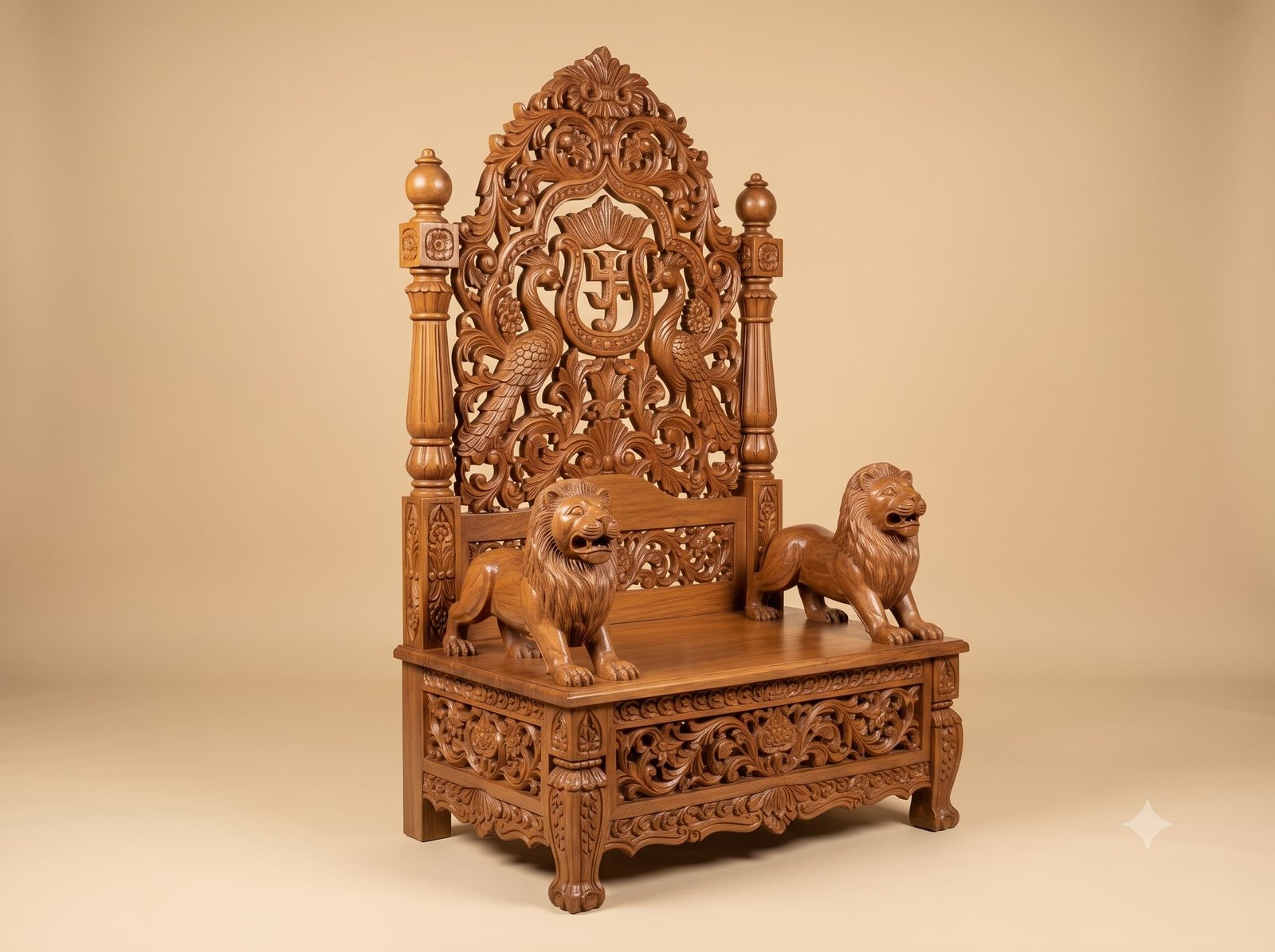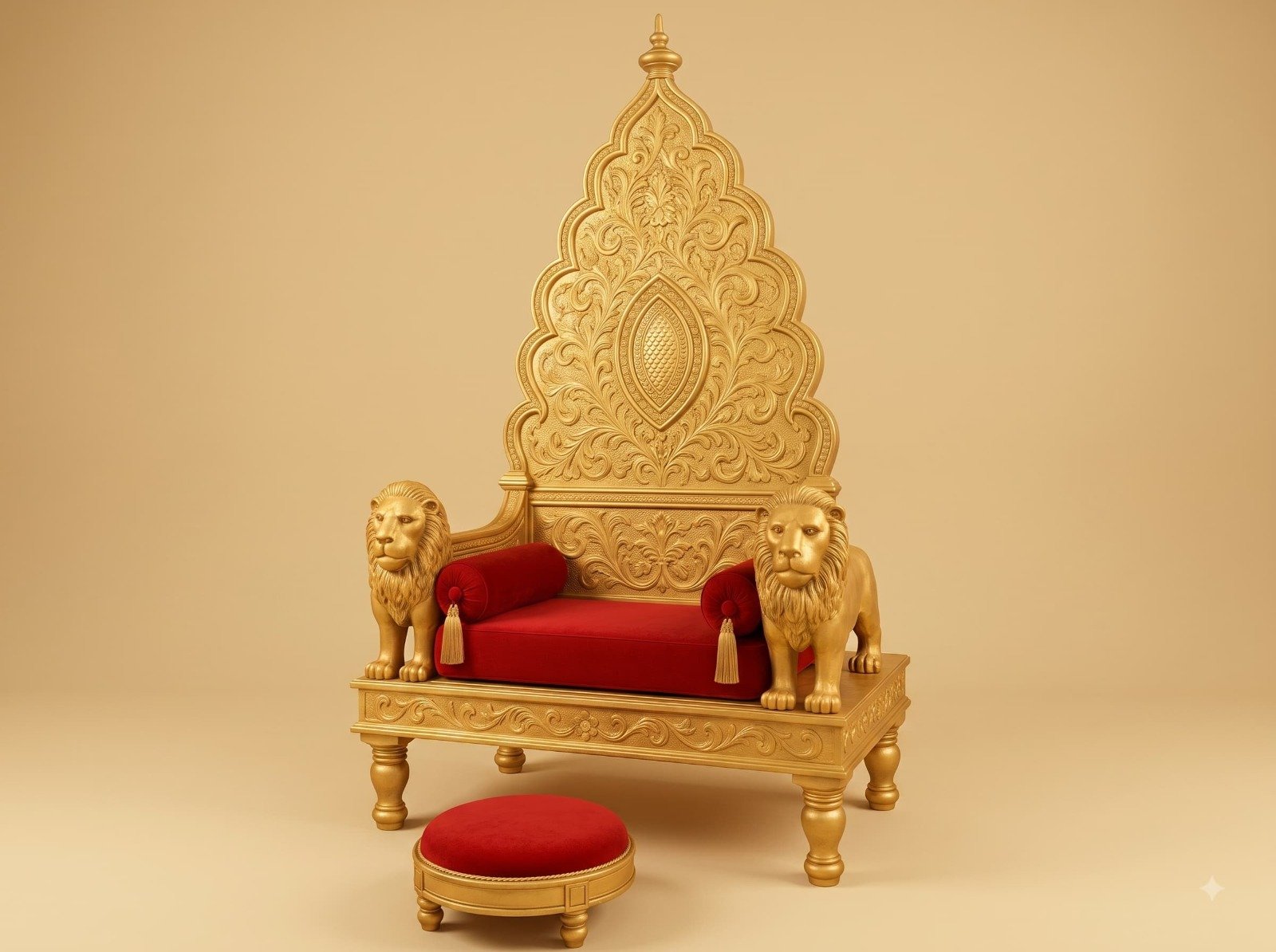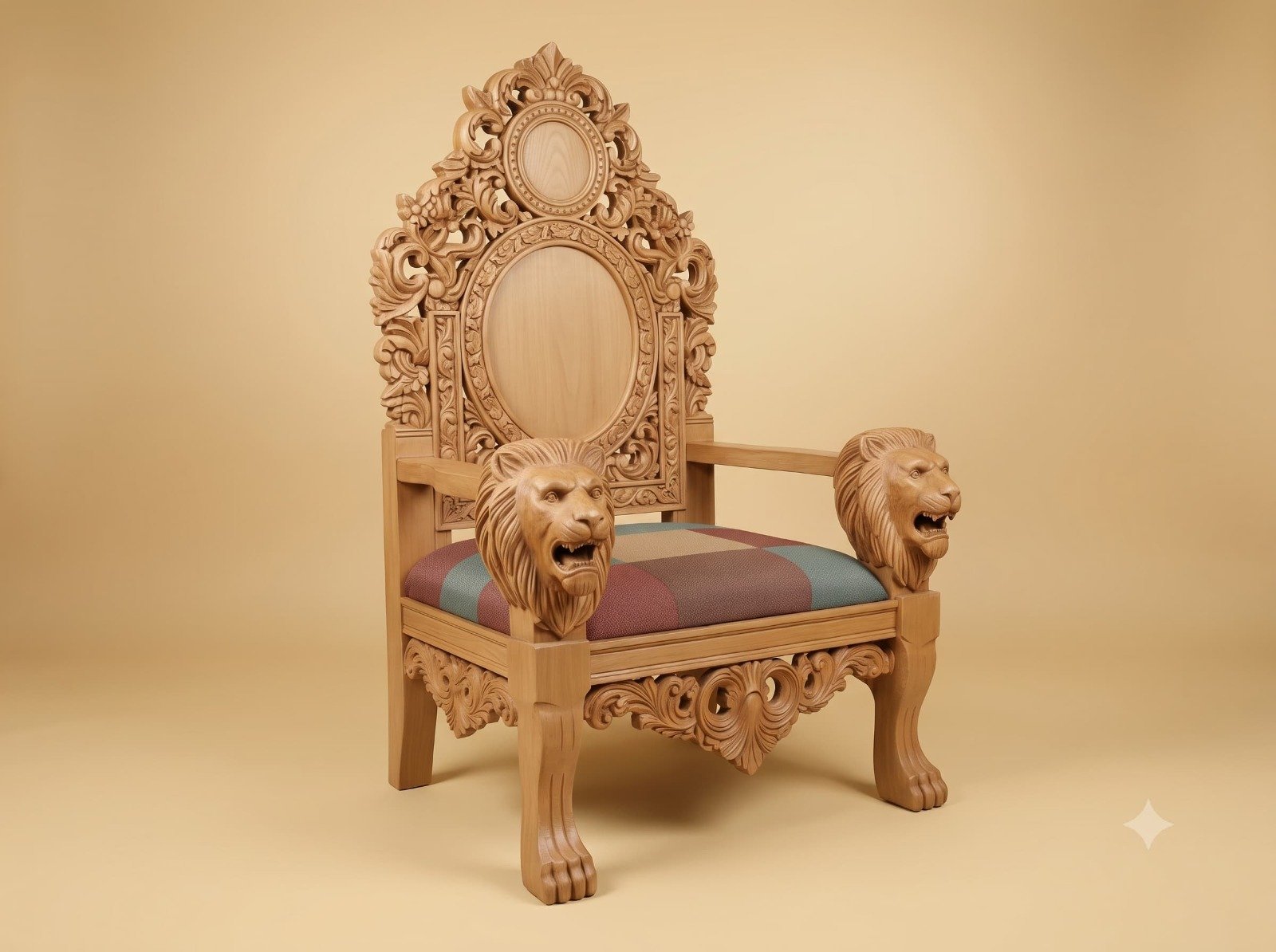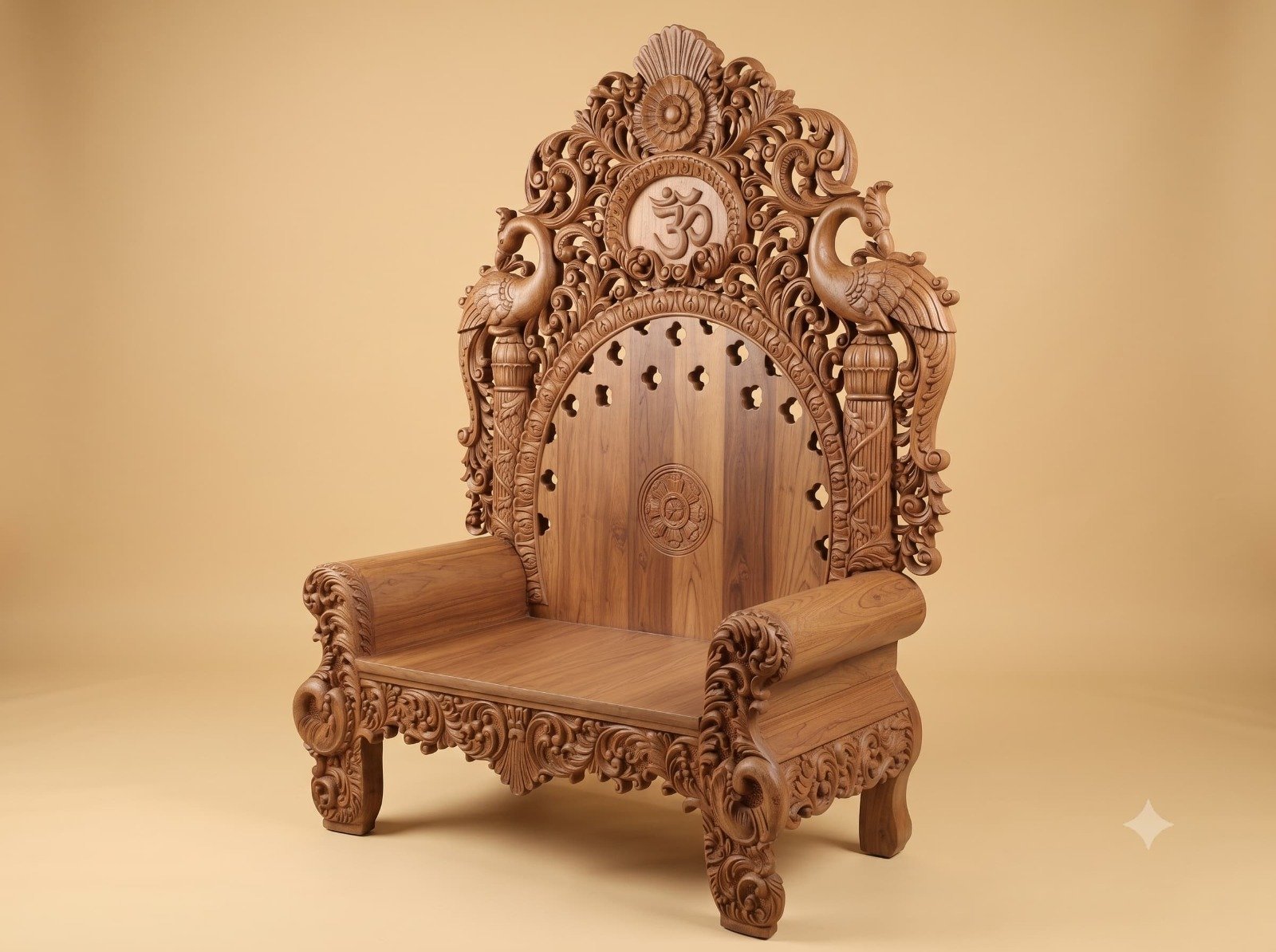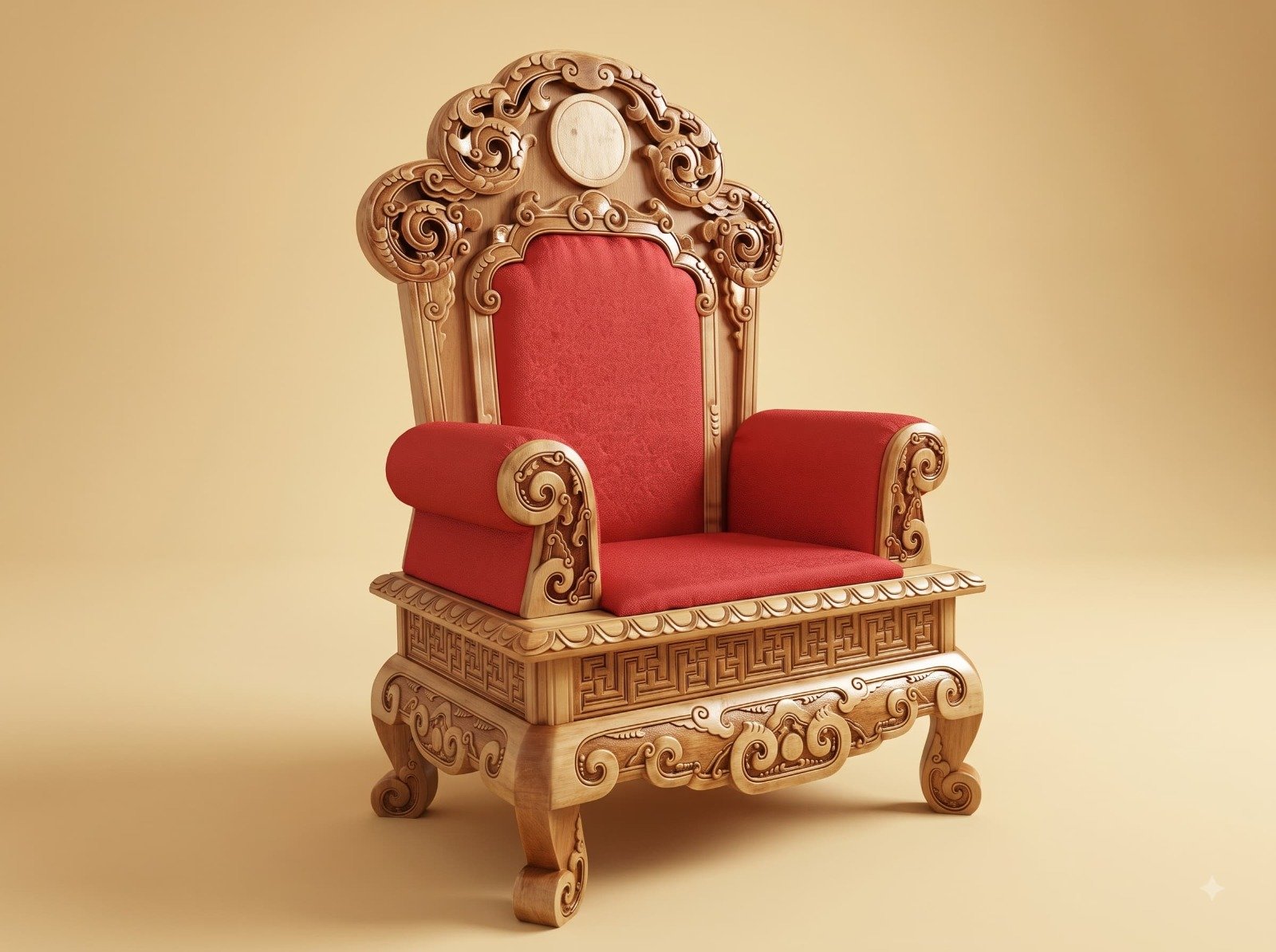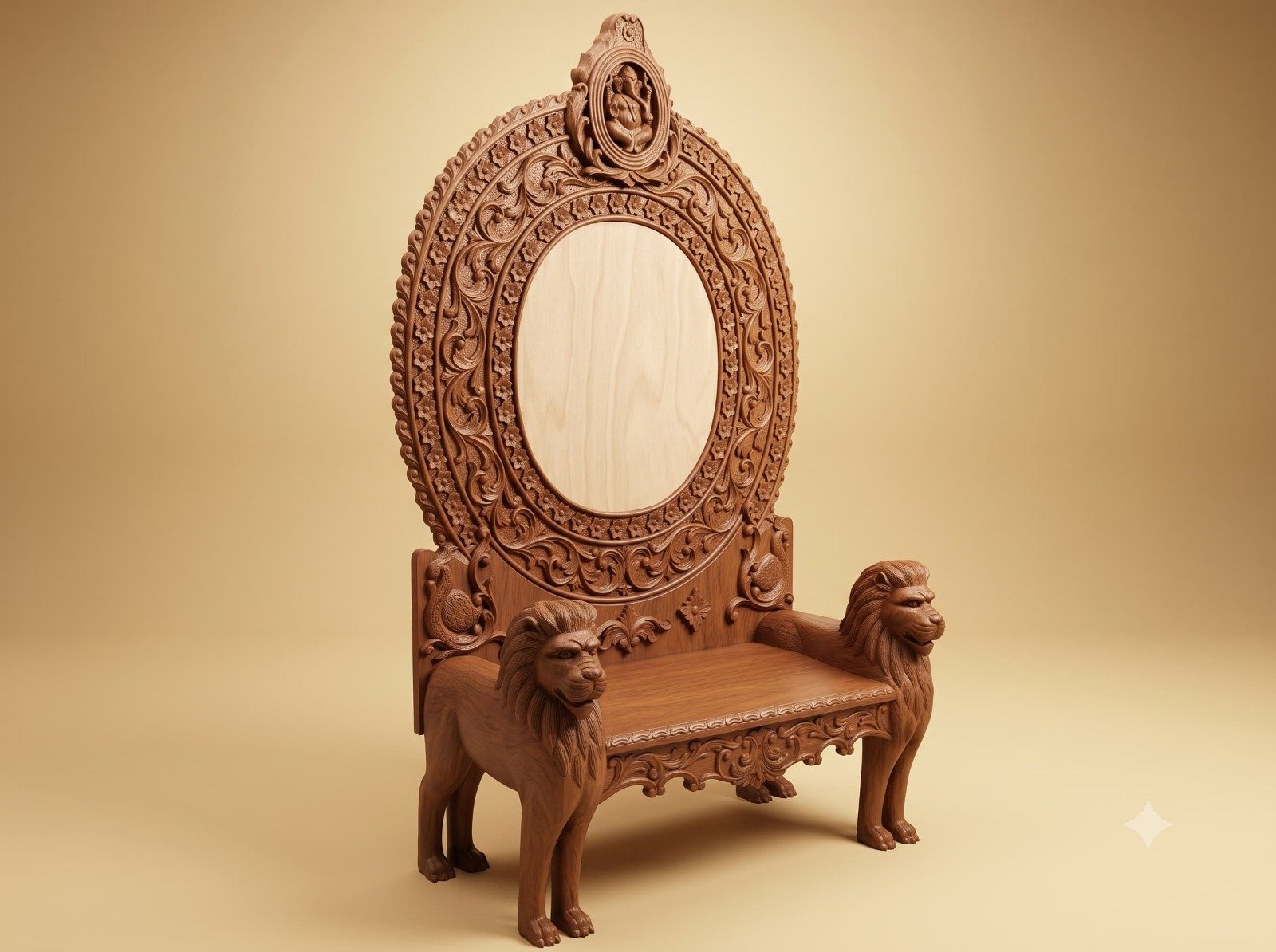
The most carefully chosen piece of wood in this whole singhasan is the one with nothing carved on it at all.
The oval at the centre of the halo is plain, and it is plain on purpose - it is the ground a murti will stand against, and anything happening on it would compete. But plain does not mean any board will do. Teak varies enormously: some boards have long, quiet, almost straight grain; others have swirls, cathedral figure, dark streaks and colour changes that pull the eye across them.
For a carved band, lively figure is an advantage - it disappears once the surface is cut up into ornament. For a flat panel that has to recede, it is the opposite. So when the stack is sorted for a piece like this, the most figured boards go to the carved rings and the quietest, most featureless board in the pile is set aside for the centre. It is often a board a furniture maker would otherwise pass over as dull.
That is the whole decision, and it is made before anything is cut. Everything carved around the oval is designed to draw the eye inward. A restless piece of grain in the middle would throw all of it away.
 Ask Price On WhatsApp