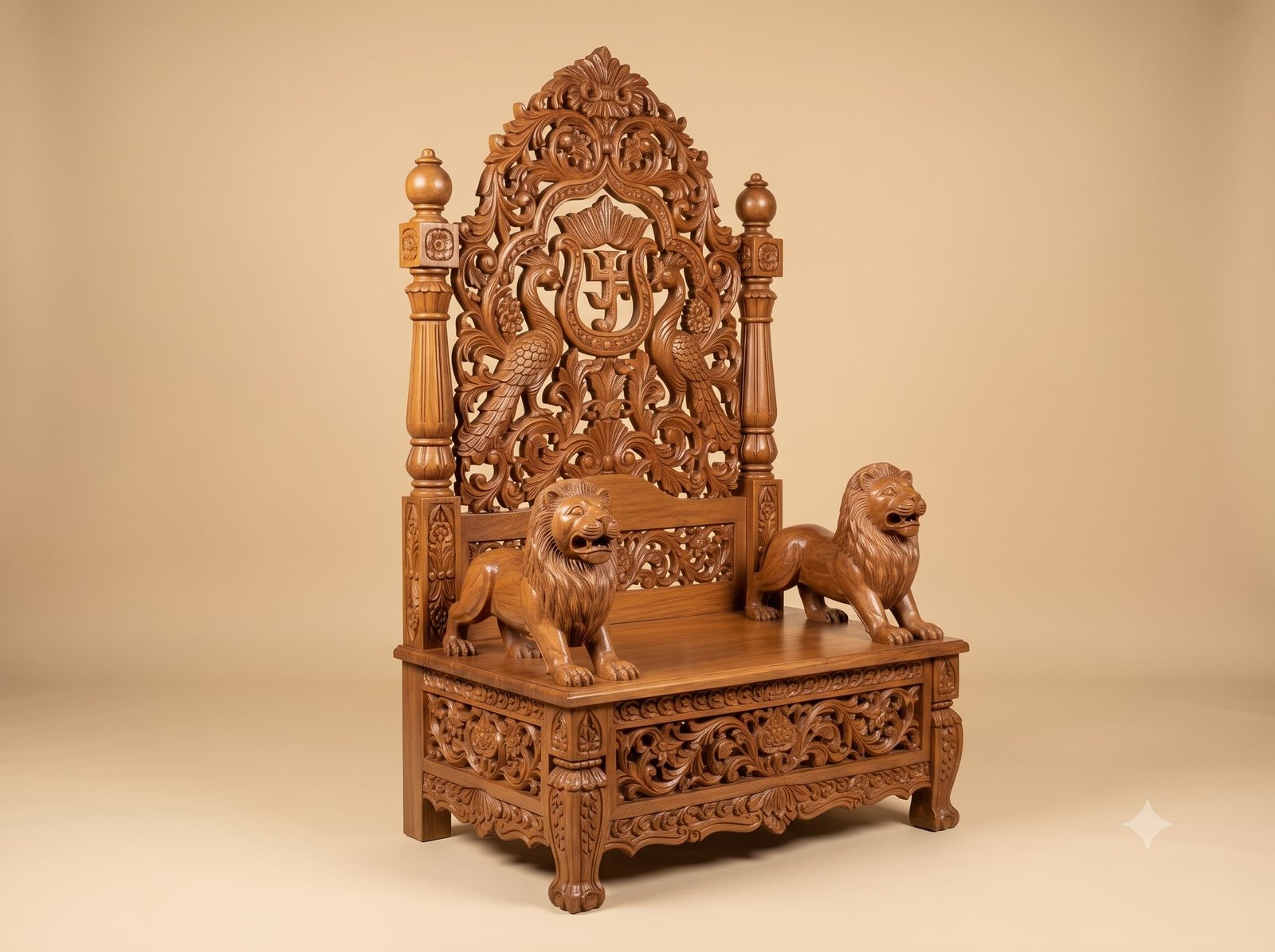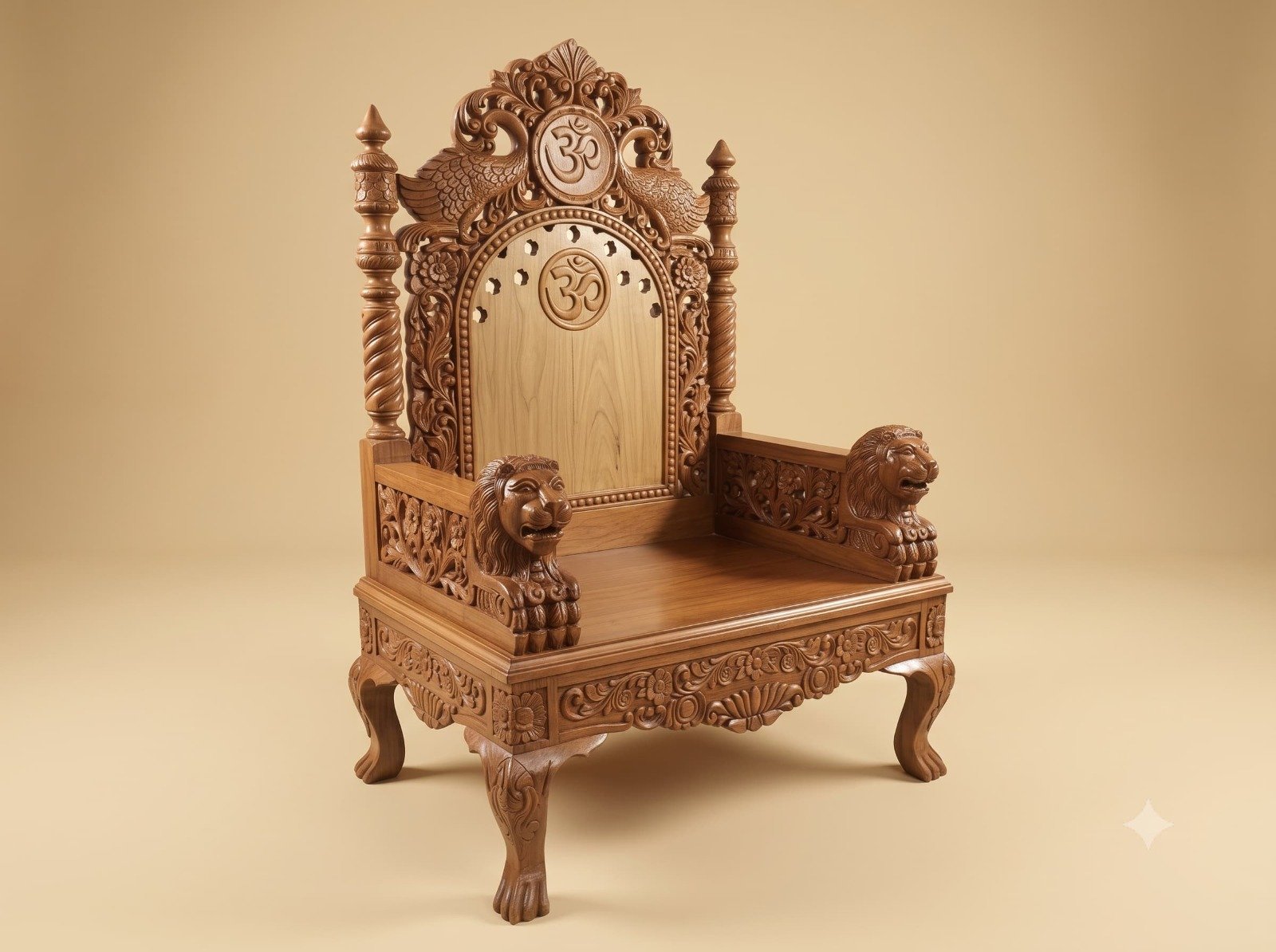
The two twisted columns beside the back look like they were made on a machine that spins and cuts at the same time. They were not, and there is a simple reason a spiral cannot be marked out by eye.
The column is turned round on the lathe first, as a plain cylinder. Then the lathe stops, because the spiral has to be drawn on a stationary piece - and a helix drawn freehand on a curved surface always wanders, because there is no straight reference anywhere on a cylinder to judge it against.
So a long strip of paper is wound around the cylinder at a constant angle, its edge held tight against itself turn after turn. That edge is a true helix: the geometry of wrapping guarantees it, whatever the carver's eye thinks. A pencil run along the paper edge transfers it to the wood, the paper comes off, and the line is exactly right.
After that it is hand work - a saw cut down the line to depth, then rasps and files opening the groove out into a rounded hollow, and the ridge between the turns shaped by hand along its whole length. Two columns, cut in opposite directions so the pair mirrors rather than repeats. The setting out takes minutes. The cutting takes a day.
 Ask Price On WhatsApp