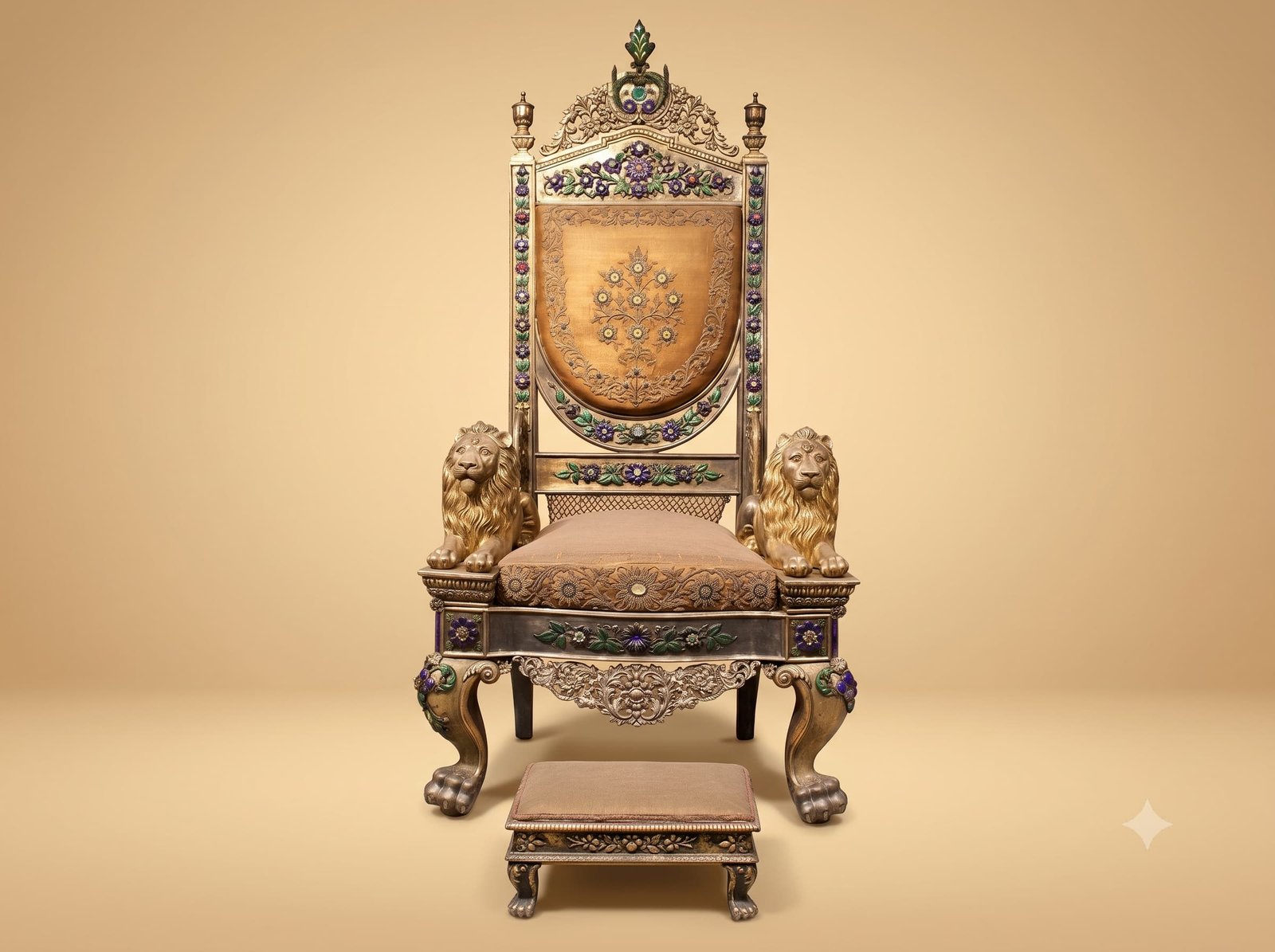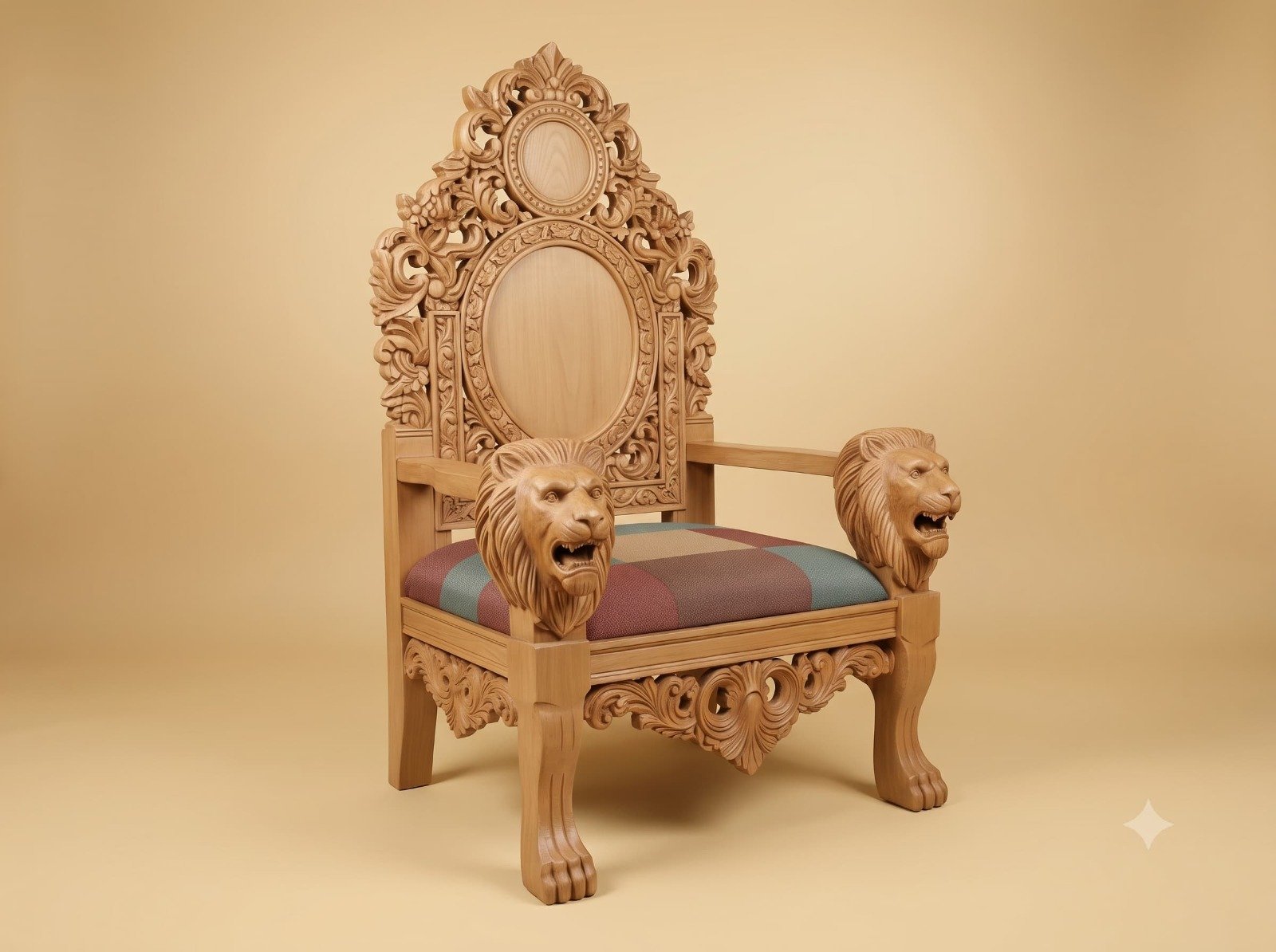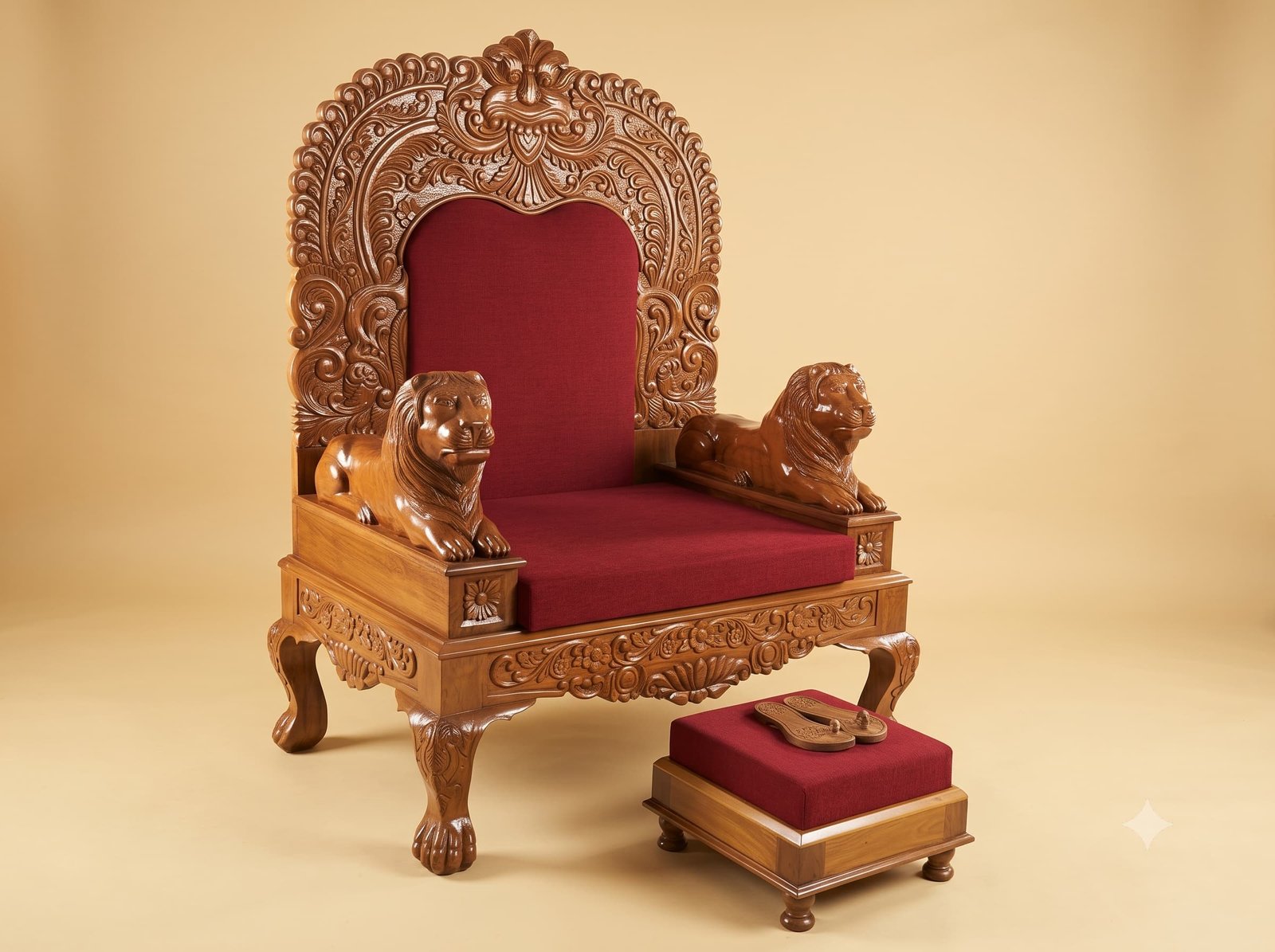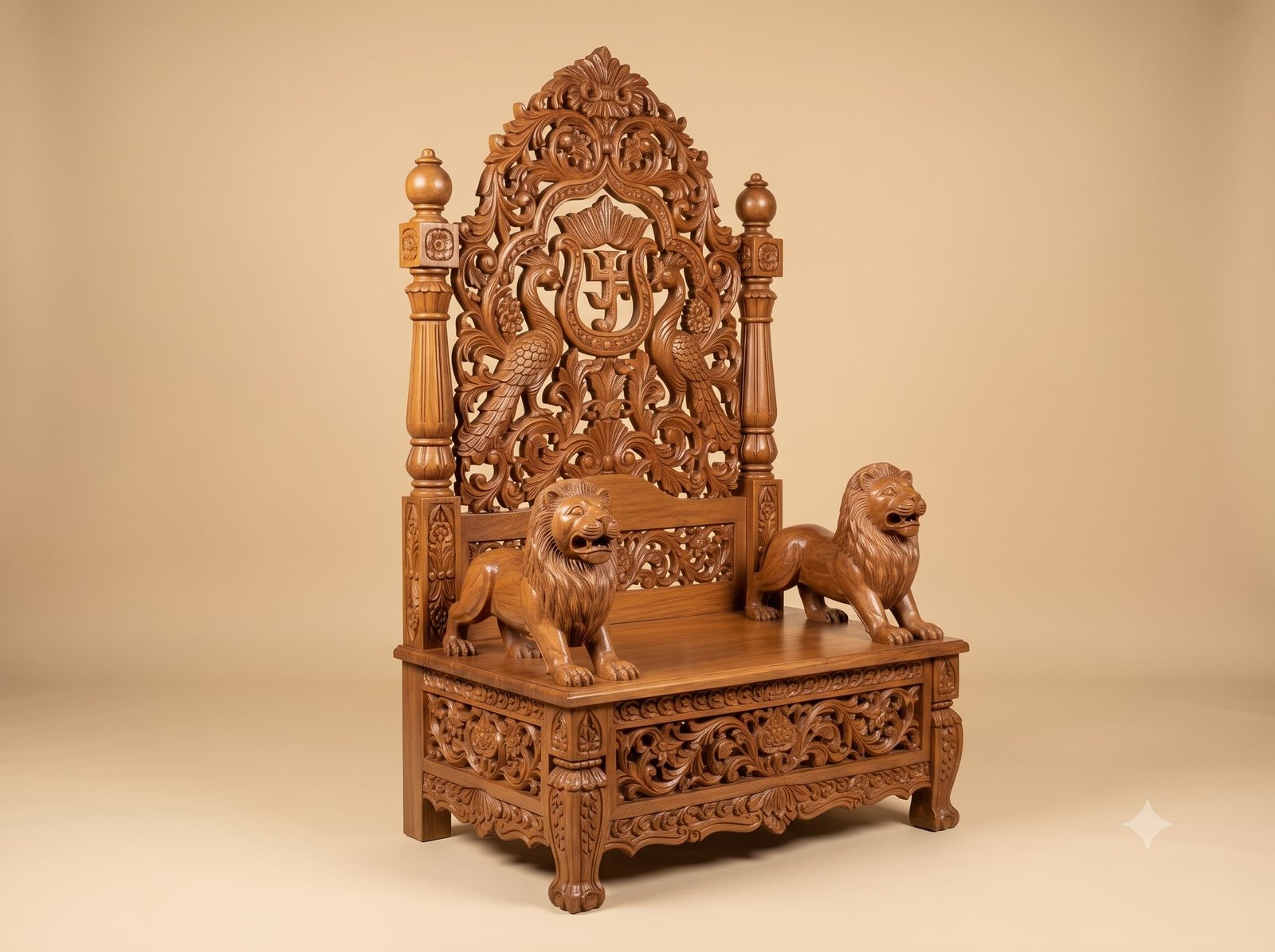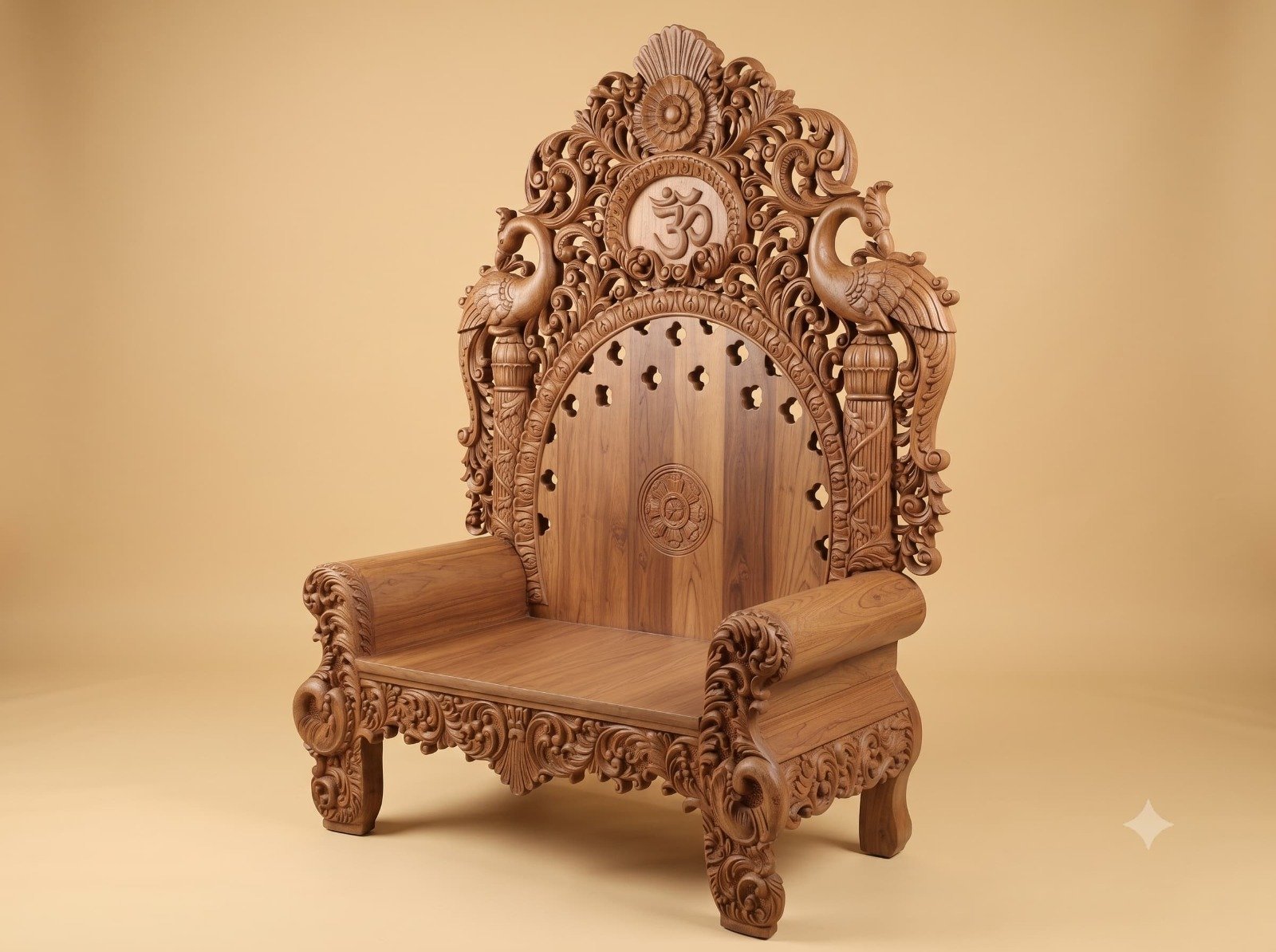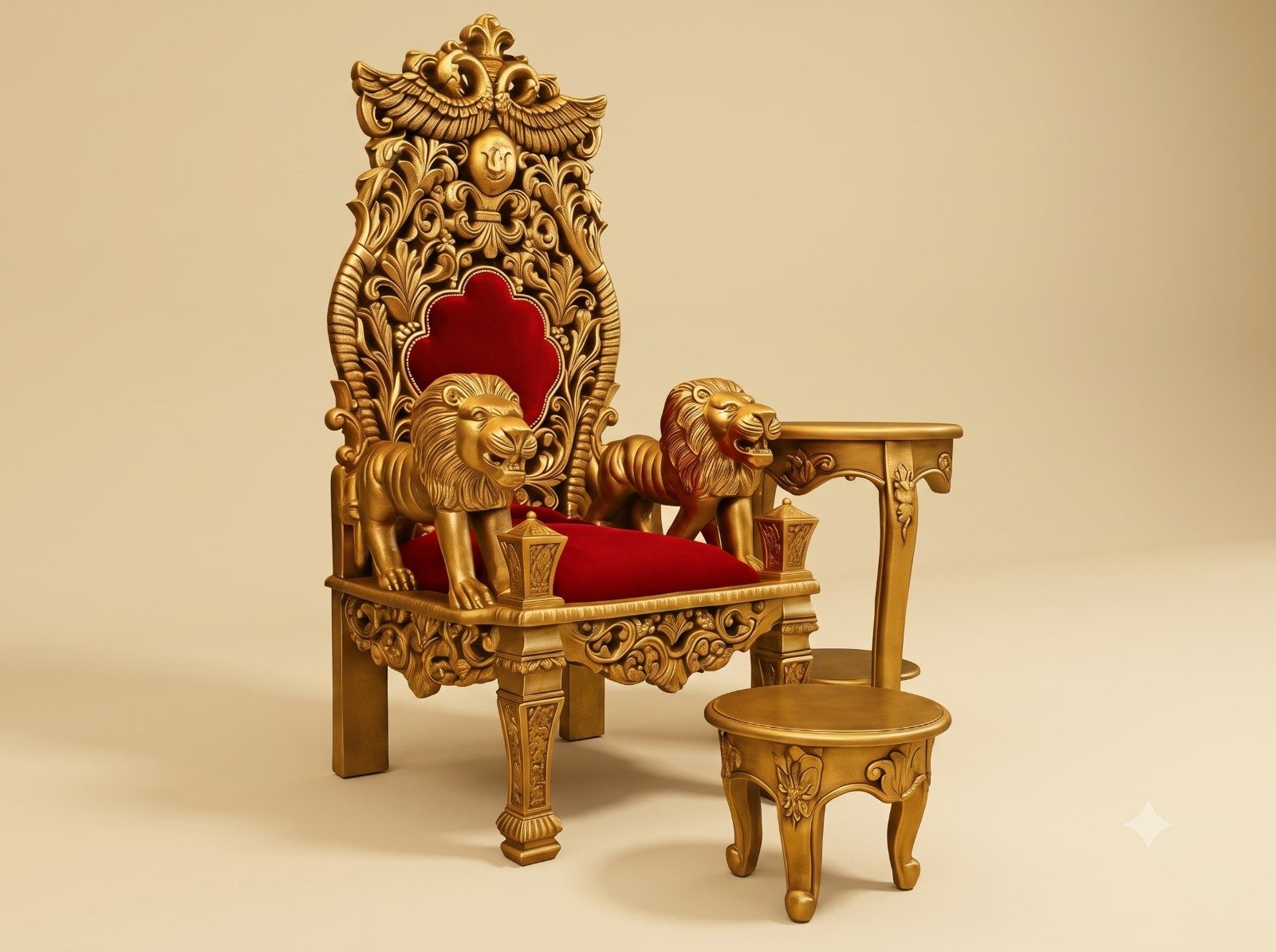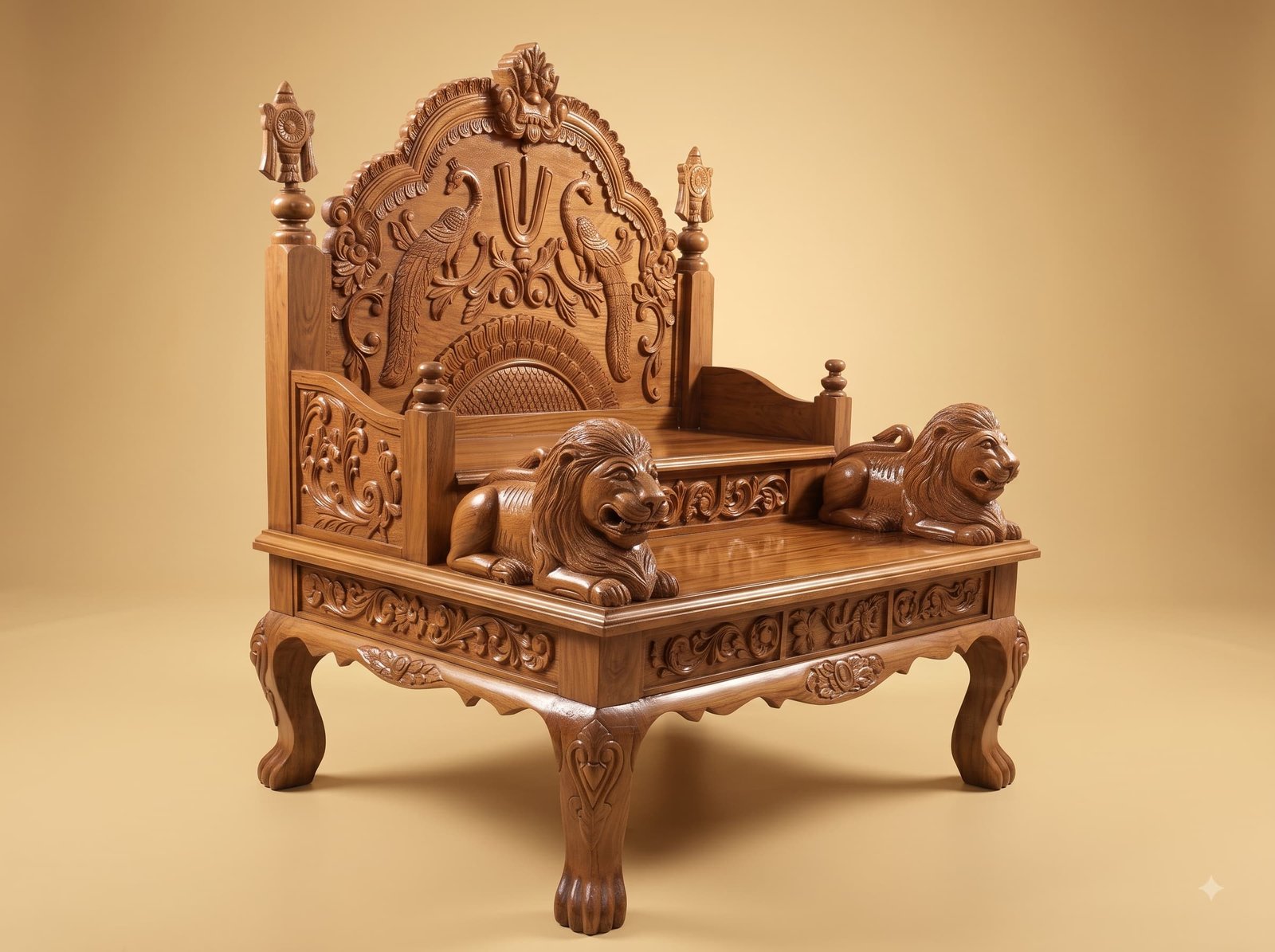
Look at the corners of the plinth. Each band of ornament arrives at the corner with a complete motif, not half of one. That is the whole problem with wrapping a repeat around a box, and it is solved before any carving starts.
A repeating band has a fixed unit - a leaf, a petal, an arch. Divide the length of a plinth face by that unit and you will almost never get a whole number. Carve it anyway, working from one end, and the last unit before the corner gets cut in half. Do that on four faces at four corners and the piece looks like it was made from offcuts, no matter how good the carving is.
So the unit is adjusted instead of the face. The carver measures each face, decides how many units it should carry, and divides to get the exact repeat length for that face - usually a millimetre or two different from the drawn ideal. Every unit on that face is then set out to the adjusted figure, so the band starts whole at one corner and finishes whole at the other.
Nobody looking at the finished plinth can tell that the repeat on the front is fractionally wider than the repeat on the end. They can tell, instantly, when a corner is wrong.
 Ask Price On WhatsApp