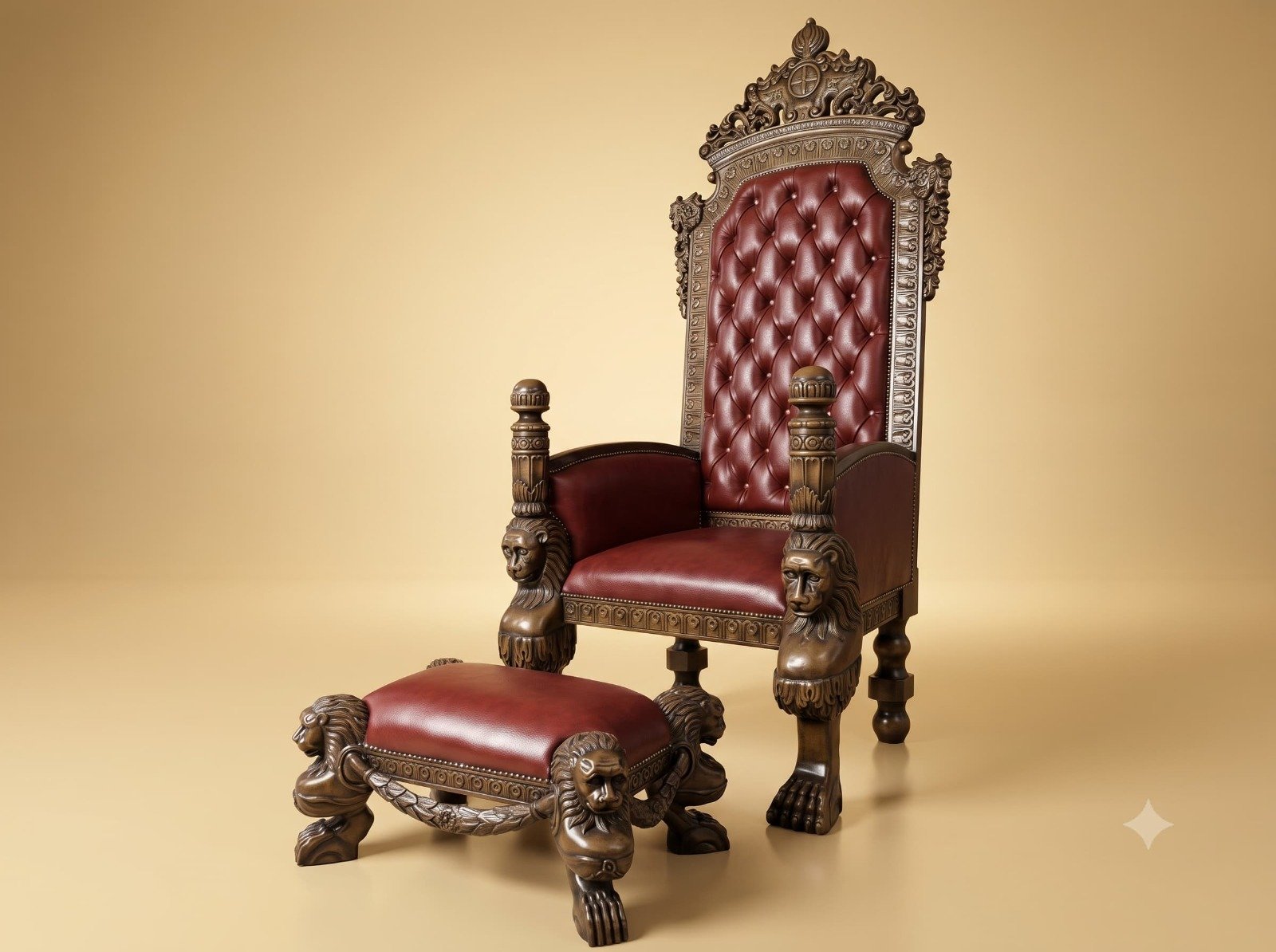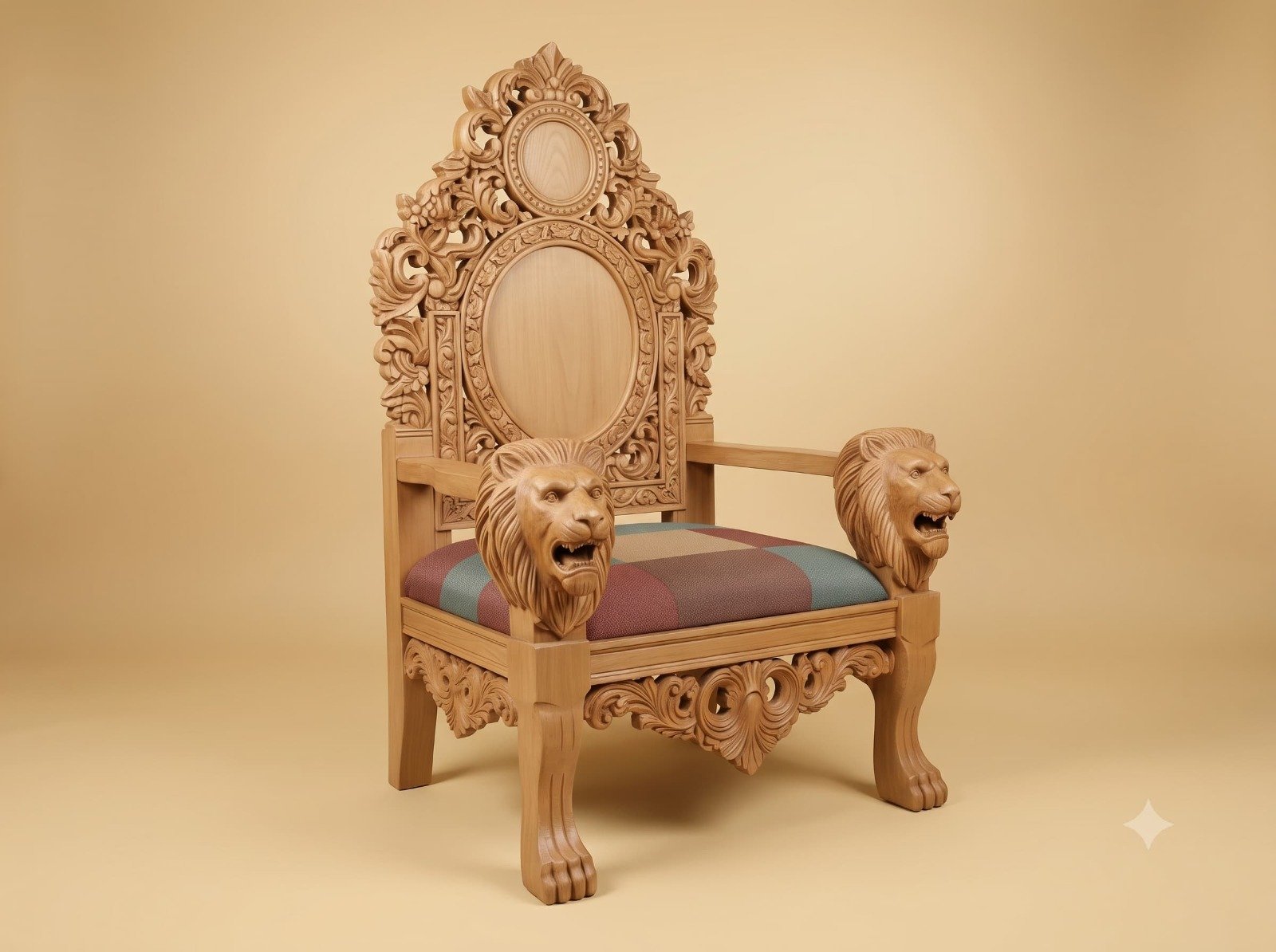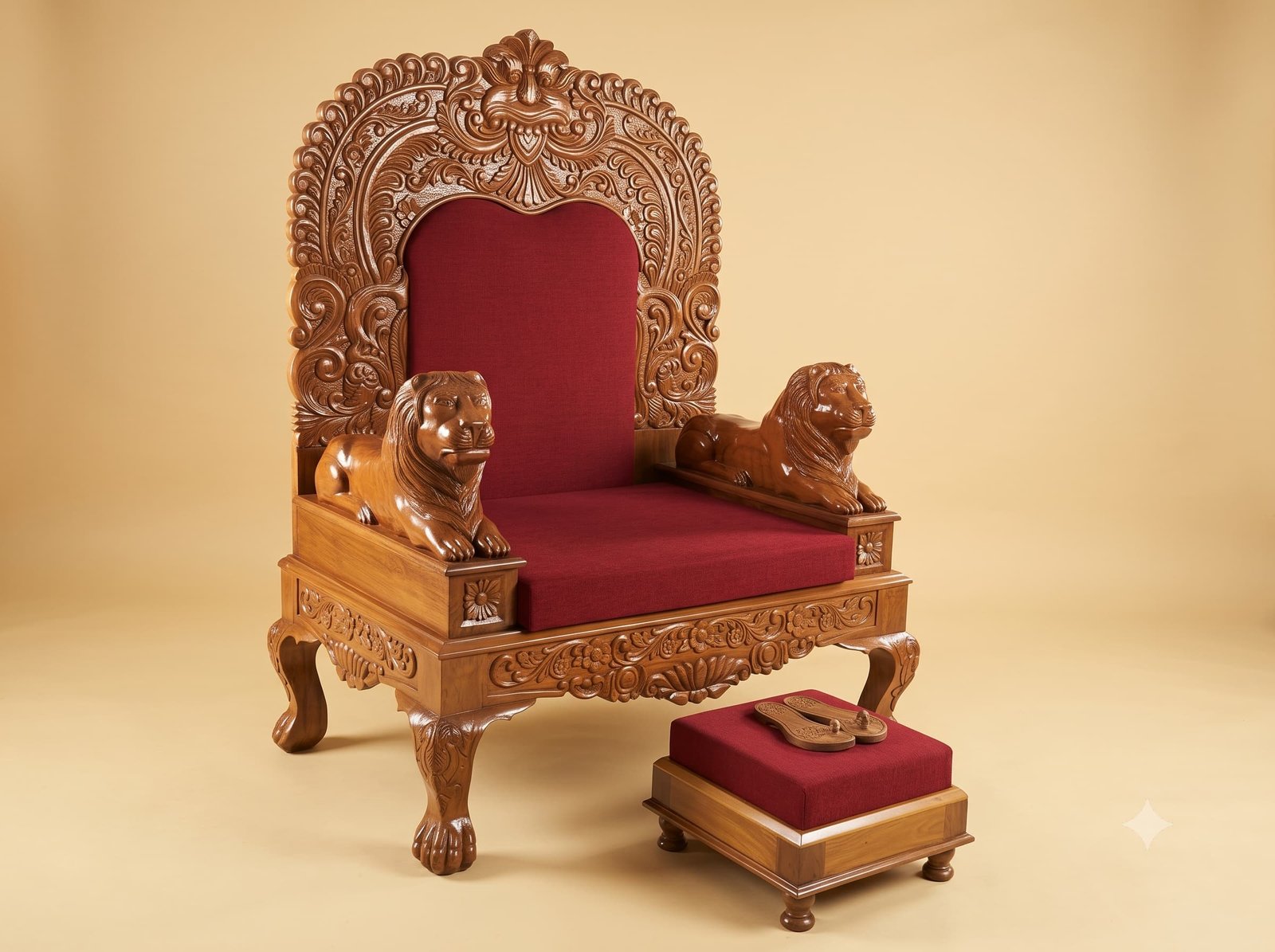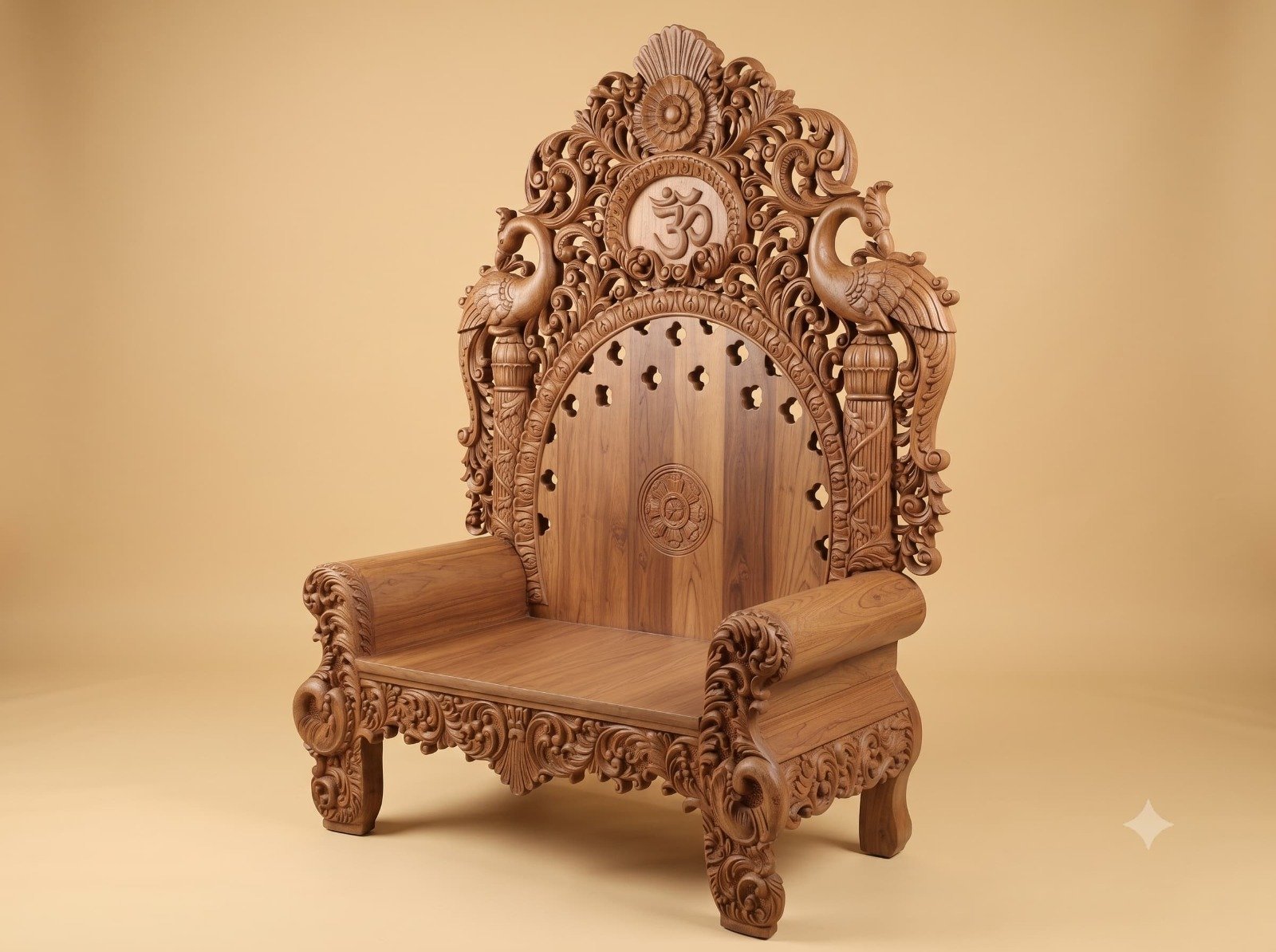
There is a row of small shaped openings arcing across the top of the back panel. They are the smallest work on the piece and they are drilled twice - once from each side.
Boring a hole straight through a board in one pass always damages the far face. The cutter reaches the back, there is nothing left to support the fibres, and it pushes them outward instead of cutting them - so the exit side breaks out in a ragged ring. On a hidden fixing hole nobody cares. On an opening that is meant to be looked at from both sides, and sits in a row where any inconsistency is obvious, it is unacceptable.
So each opening is set out on both faces from the same centre marks, and bored from the front only until the tip of the cutter just breaks the far surface. The panel is then turned over and the same hole is bored back from the other side, meeting the first cut halfway. The waste falls out of the middle, and both faces are cut cleanly from their own side.
Every opening in that arc is worked that way, then shaped by hand into its final outline. It doubles the setting out and doubles the handling, and the reward is a row of openings with no ragged edge anywhere - front or back.
 Ask Price On WhatsApp