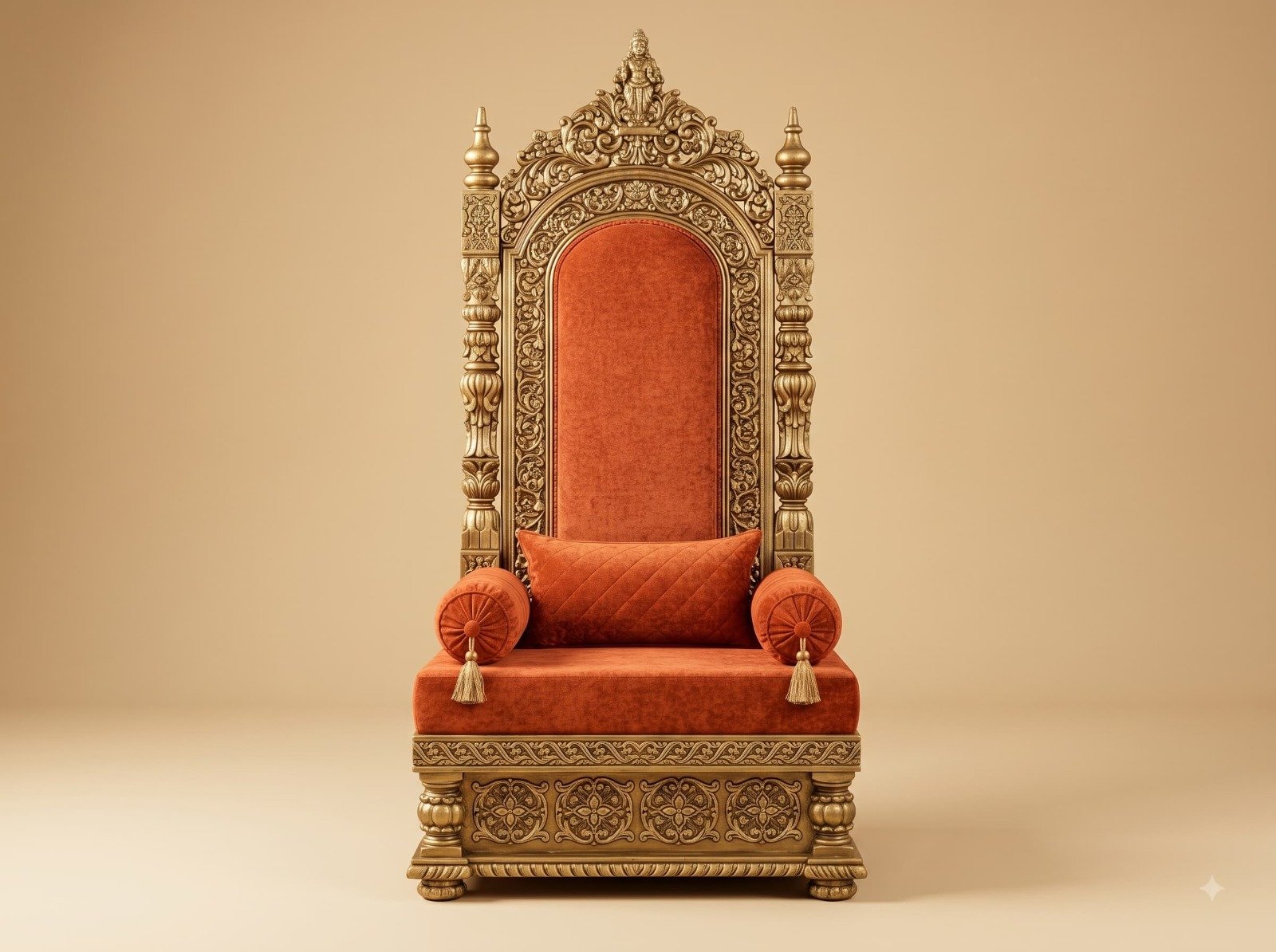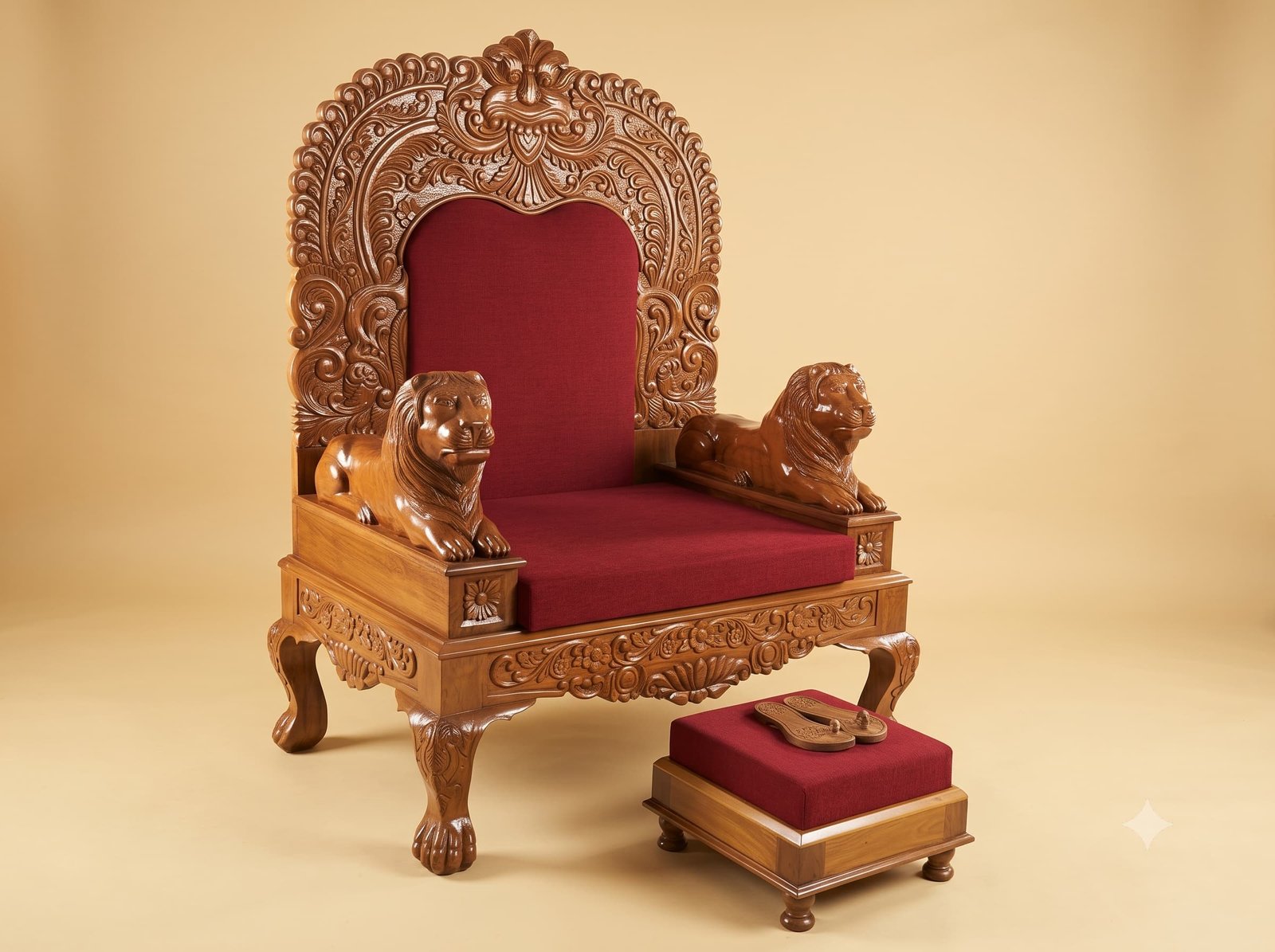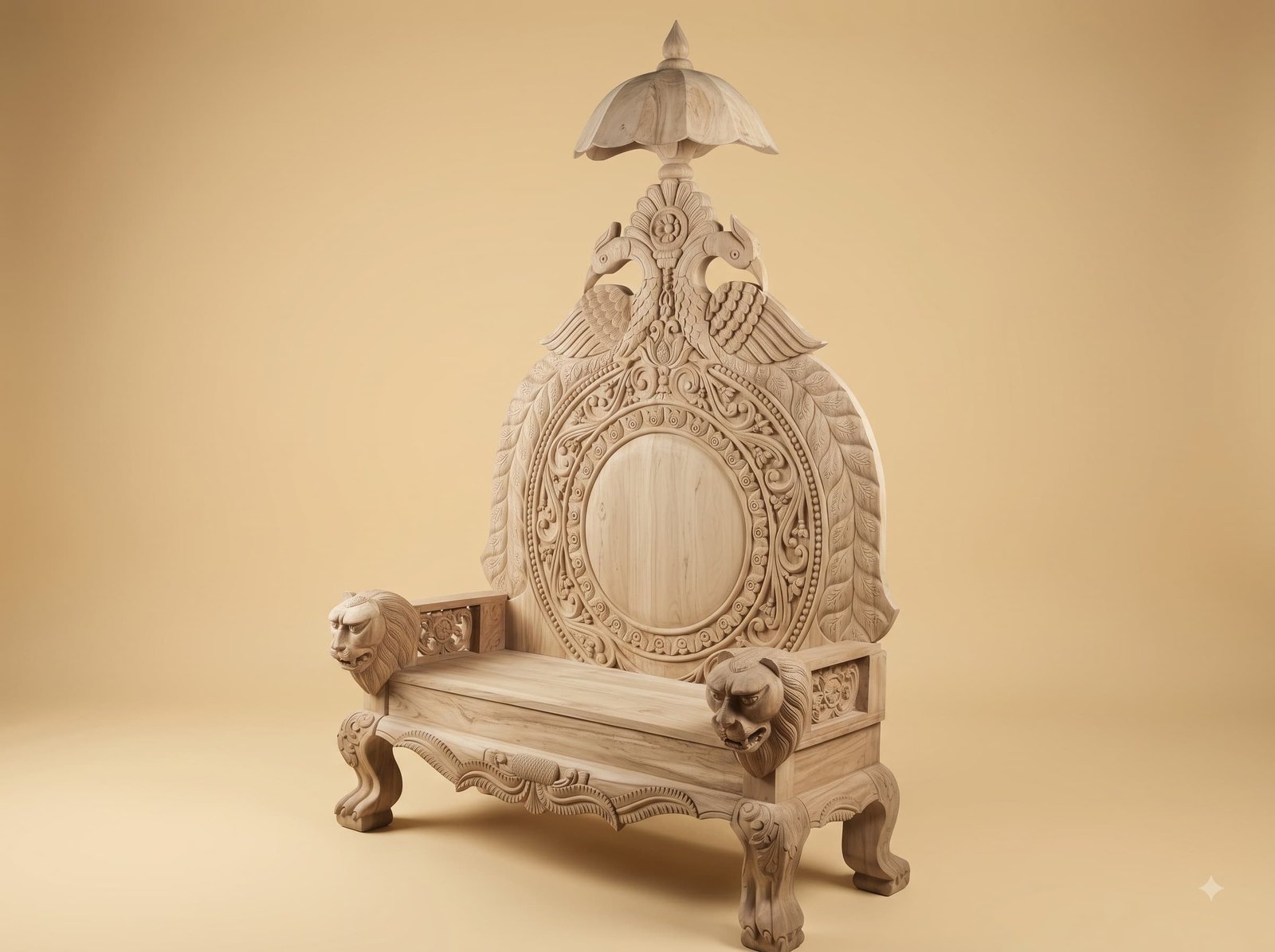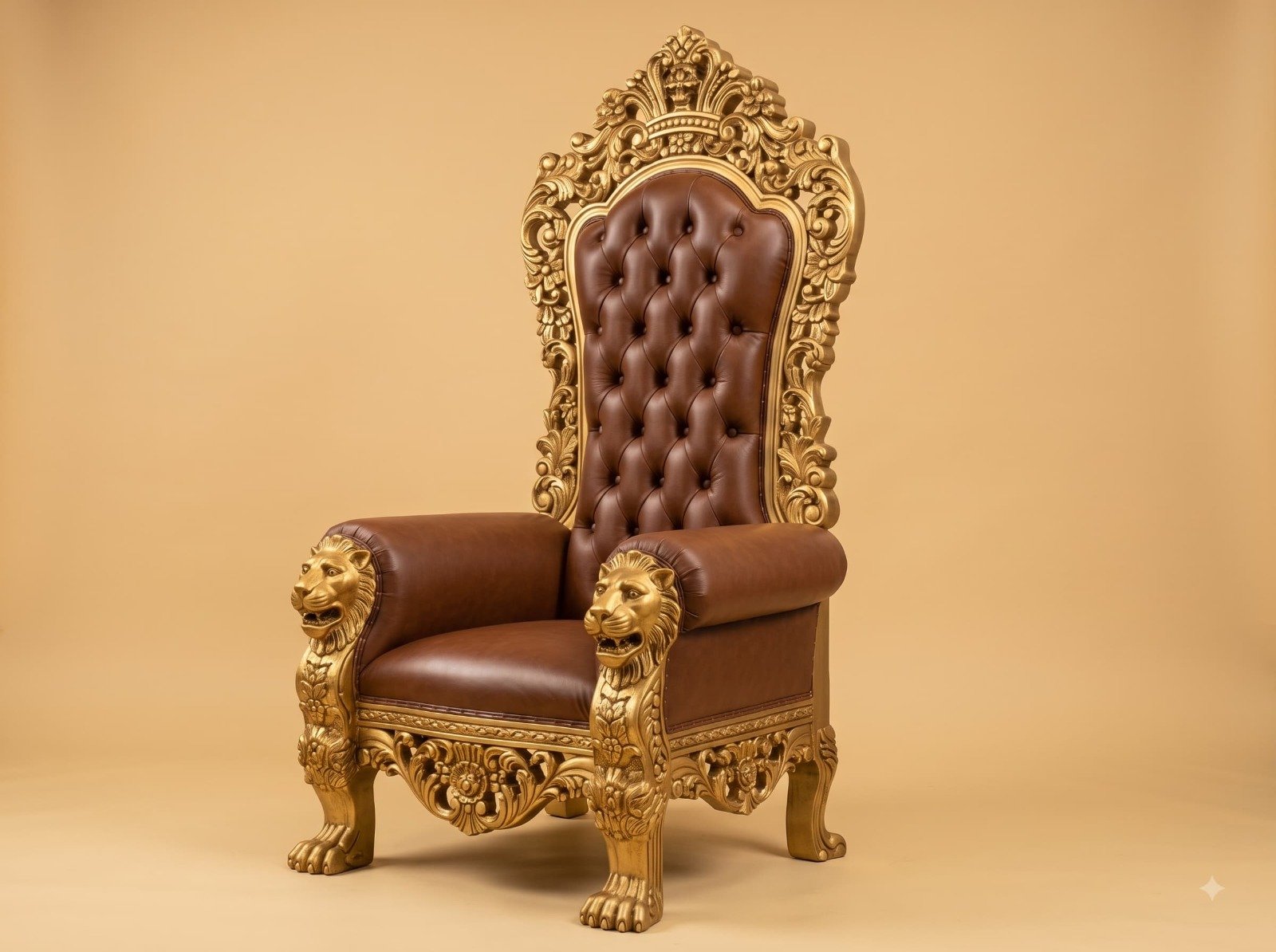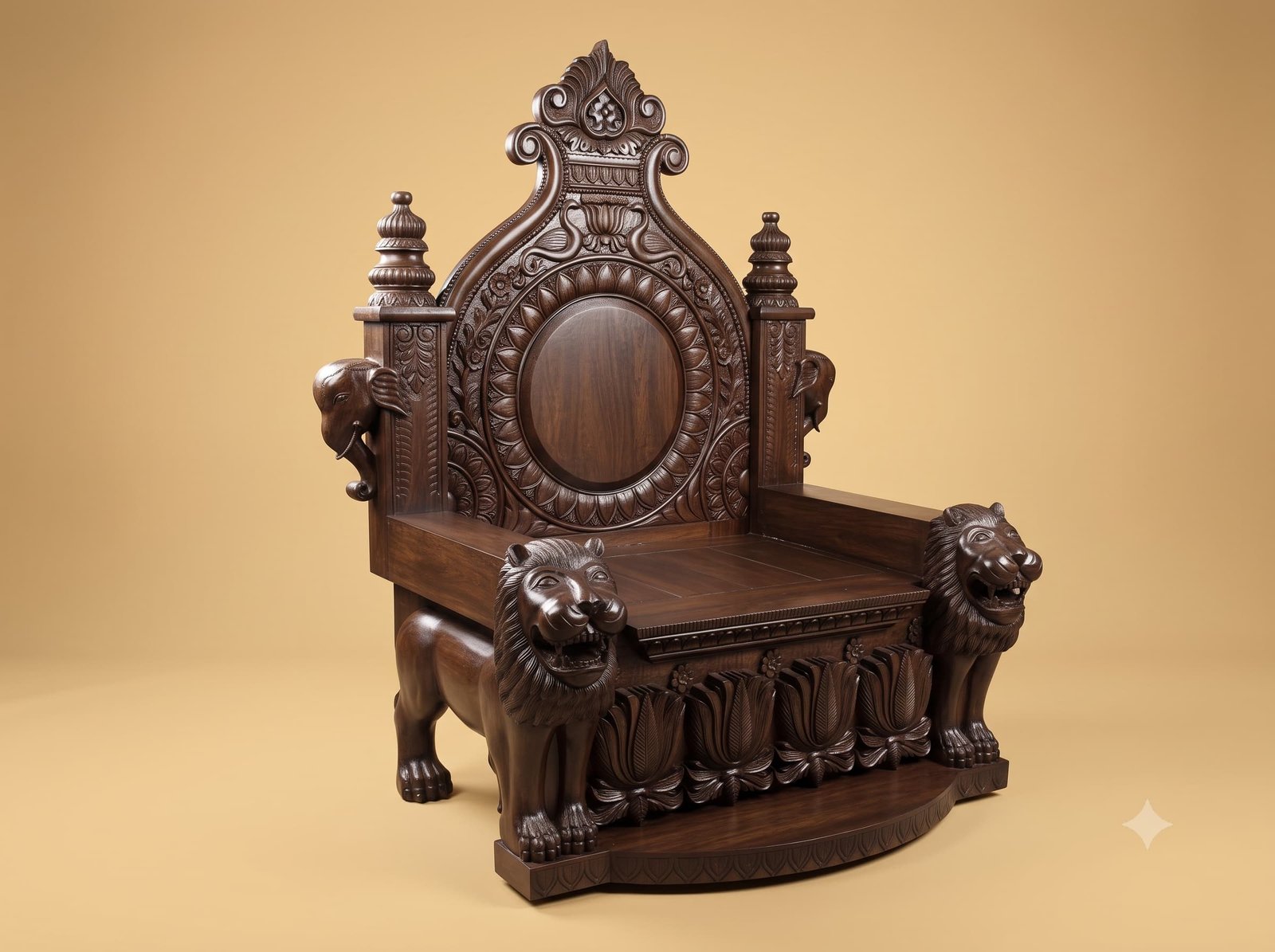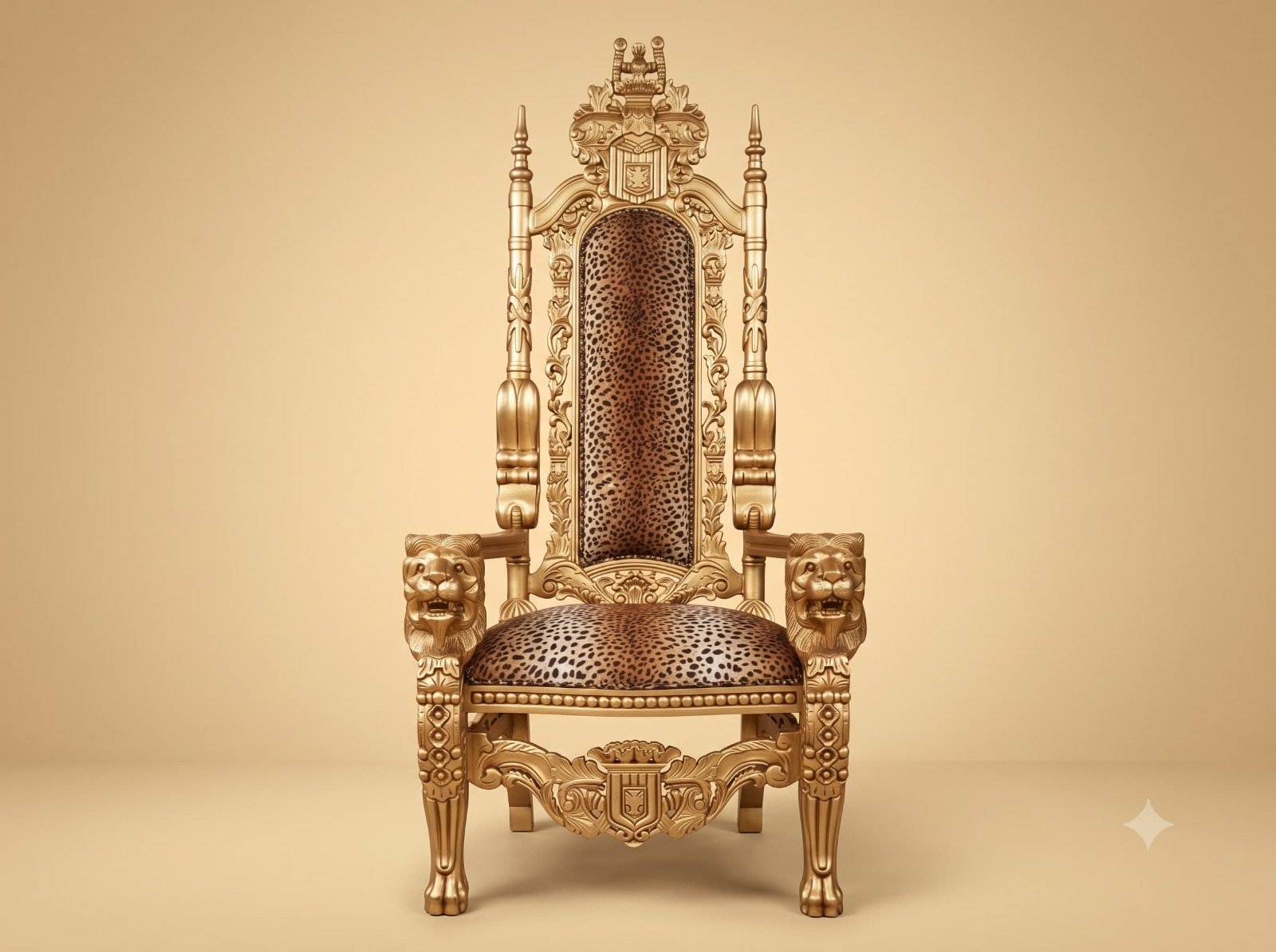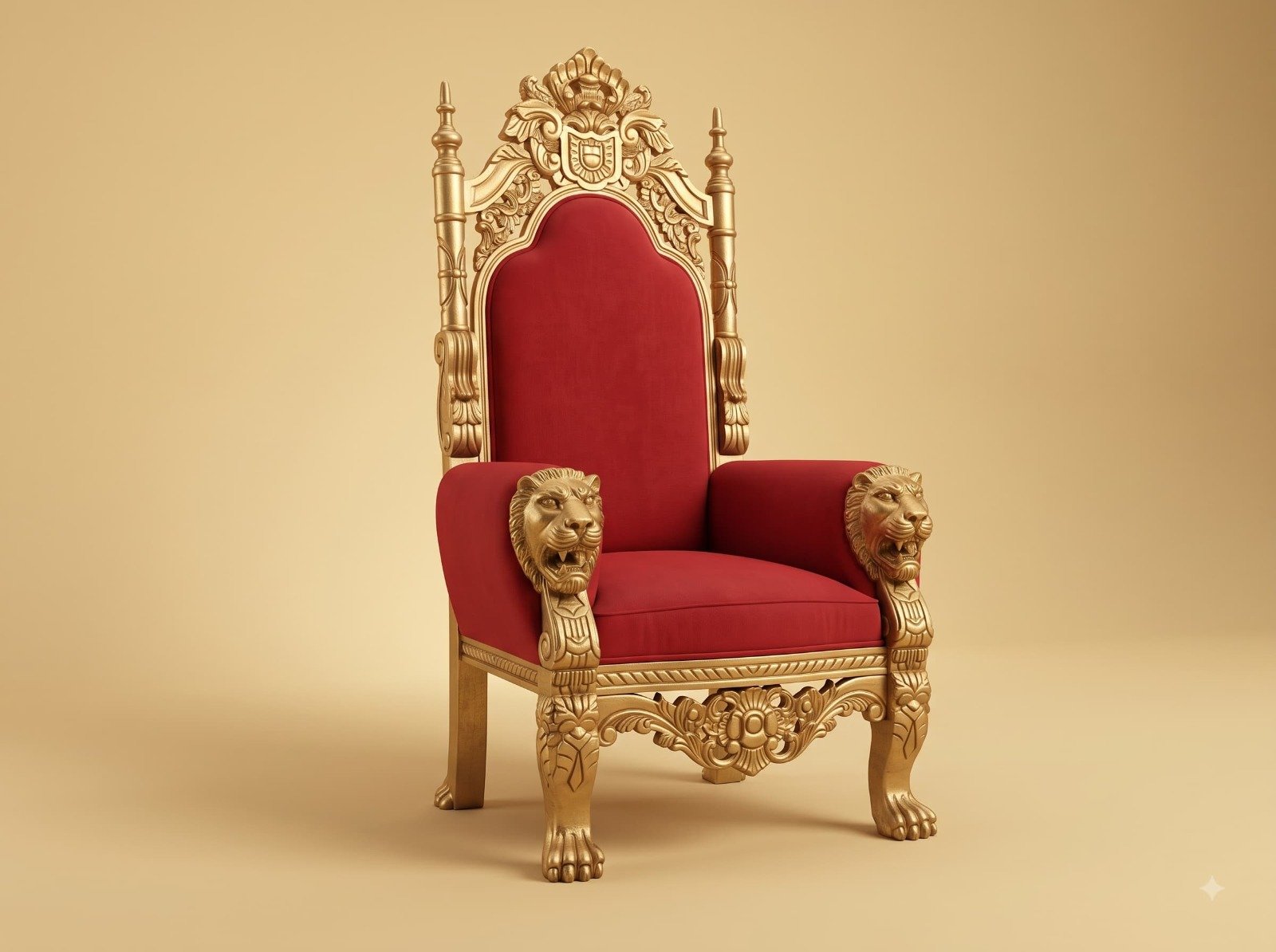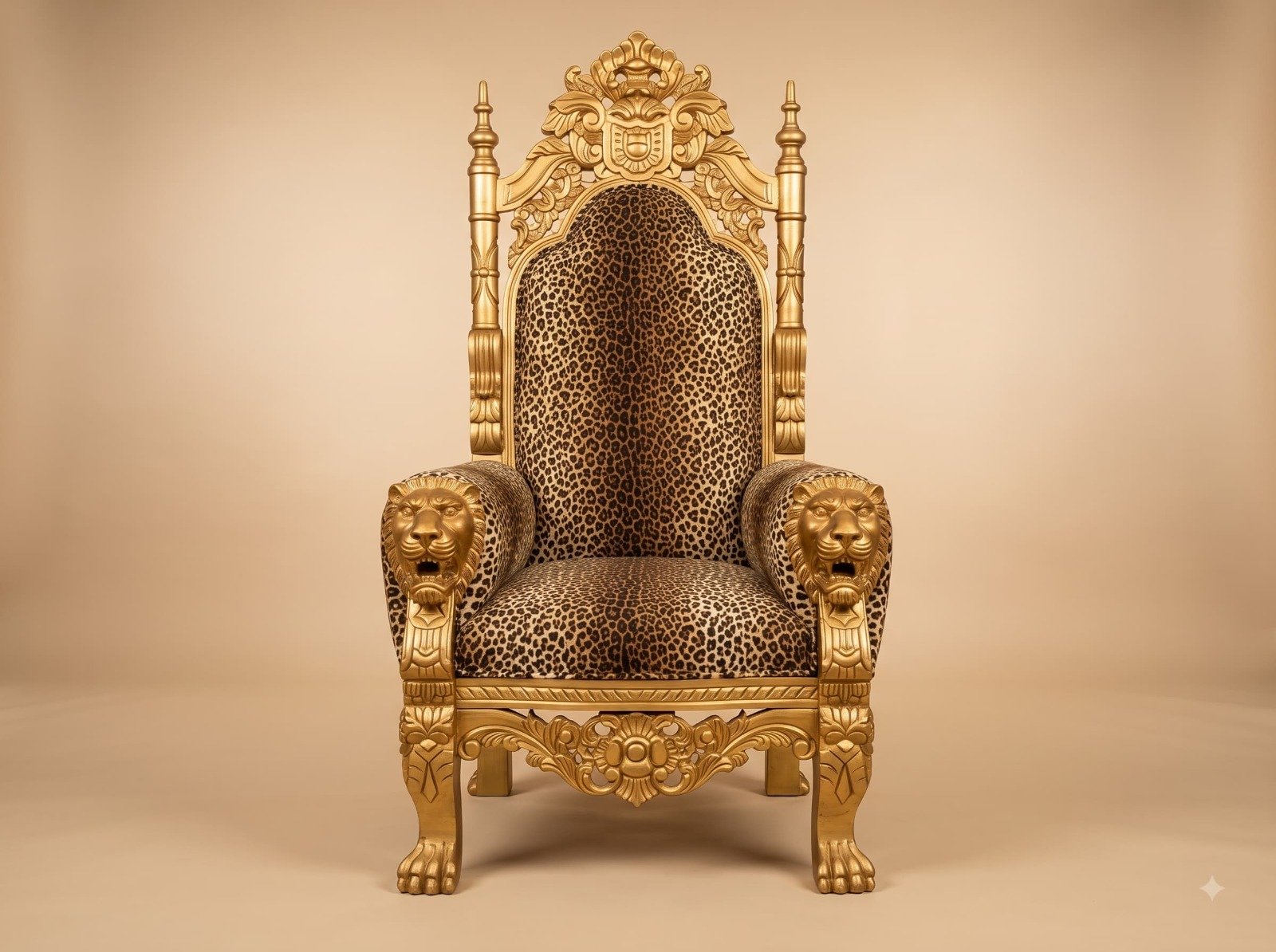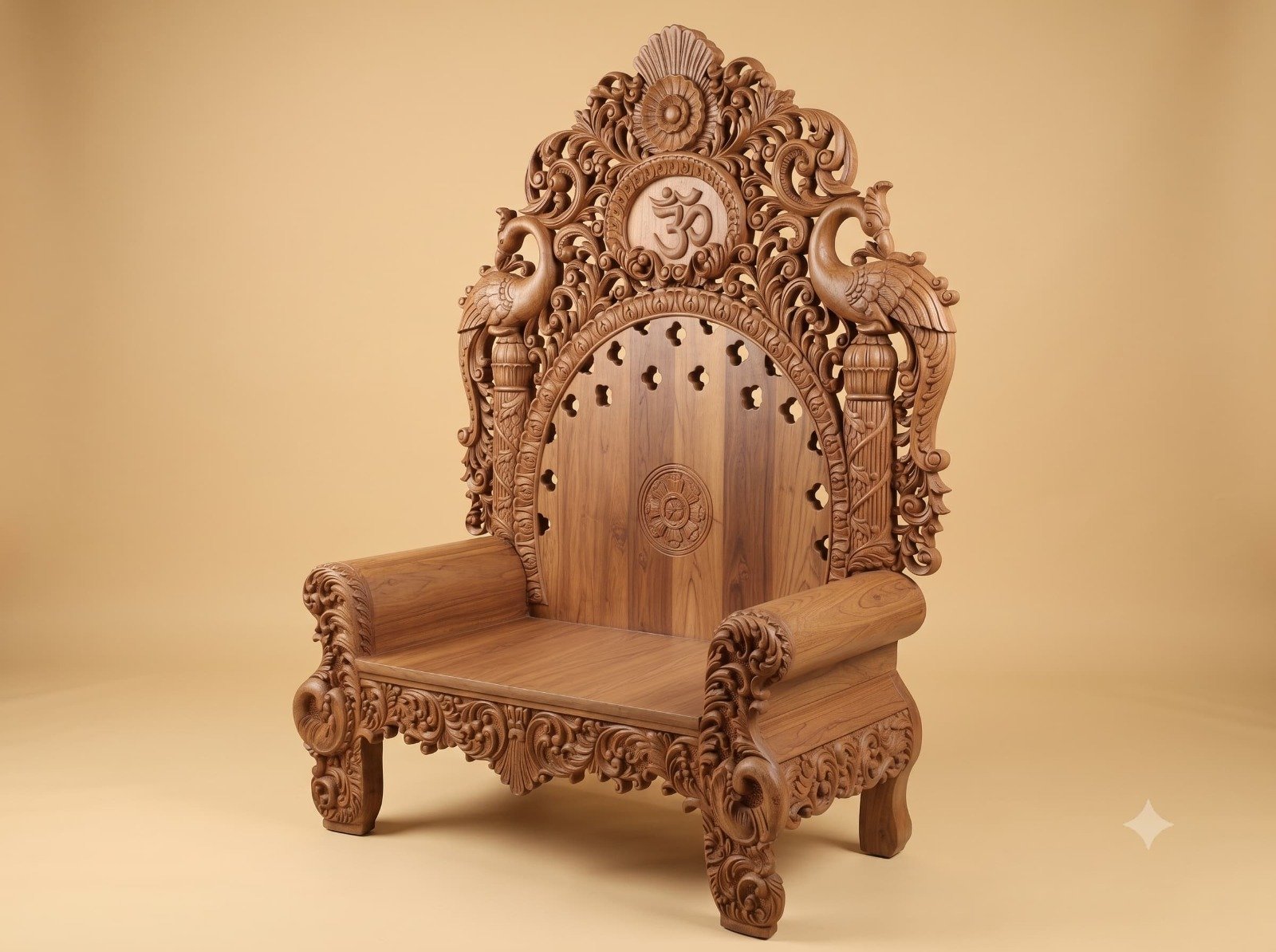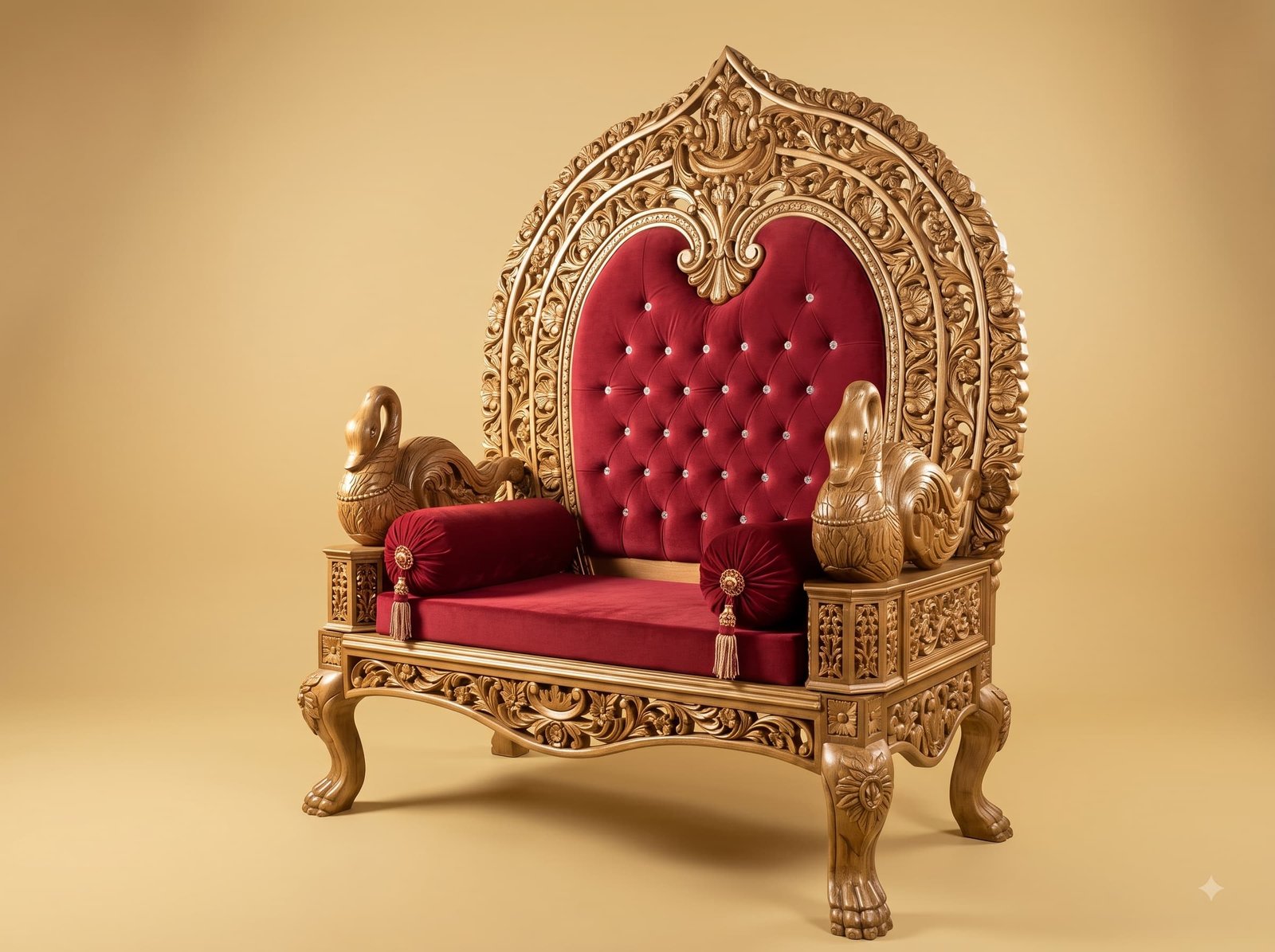
The arch above the seat is cut right through, and the order in which that happens is the difference between crisp openwork and a ragged edge.
Every void starts as a drilled hole, just large enough to pass a saw blade. The blade is threaded through, the frame is closed around it, and the carver saws to the marked line from inside the opening outward. Then the blade comes out and goes into the next hole. A panel like this one has dozens of openings, and the blade is threaded and unthreaded for every single one.
The direction matters more than the sawing. Wood breaks out on the face where the tool exits, not where it enters, so all of it is cut from the back. Whatever splintering happens lands on the hidden side, and the front face - the one that will be seen from across a hall - comes up clean.
Only after the panel is fully pierced does the carving begin, working the leaves and stems in relief across the bridges of wood that remain. Carve first and saw second, and every stroke risks snapping something already finished. Saw first, carve second: slower to set out, and the only order that reliably works.
 Ask Price On WhatsApp