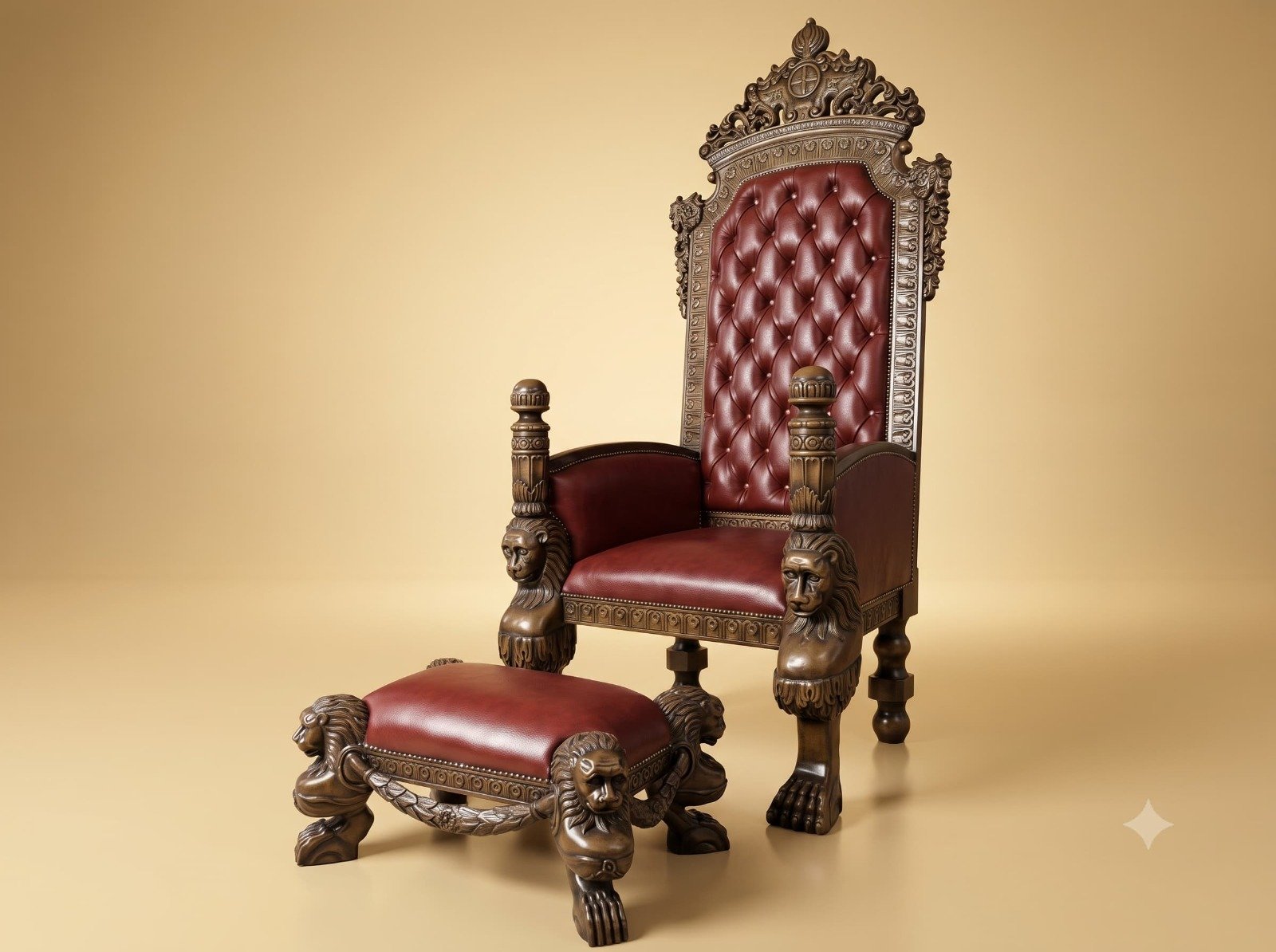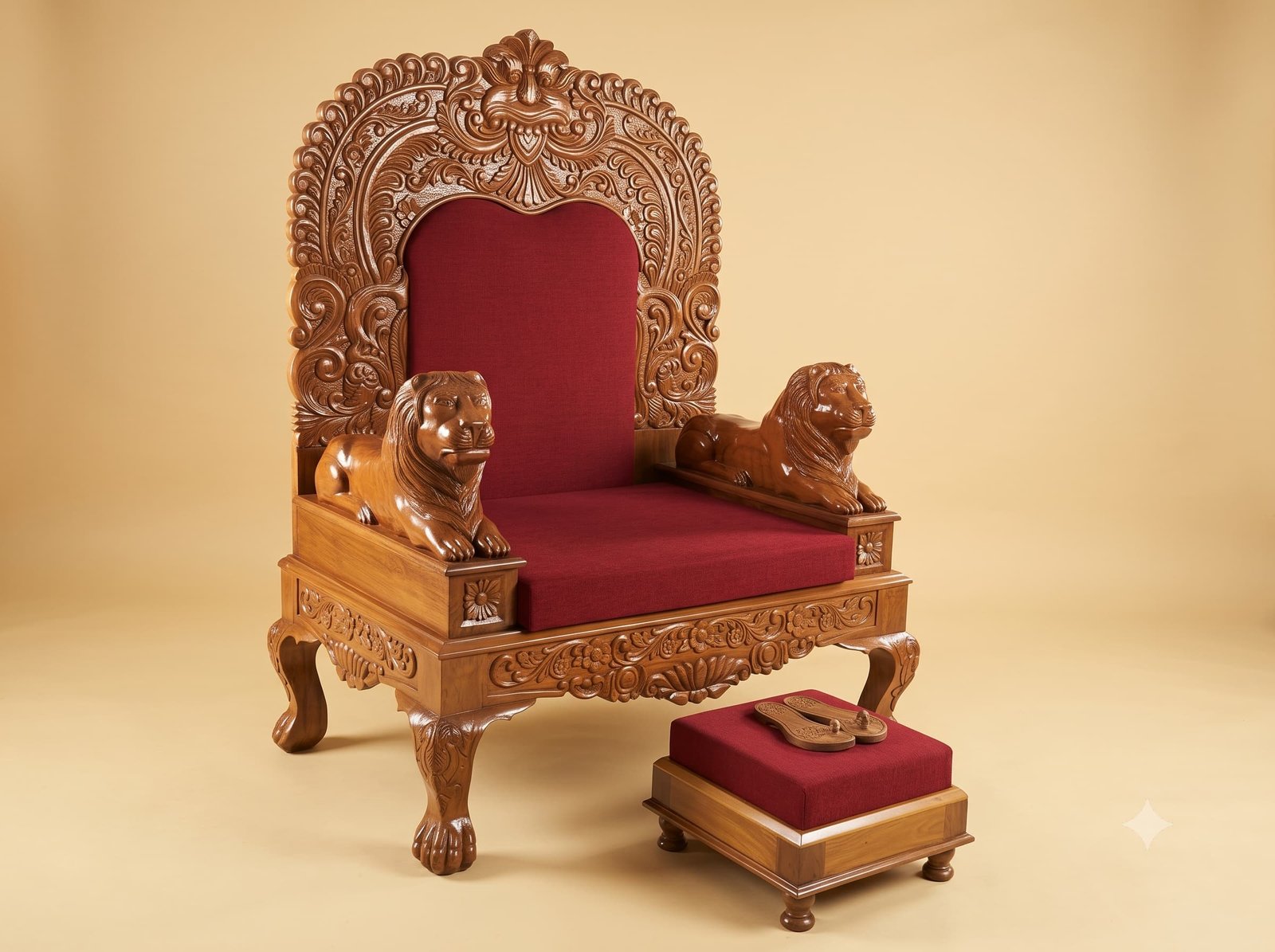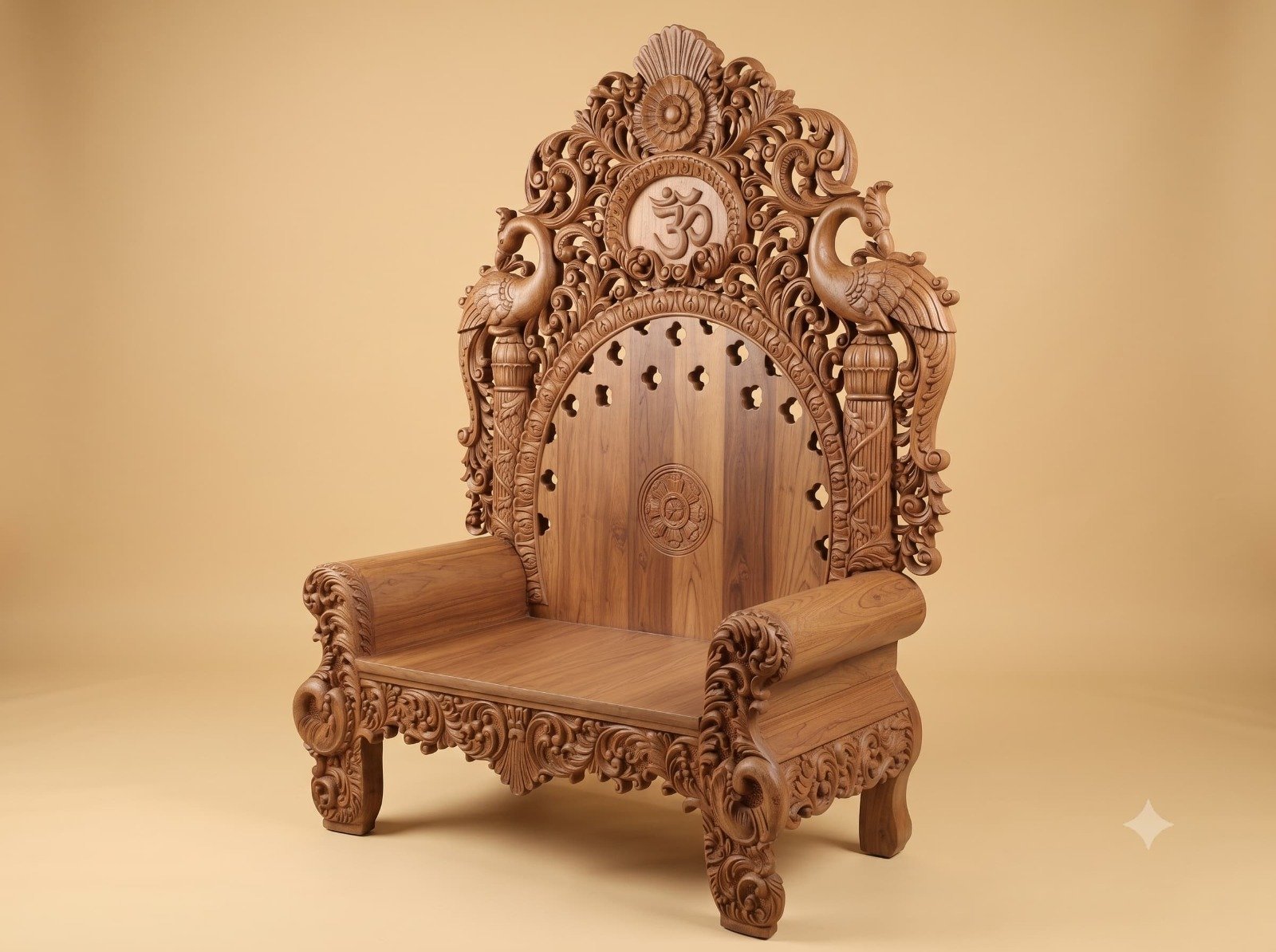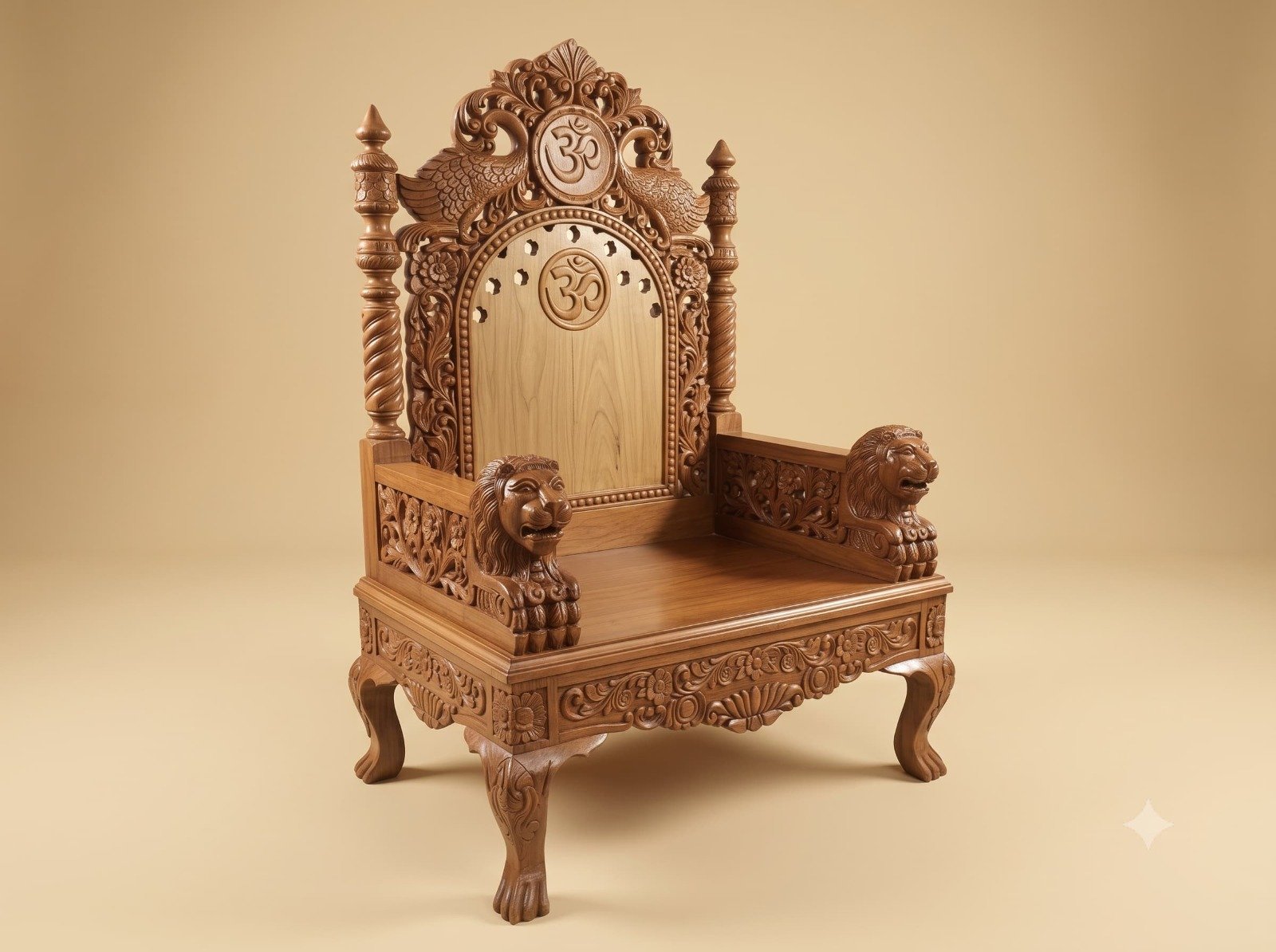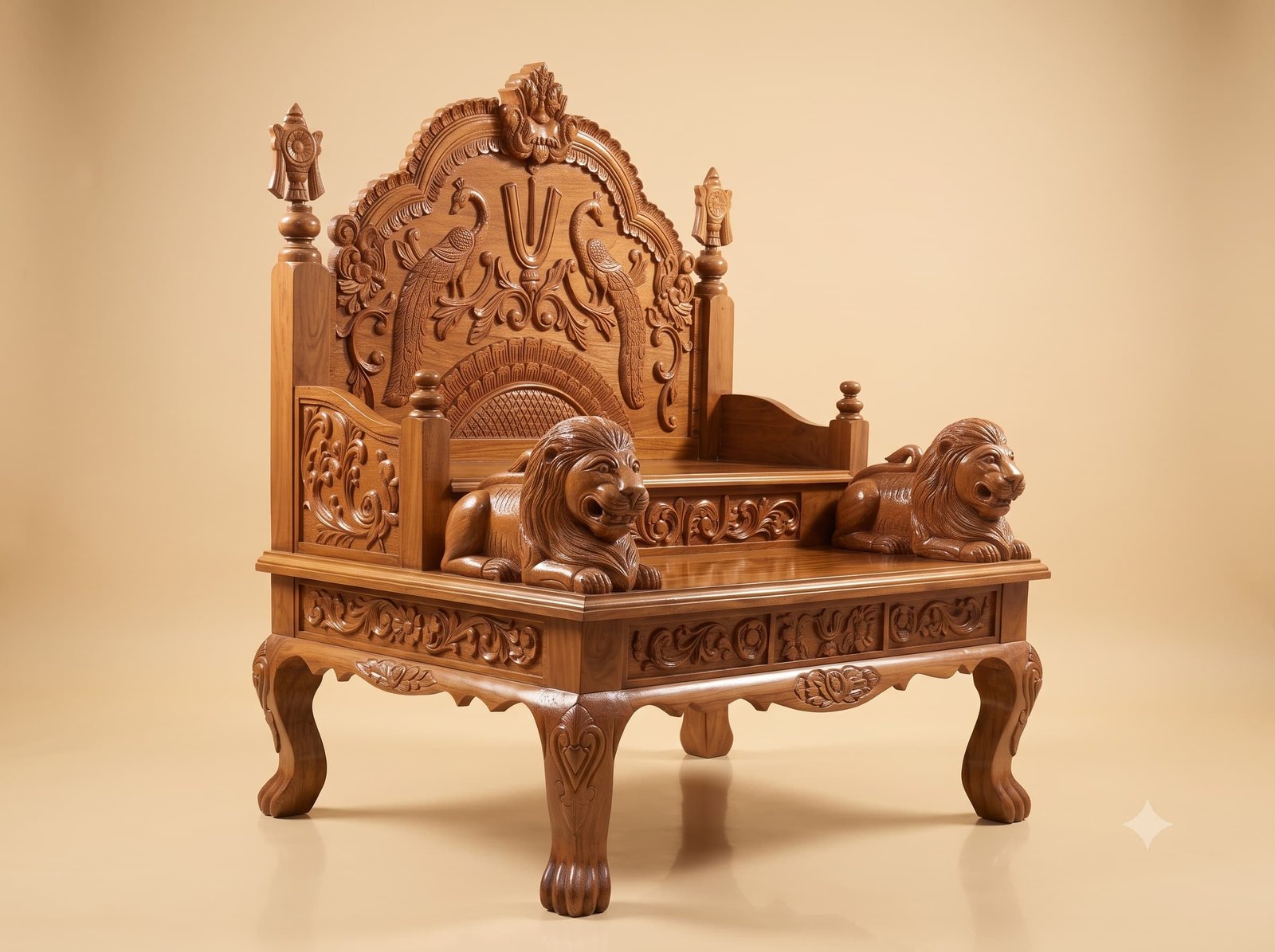
The two finials at the back corners are turned on a lathe, and each one sits on a square block that is not. Getting a clean line where the square becomes round is one of those small jobs that will punish carelessness immediately.
The post starts as a square section of teak, mounted whole. As the lathe spins, the square part is a blur with four corners cutting the air, and the round part below it will be solid material. The transition between them - the point where the corner of the square ends - is the vulnerable place. Bring the tool in from the square side towards the round and it catches those spinning corners one at a time and tears them, leaving a ragged, splintered shoulder.
So the cut is always made the other way: the tool enters in the round section and travels outward towards the square, so it is cutting away from the corners rather than into them. Each corner is severed cleanly at the end of a cut instead of being struck at the start of one.
The result is a crisp shoulder where flat meets curve - four sharp corners that look machine-made and are not. Turners judge each other on that line more than on the shape of the vase above it.
 Ask Price On WhatsApp