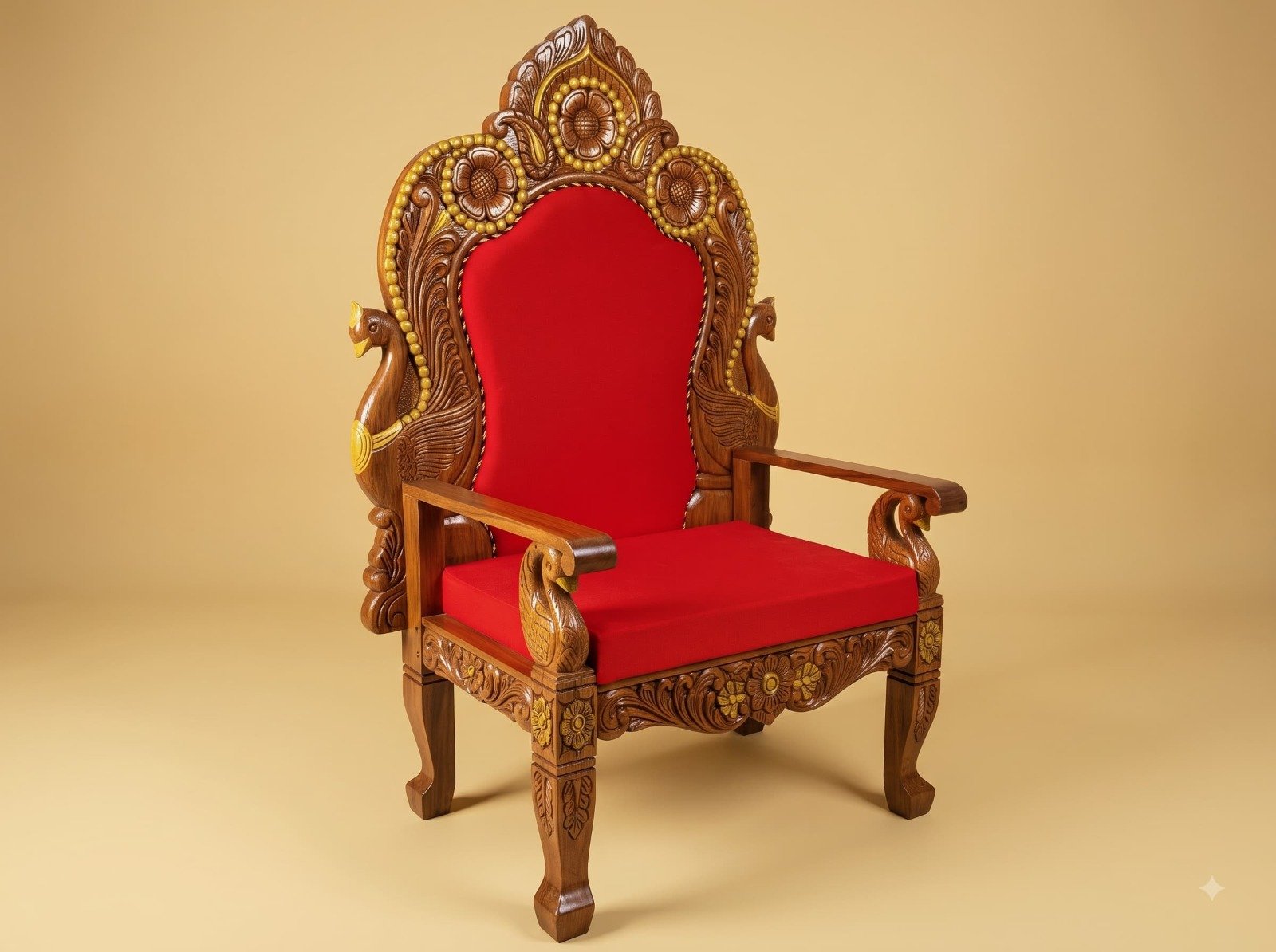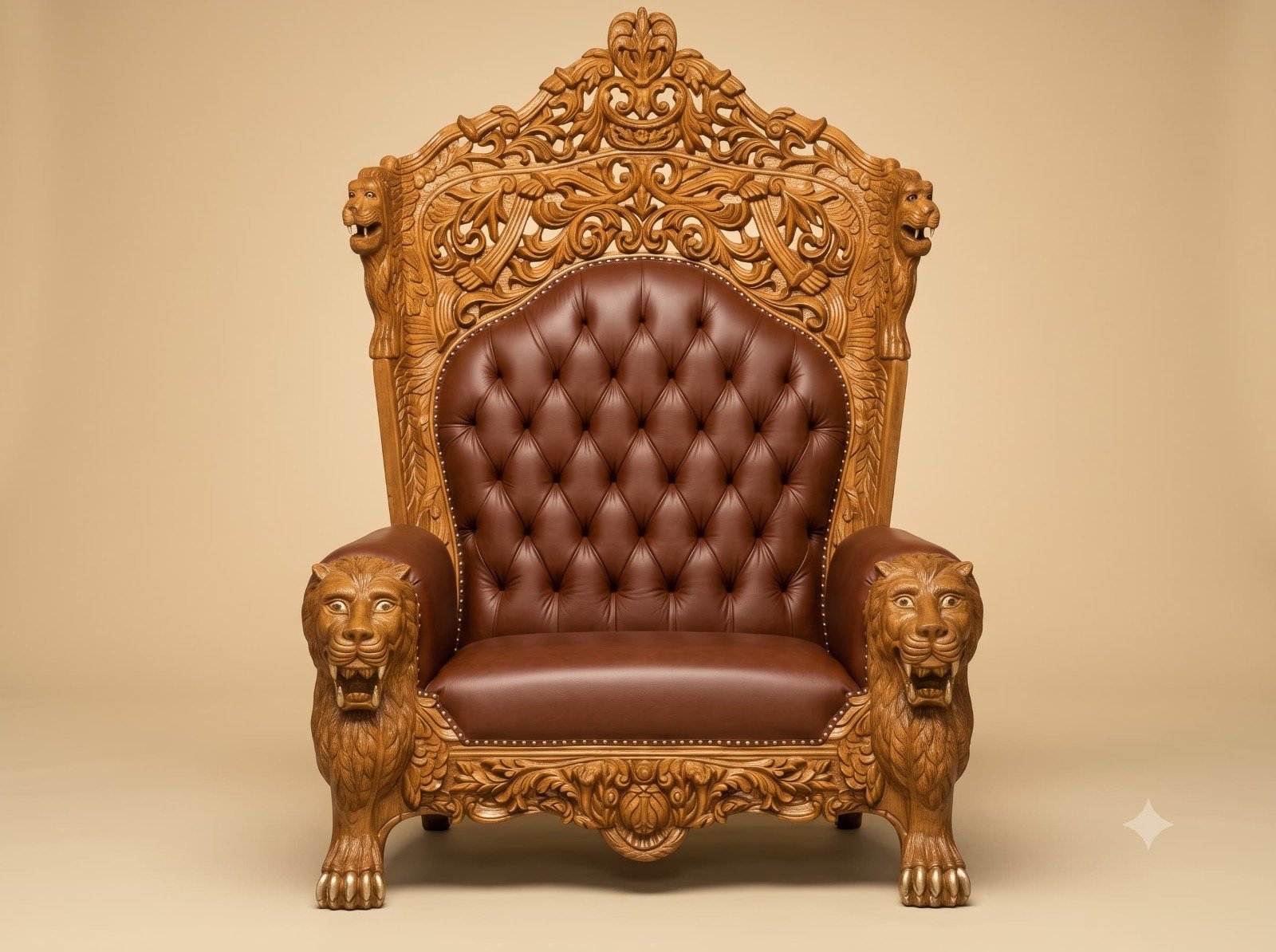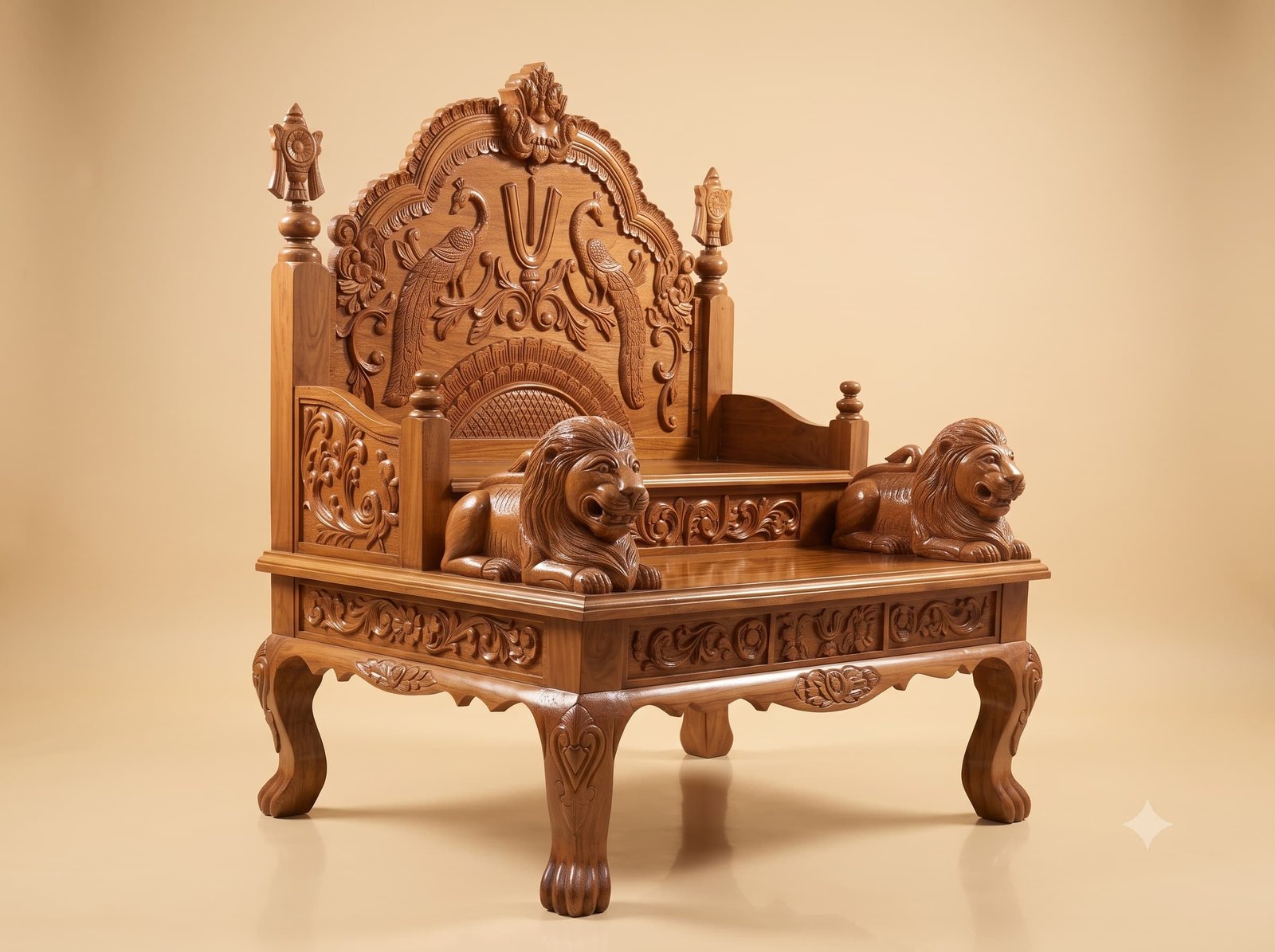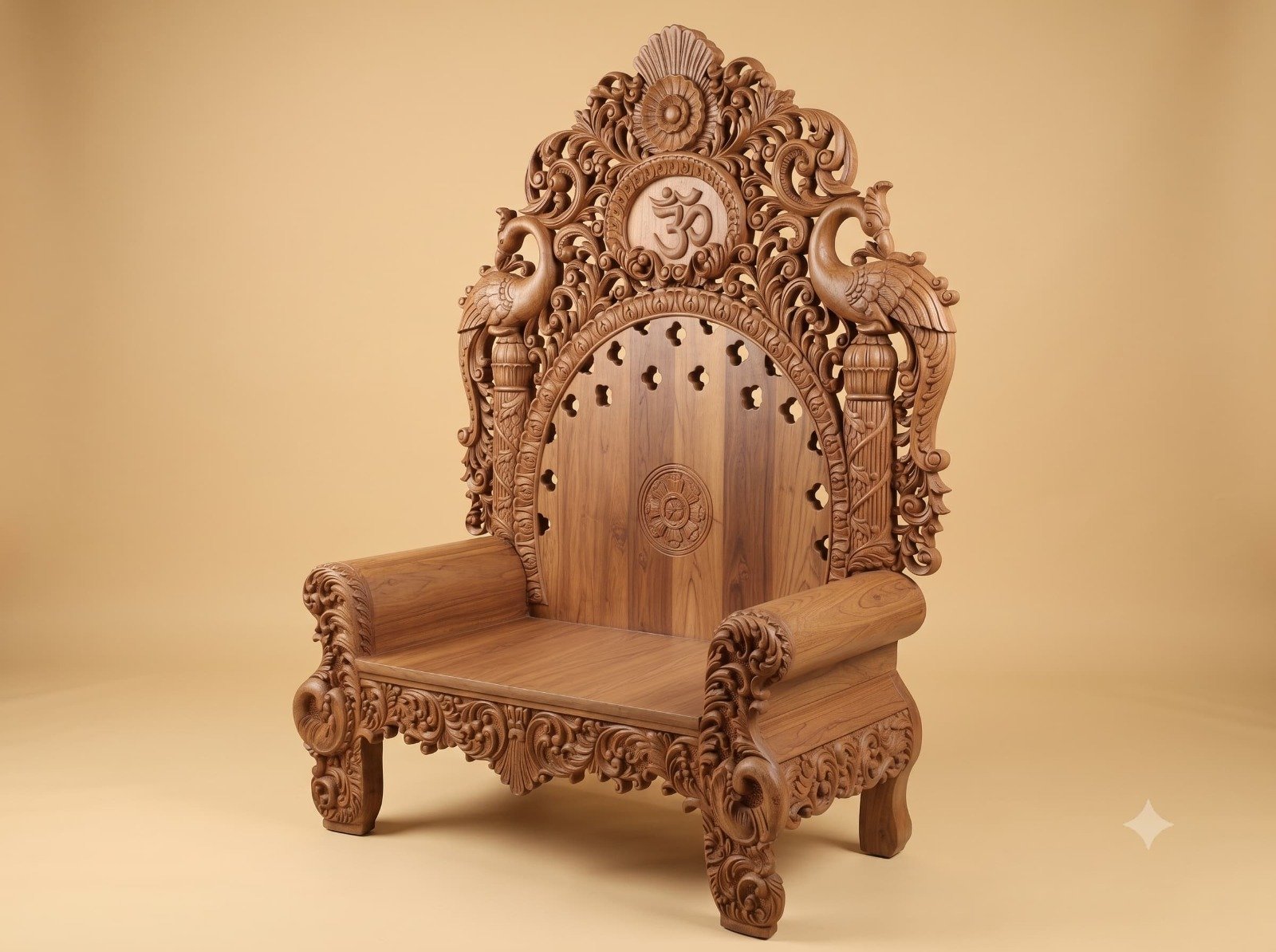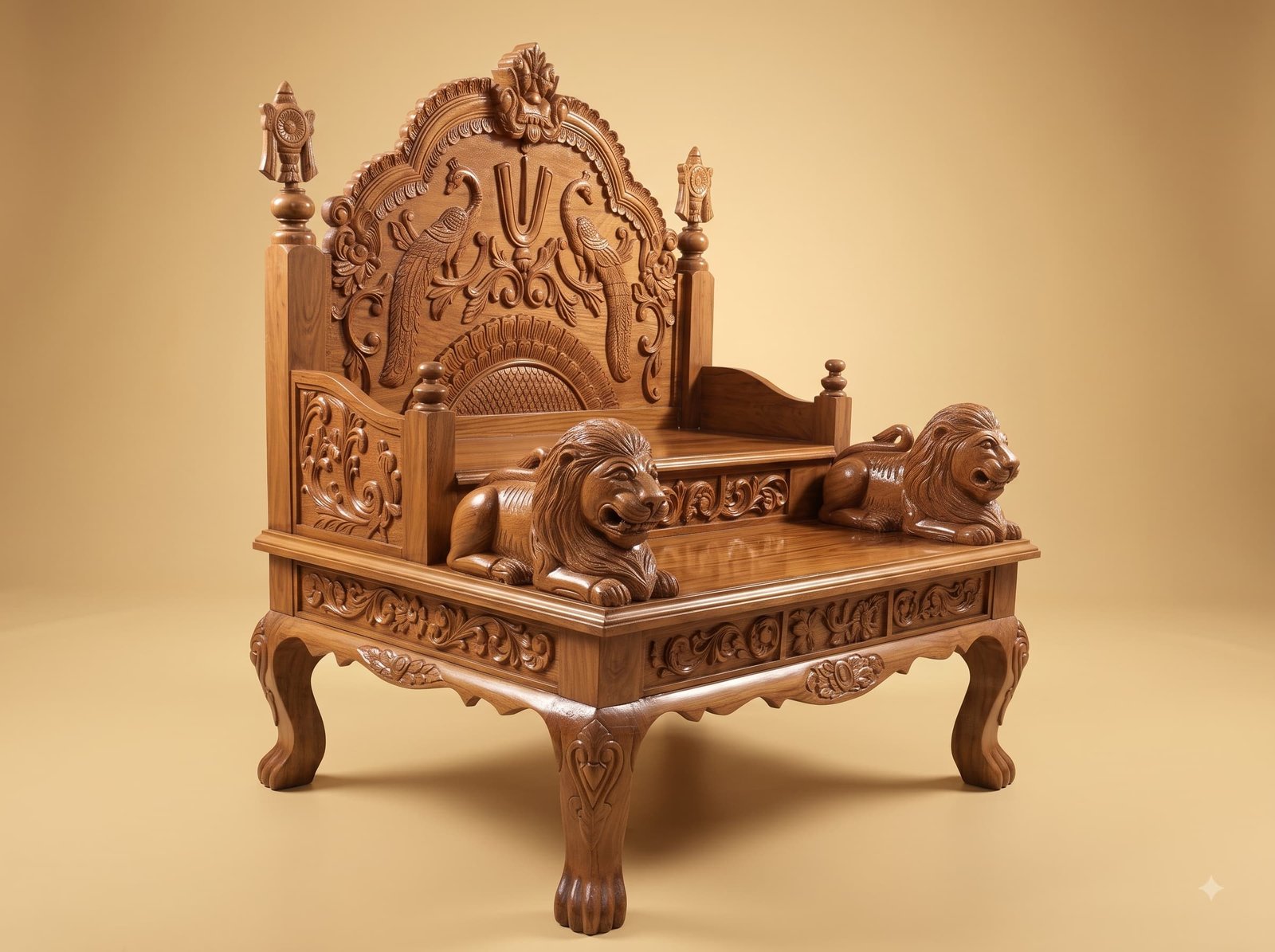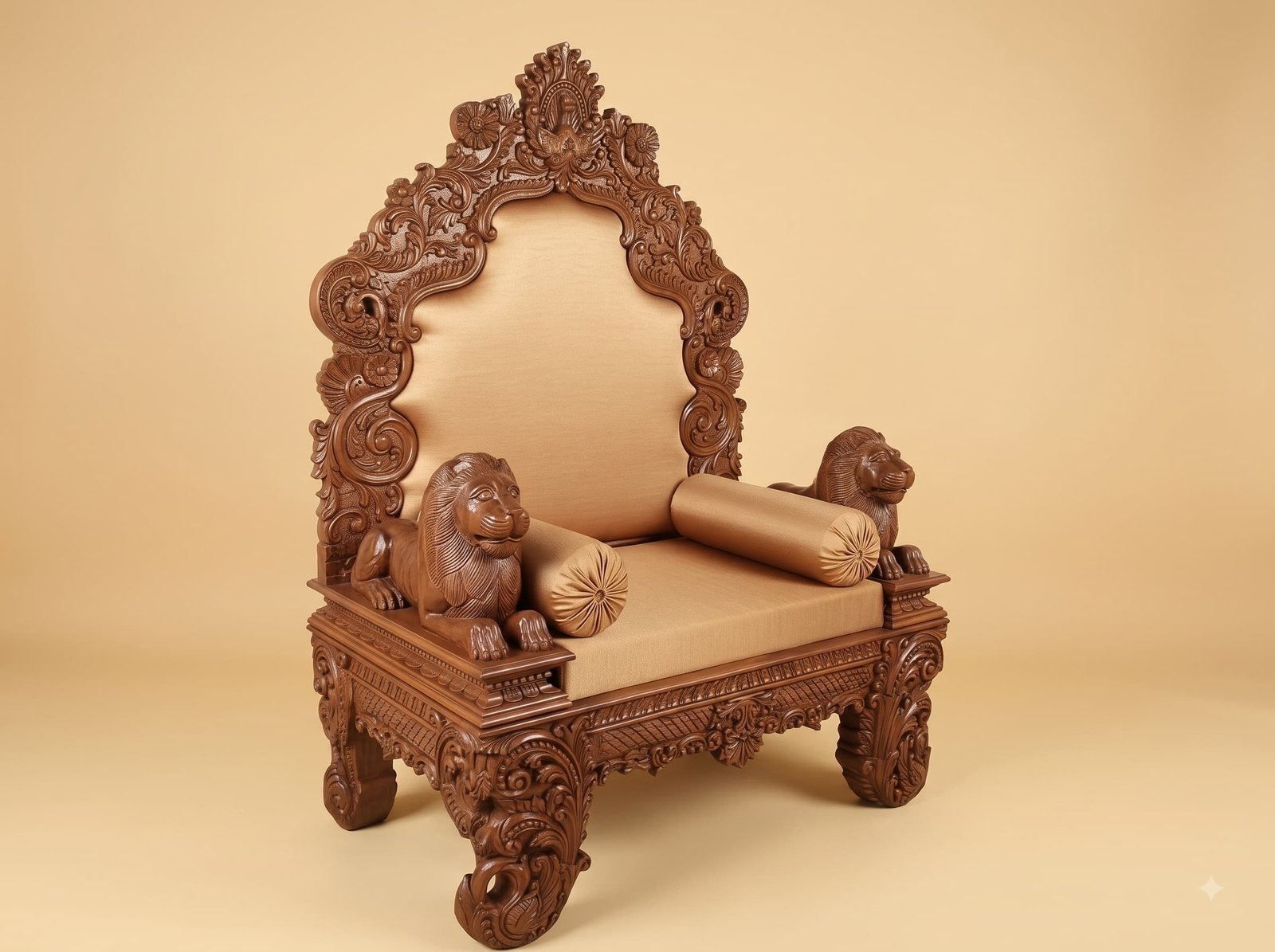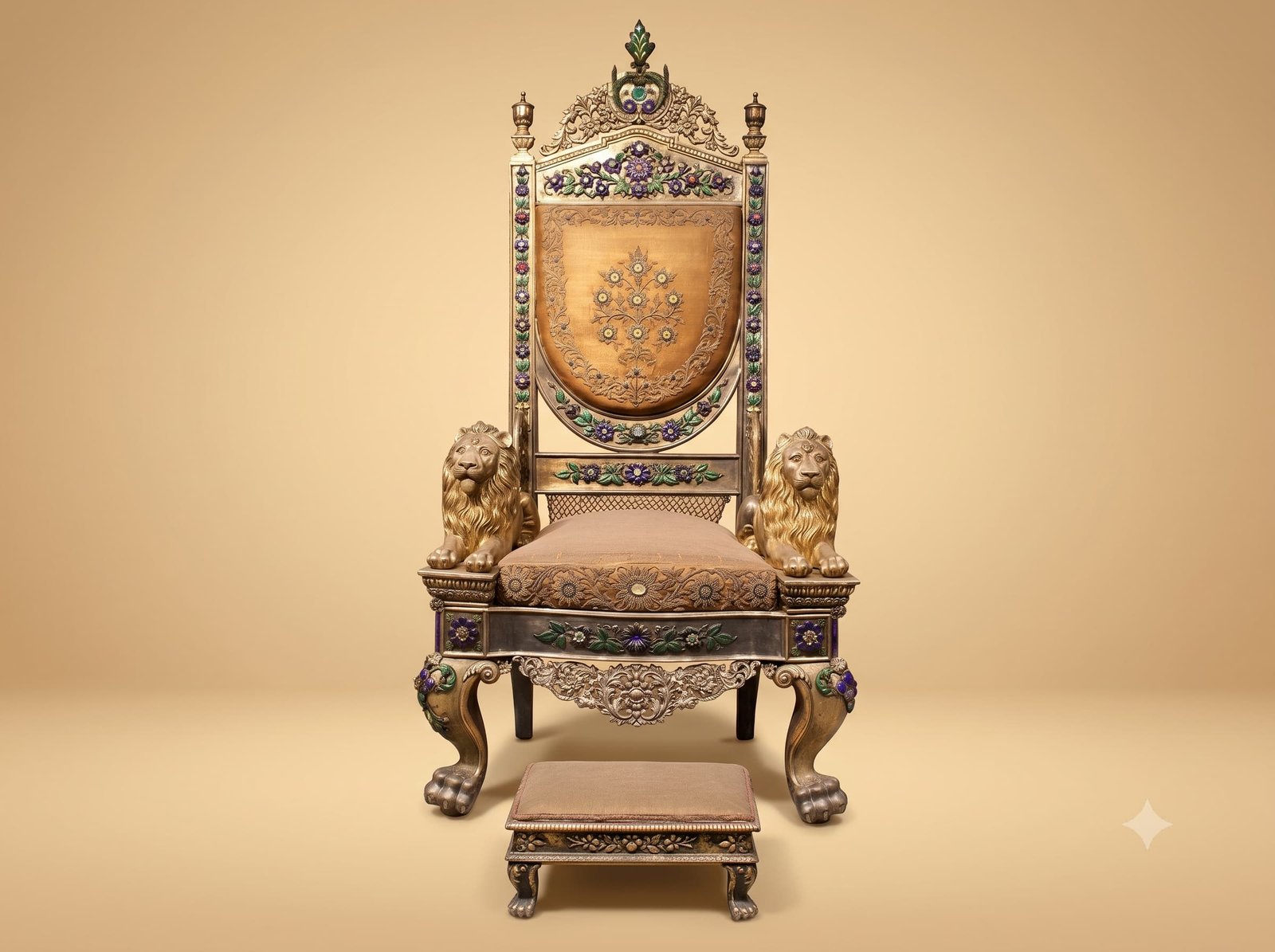
The coloured flower bands running down the stiles and across the rails are not painted onto the surface. They sit in channels cut into it, and the whole effect depends on one thing: the channel being exactly as deep as the ornament is thick, everywhere along its length.
Too shallow anywhere and the band stands proud, catching light along one edge and looking stuck on. Too deep and it sits below the surface in a trough, throwing a shadow line that reads as a mistake. Either error is invisible in a photograph of one flower and glaring across a metre of border.
So the depth is not measured with a rule. A short offcut of the ornament itself is kept beside the work as a gauge, and after each pass the carver lays it into the channel and runs a fingertip across the join. A finger can detect a step of a fraction of a millimetre, far below what the eye picks up under workshop light - which is why this check is done by touch rather than by sight, and done every few inches rather than at the end.
When it is right, the band and the wood read as one surface, and nobody thinks about how the colour got there at all.
 Ask Price On WhatsApp