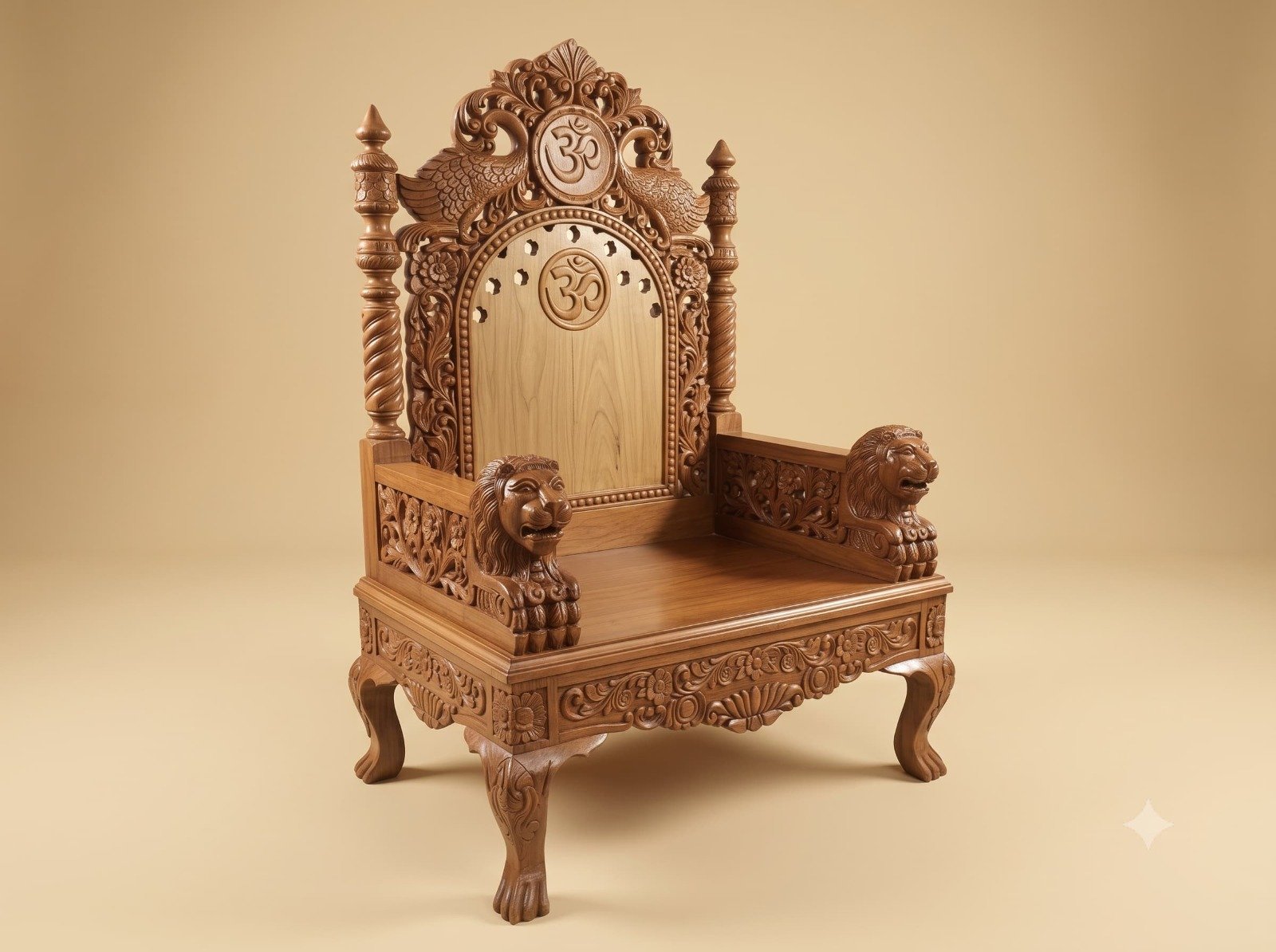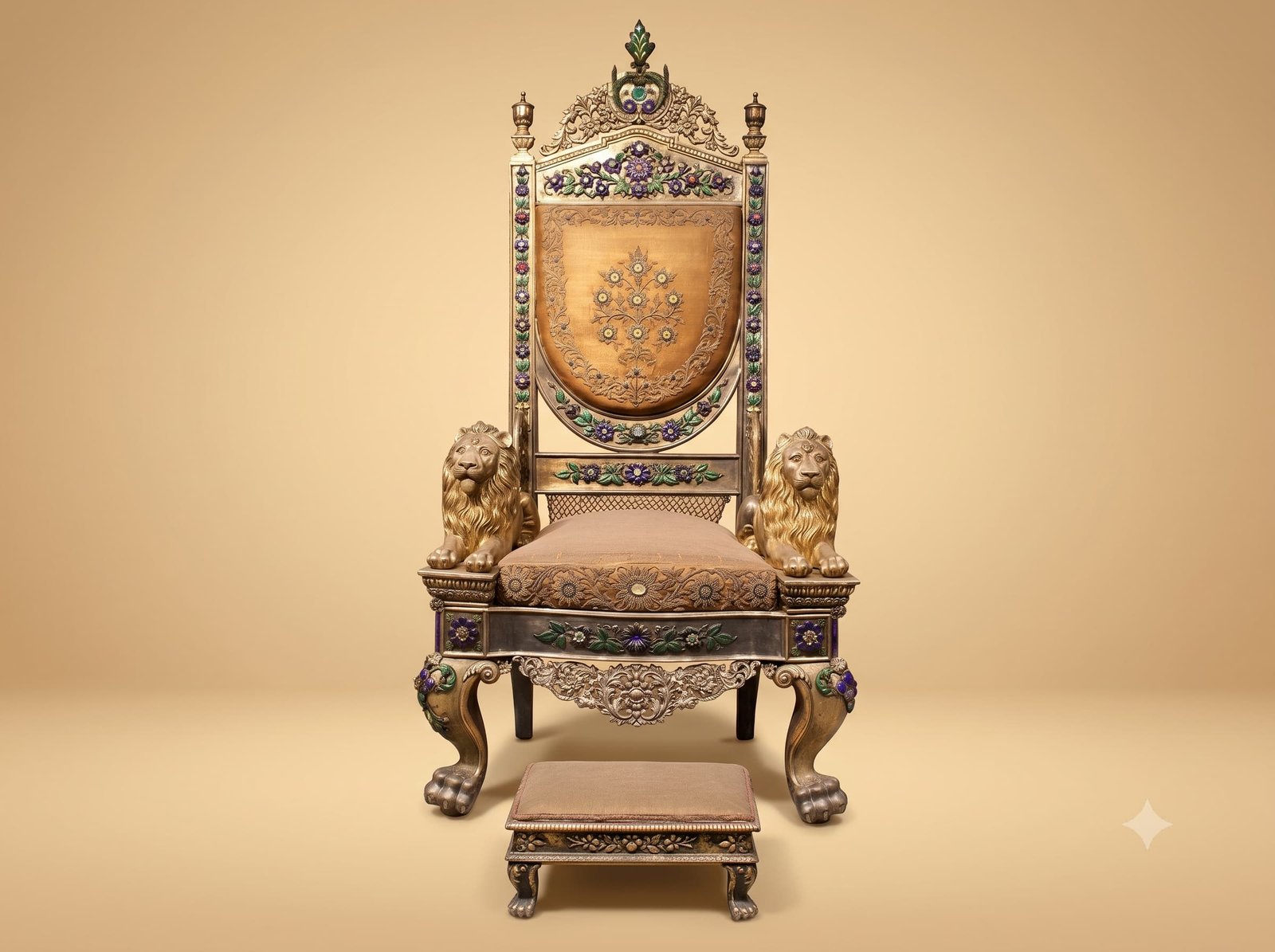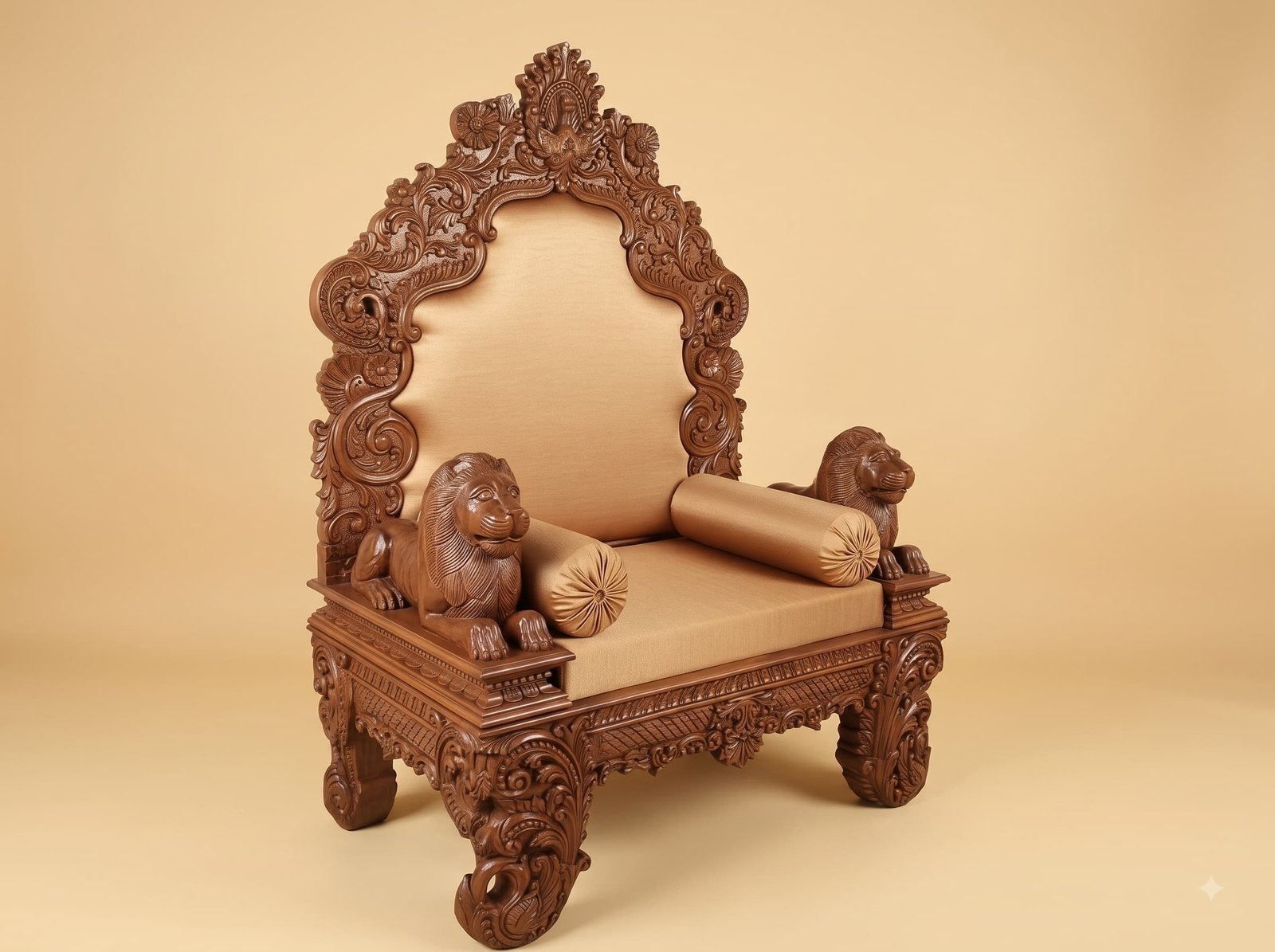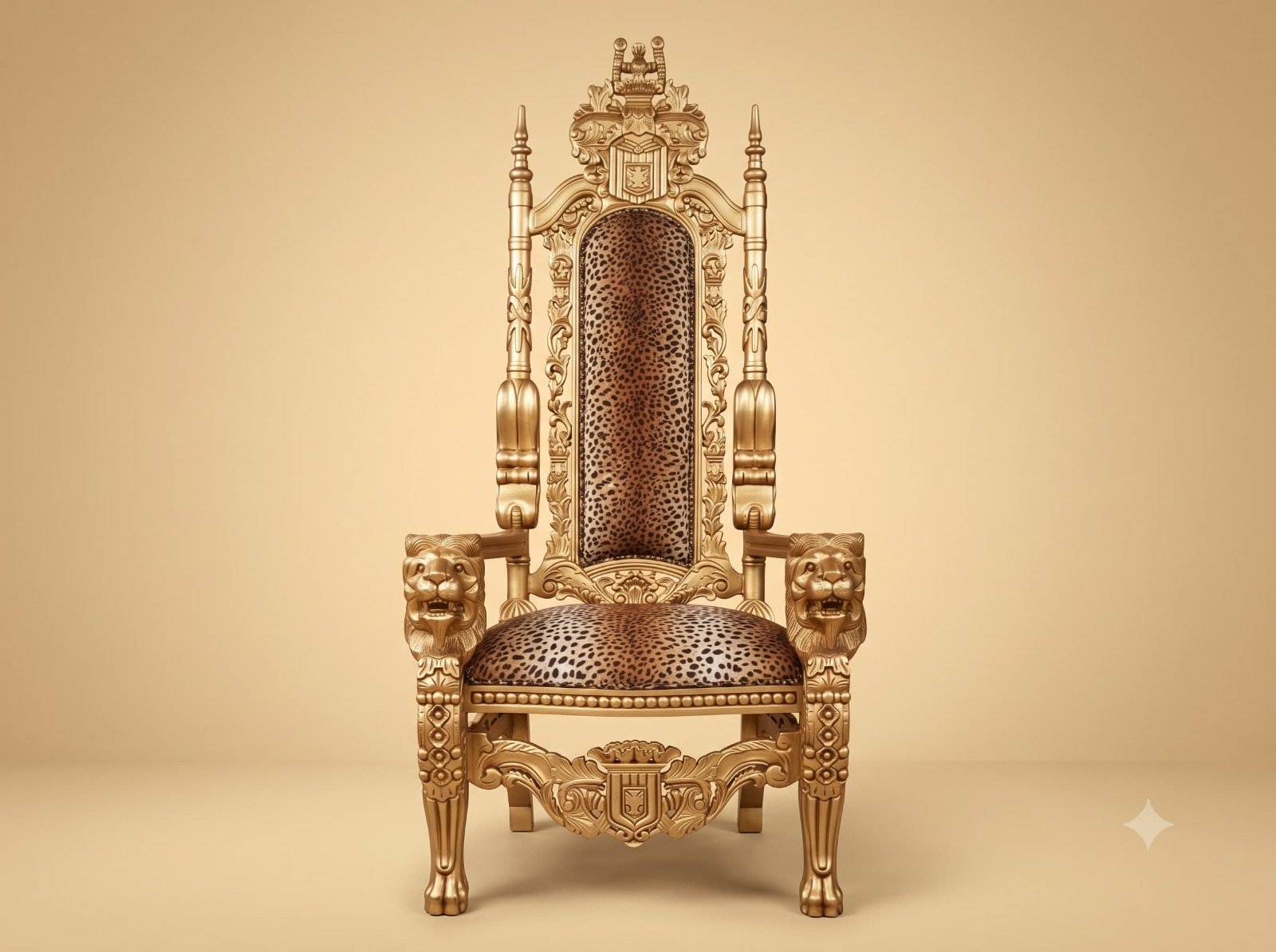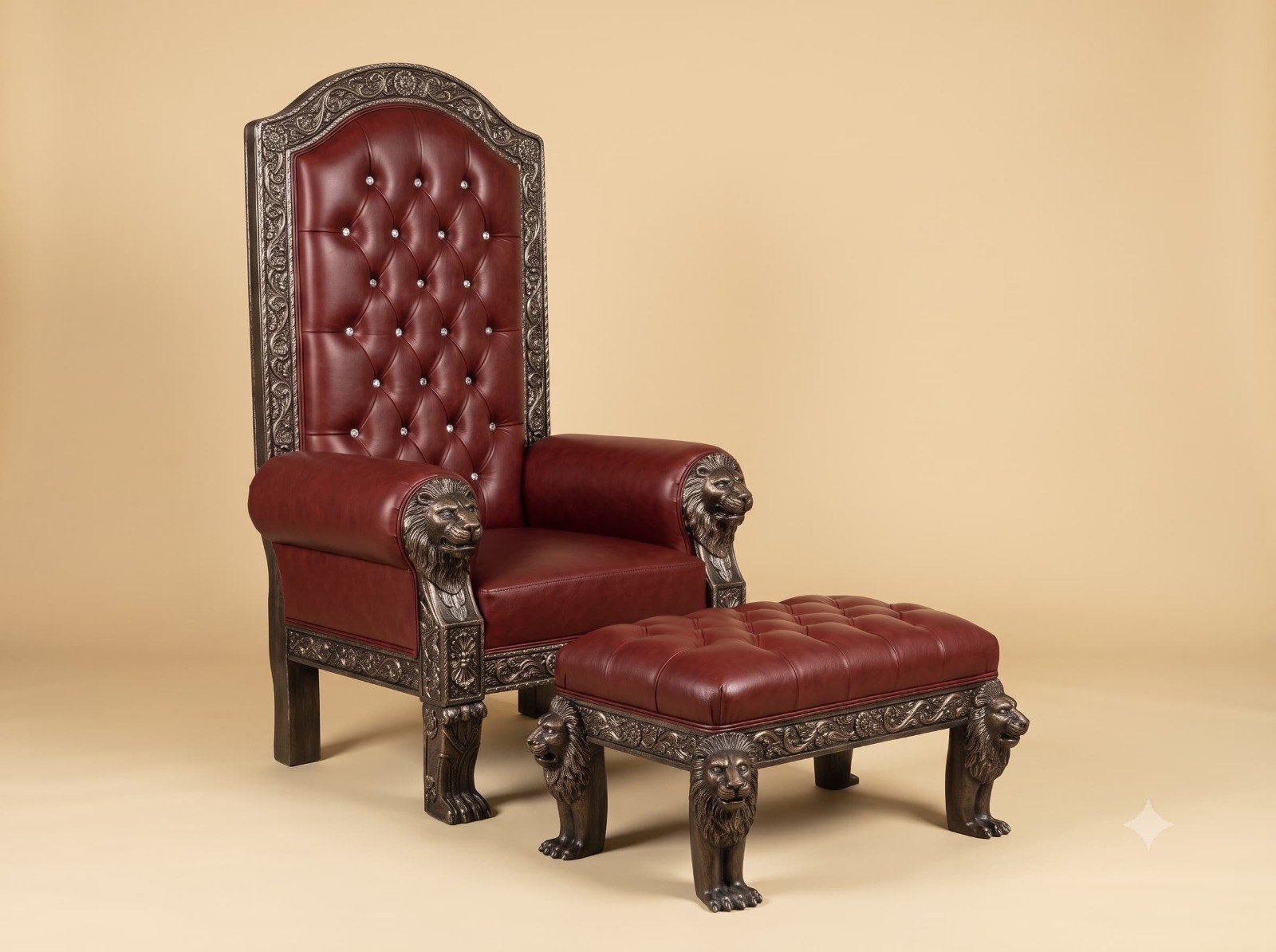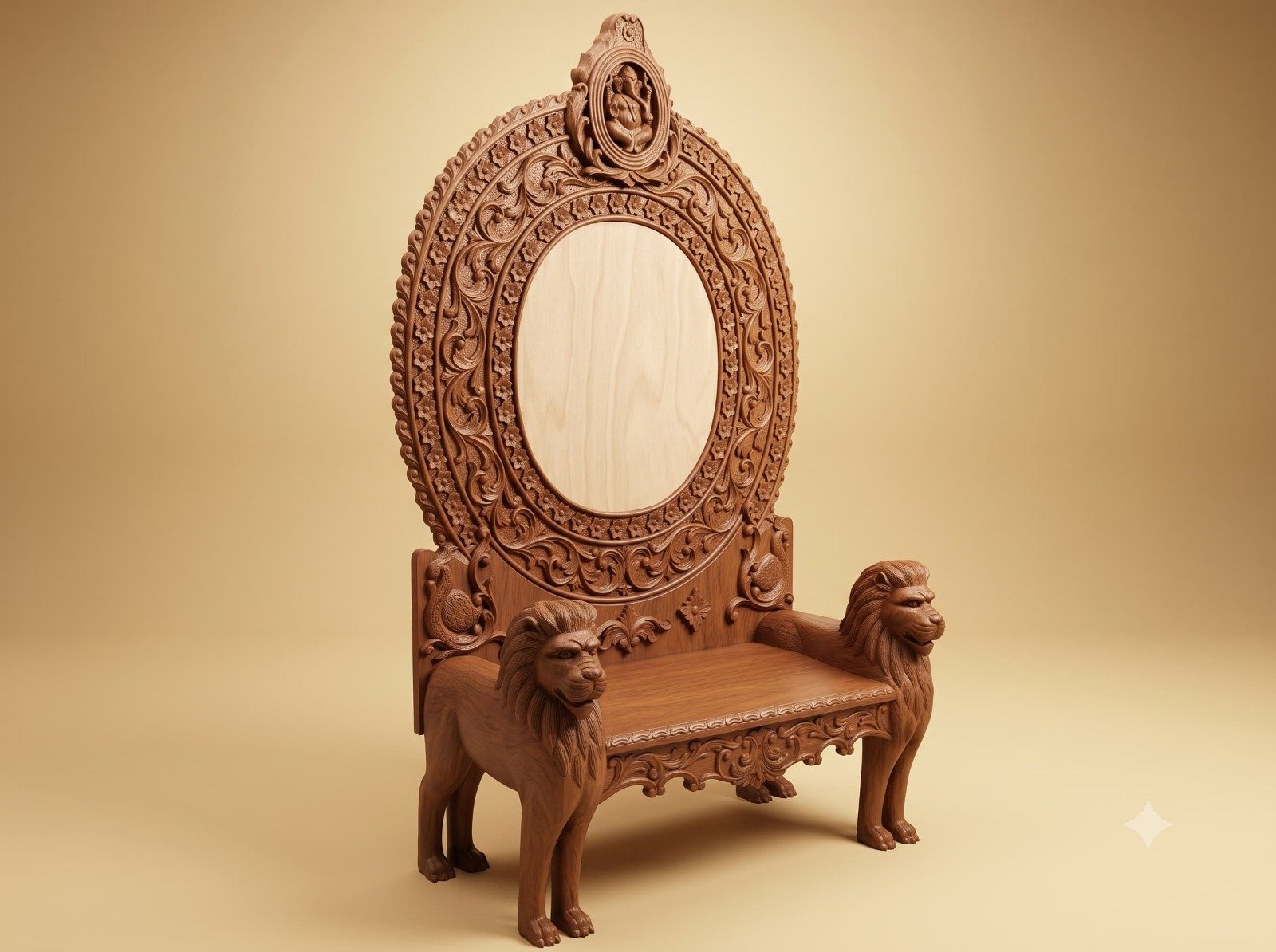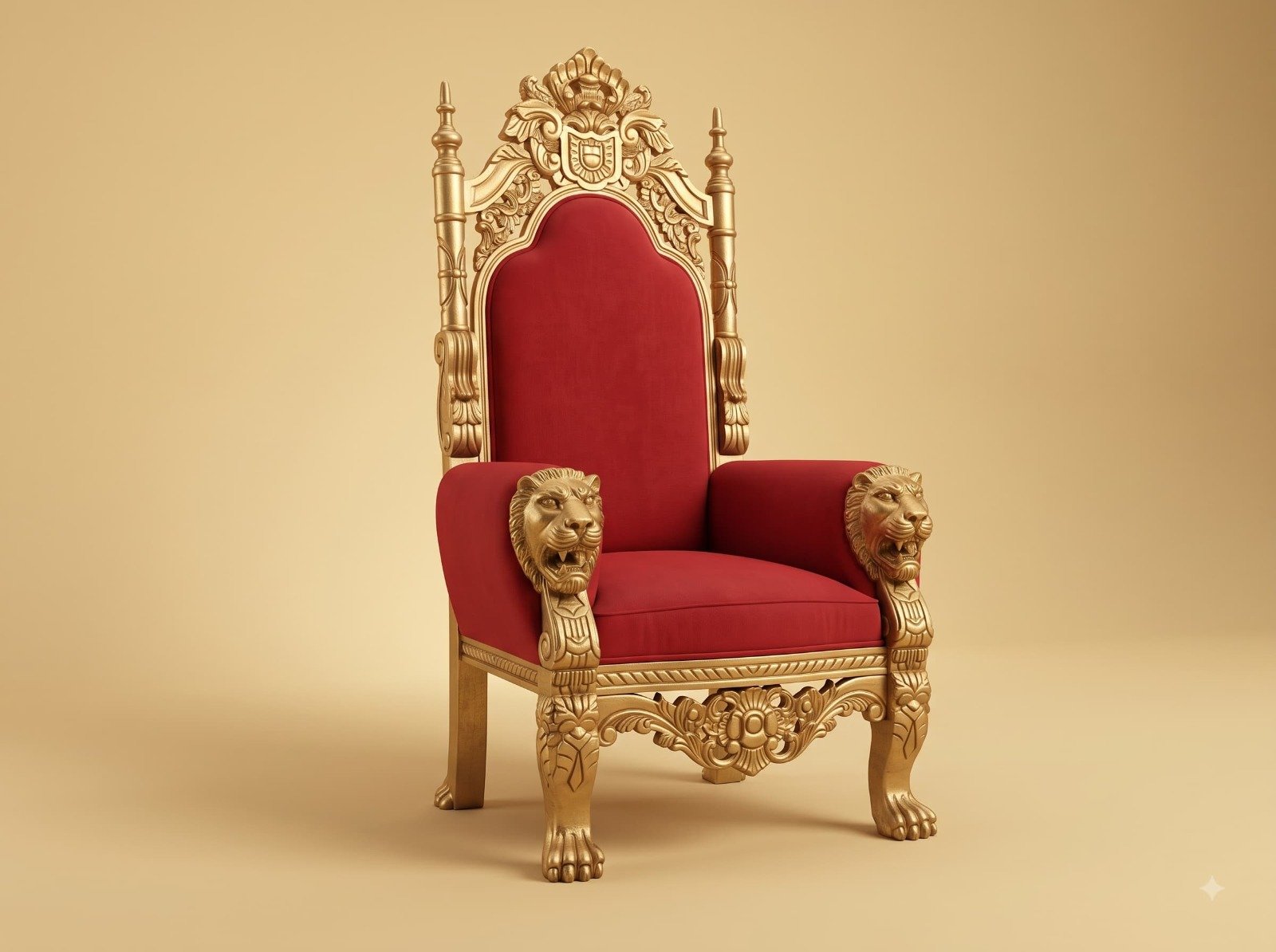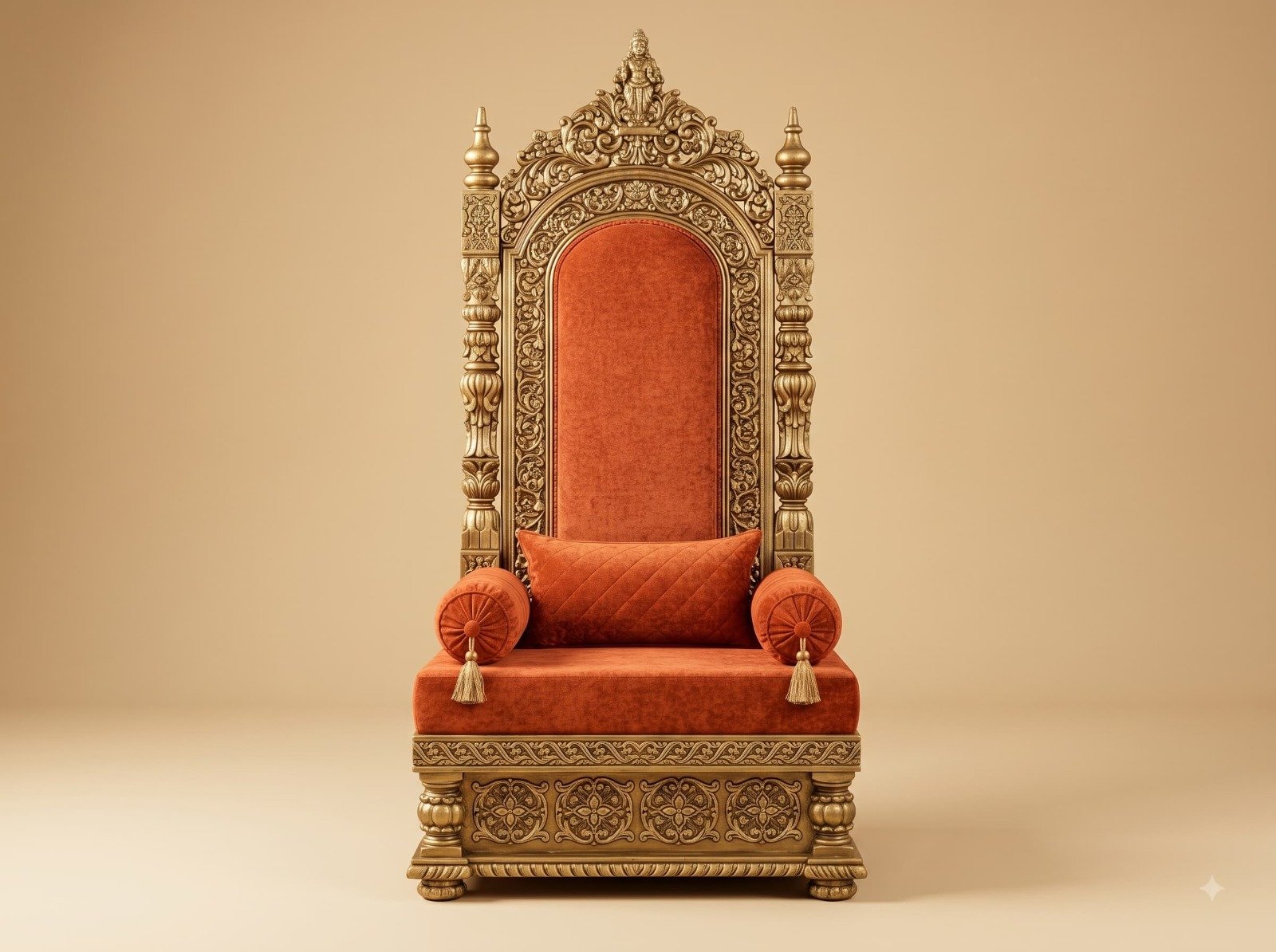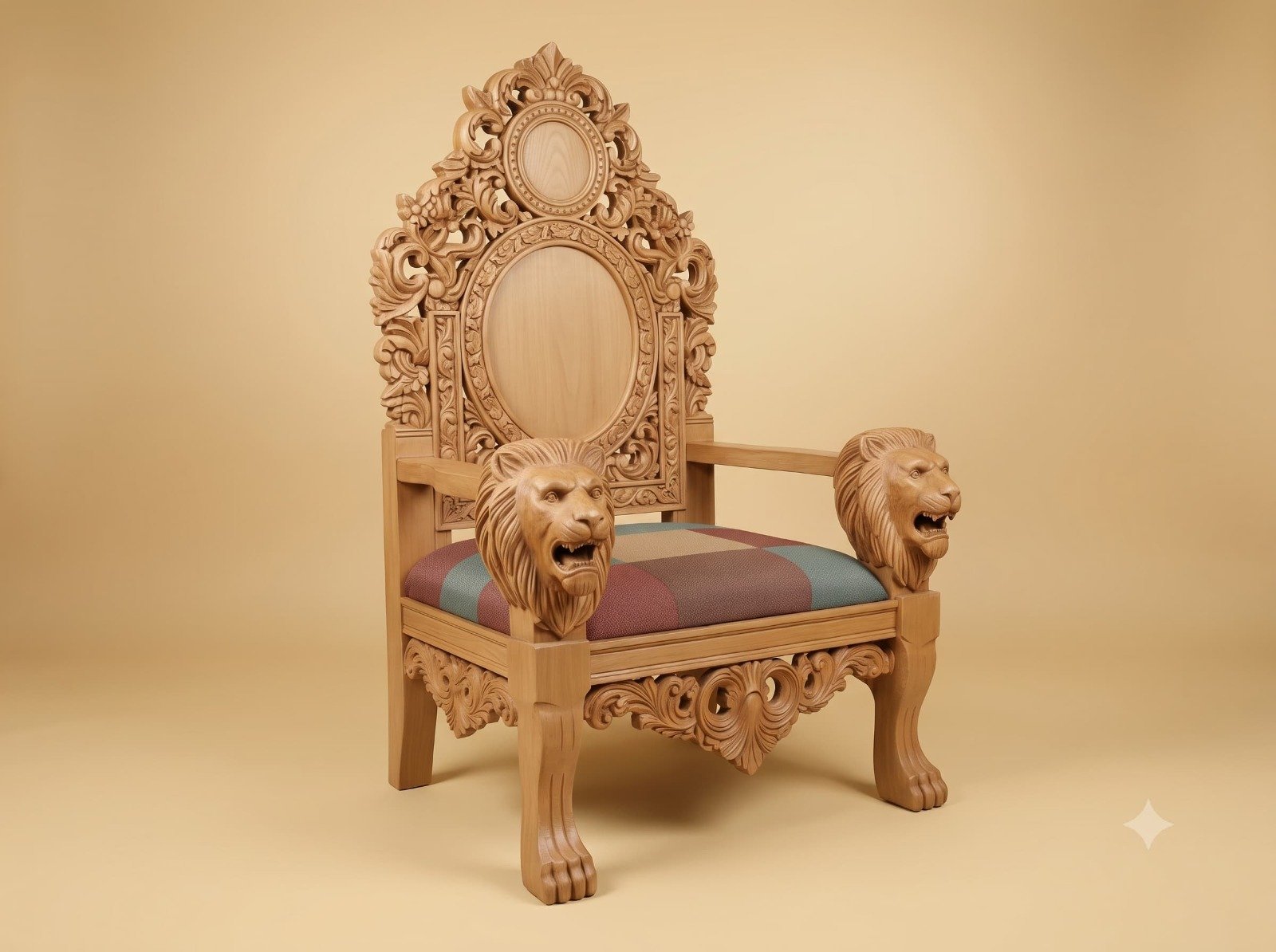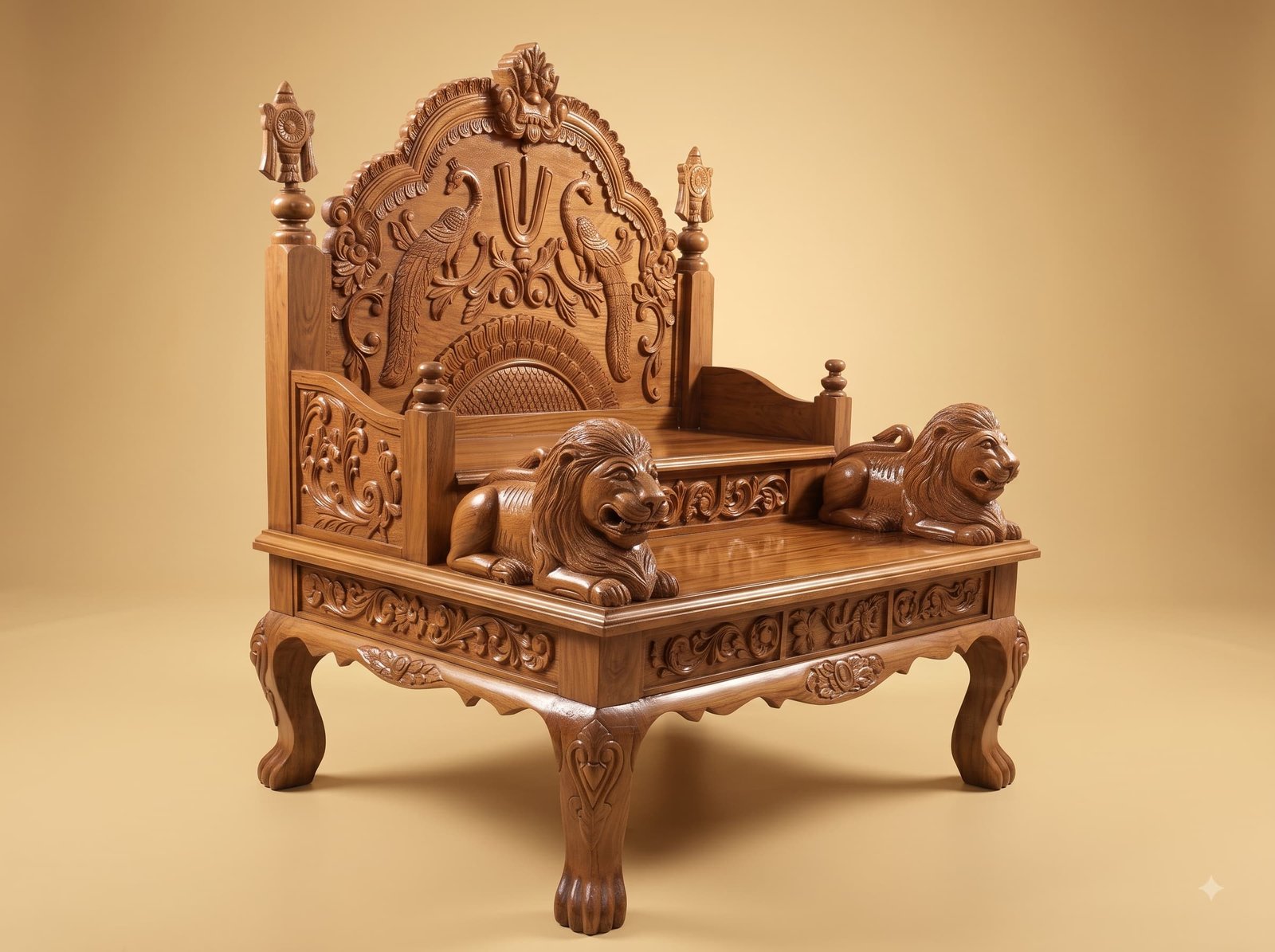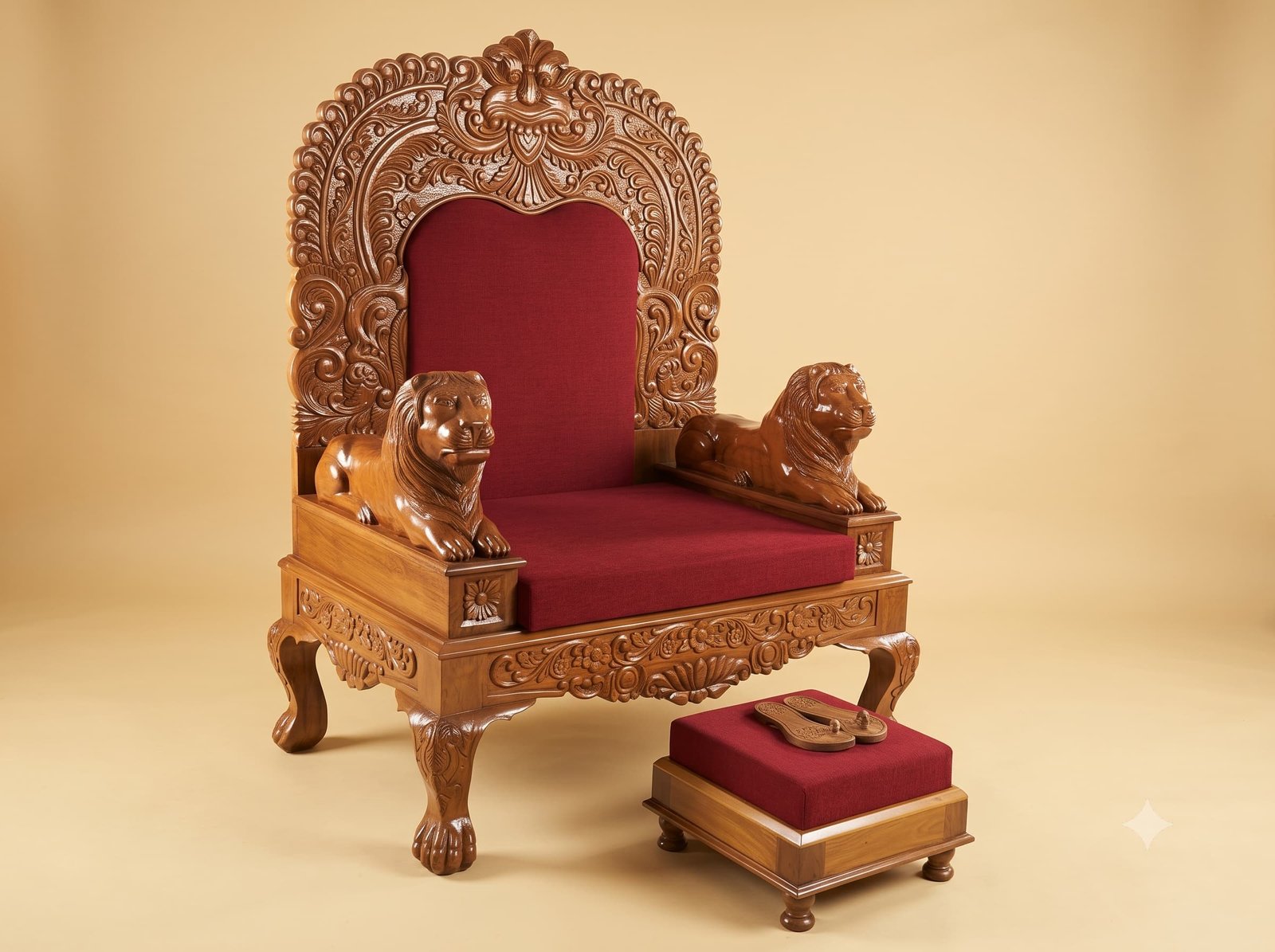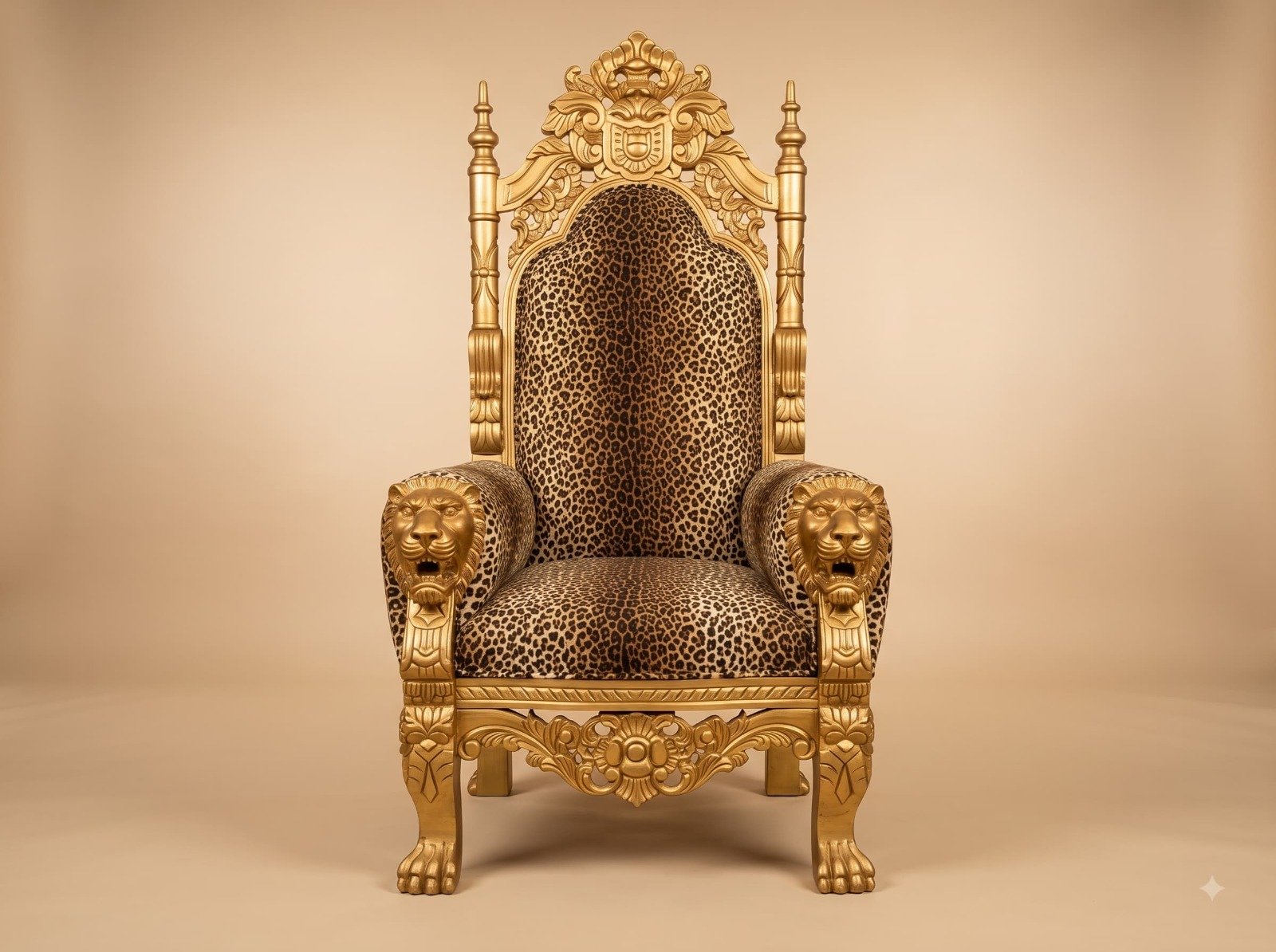
The two lion heads on this chair are mirror images of each other, and they were not carved one after the other.
The obvious way to make a pair is to finish the first, then use it as the model for the second. It never quite works. A carved face is a set of decisions - how far the brow drops, how wide the muzzle sits, how deep the eye is set - and copying a finished piece means re-deciding all of them from a three-dimensional reference rather than a drawing. Small differences creep in, and on a face the eye finds them instantly. One lion always ends up looking slightly kinder than the other.
So the pair is carved together, side by side on the bench, alternating. Both are blocked out, then both have the brows cut, then both the muzzles, then both the manes. Each stage is done twice in immediate succession, with the same tool, the same grip and the same decision fresh in the carver's hand.
They still are not identical - nothing carved by hand is. But they are the same expression, made the same way, minutes apart. That is why they read as a pair from across a room instead of as two lions who happen to be sitting on the same chair.
 Ask Price On WhatsApp