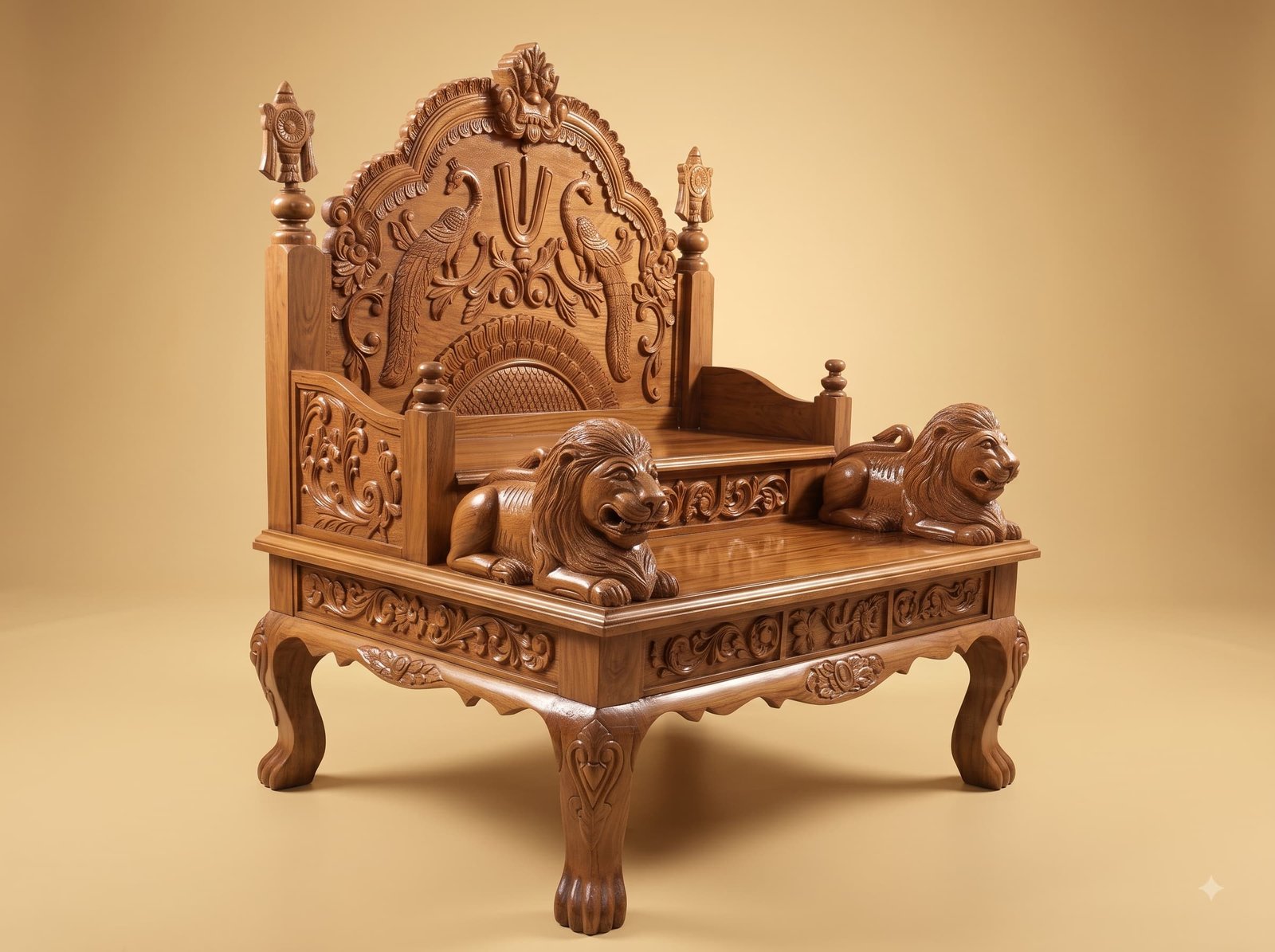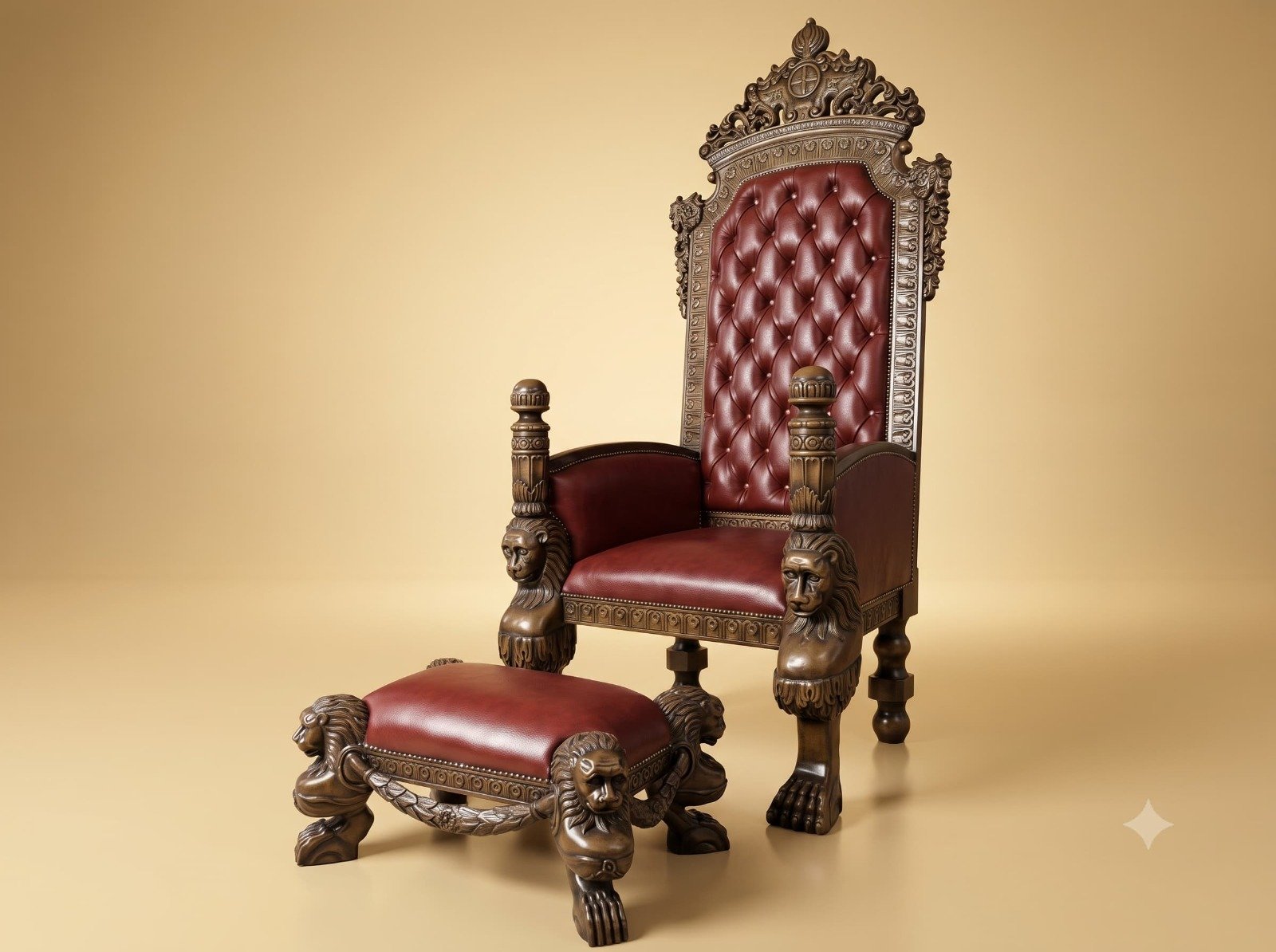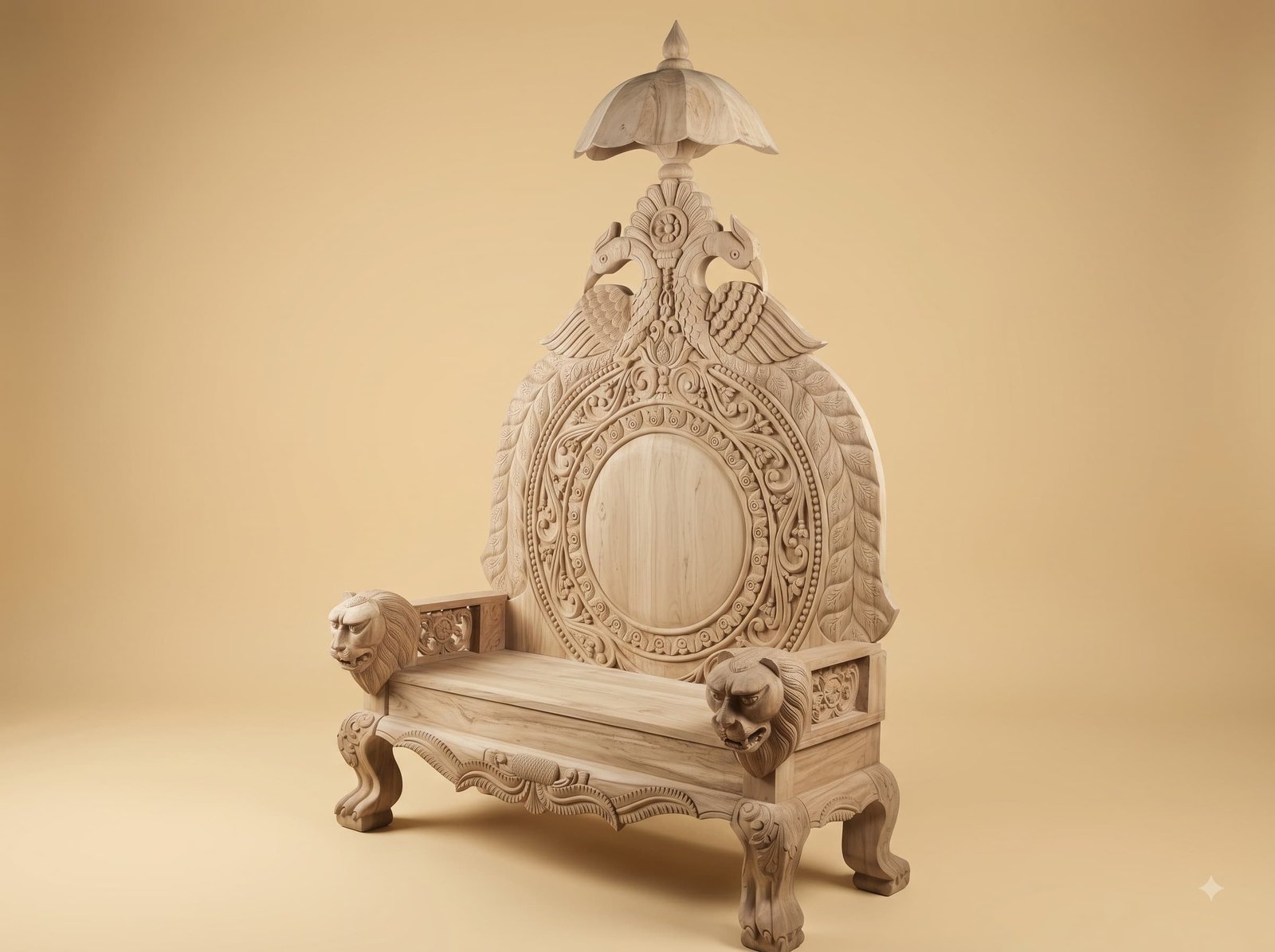
The chhatri on top of this piece is one block of teak, and almost all the work in it happens on the side nobody will ever see.
Carve an umbrella shape as a solid dome and it reads exactly as what it is - a lump of wood with a scalloped edge. What makes it read as a canopy is the underside: it has to be hollowed out so the rim is thin, so that light passes under the edge and the shape appears to be a cover rather than a mass. That hollowing is done blind, from below, with curved tools working into a space the carver cannot easily see into.
The difficulty is keeping the wall an even thickness all the way round. A canopy that is thicker on one side does not just look wrong - it sits on a slender stem, so uneven weight puts a bending load on that stem permanently, in one direction. The carver checks the thickness constantly by feel, pinching the rim between finger and thumb and comparing one point against the point opposite.
When it is done, the canopy is light, even, and balanced over its stem - and the only visible evidence of any of it is a rim that looks impossibly thin from across the room.
 Ask Price On WhatsApp