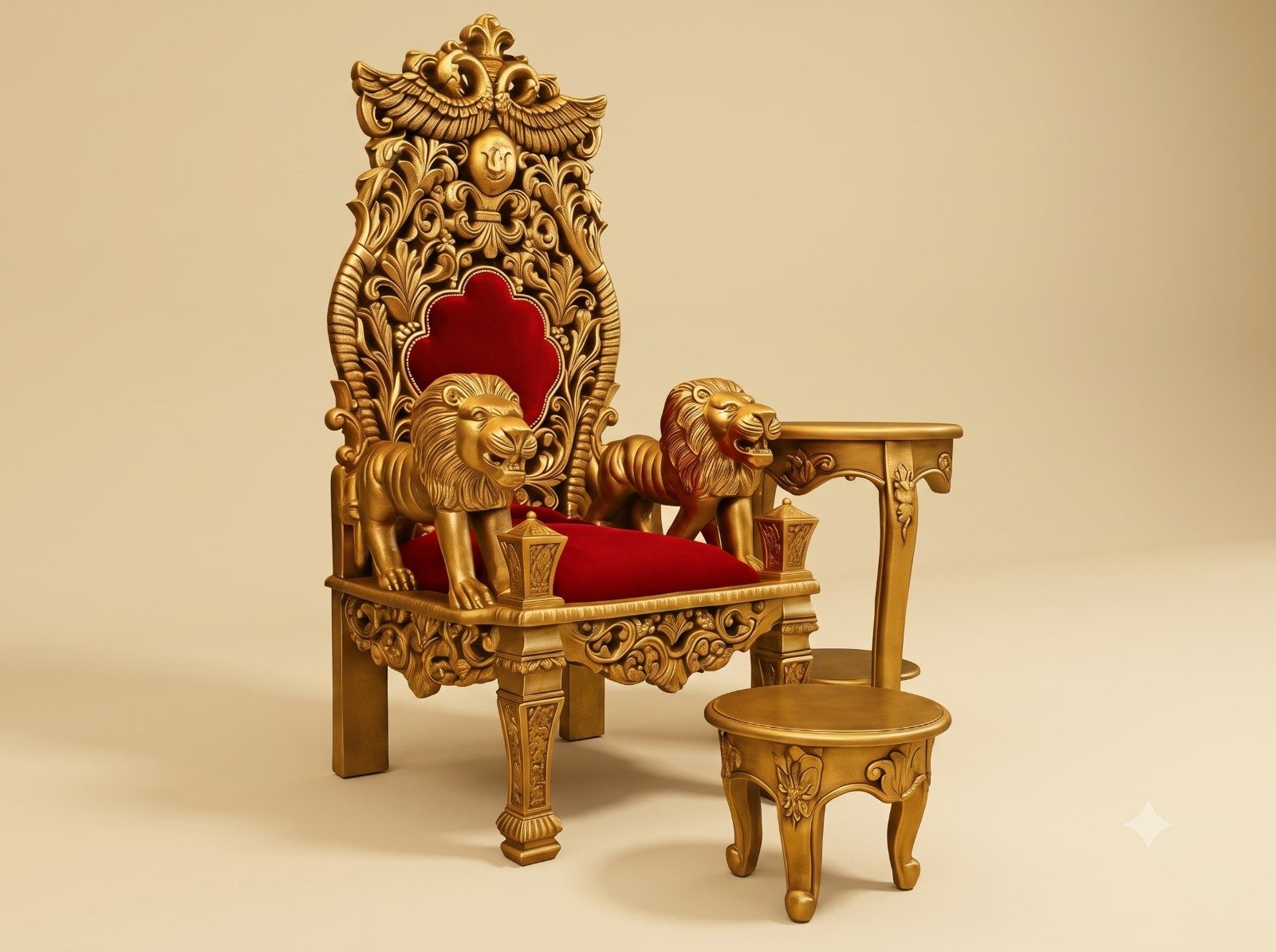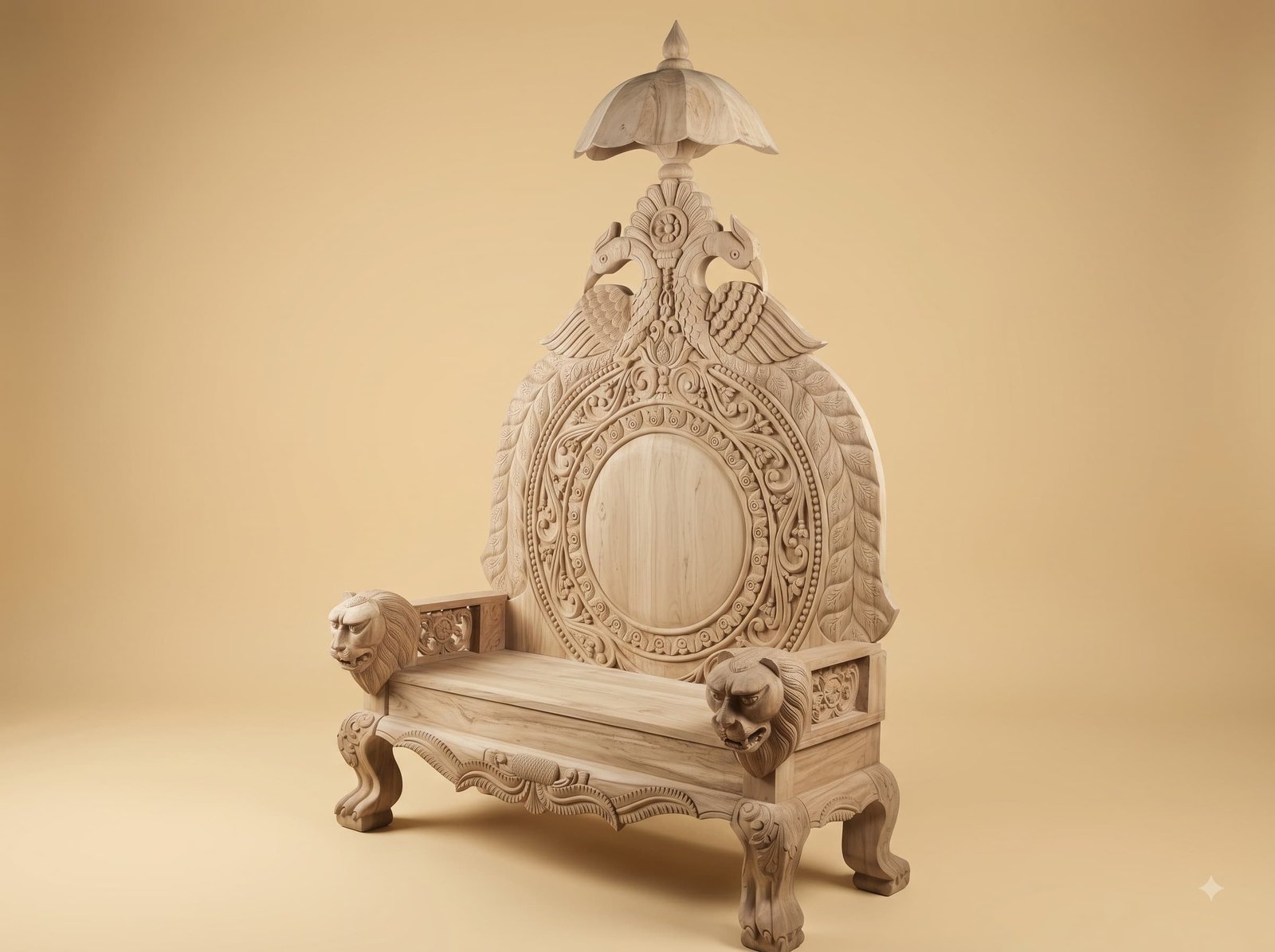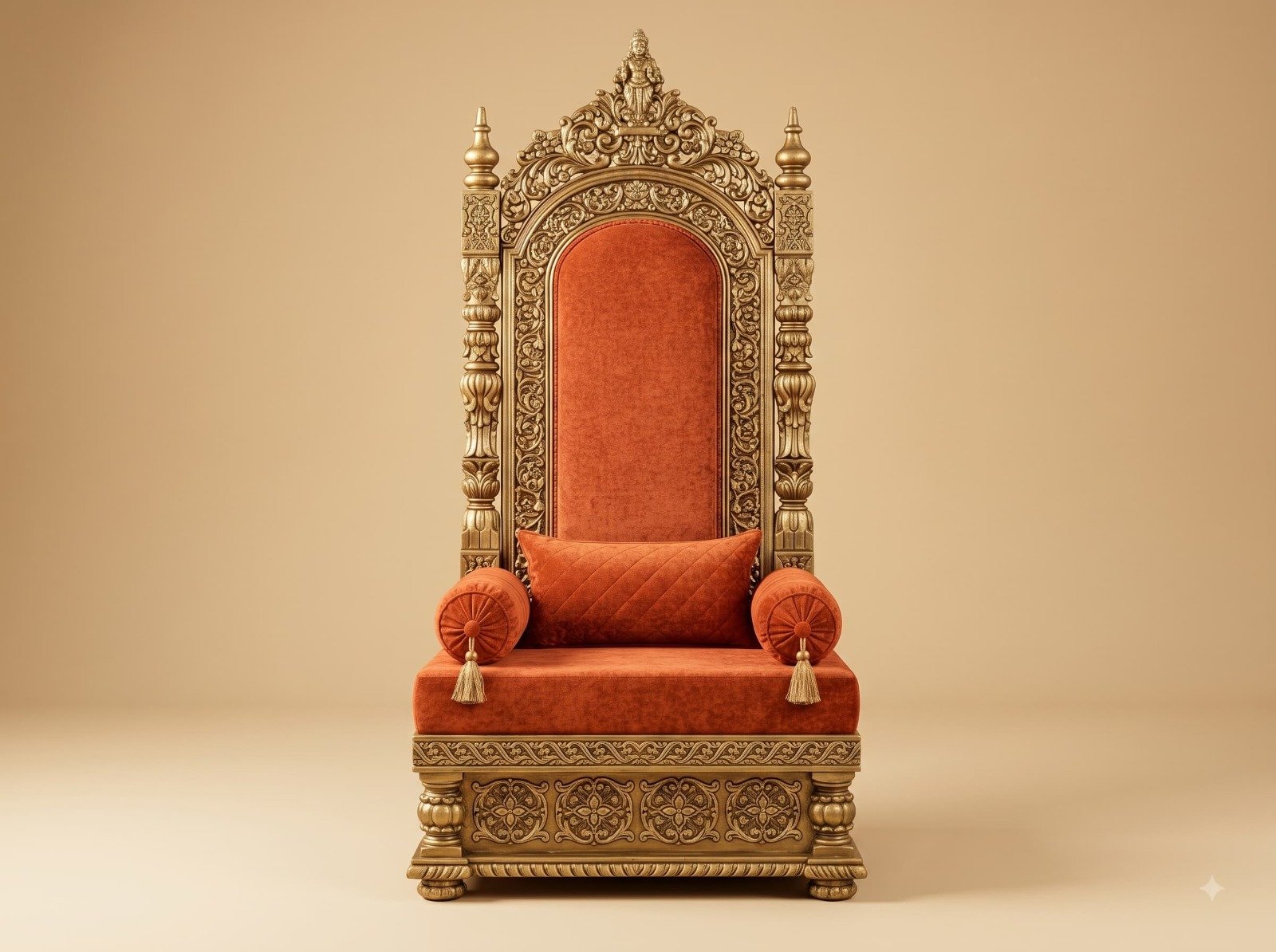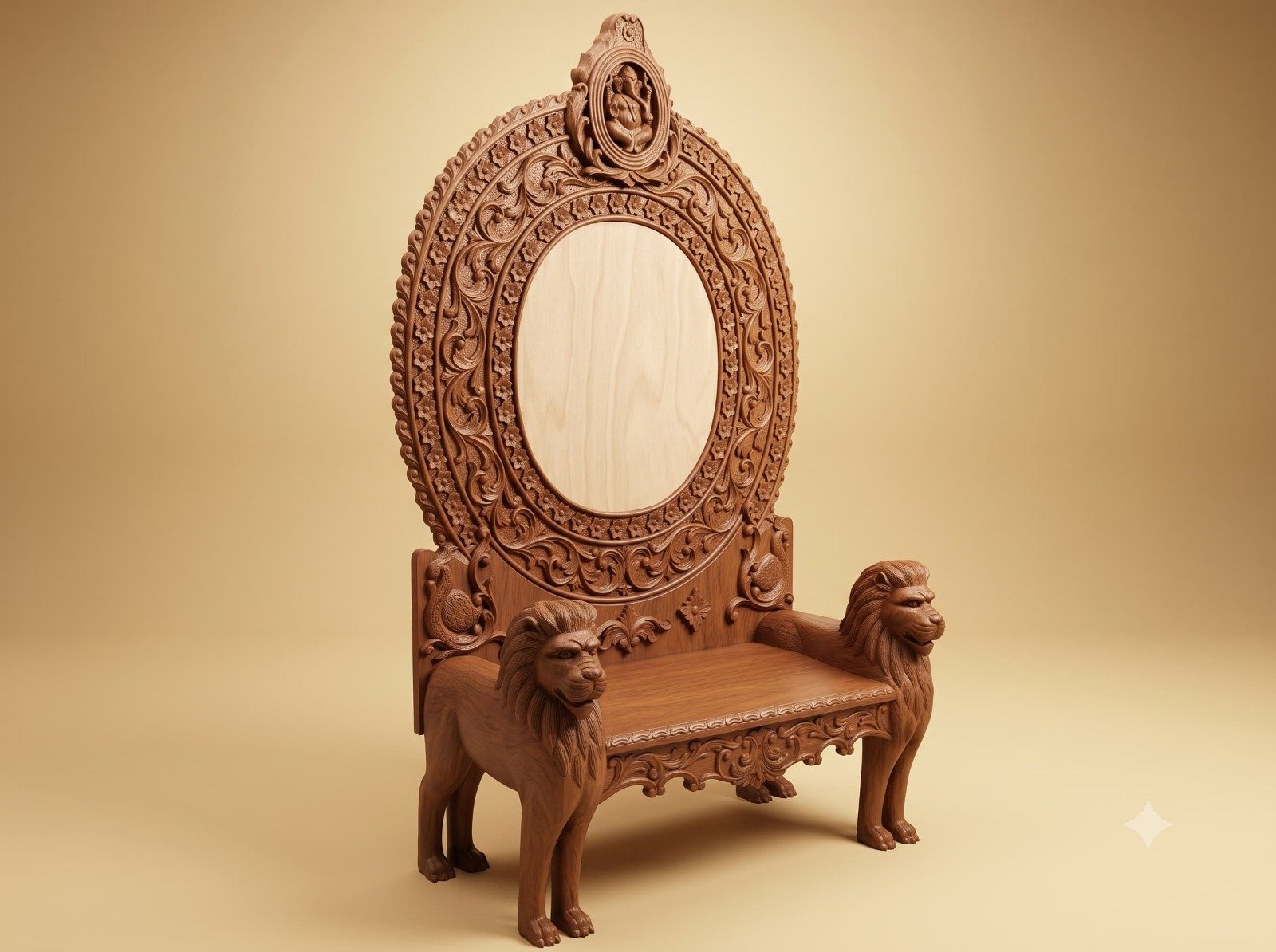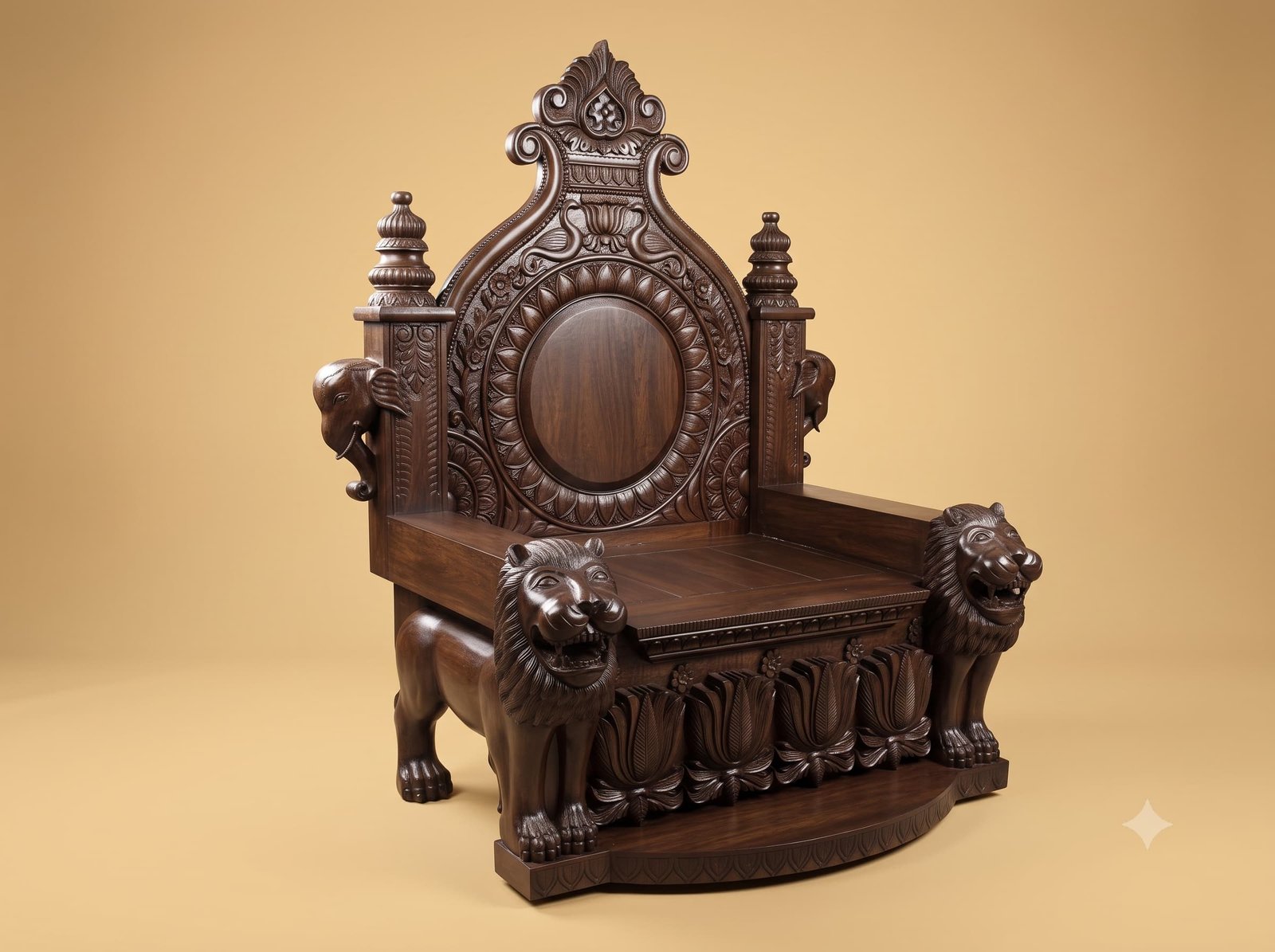
Count the lotus petals around the back medallion on this singhasan. Every one has the same sweep, the same depth and the same lift at the tip - and none of them was drawn from a template.
The trick is older and simpler than a template. A carver's gouges each have a fixed curve, numbered by how tightly they bend. To cut a petal, the carver chooses the gouge whose curve already matches the petal's edge, stands it upright on the marked line and taps it once. The tool itself is the pattern. The next petal uses the same gouge, so the next edge is identical - not approximately, but exactly, because it is the same steel making the same shape.
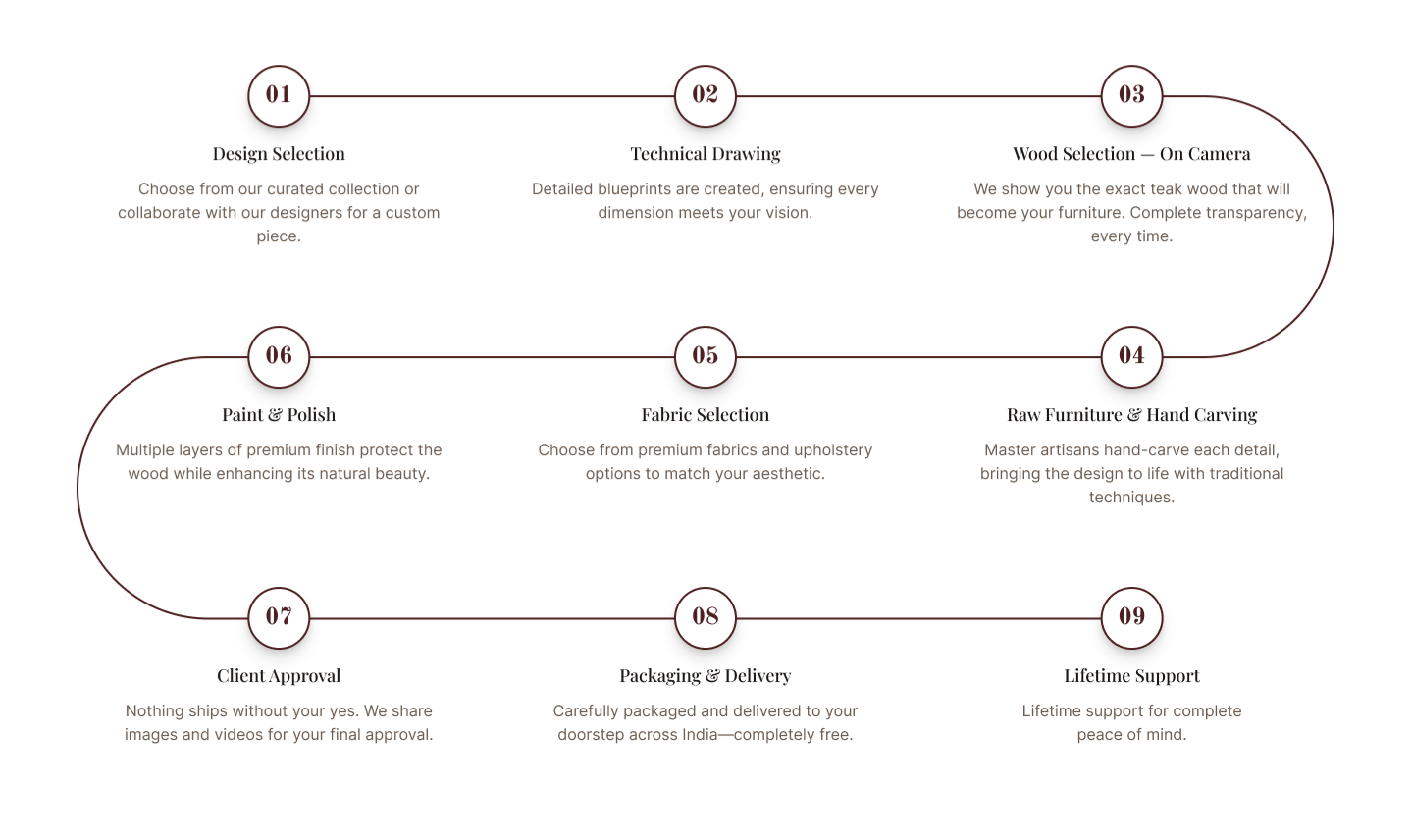
The whole border is set out that way: one gouge for the outer sweep, another for the hollow inside the petal, a third for the point where two petals meet. A row of a hundred petals uses three tools and no drawing at all after the first setting-out.
It is why hand carving from a workshop like ours has an evenness people often assume must be machine work. It is not. It is the discipline of choosing the right tool and then not deviating from it for the length of an entire border.
 Ask Price On WhatsApp