A Southern Roofline, and Room to Lay Things Out
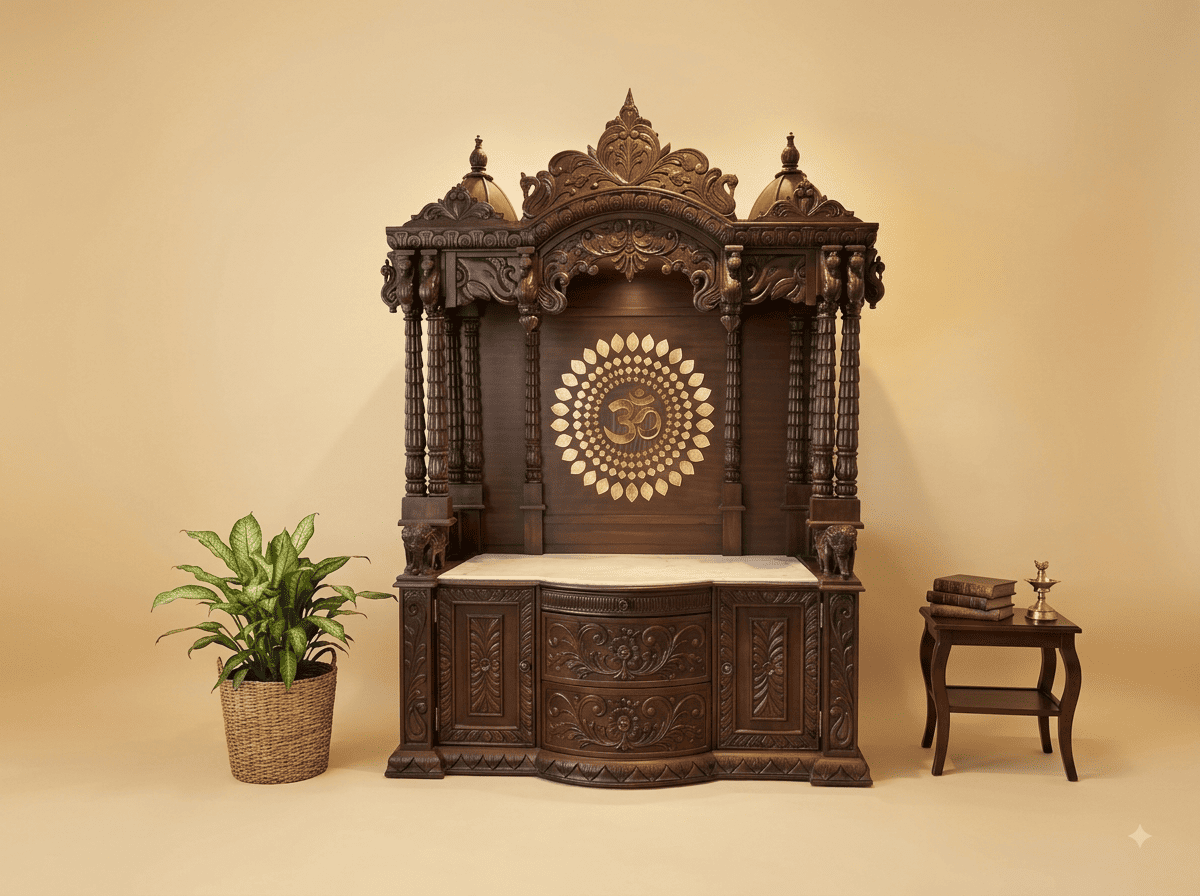
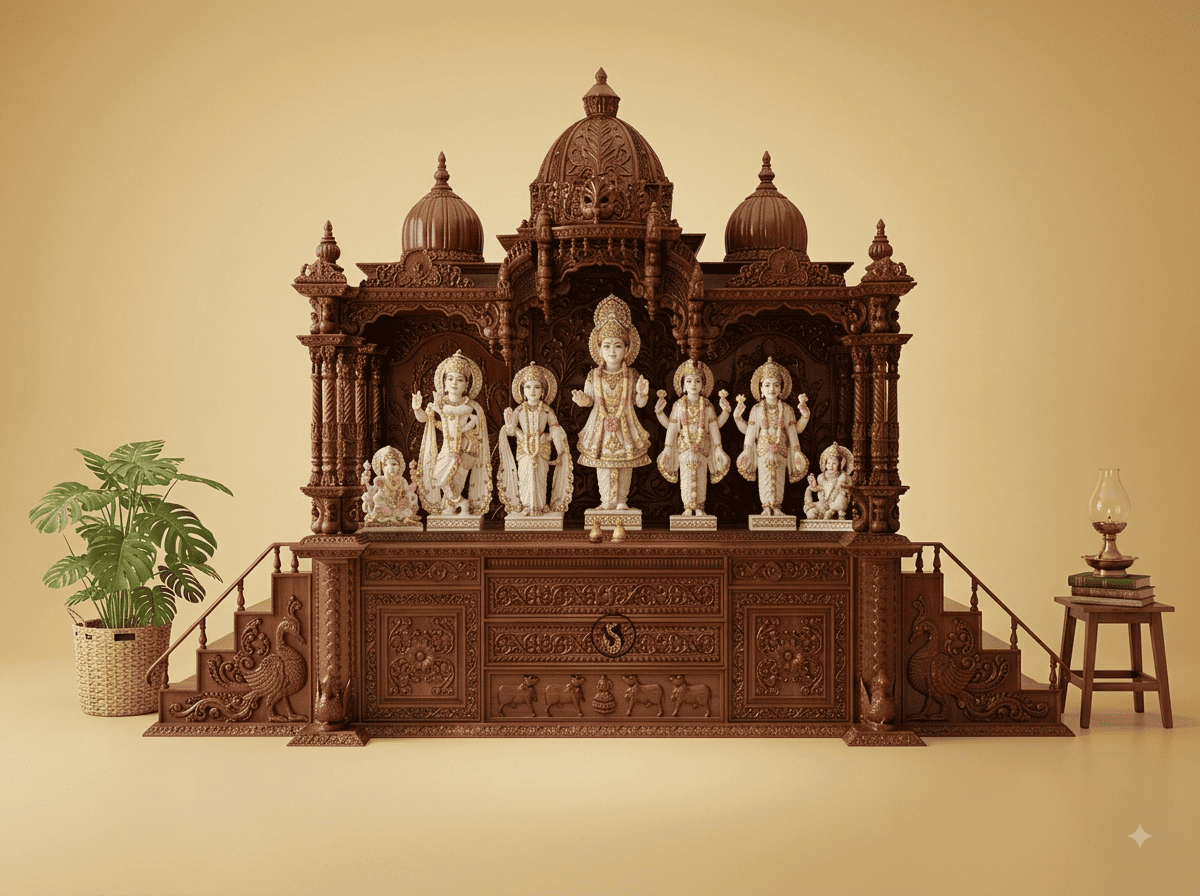
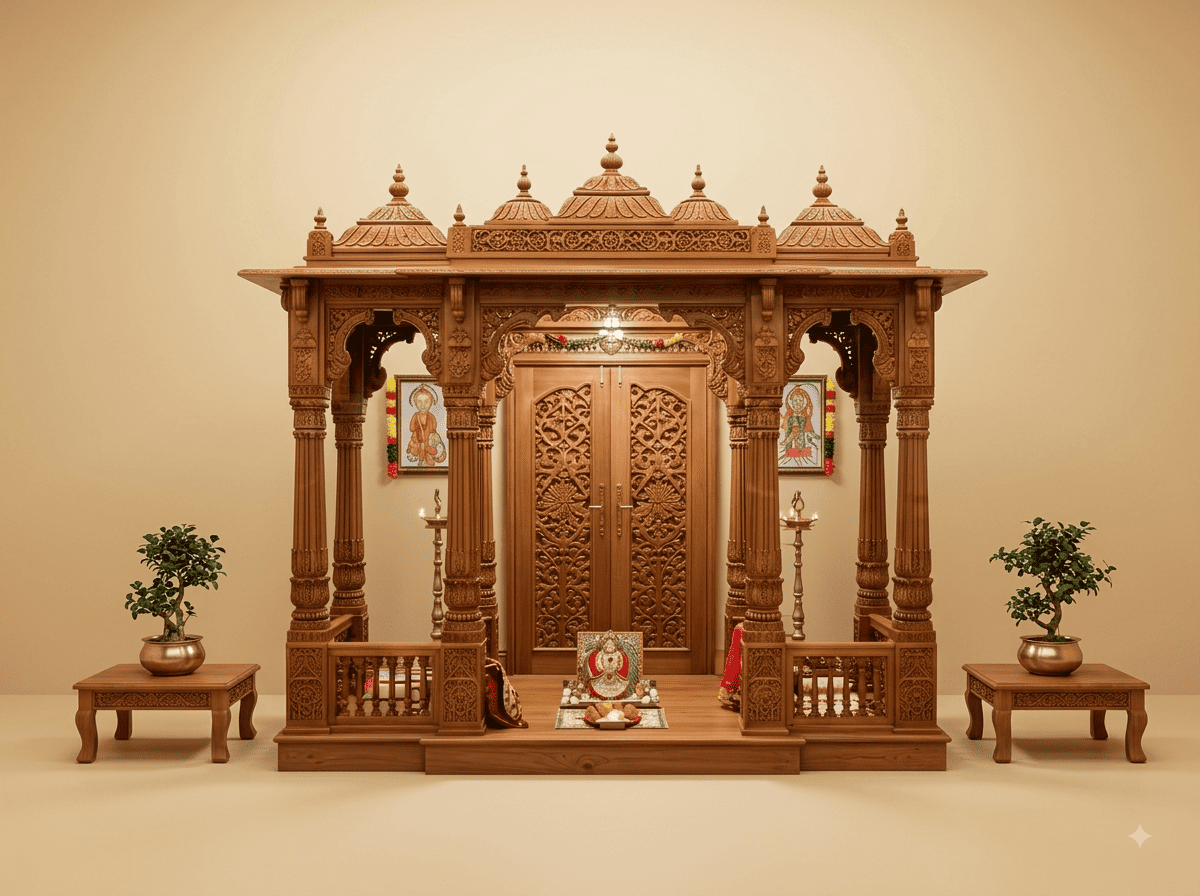
Temple architecture in India speaks in more than one accent. In the north the shikhar curves upward to a point; in the south the vimana rises in stepped tiers, each a little smaller than the one below, to a kalash at the summit. This mandir carries the southern form, flanked by ribbed domes at the corners, and it gives the piece a distinctly different silhouette from the rounded shikhars elsewhere in our range. Families who follow southern practice recognise it immediately, and many others simply prefer the geometry of stepped tiers.
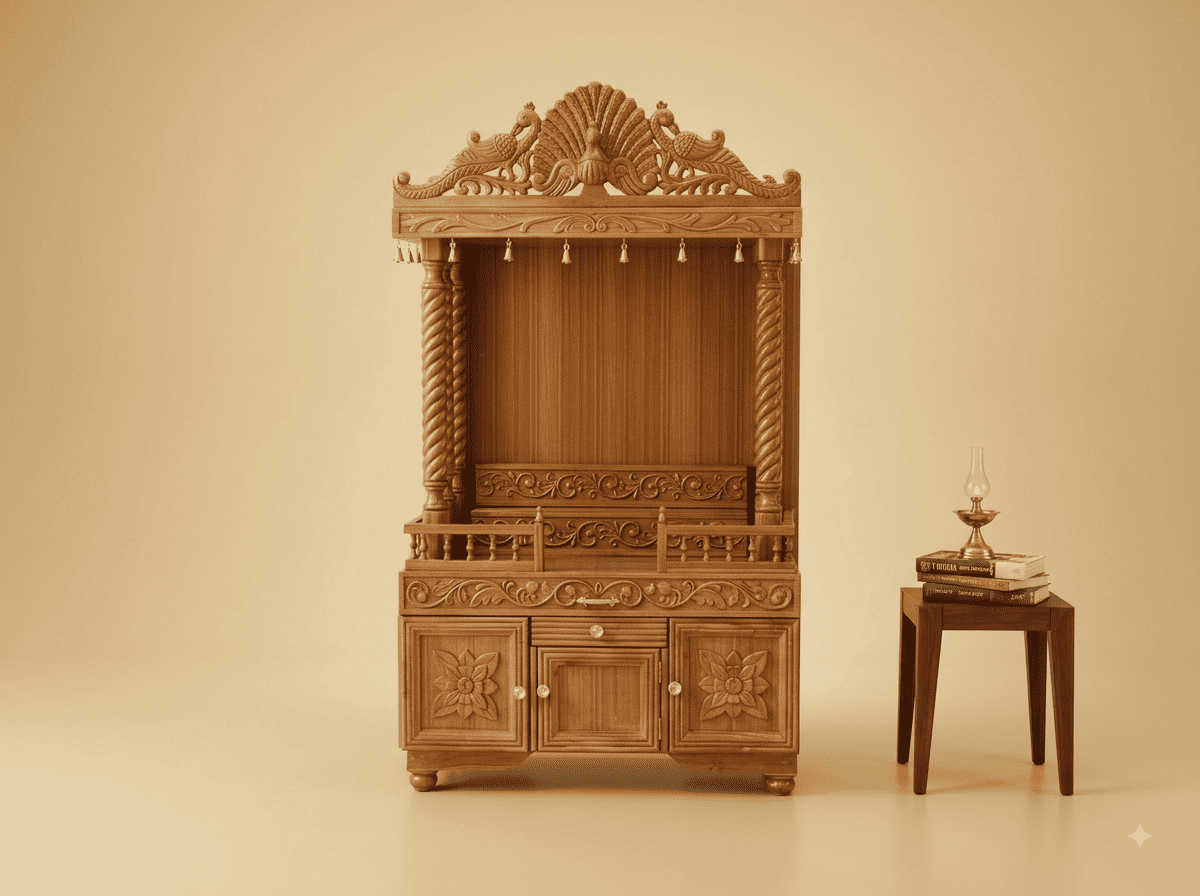
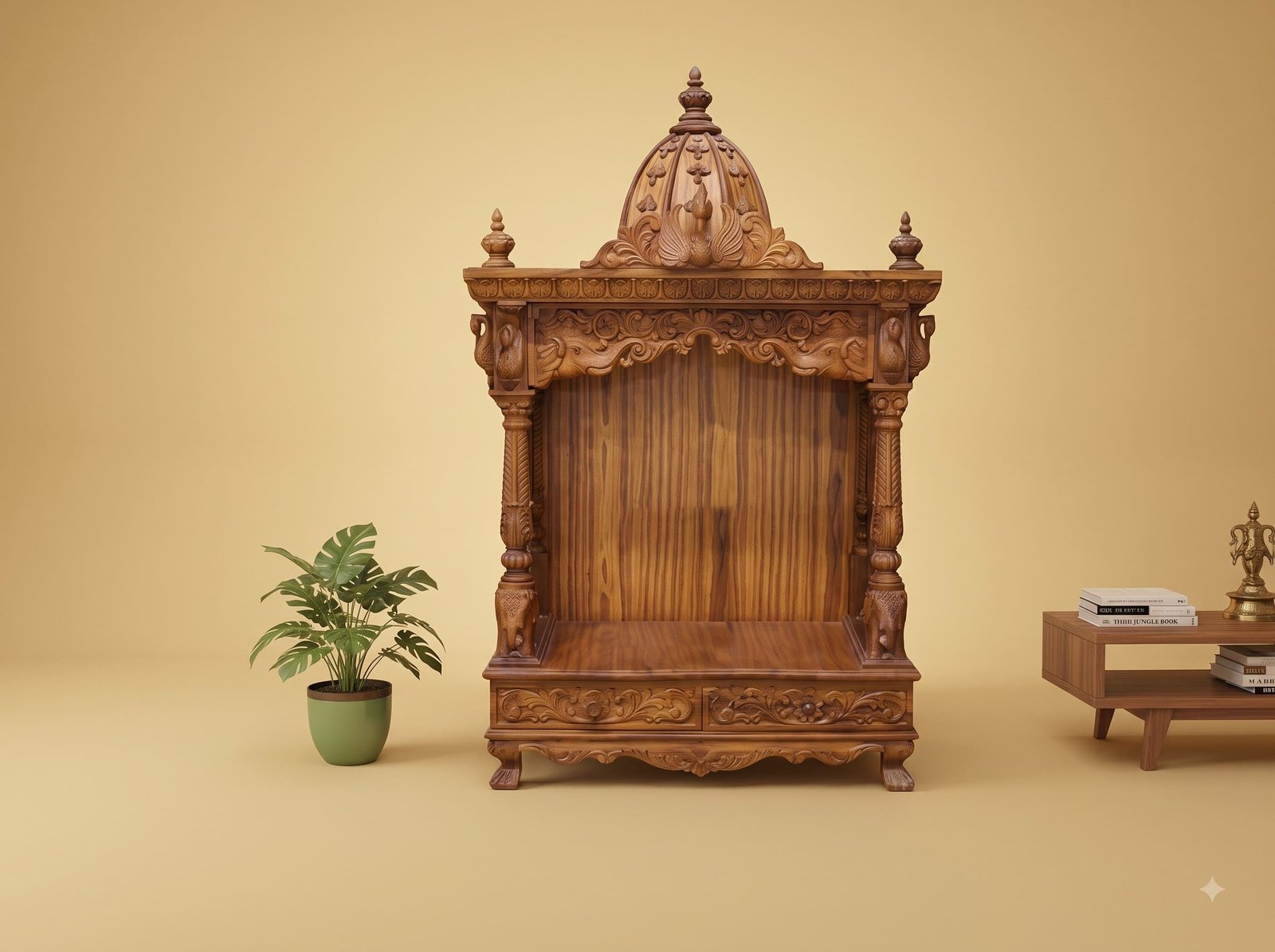
The width of the platform is the second decision, and it is the one you notice every morning. A generous marble surface means the deities can stand with clear space around each of them rather than shoulder to shoulder, the lamps and thali have their own place forward and to the side, and flowers and offerings can be laid out without anything being shifted first. It changes puja from an exercise in fitting things in to something unhurried. Every element here is carved and polished by hand by master Indian artisans, and the photographs show the actual piece.
 Ask Price On WhatsApp