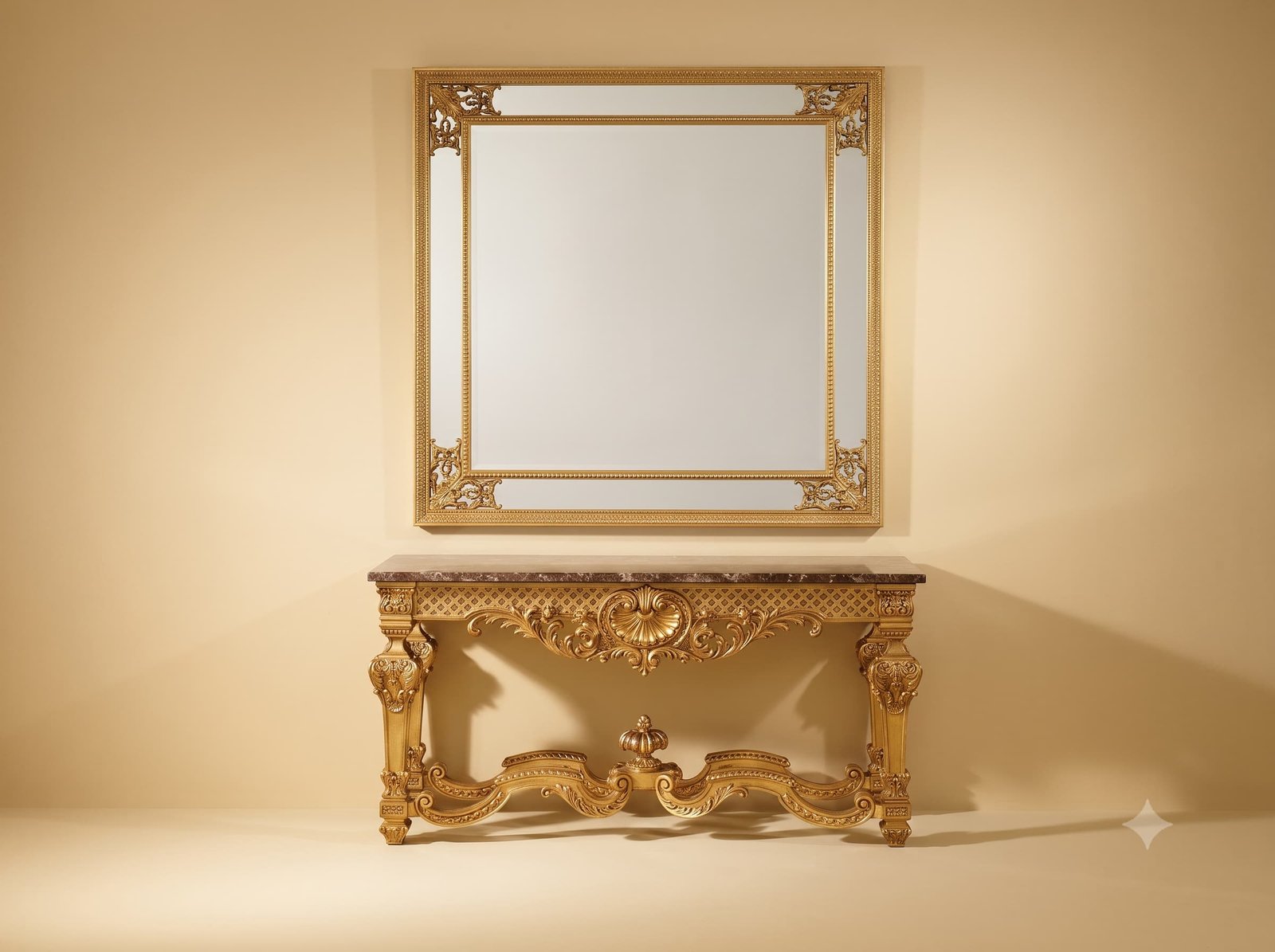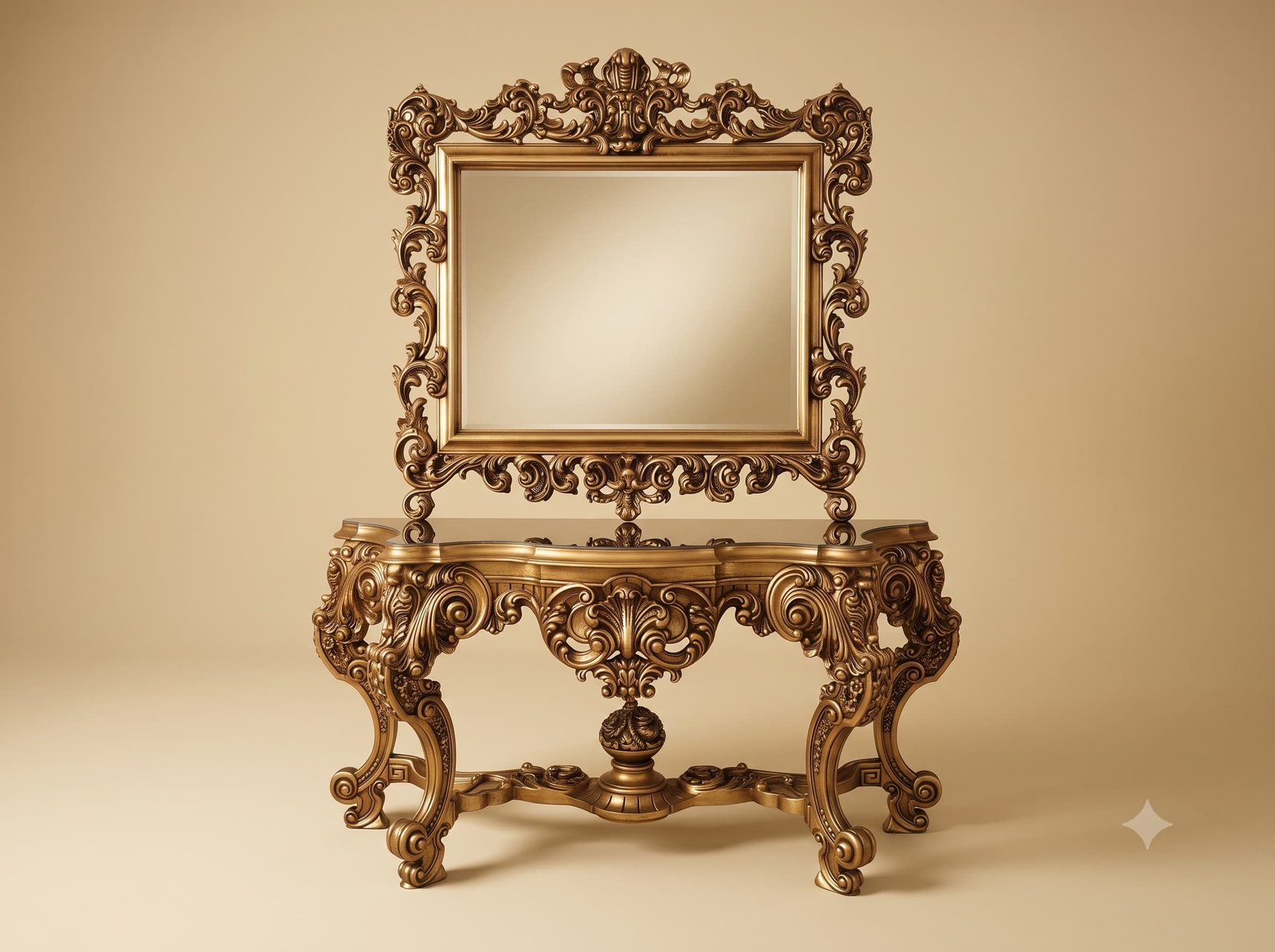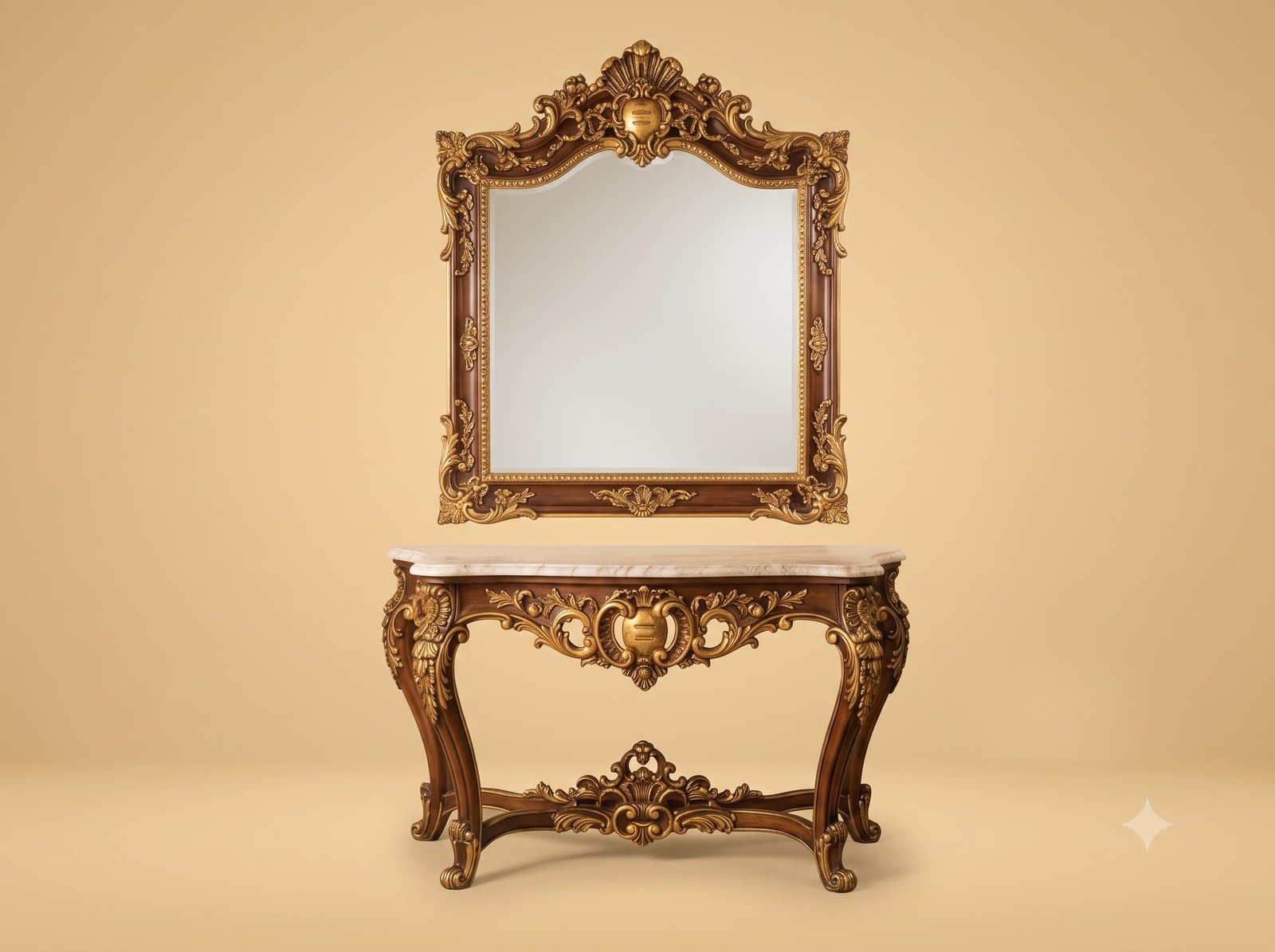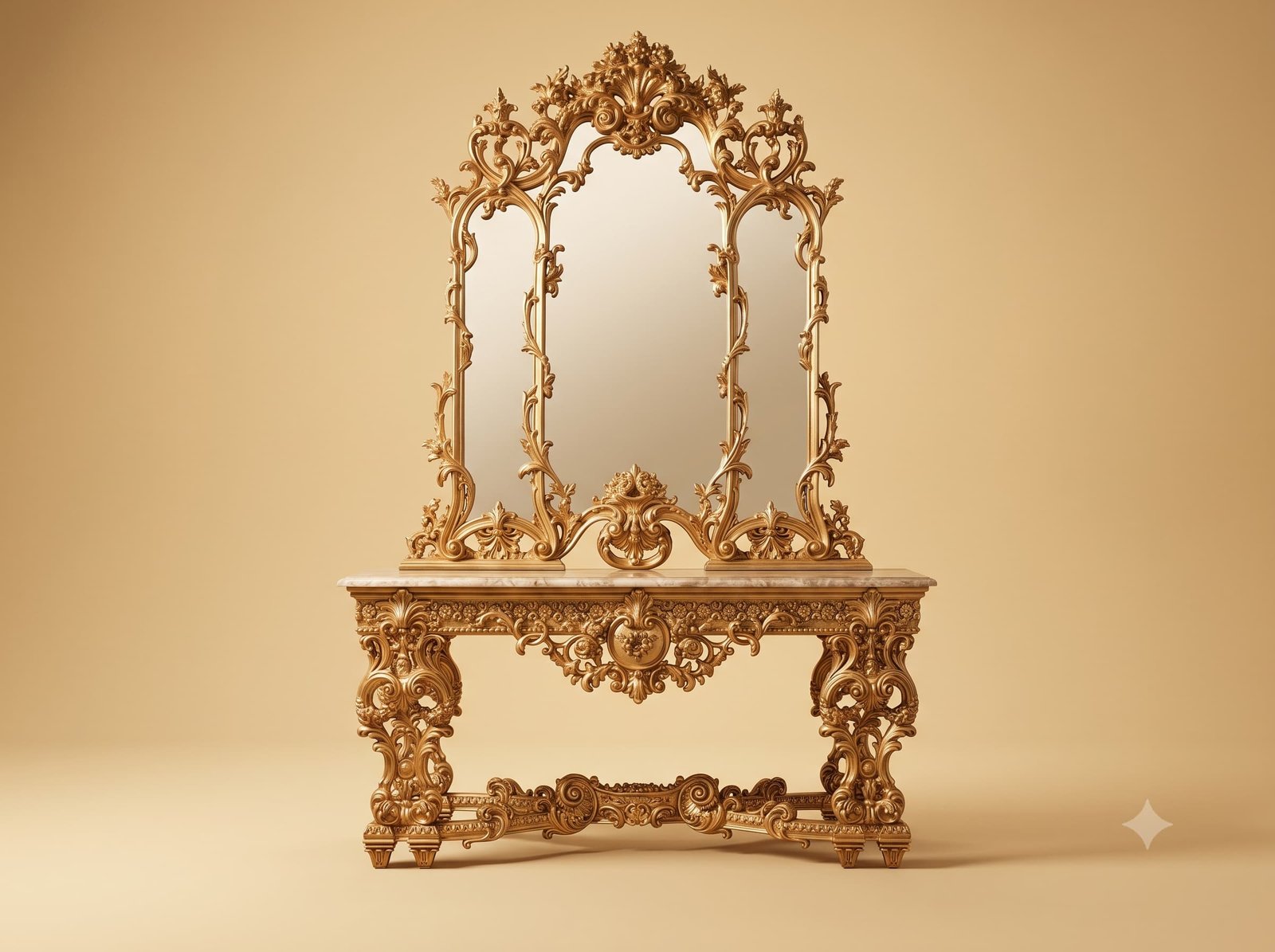
The three panels in this mirror are not a decorative choice made after the fact. They are the reason a mirror this wide can be built at all.
A single plate spanning the full width would be a large, thin, rigid sheet held in a frame that is none of those things. Timber moves a little, frames flex a little when they are lifted, and glass tolerates neither. Dividing the opening into three, with carved mullions between, means each plate is a modest size and each sits in its own rebate. If the frame shifts by a hair, the movement is shared between three small openings instead of concentrating at the corners of one big one.
The mullions earn their keep structurally as well. A wide frame with a single opening is a rectangle waiting to rack; two vertical members running from the base rail to the arched head turn it into three braced bays. Our master Indian artisans carve those mullions as part of the design, so what is doing the engineering also reads as ornament.
The arches at the top of each panel are set out from one centre so the three heads rise together rather than each finding its own line.
 Ask Price On WhatsApp