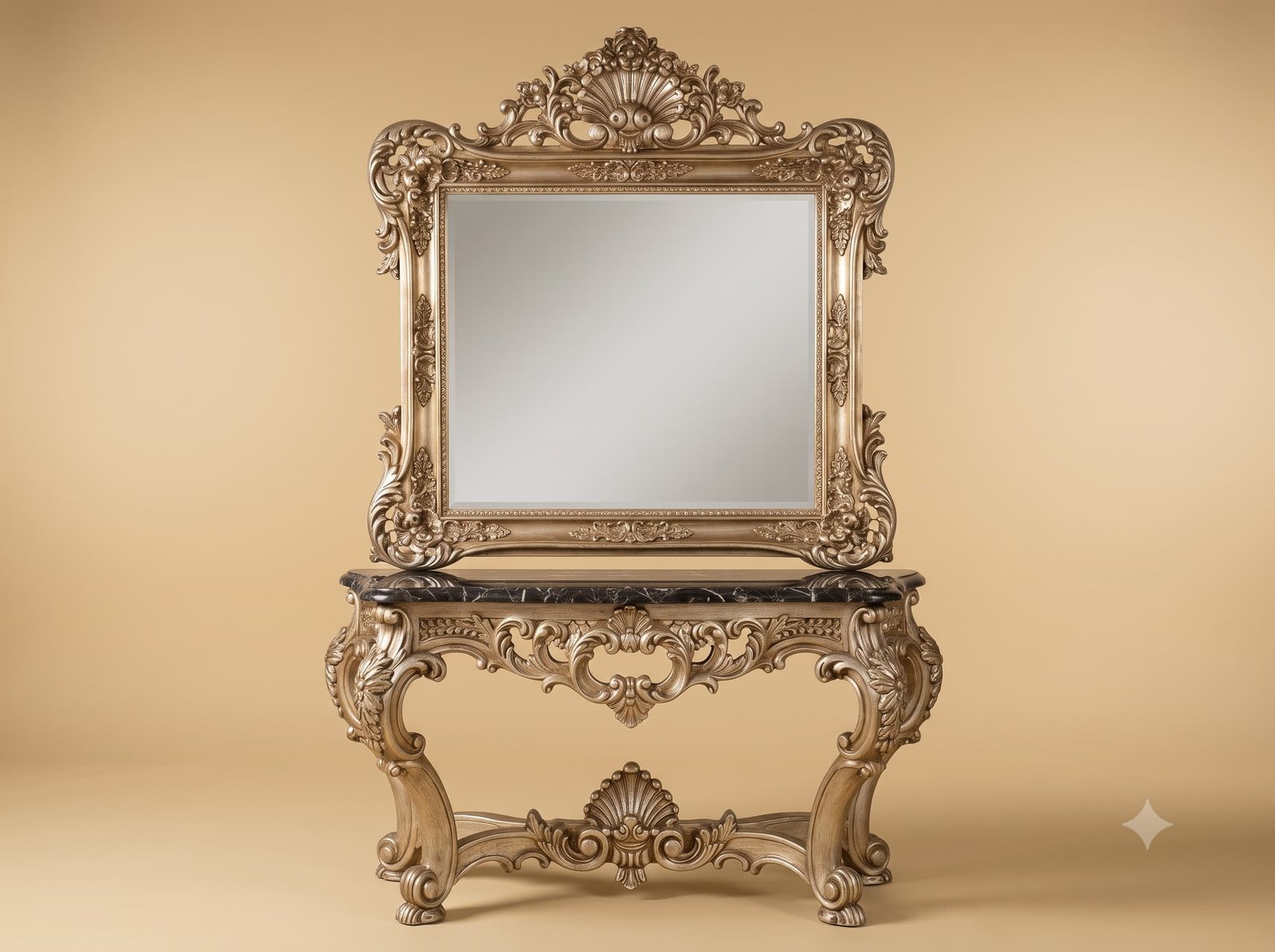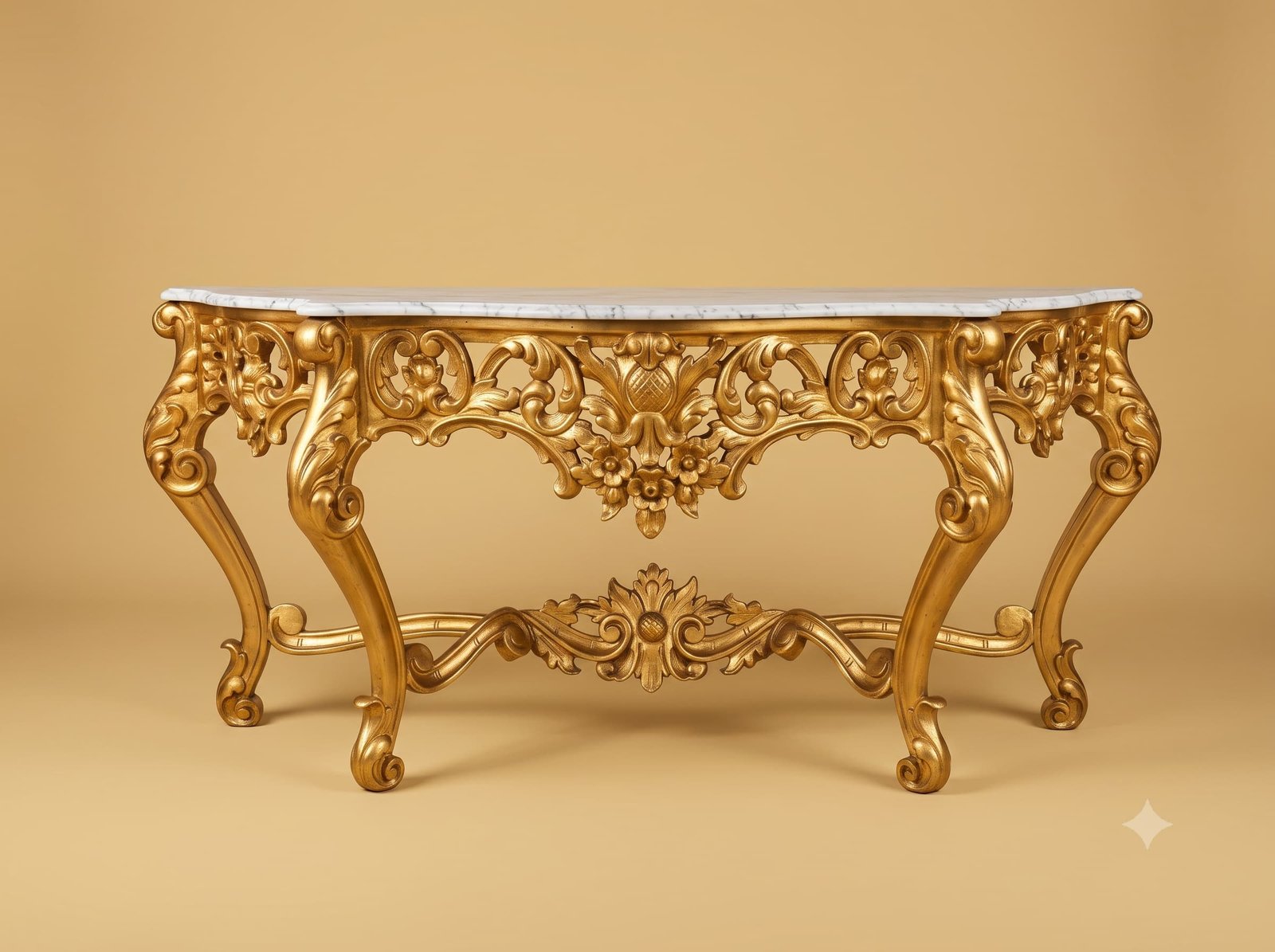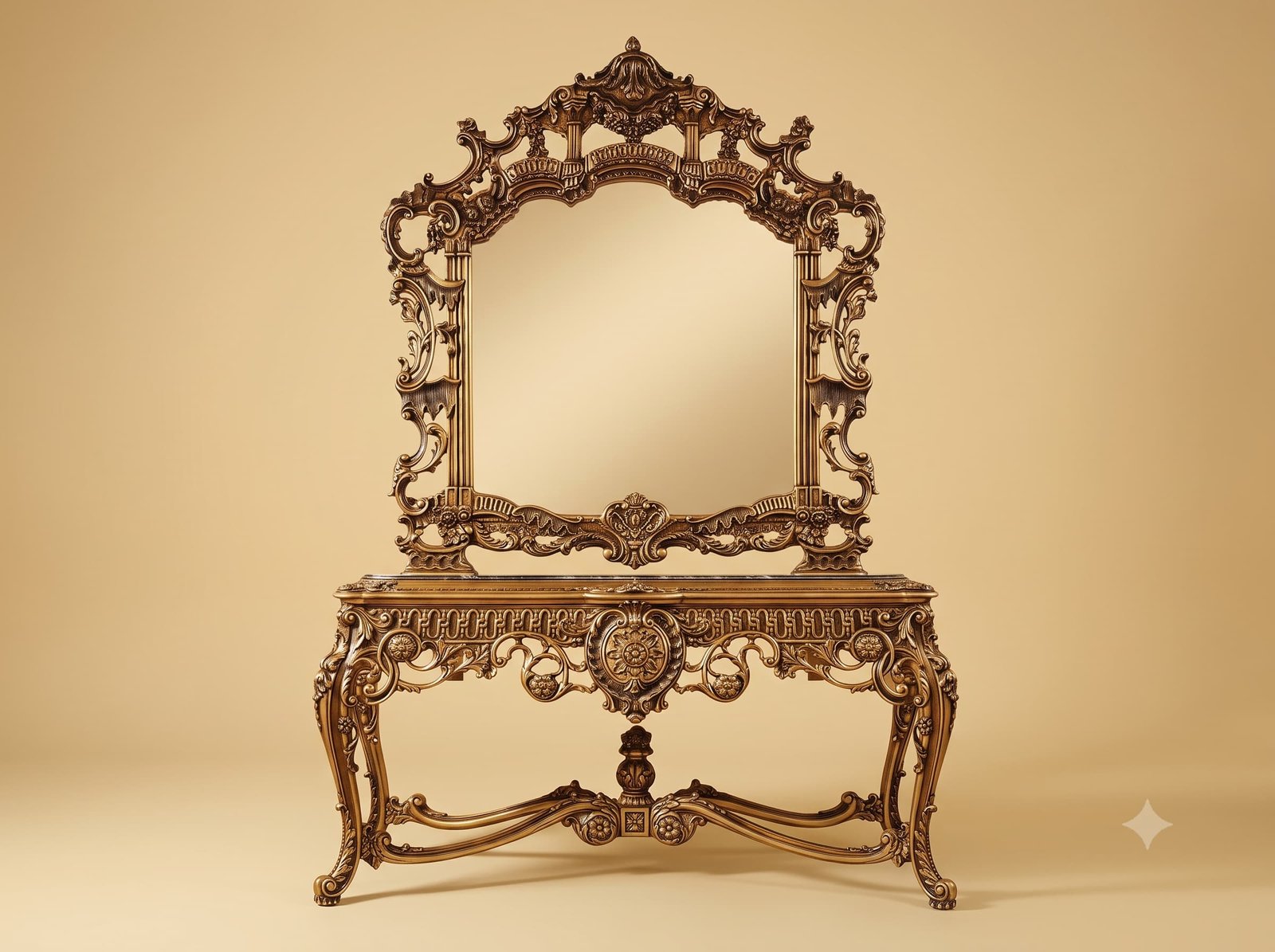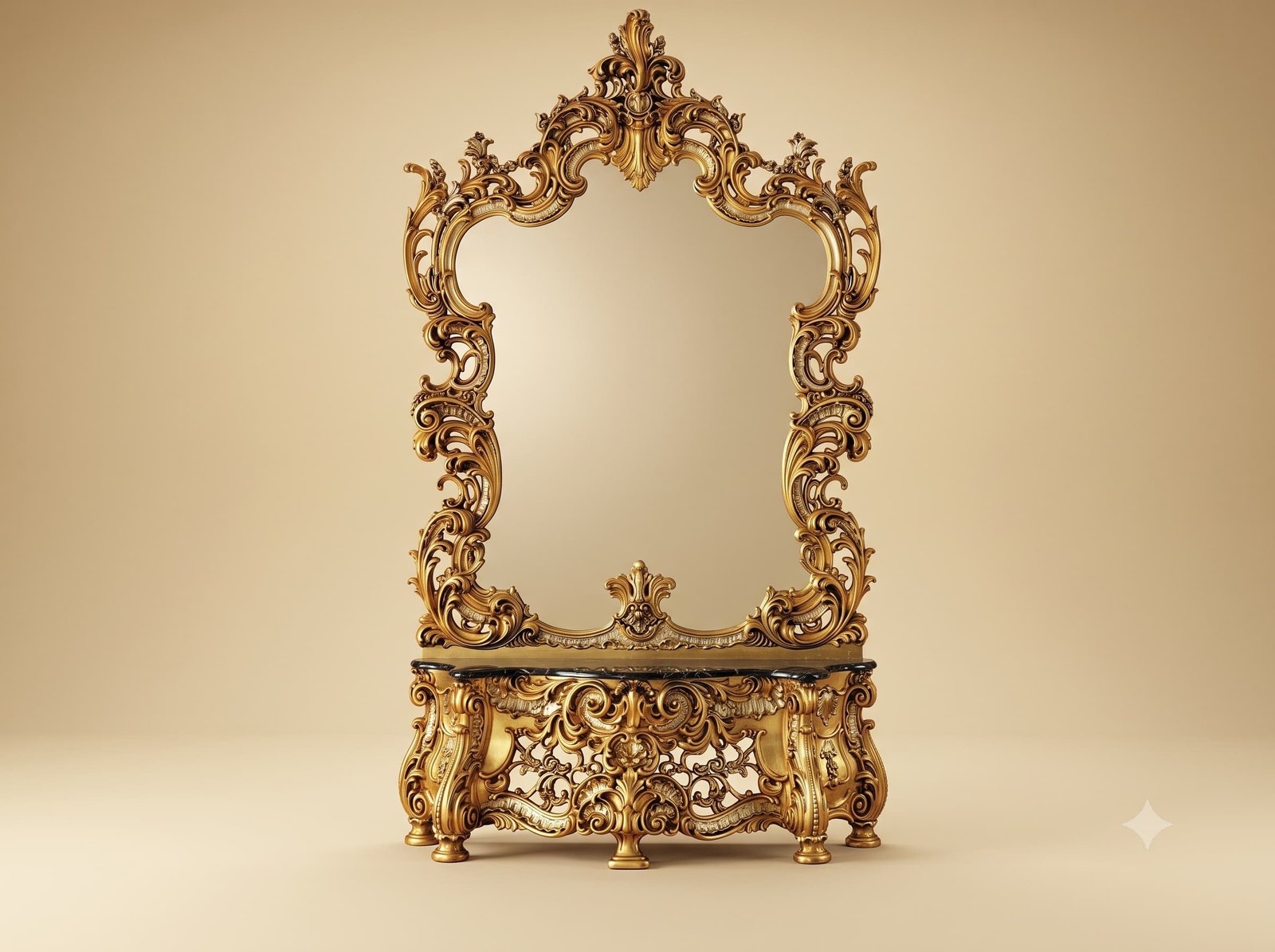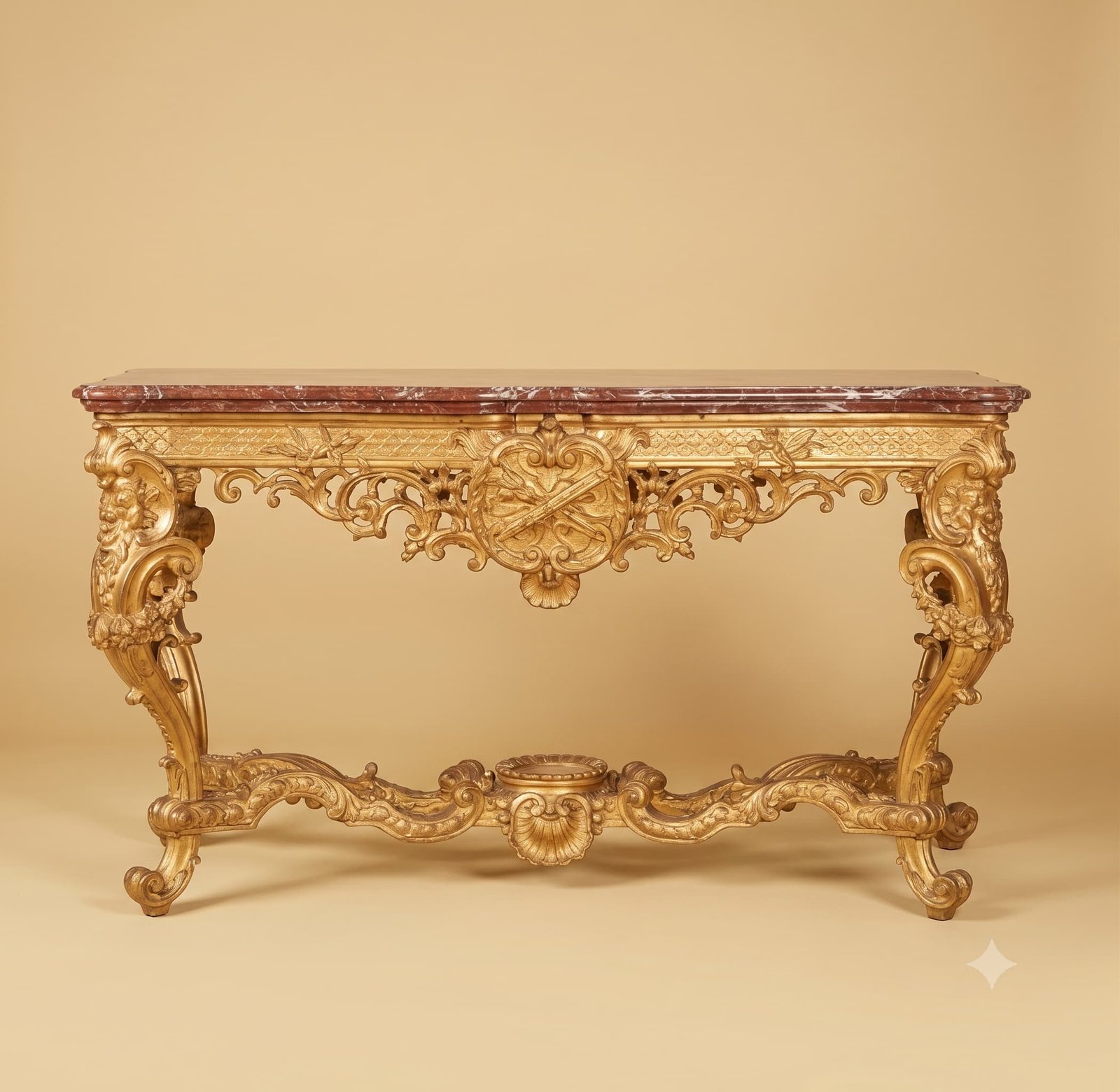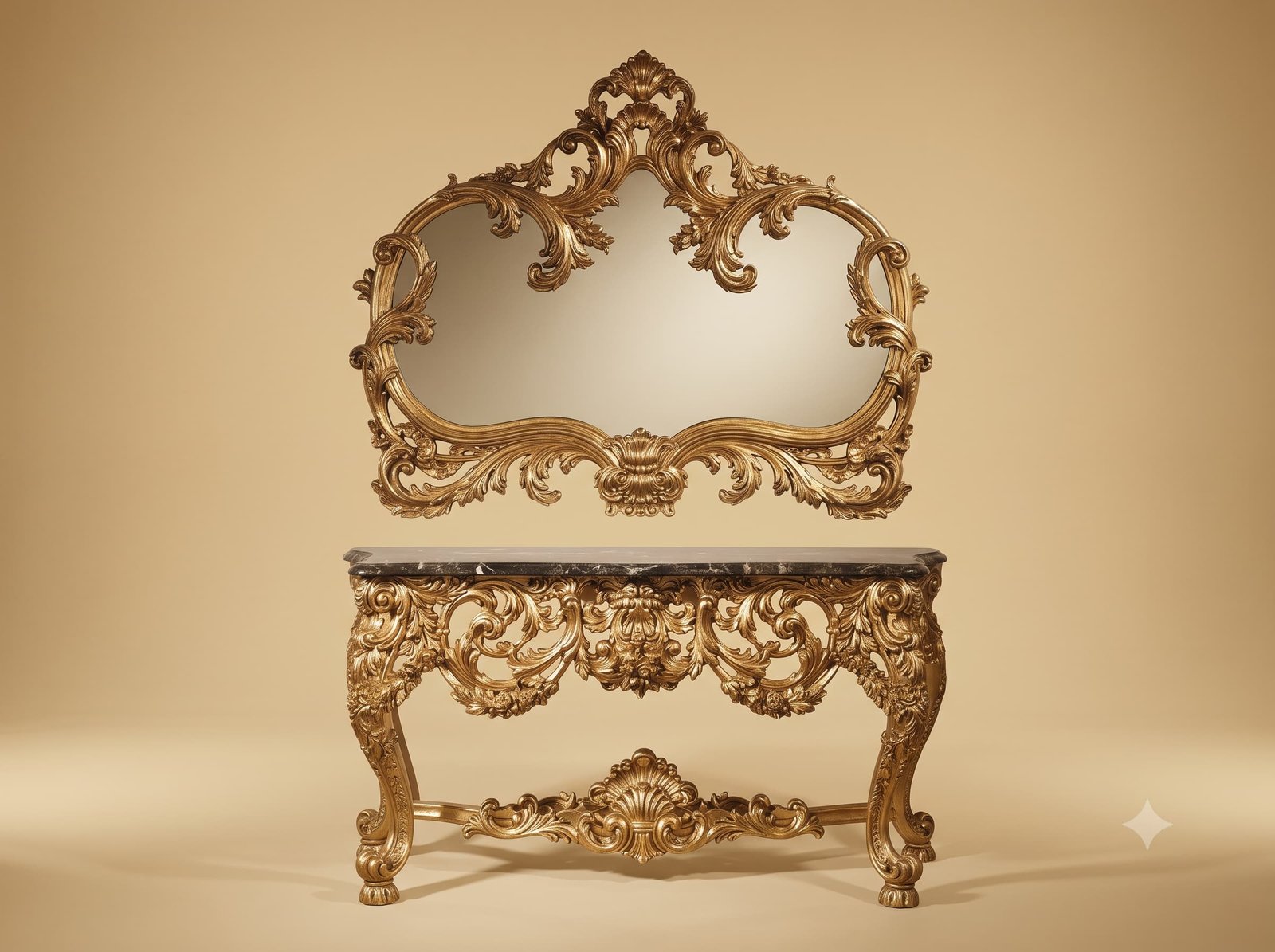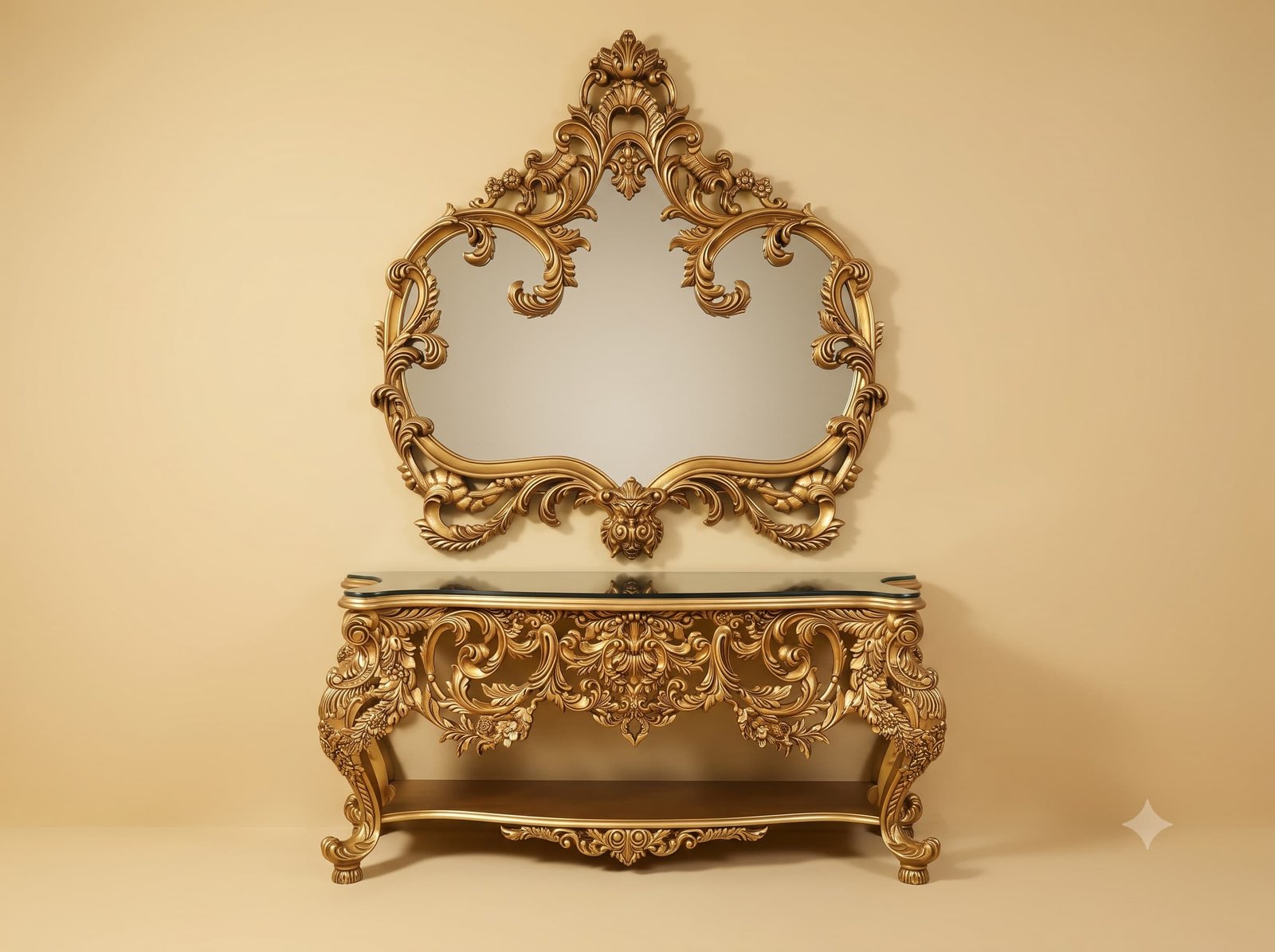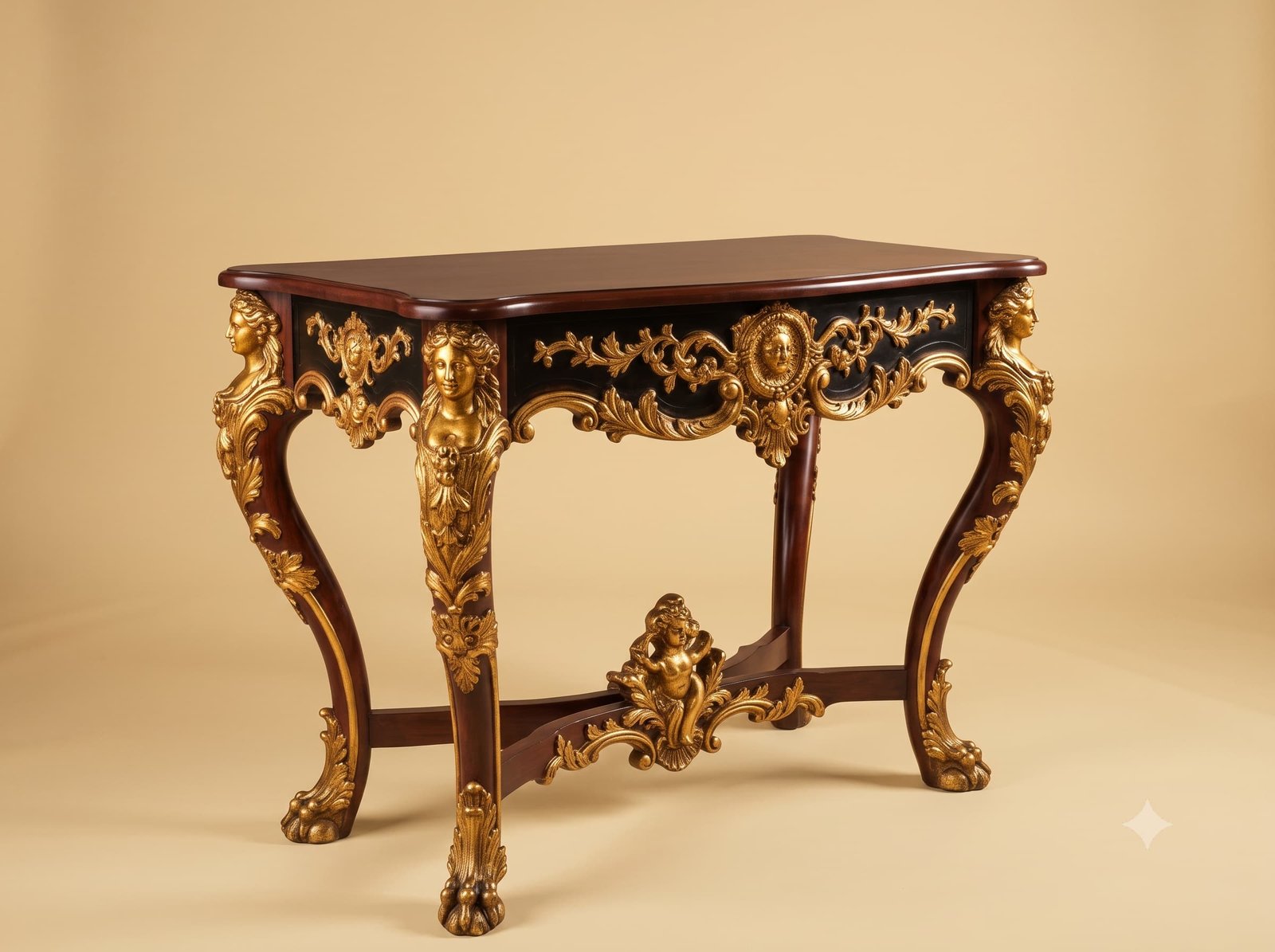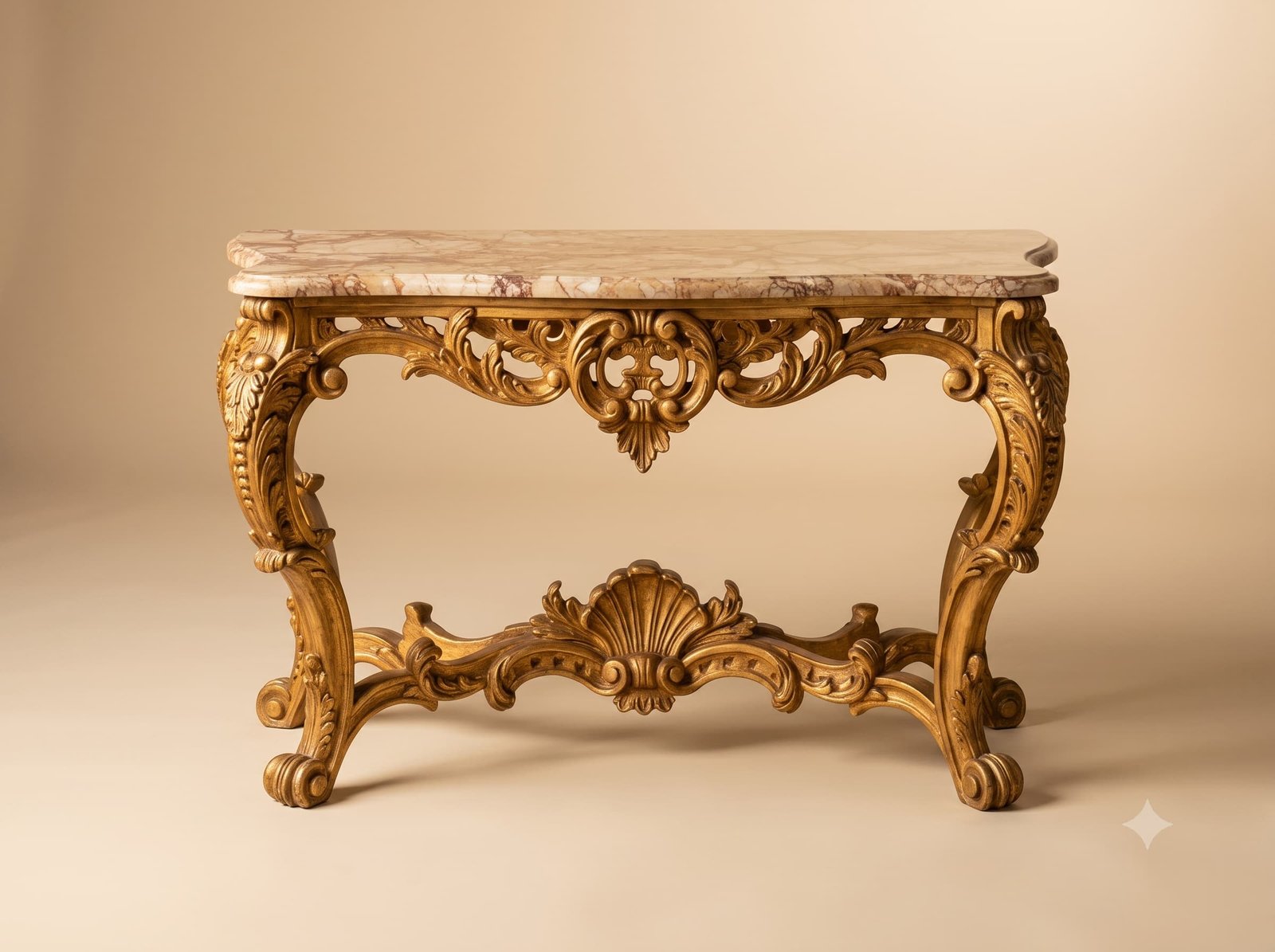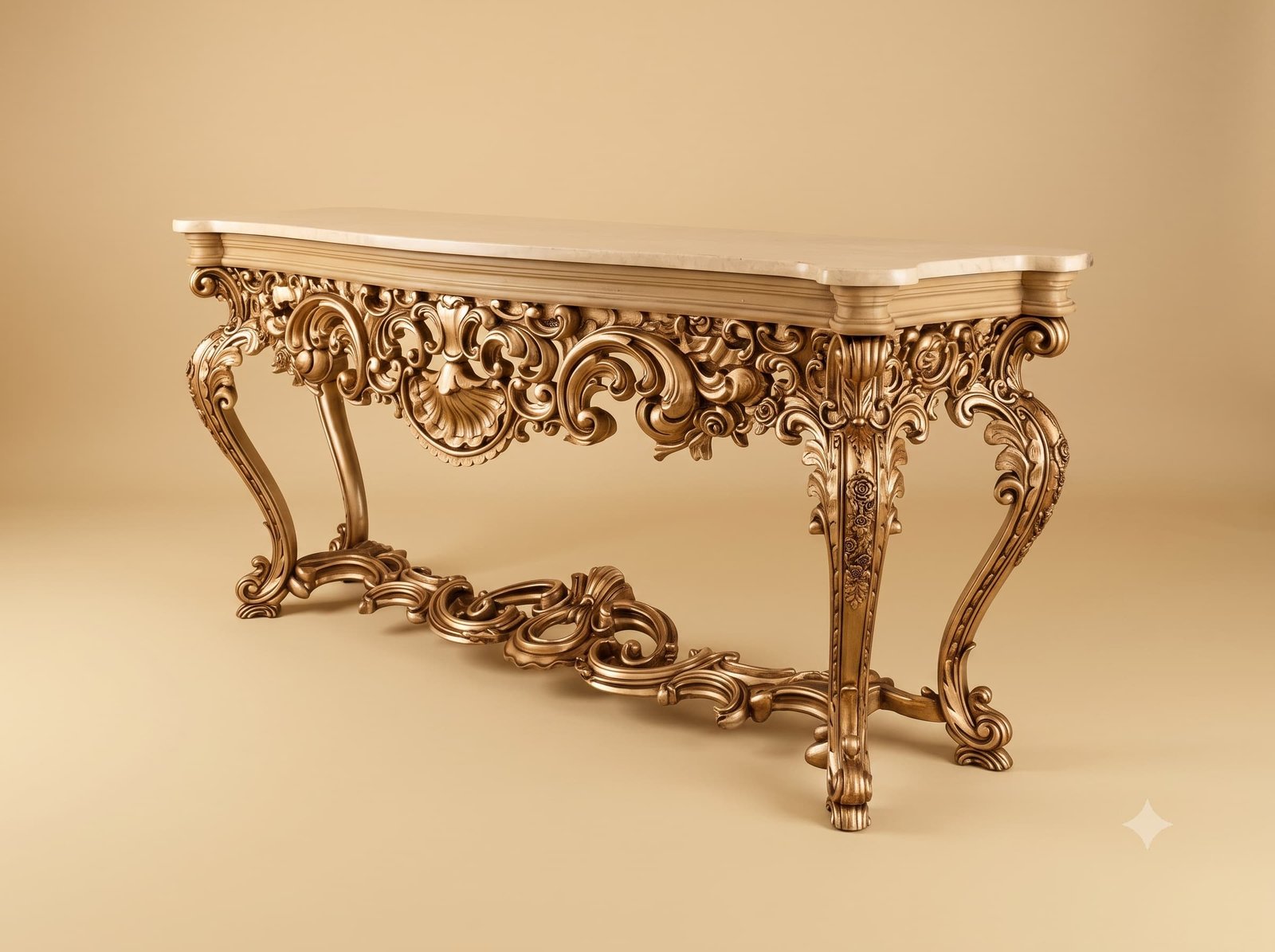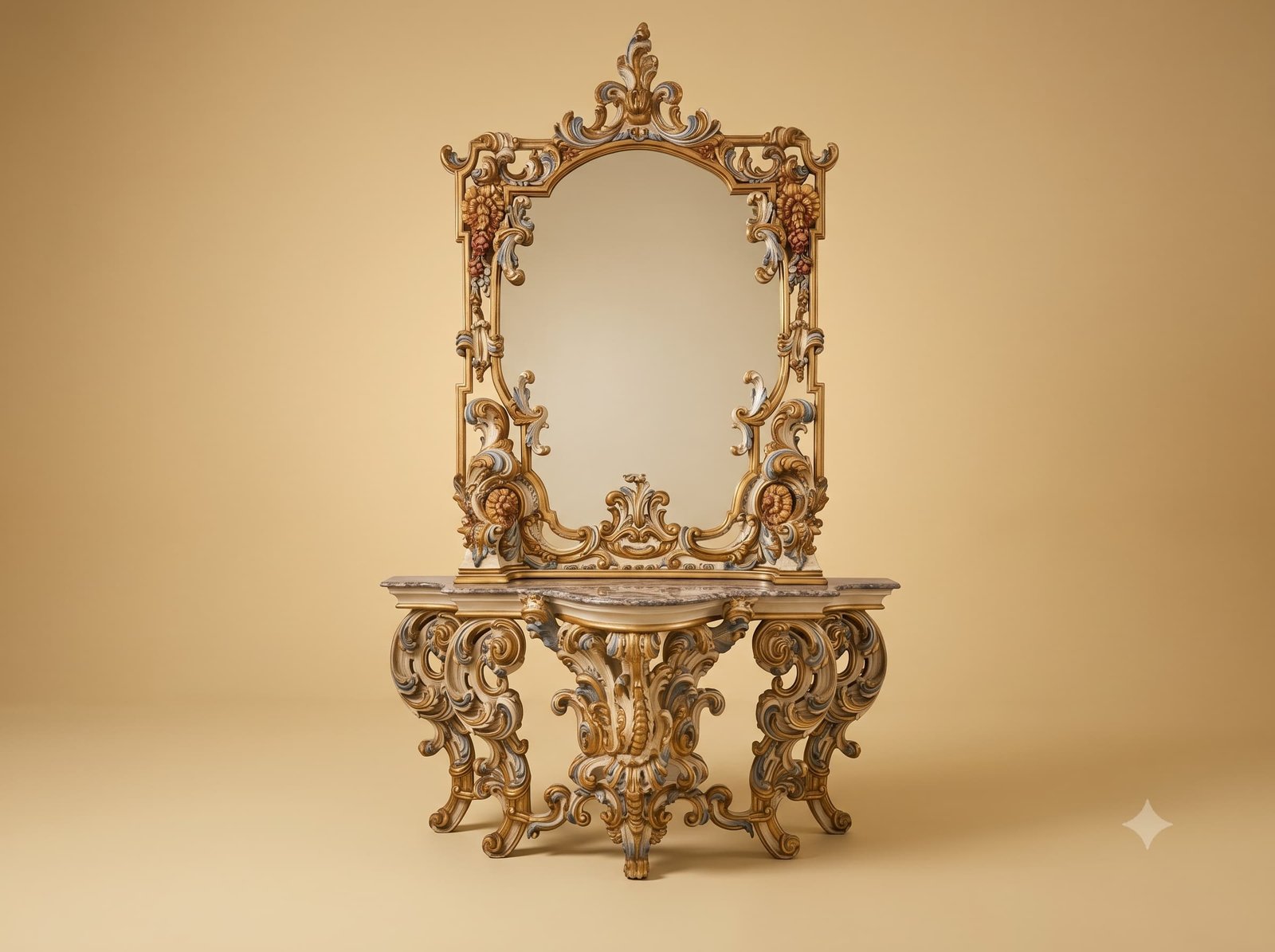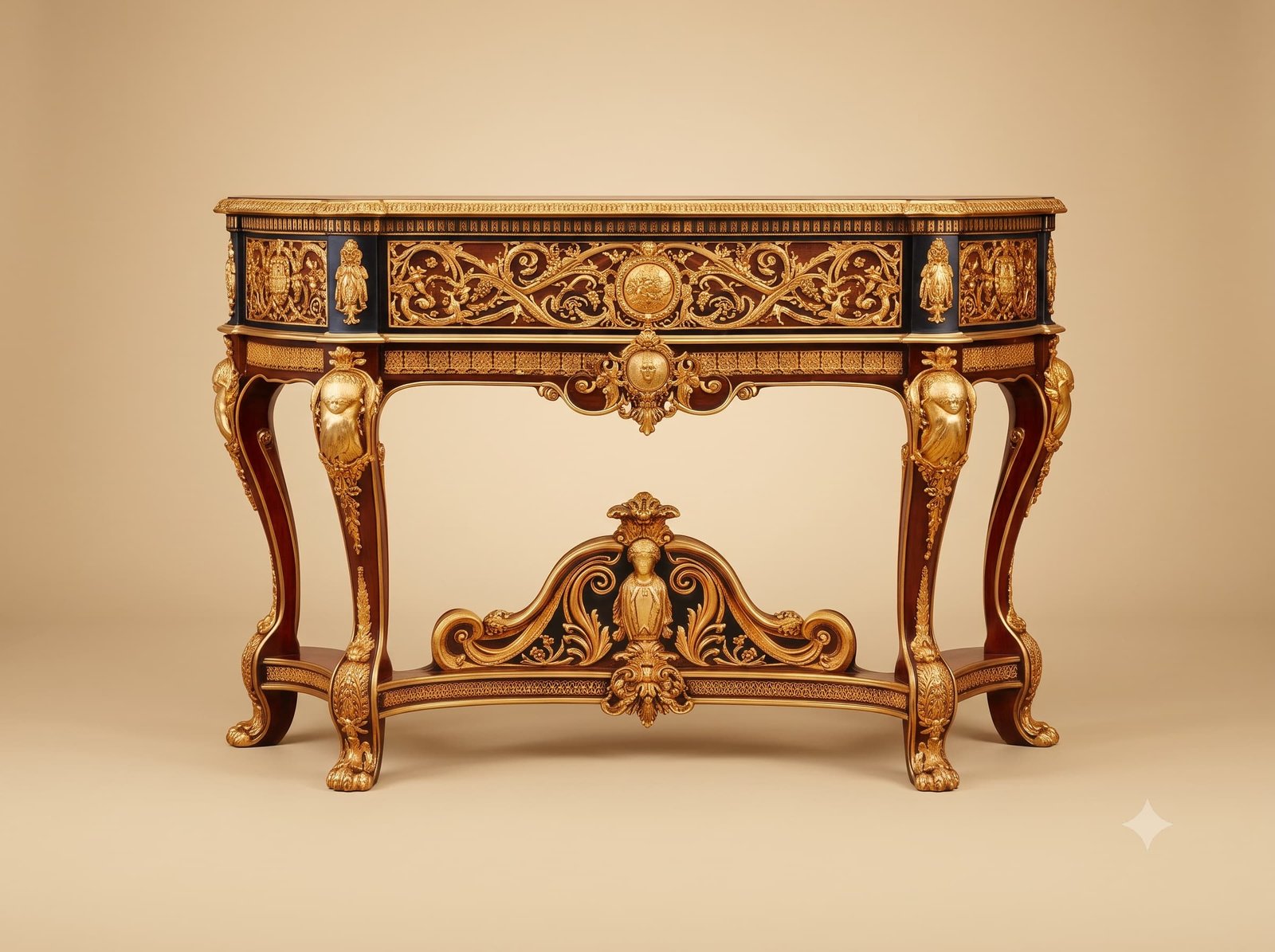
The gilded mounts at the knees of these legs sit on a curve that runs in two directions at once, and getting a separate piece to bed onto that without a shadow gap is the fussiest half hour on the whole console.
A leg like this is convex front to back and also swells side to side, so its surface curves both ways - what a maker calls a compound curve. A mount carved on a flat bench has a flat back. Put the two together and the mount touches at its centre and lifts at all four edges, and once the piece is gilded that lift reads as a dark line right around the ornament.
So the mount is bedded. Its back is hollowed to roughly the leg's curve, then a marking medium is smeared on the leg and the mount pressed onto it. Wherever it touches, colour transfers; those are the high spots, and they are pared away. Press, pare, press again - usually a dozen cycles before the transfer shows contact right across the back.
Only then is the mount gilded and fixed. What you see afterwards is ornament that appears to have grown out of the leg rather than been laid on it.
 Ask Price On WhatsApp