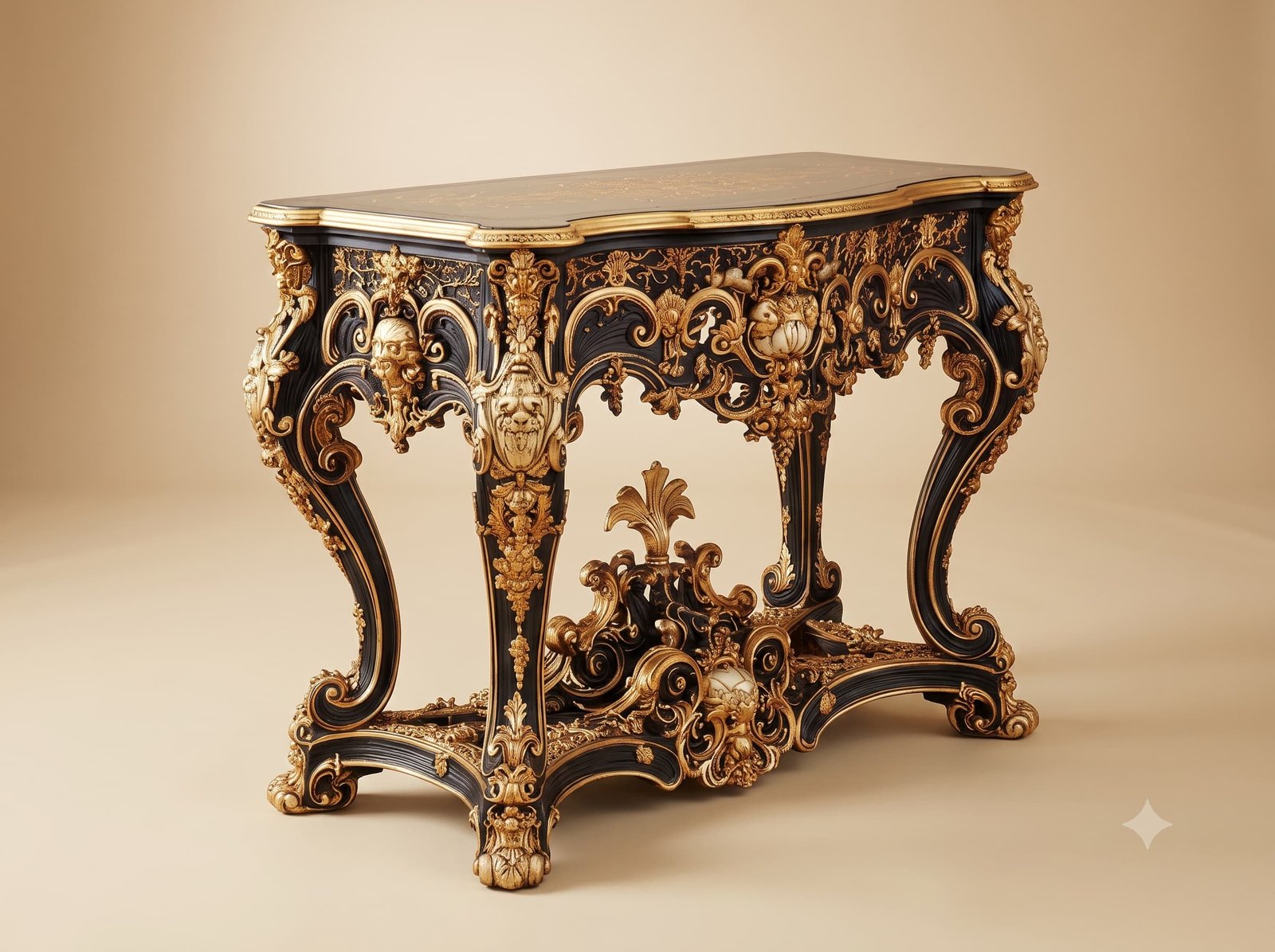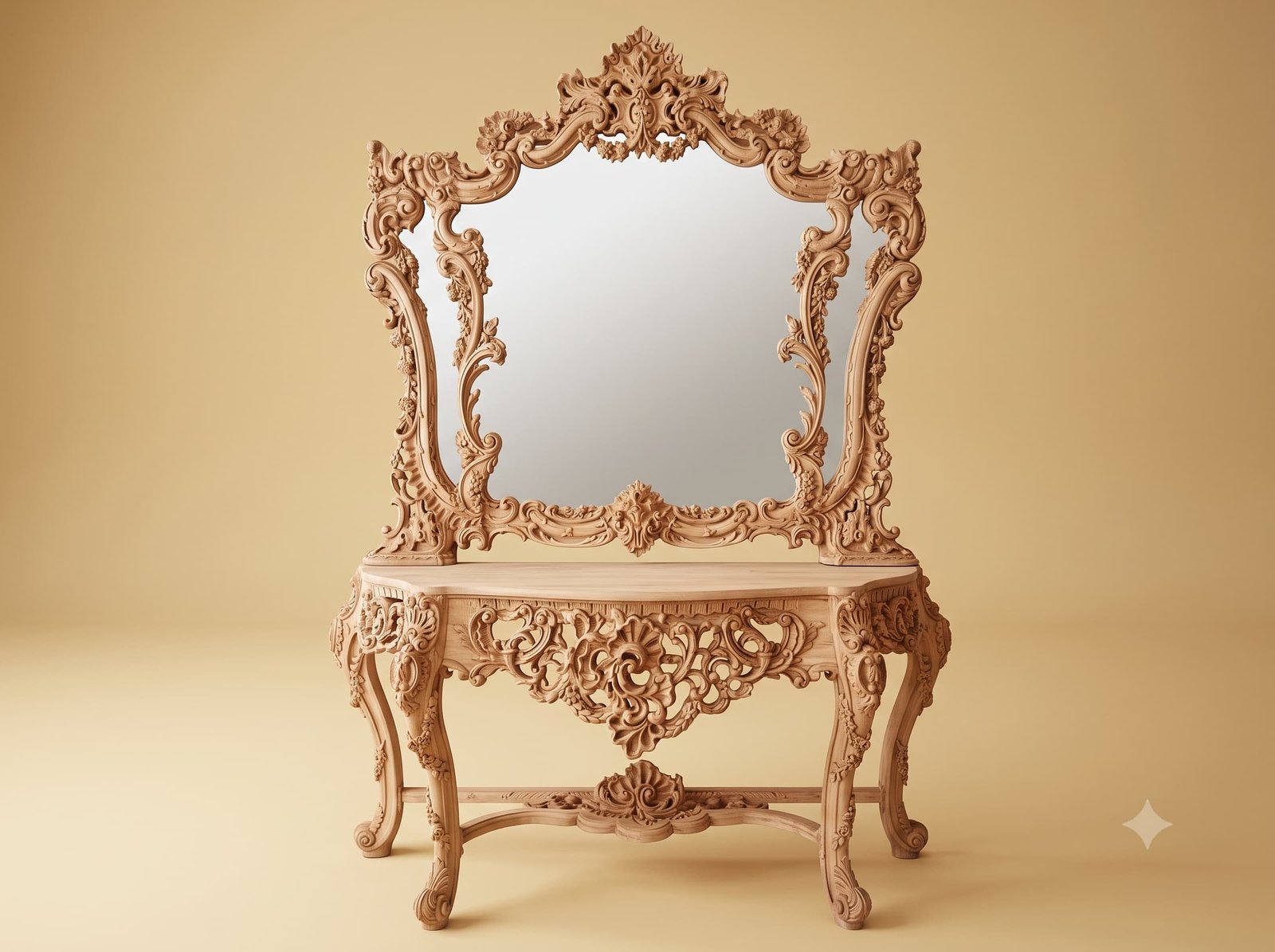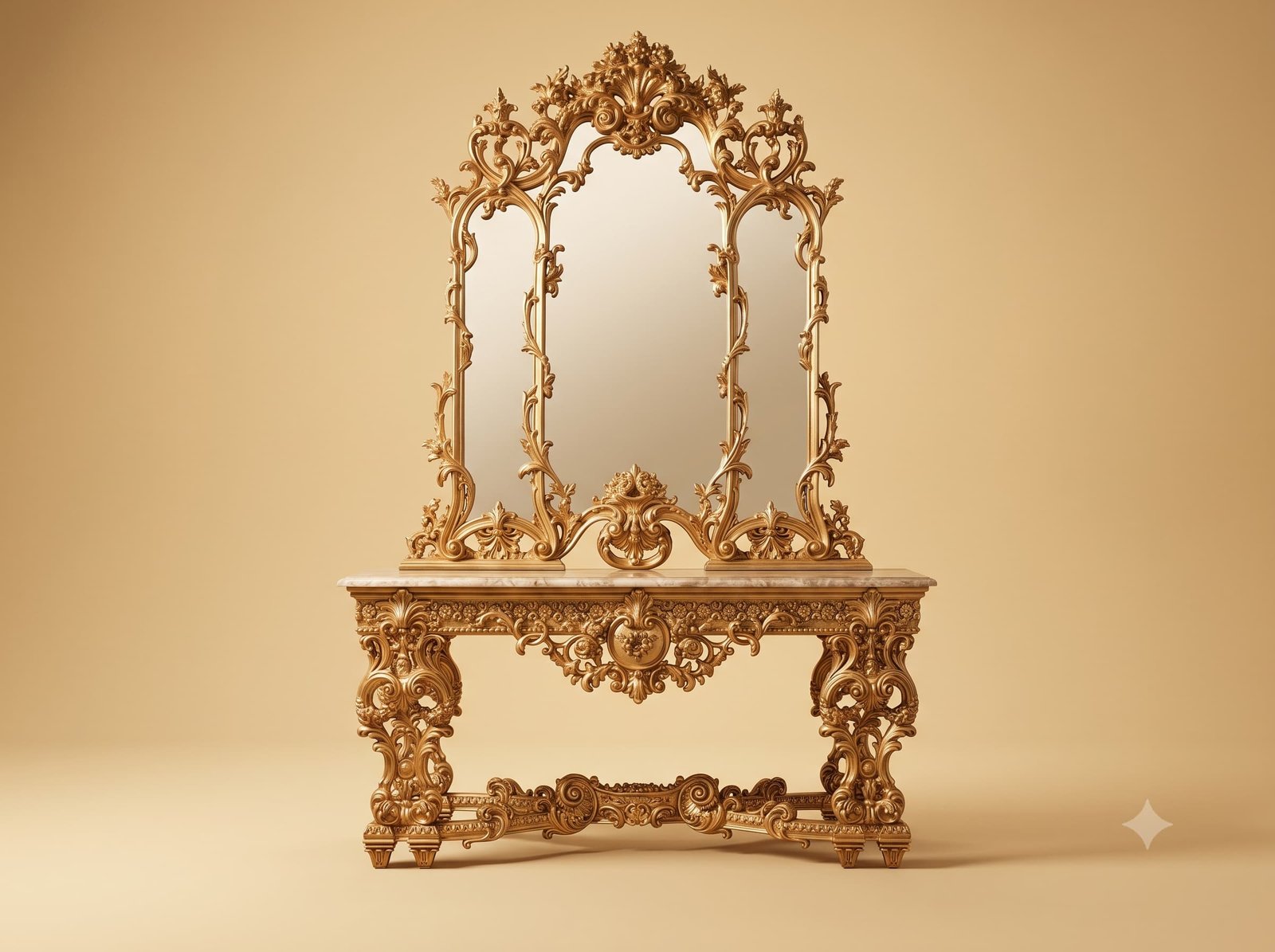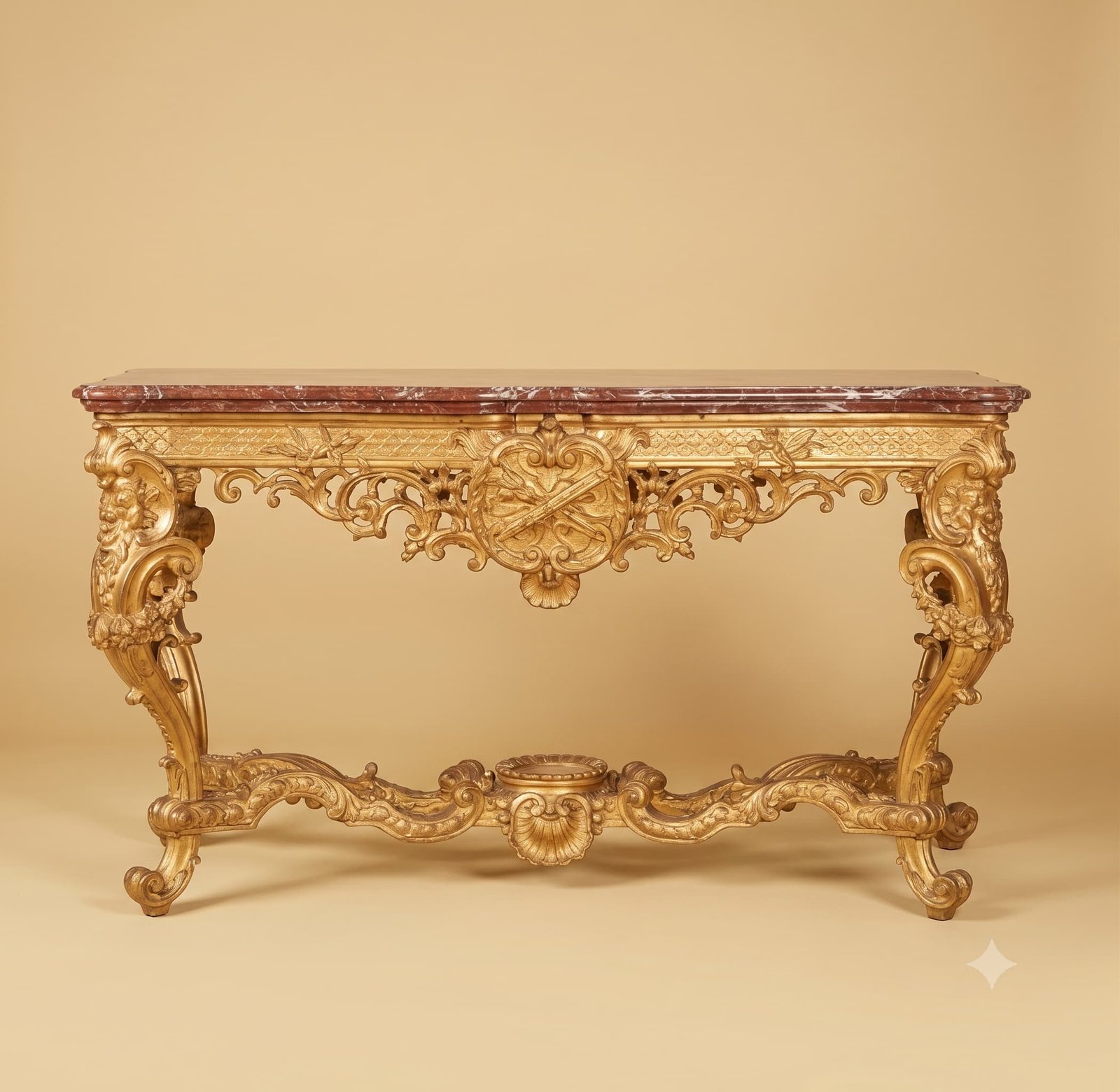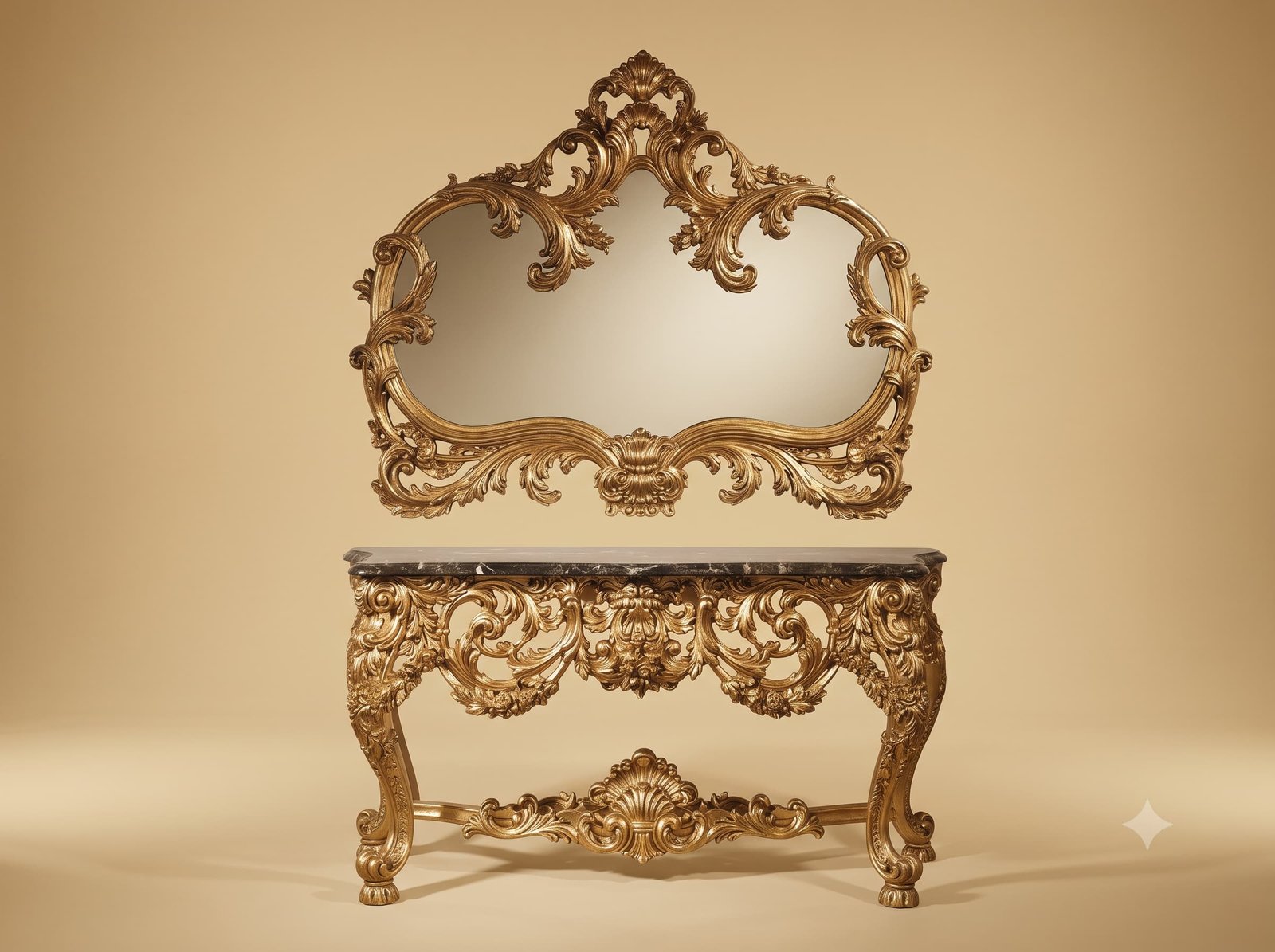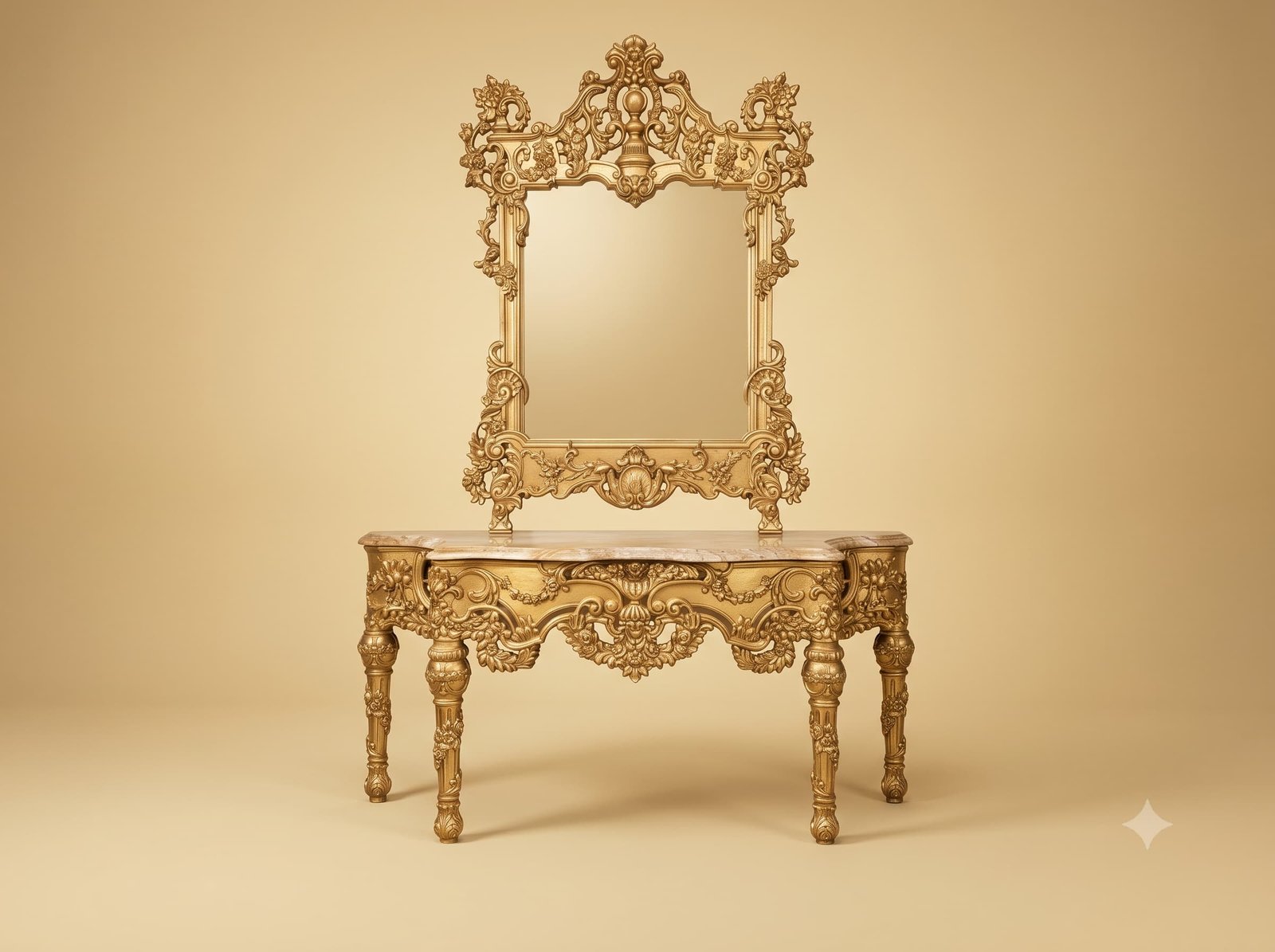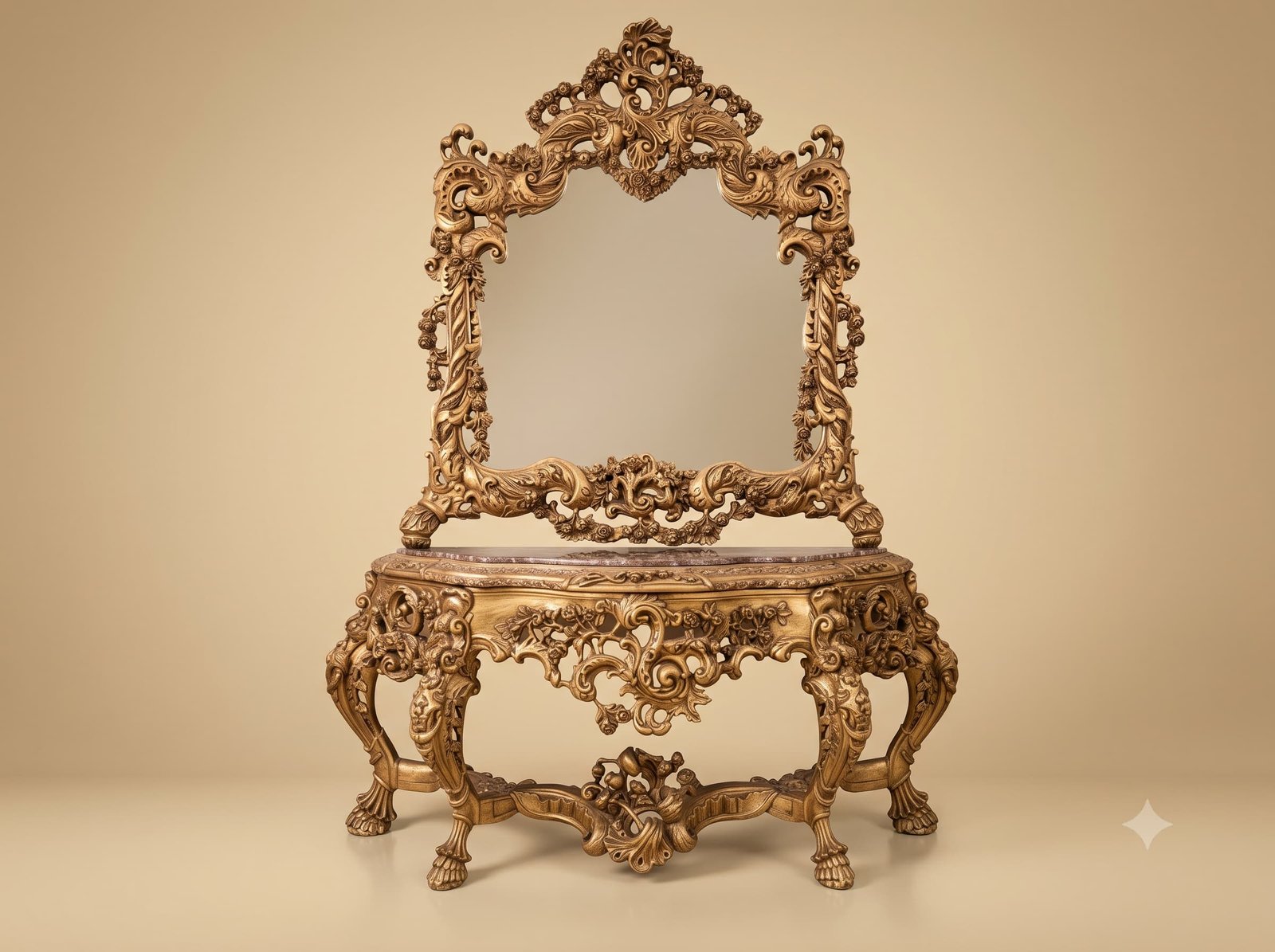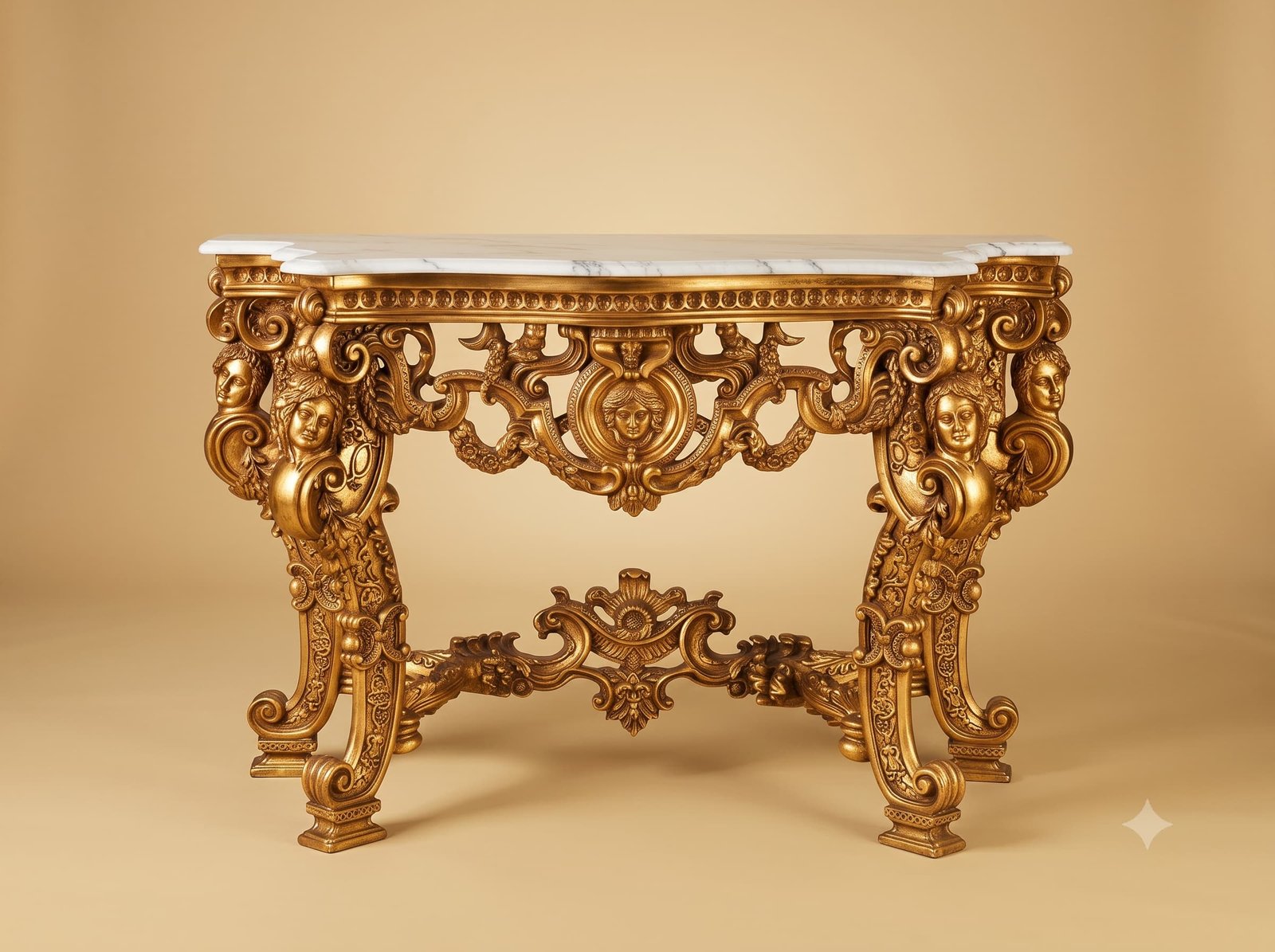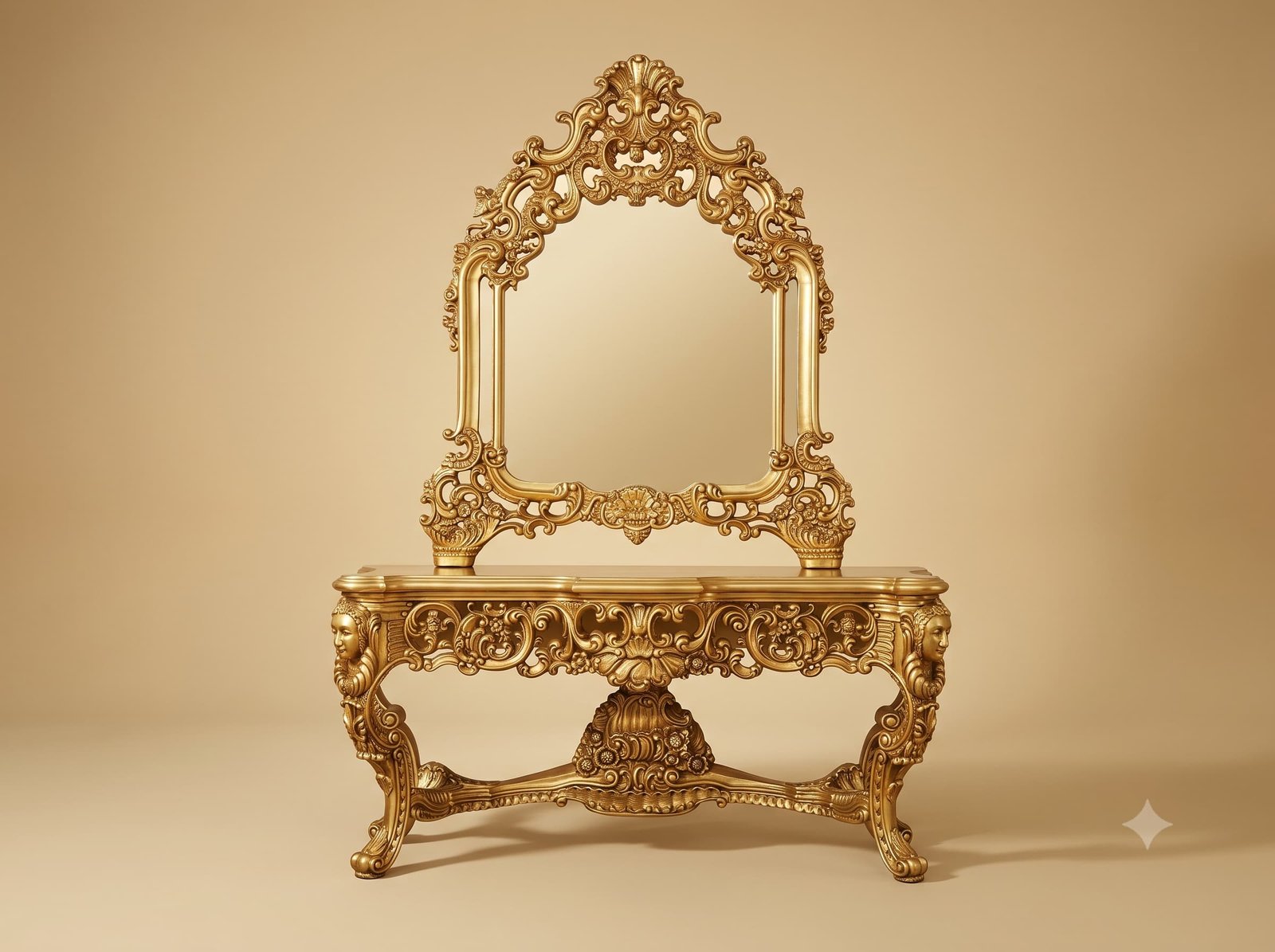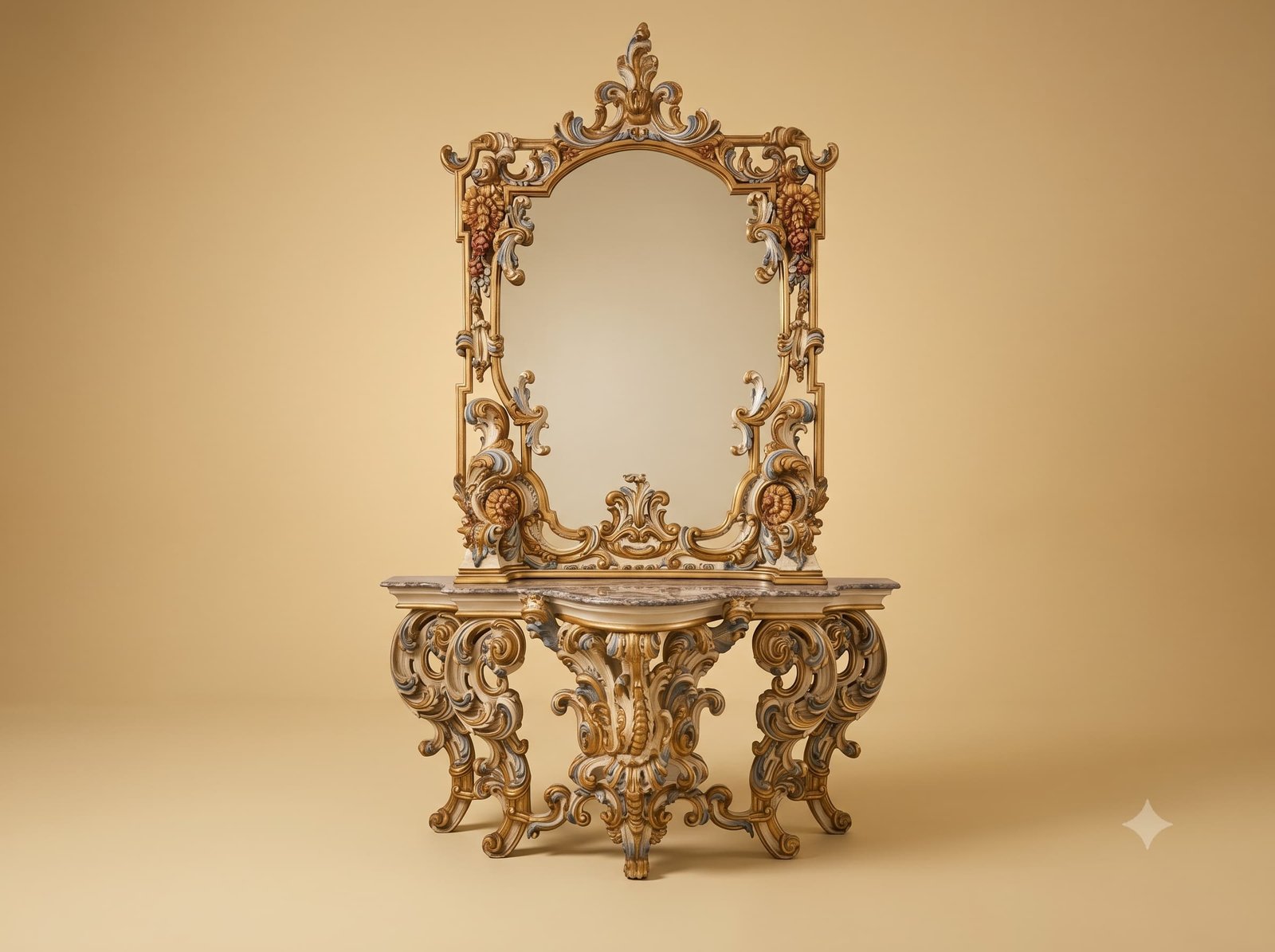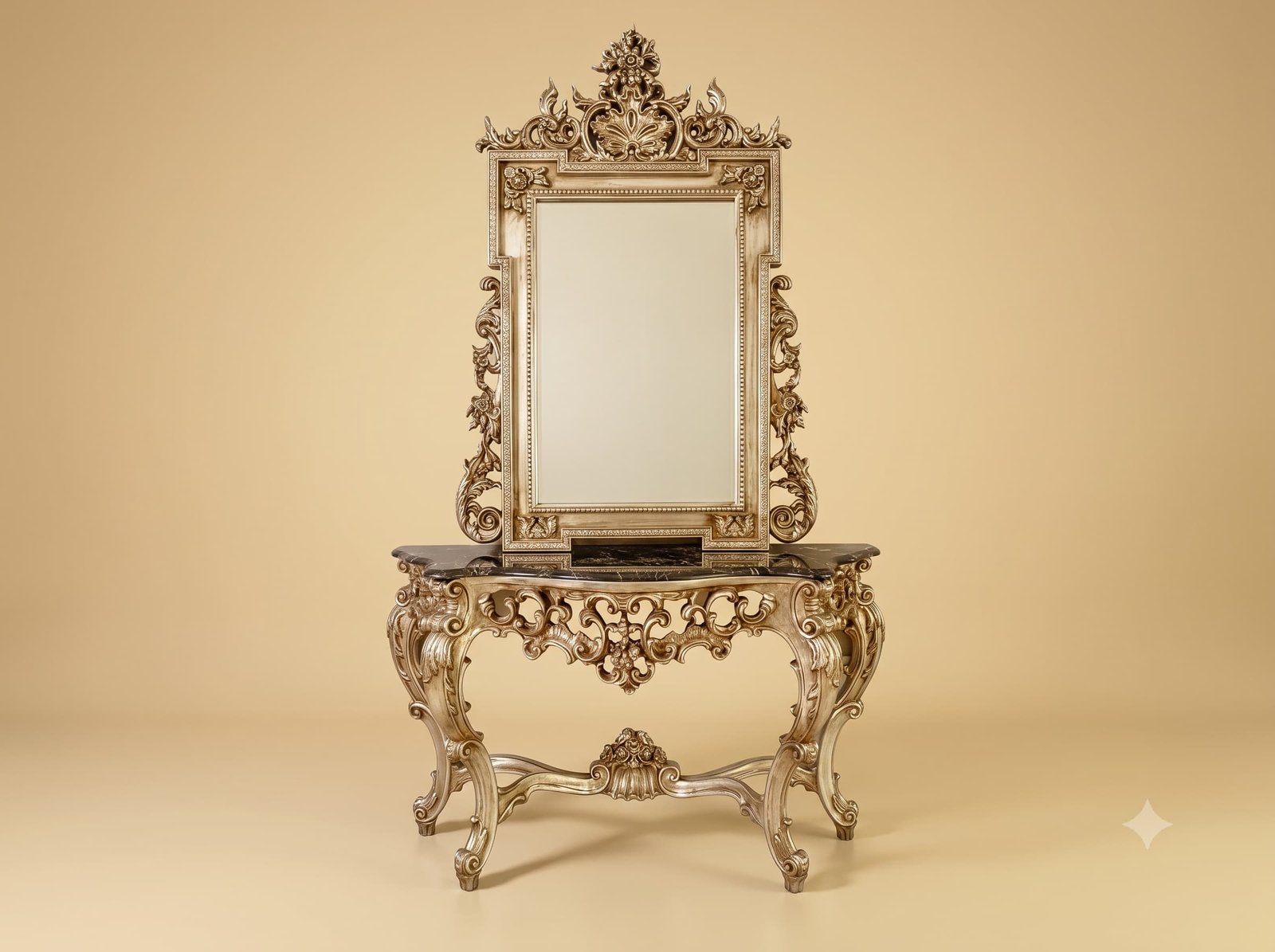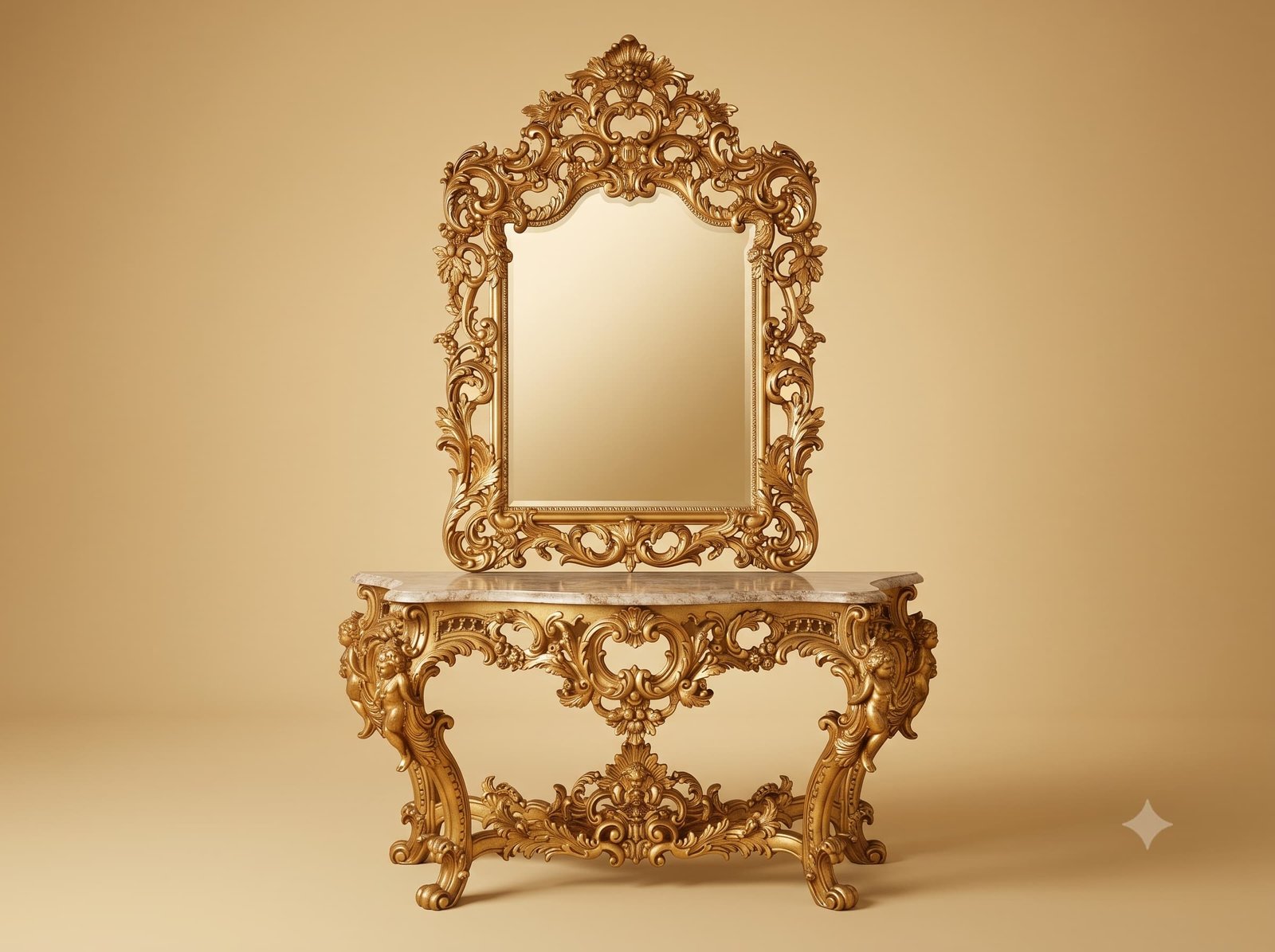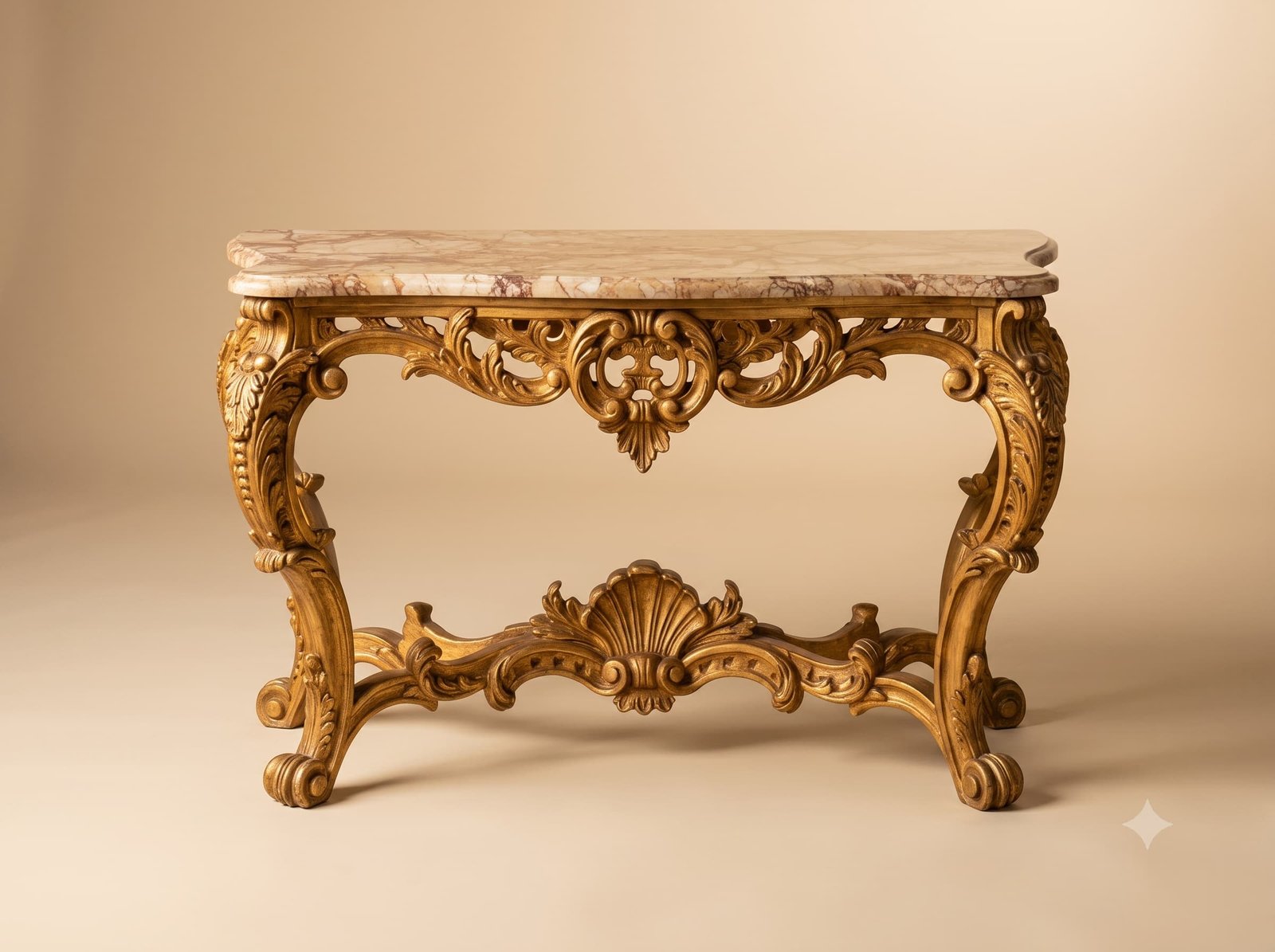
A crossed stretcher on a console like this is set out in plan, not in elevation, and that is the part most people never see. The four legs curve outward as they descend, so the point where each stretcher arm meets a leg is not directly below where the leg meets the apron. Our master Indian artisans draw the whole footprint full size on a board first: the four toe positions, the four points where the arms strike the legs, and the centre where the two arms cross.
The arms are then cut to that plan drawing, each one a shallow S so the pair meets in a smooth junction rather than a hard cross. Where they meet, a boss is left standing proud in the solid, and the shell is carved out of that boss afterwards, so the shell is part of the stretcher and not a piece glued on top.
The height of the stretcher is chosen last. Set it too high and it fouls the sweep of the legs; too low and the table looks like it is standing on a raft. The carver sights along the leg curve and picks the height where the arms appear to spring from the legs instead of crossing them.
 Ask Price On WhatsApp