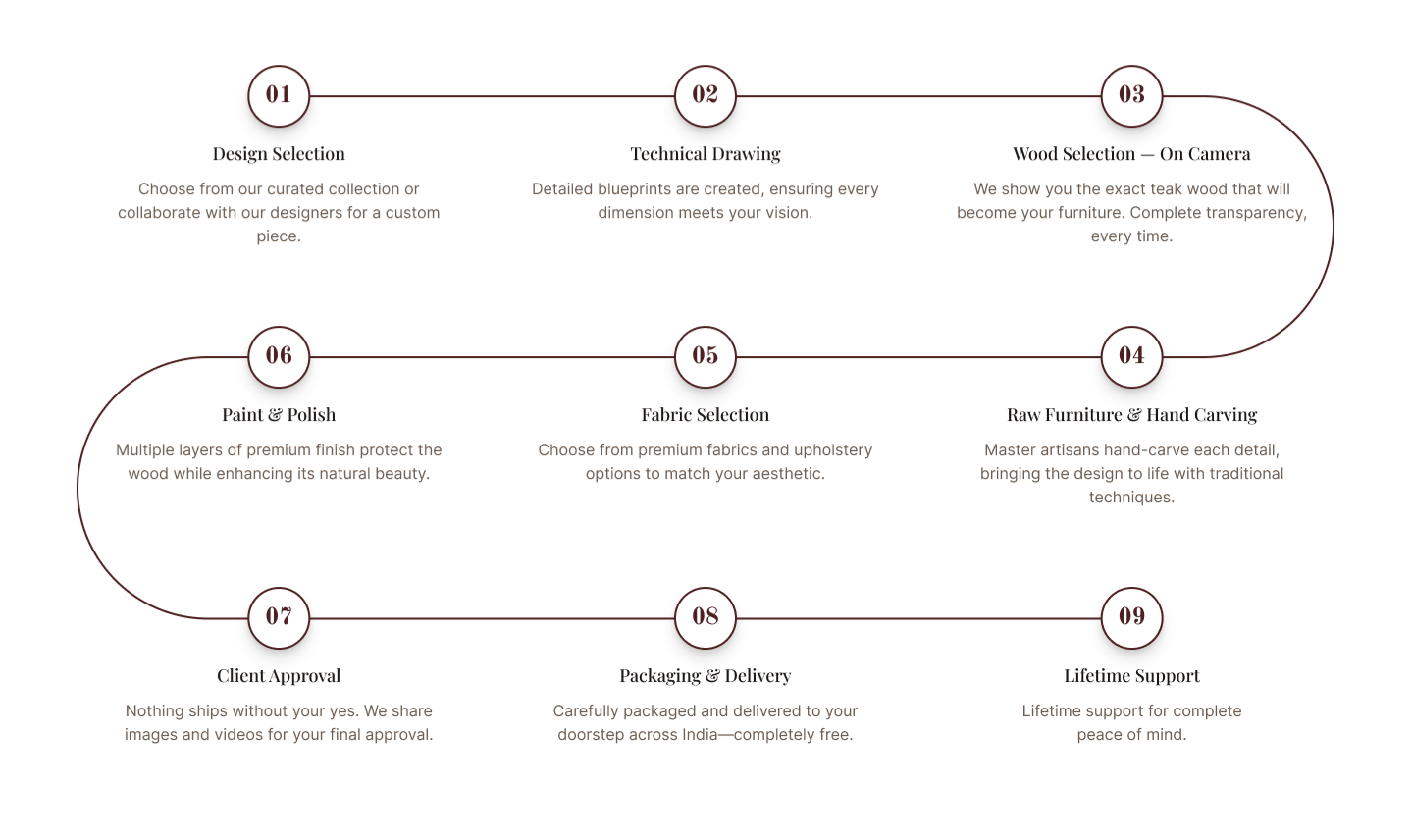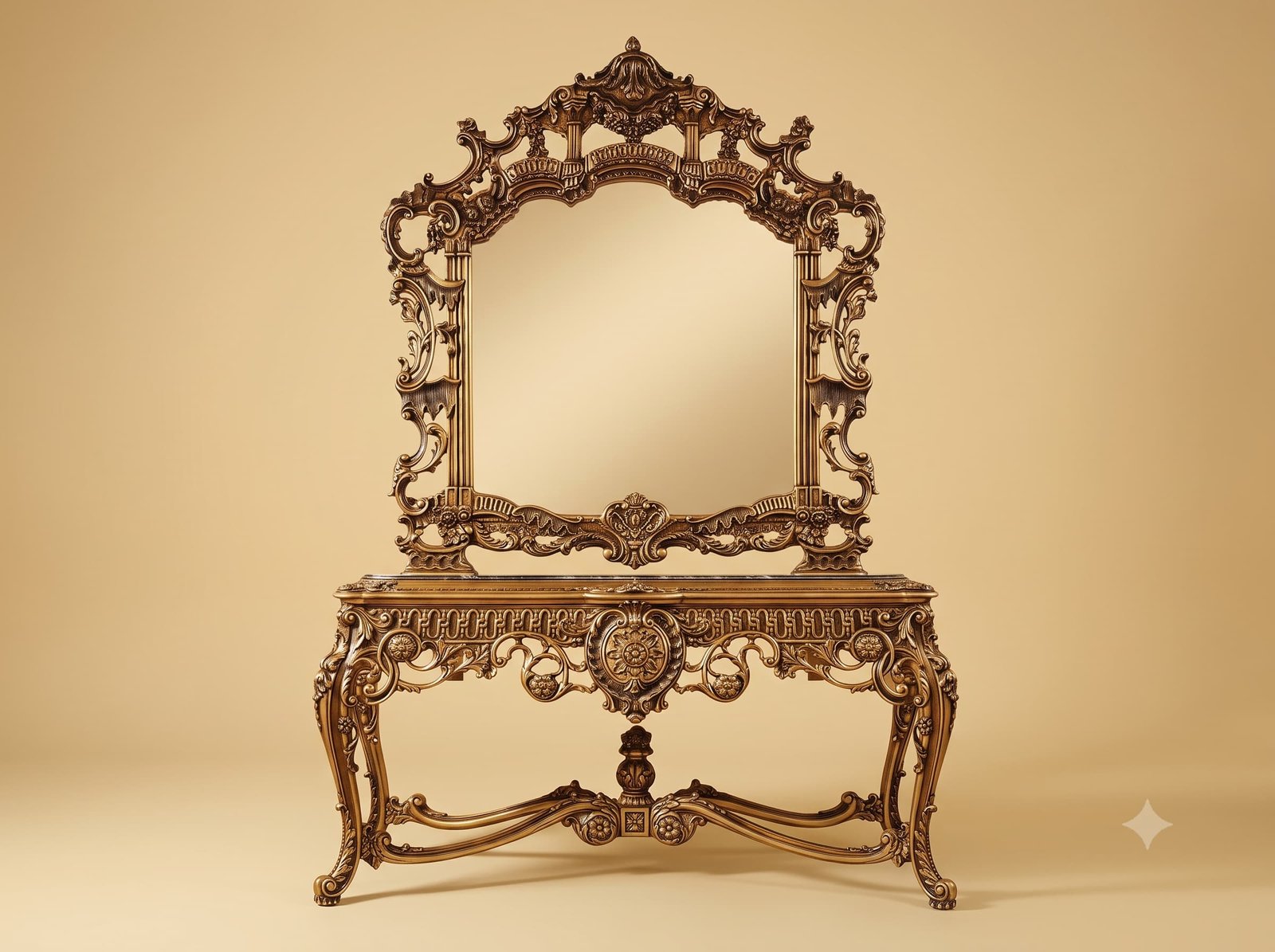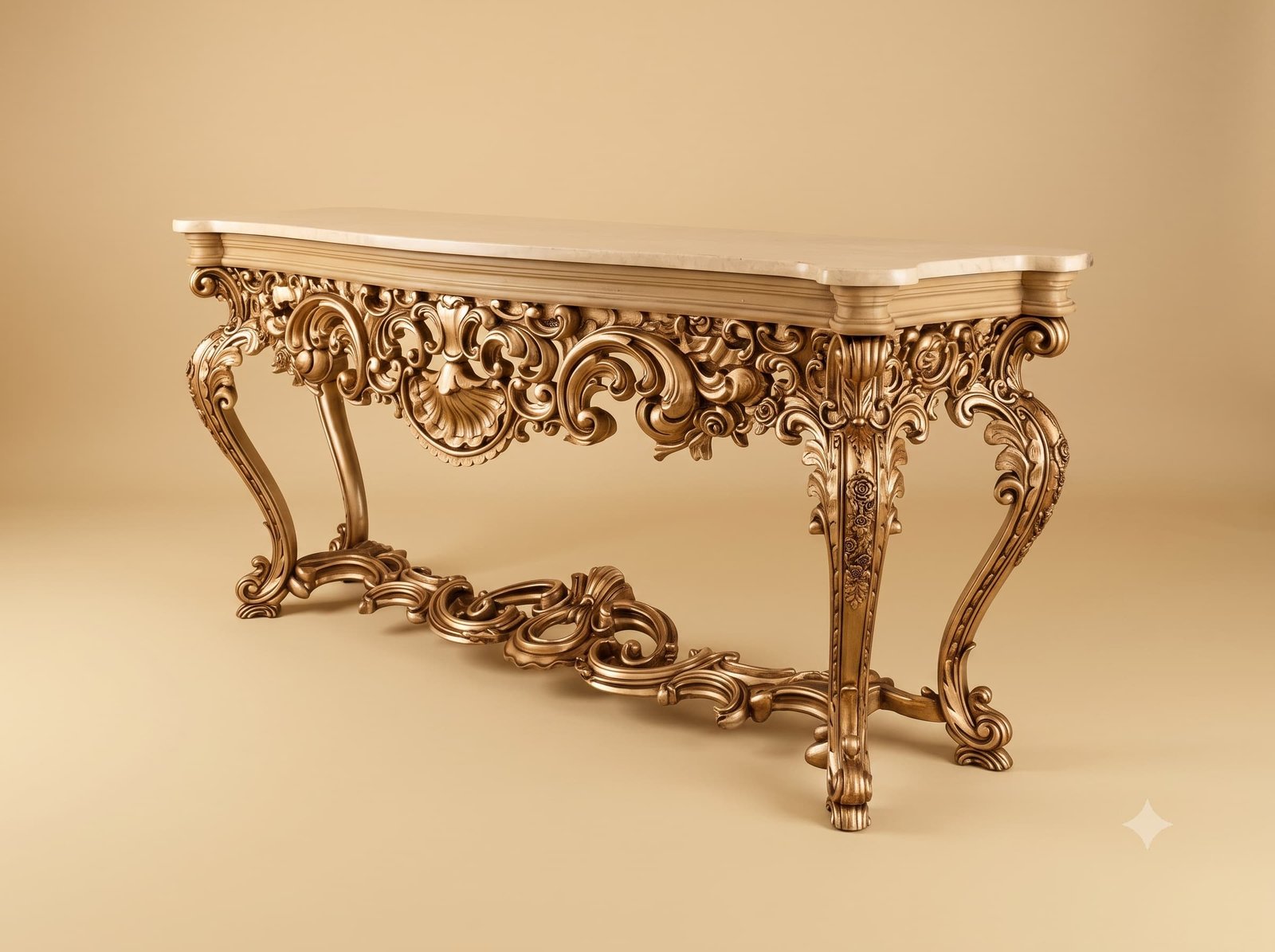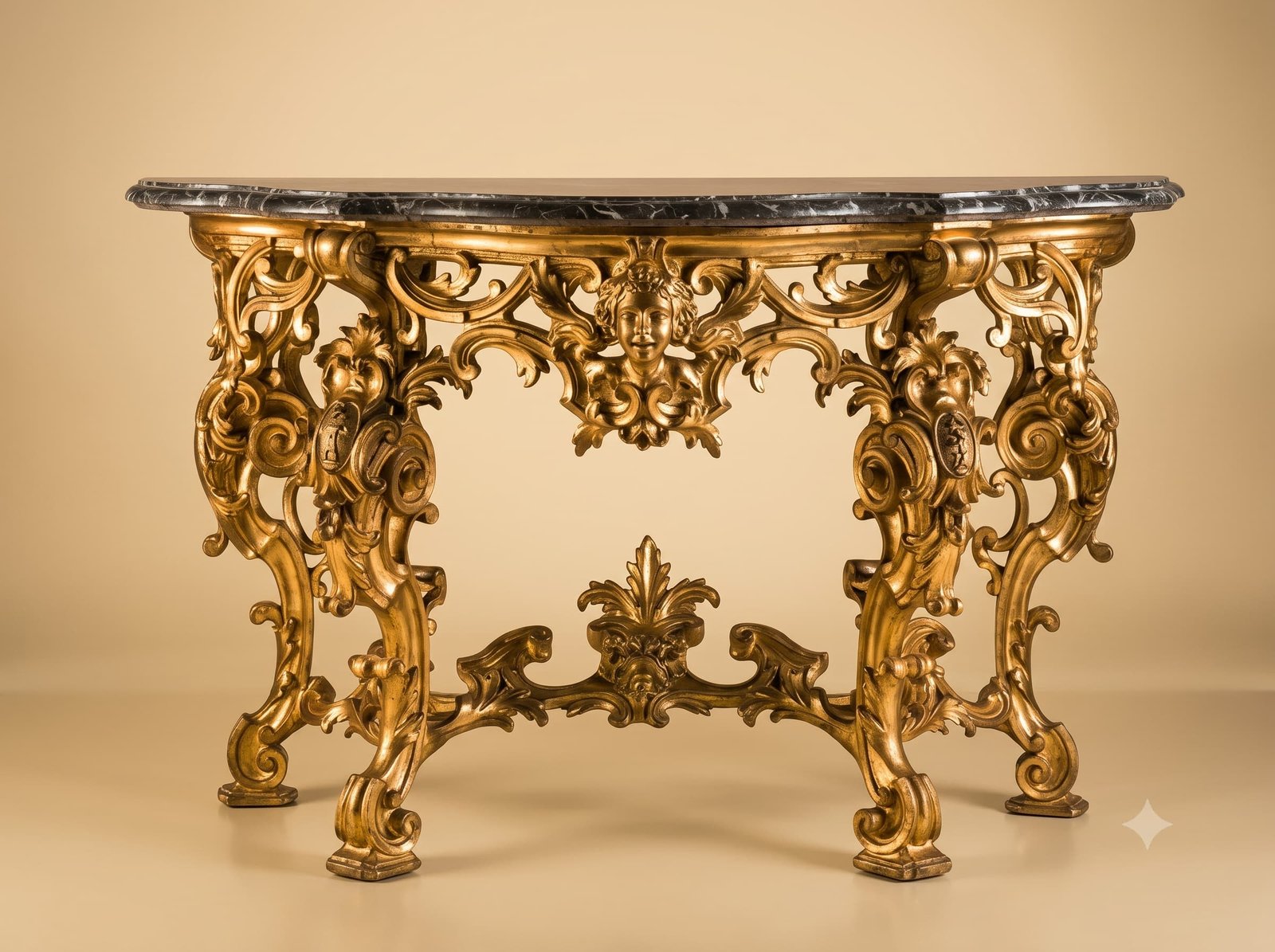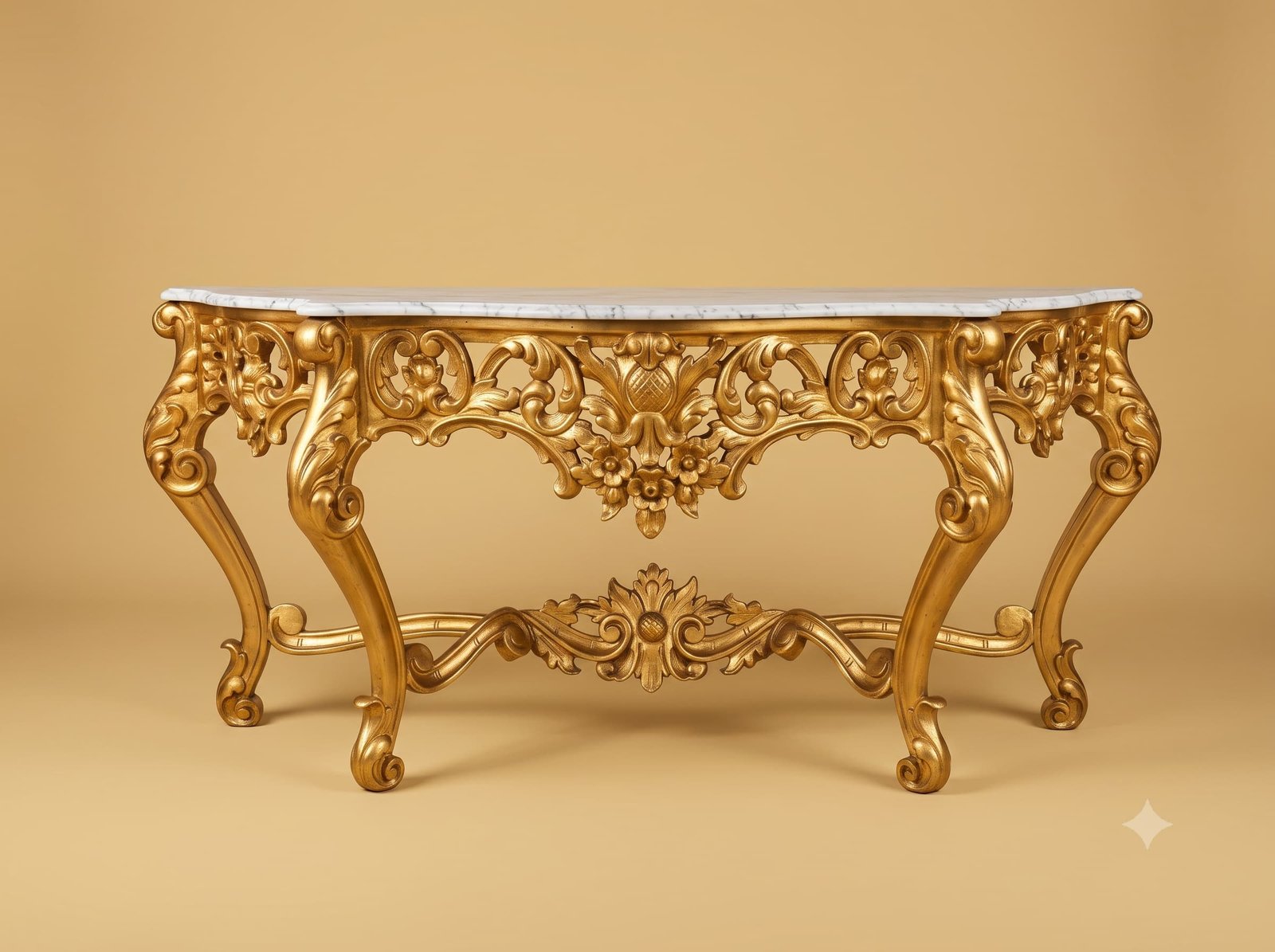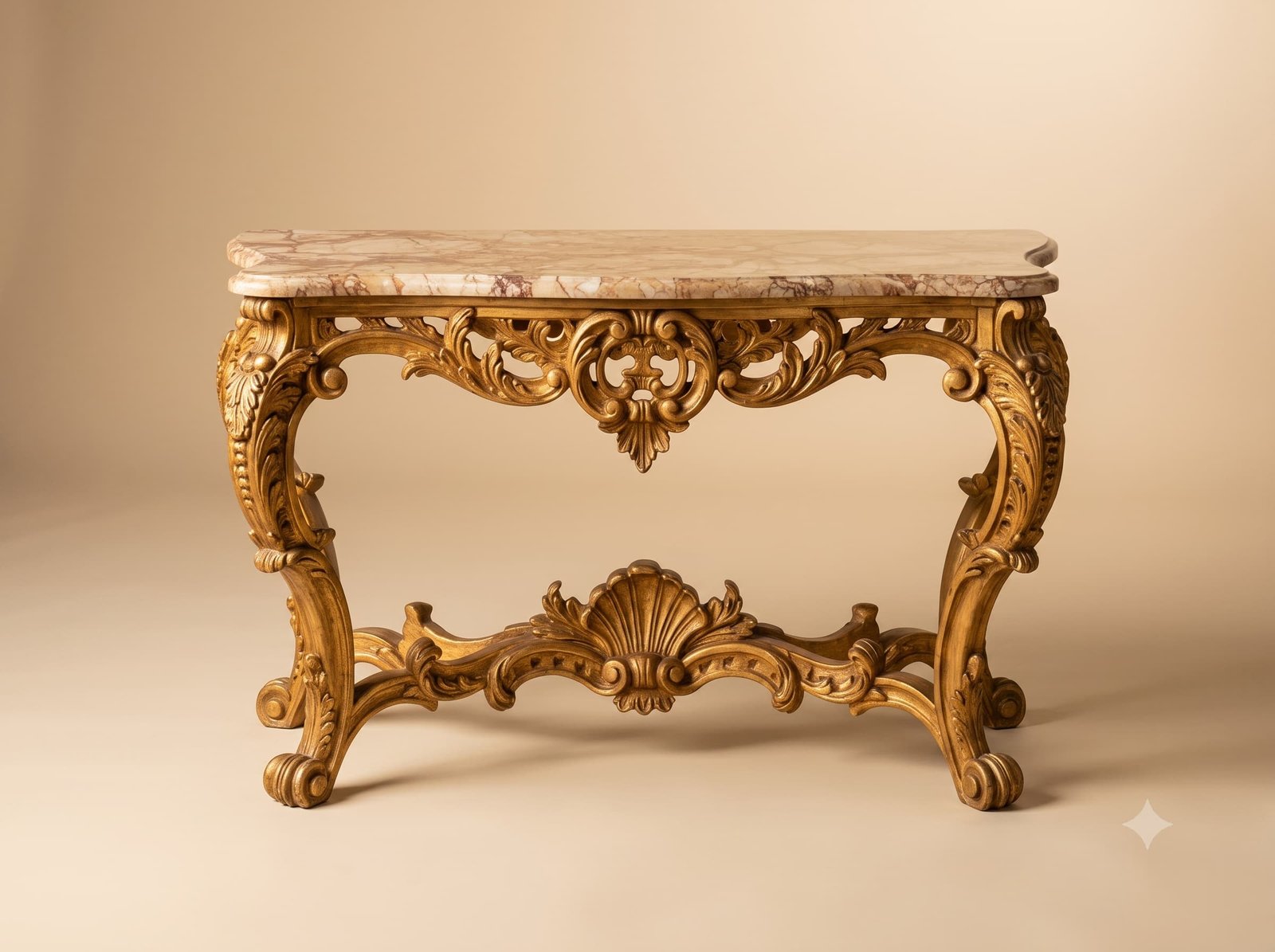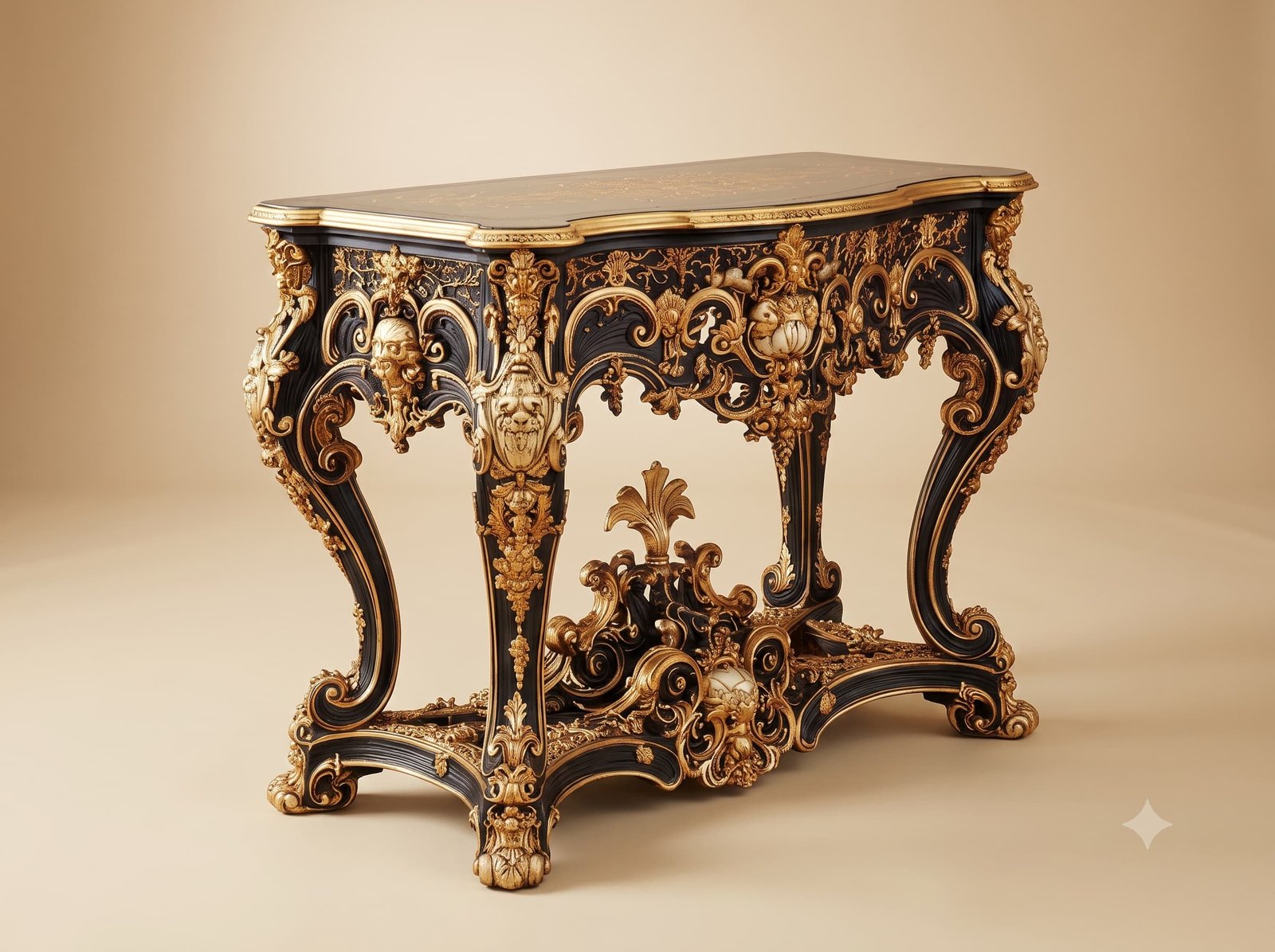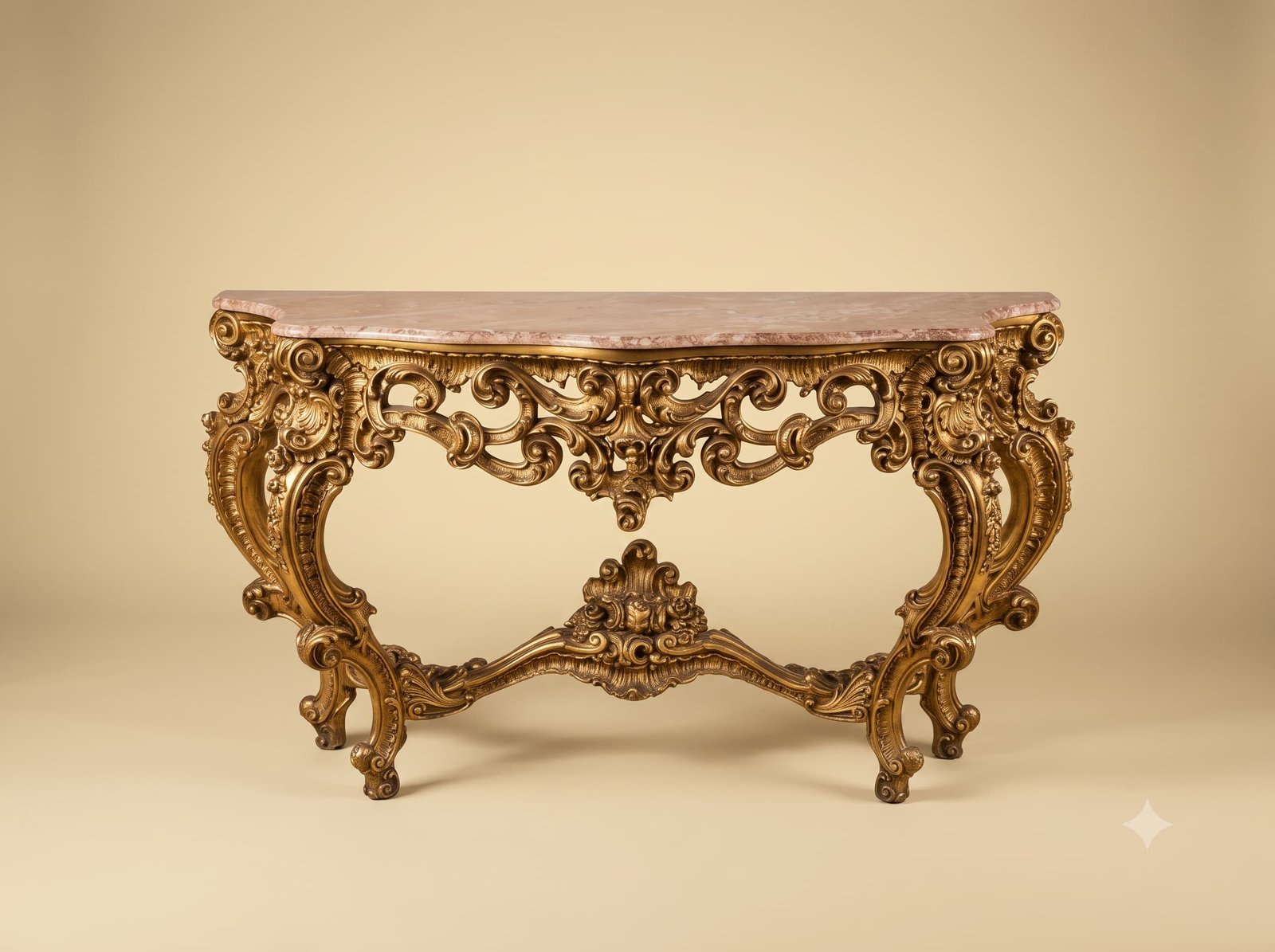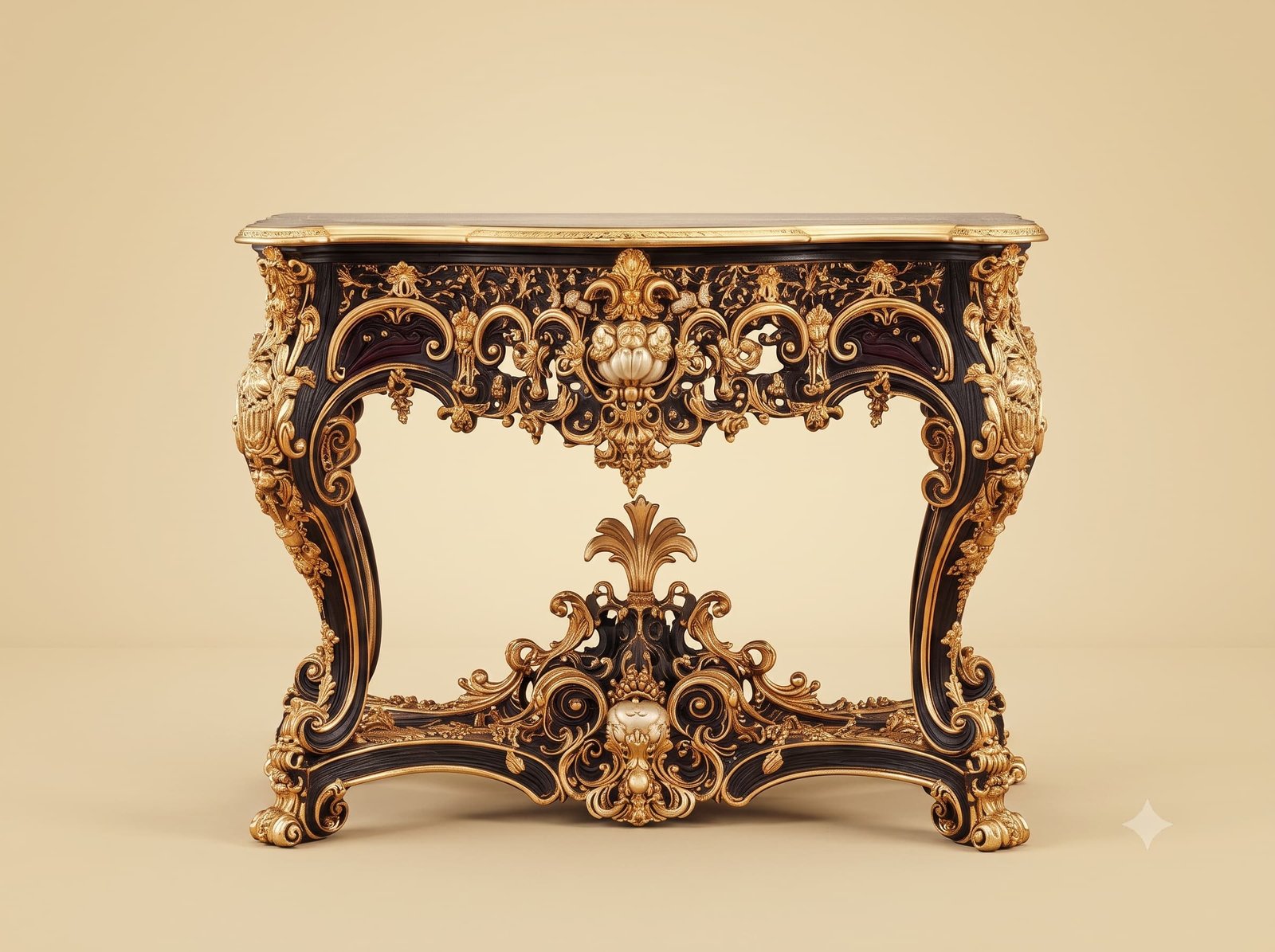
The plume rising from the stretcher is the smallest element on this table and the one that takes the longest to settle, because its height is a judgement rather than a measurement.
It is carved with the grain running vertically and mortised into the stretcher, so the fibres run continuously up through the leaves and there is no short-grained neck to fail. That part is straightforward joinery. What is not straightforward is deciding where it stops.
Our master Indian artisans work to a rule that applies to any ornament pointing into empty space: it must either clearly reach the thing above it, or clearly stop well short of it. What it must never do is almost touch. A plume whose tip finishes a finger's width below the apron looks like a mistake - the eye reads the gap as an error rather than as a decision, and it keeps returning to it. Give it a generous, obvious gap and the plume reads as rising freely; carry it all the way up and it reads as a support.
So the carver works the plume slightly over height, stands the table up, looks at it from across the room, and takes it down until the gap is unmistakable.
 Ask Price On WhatsApp