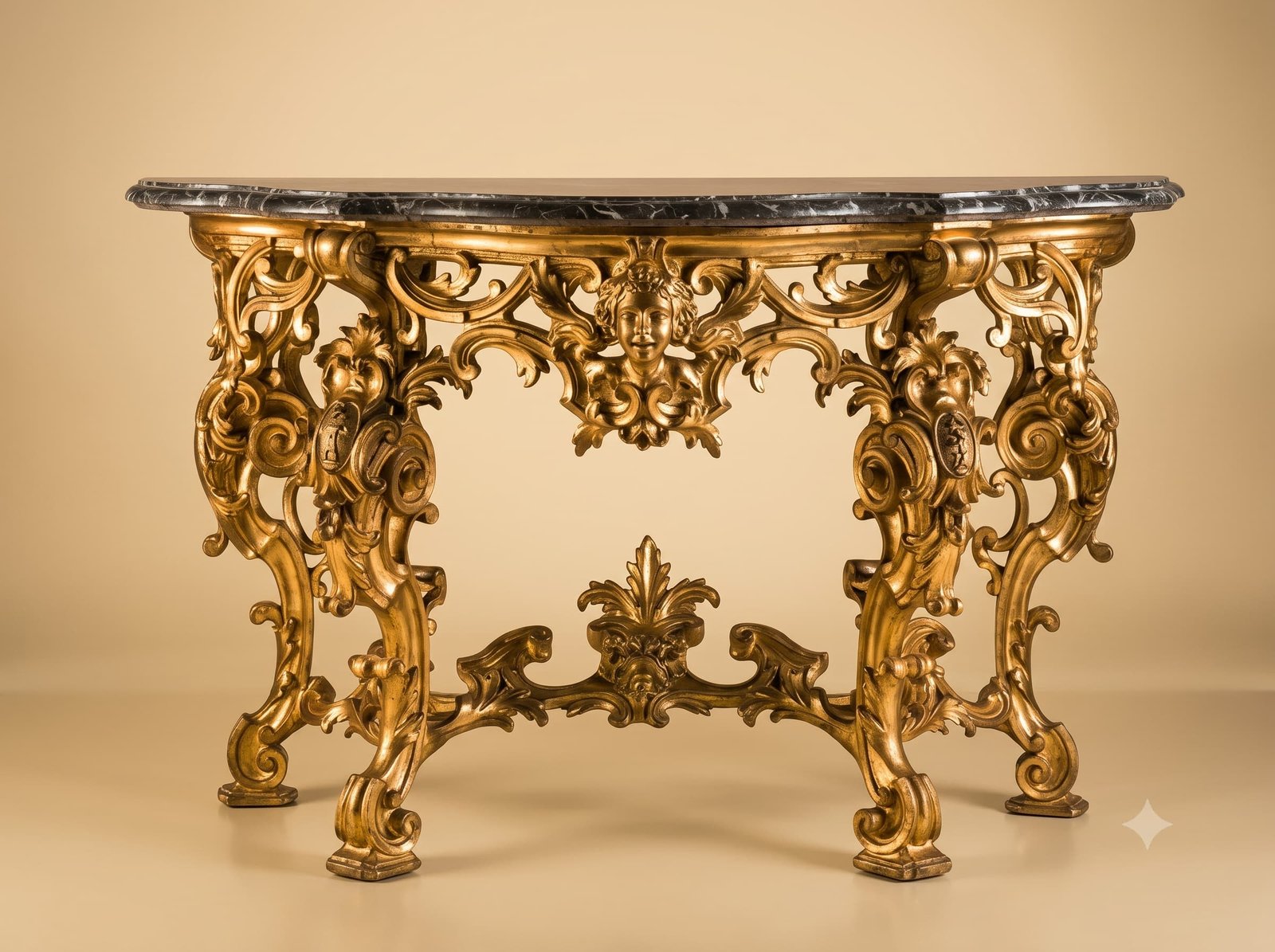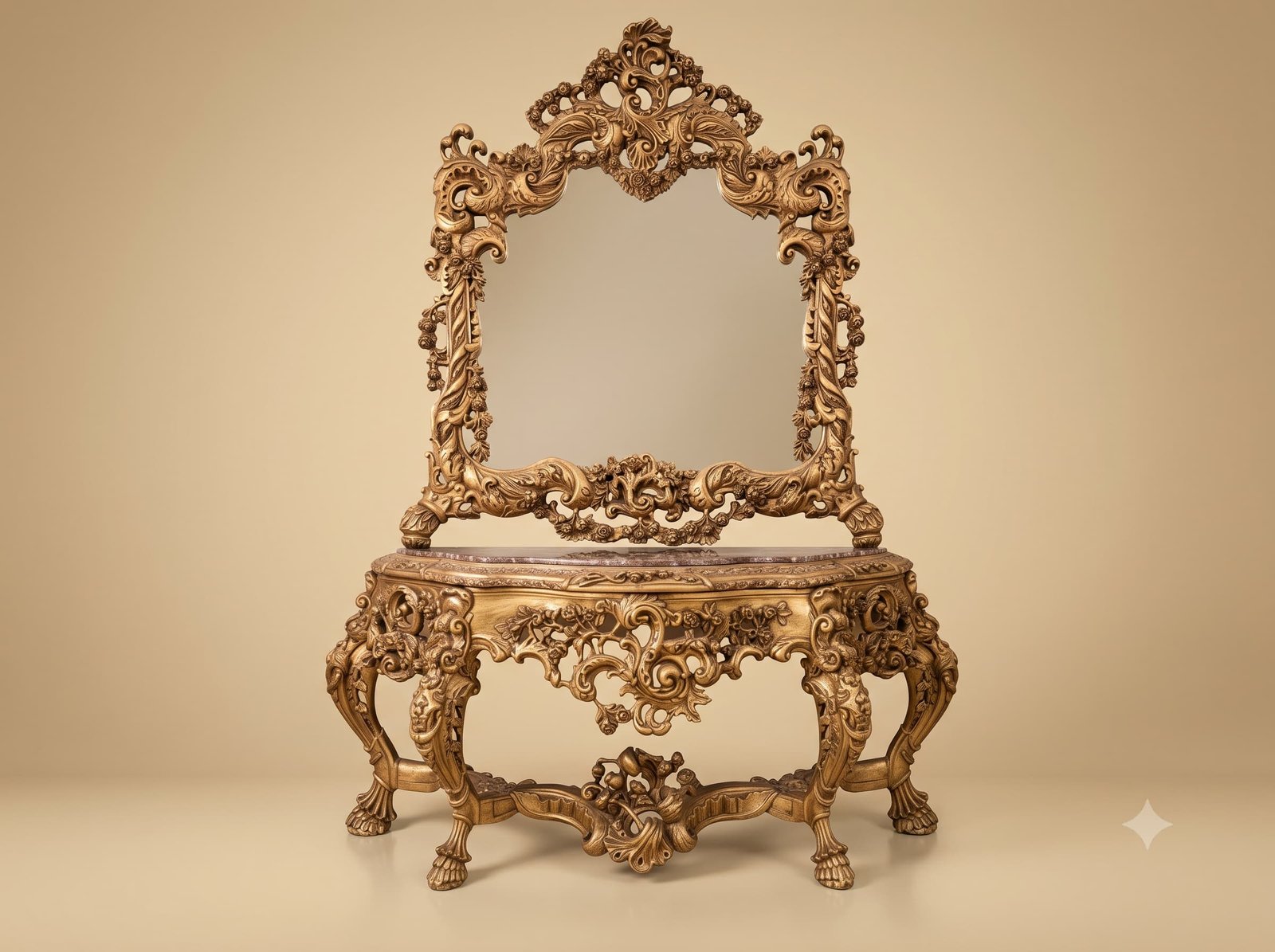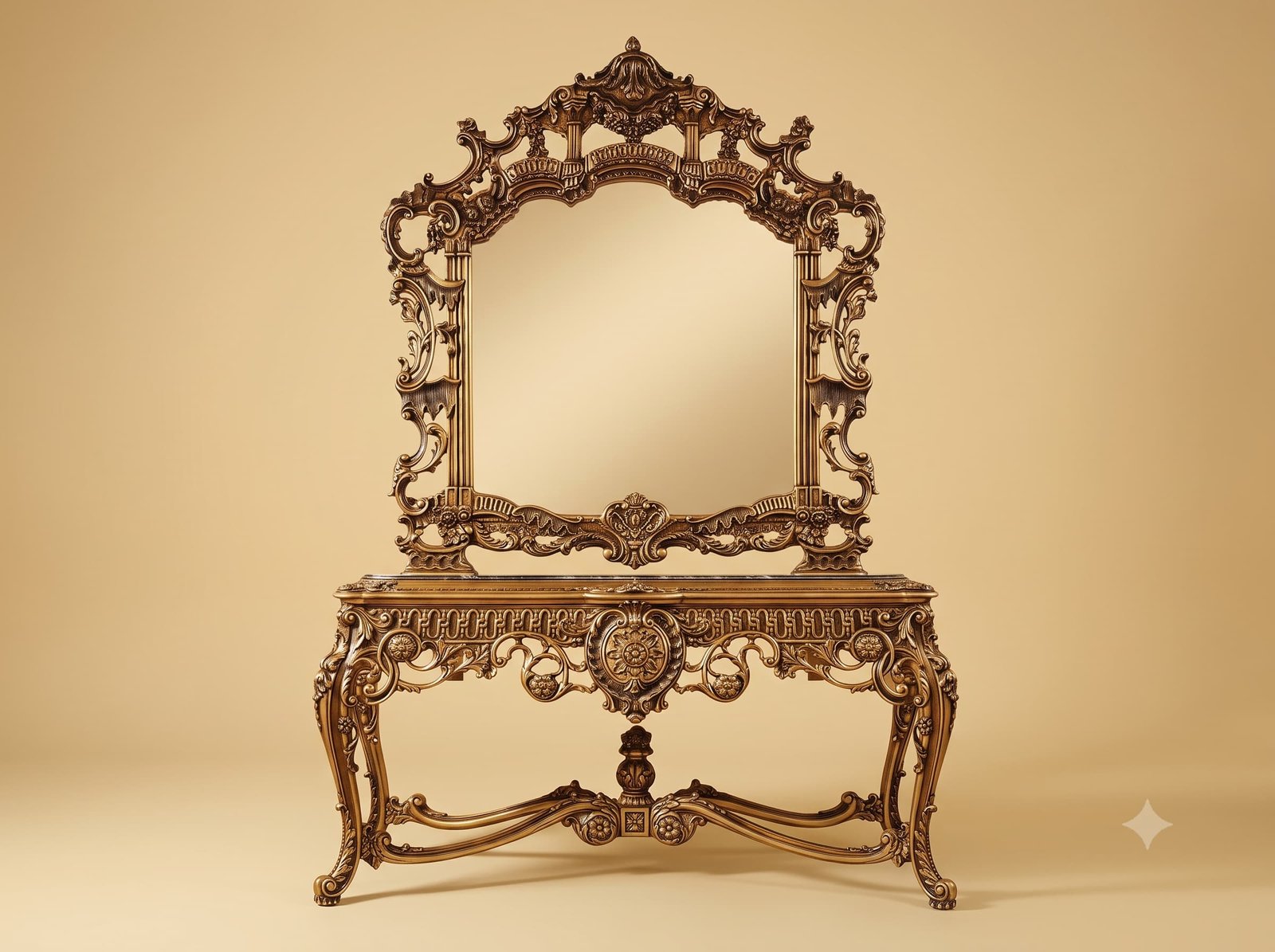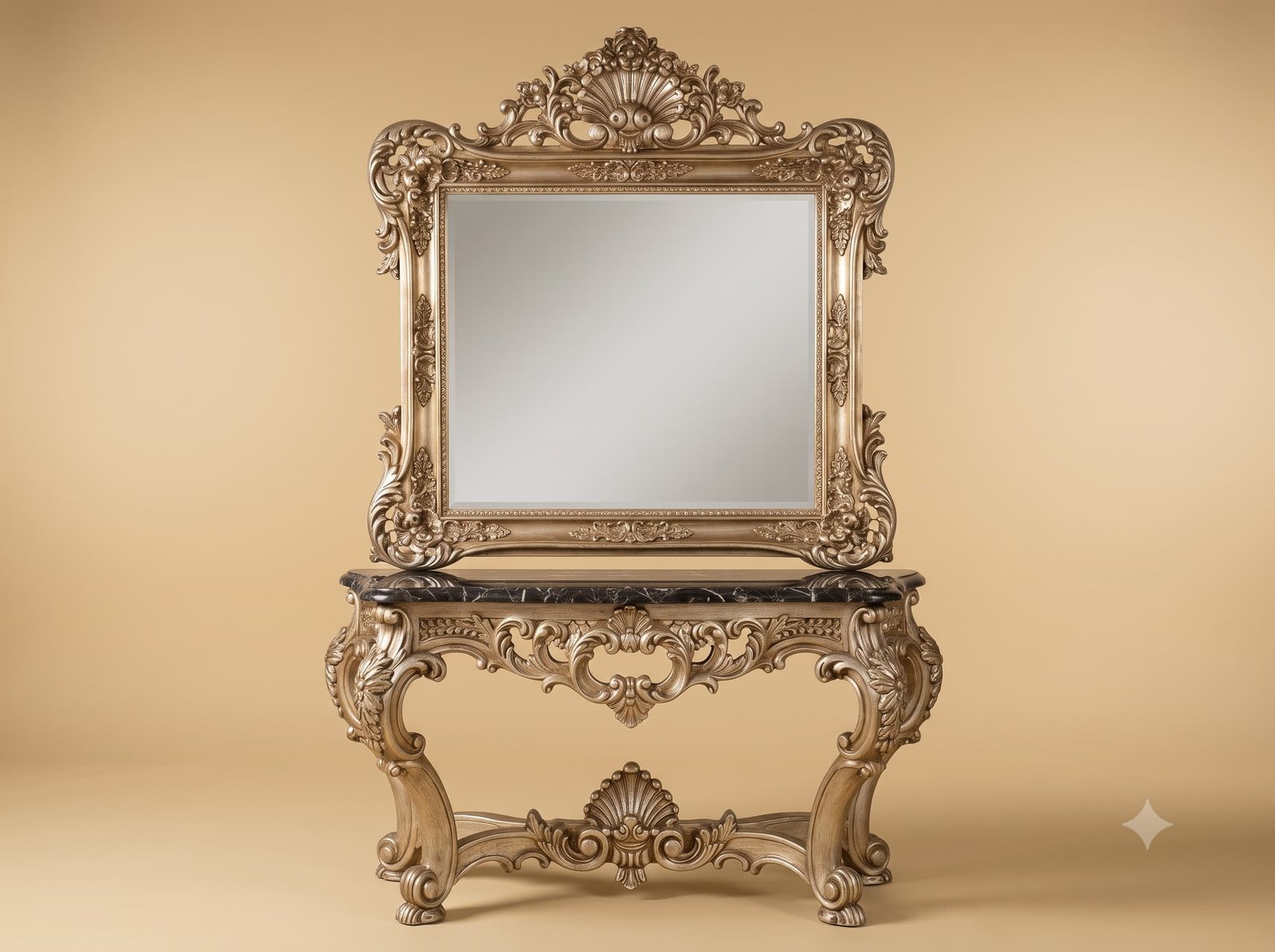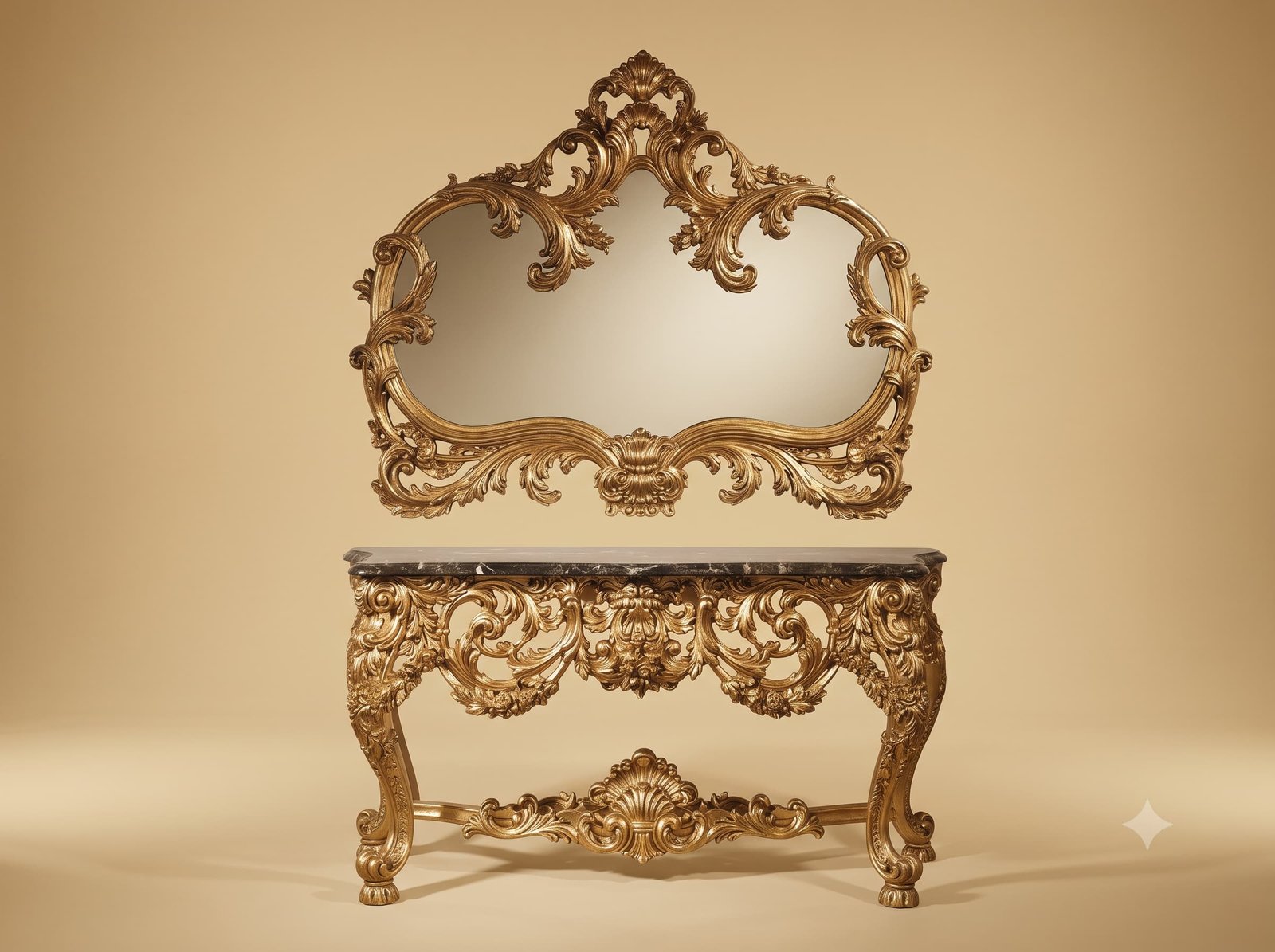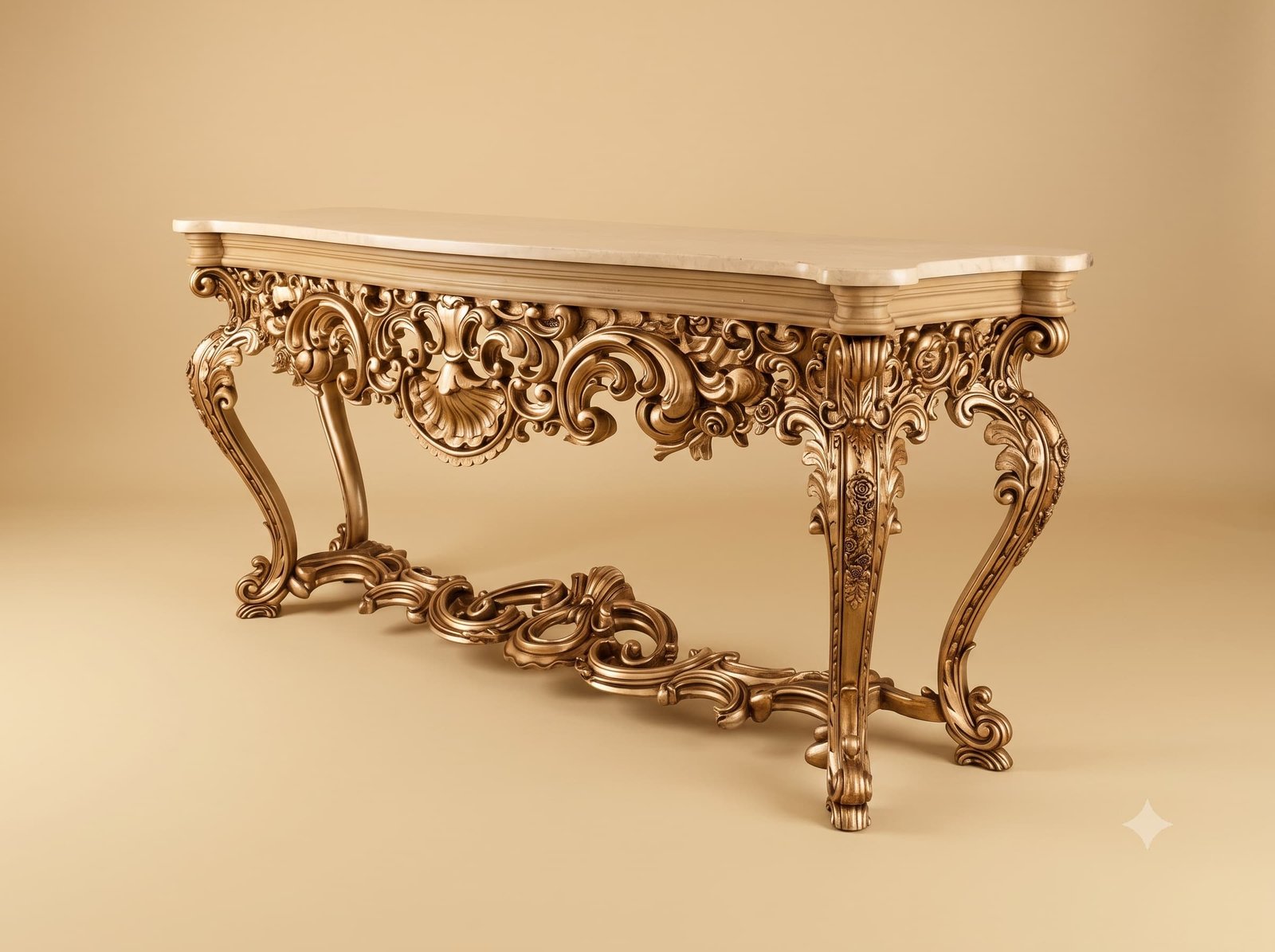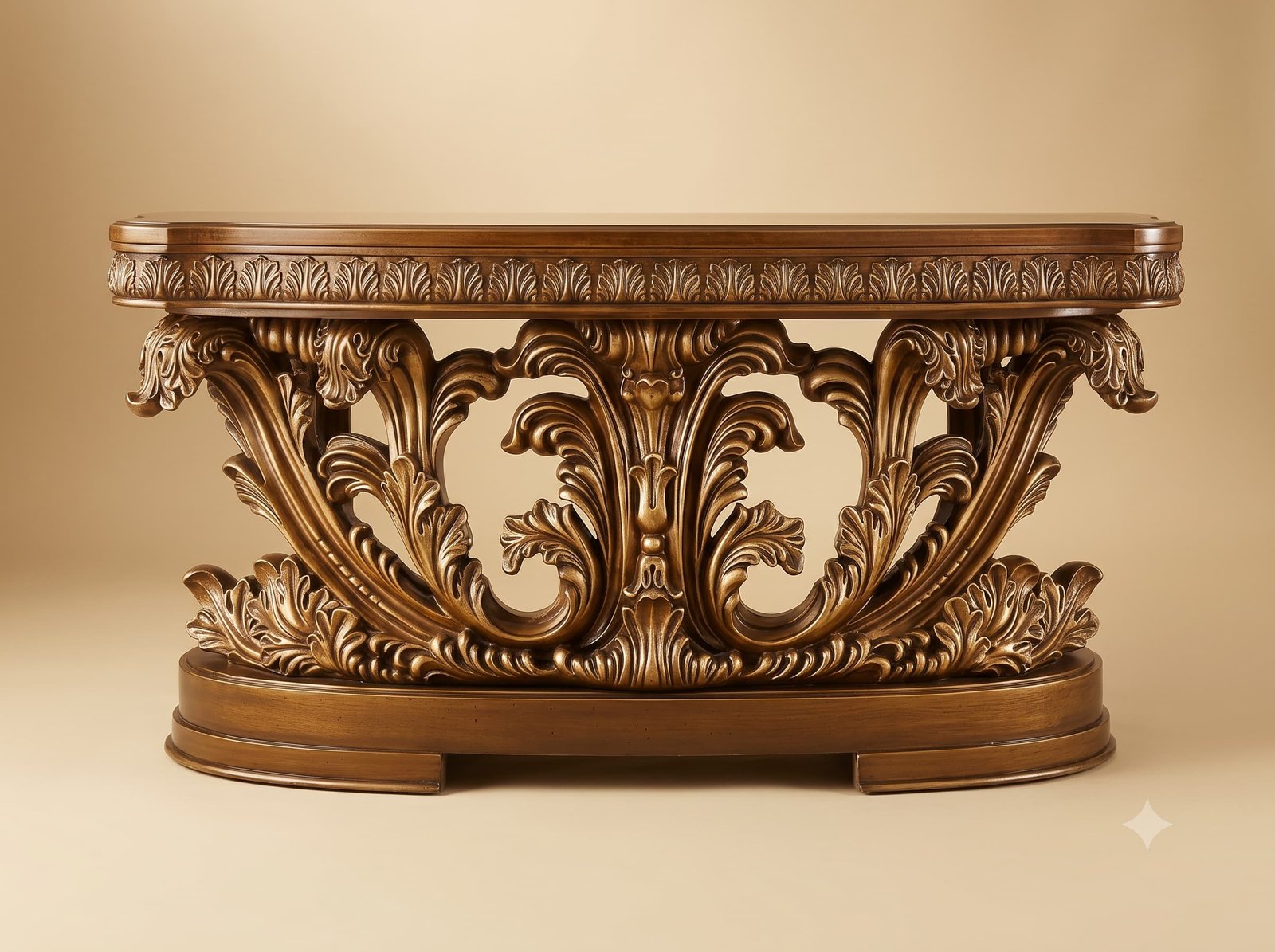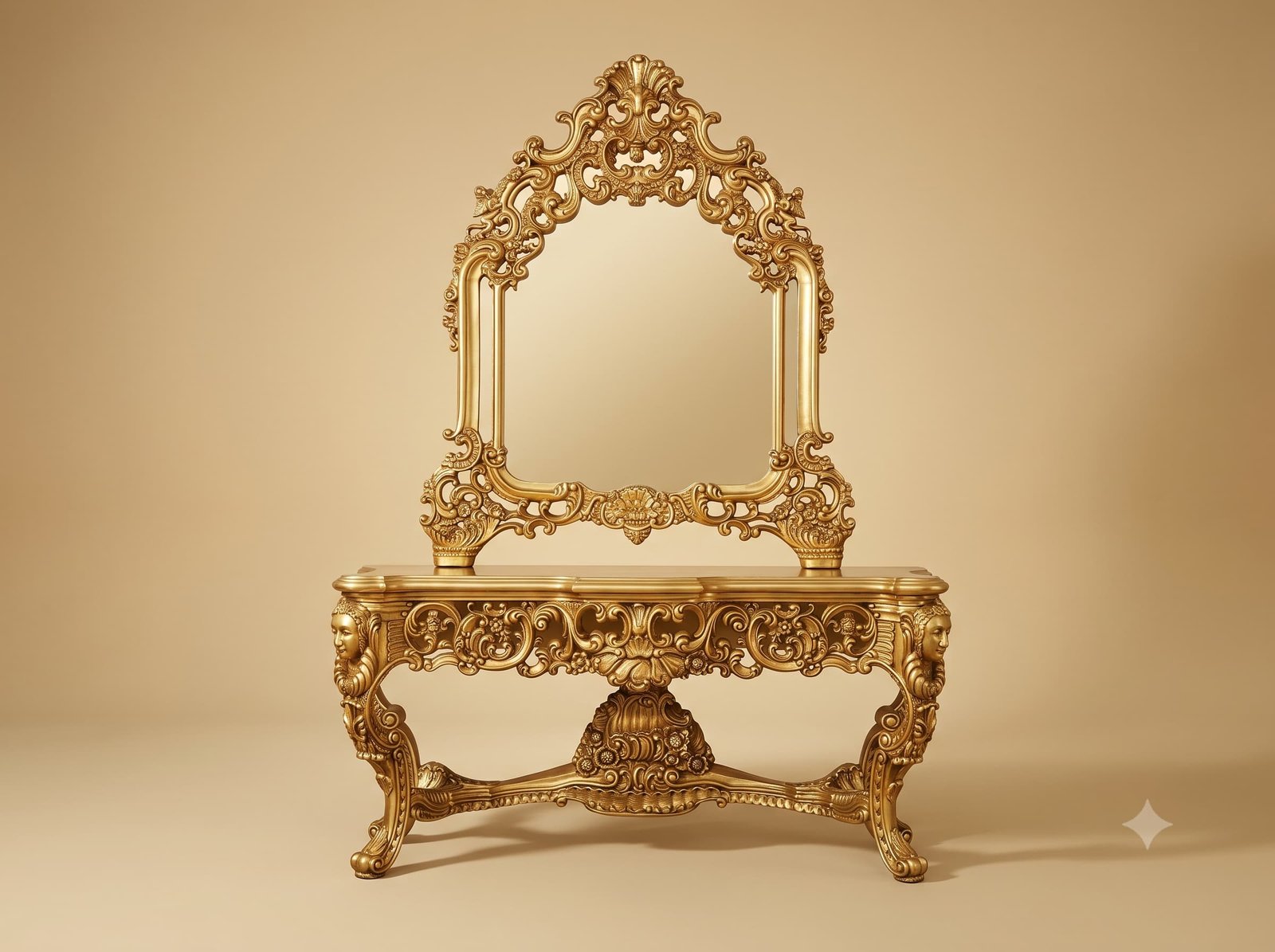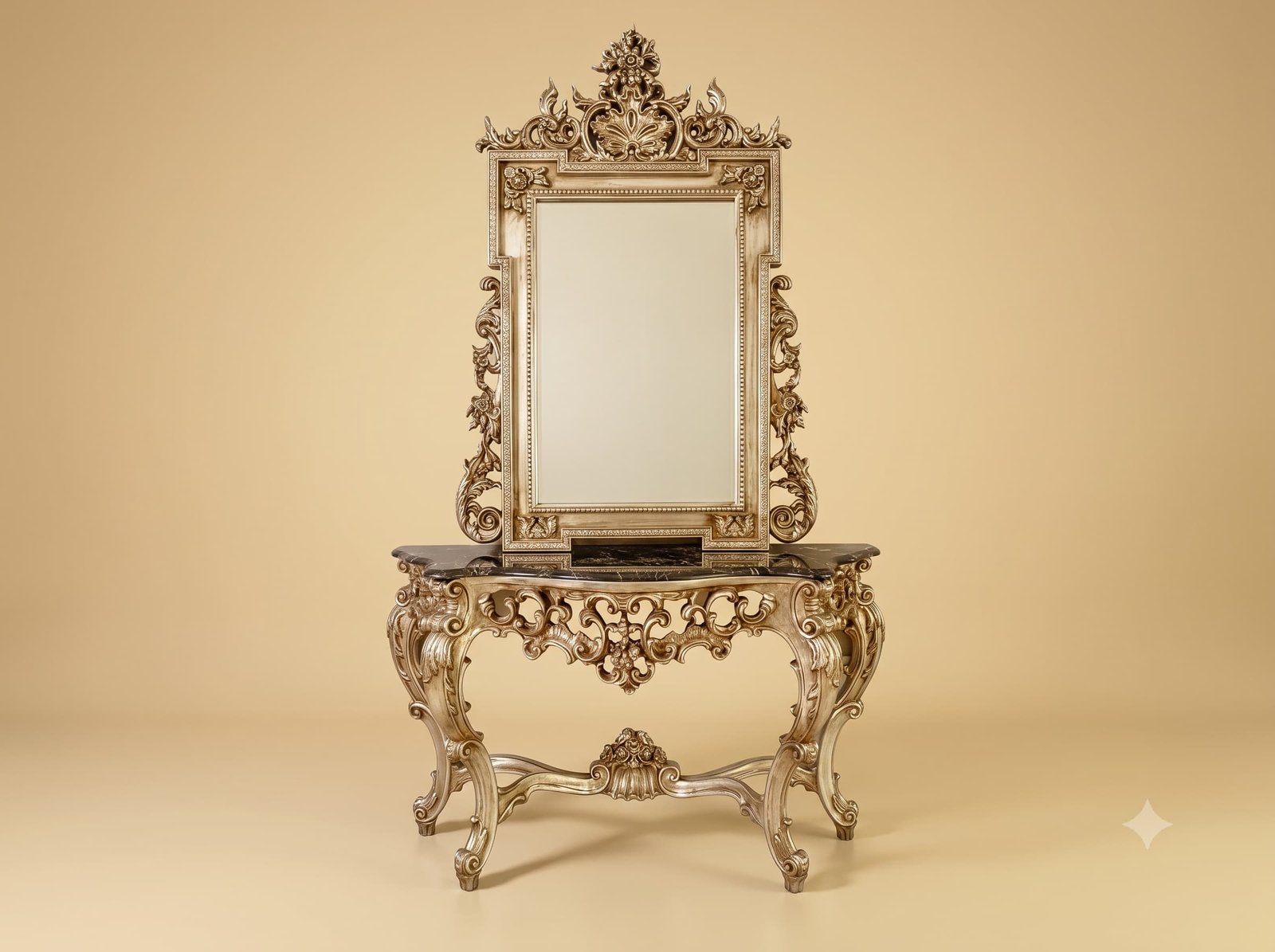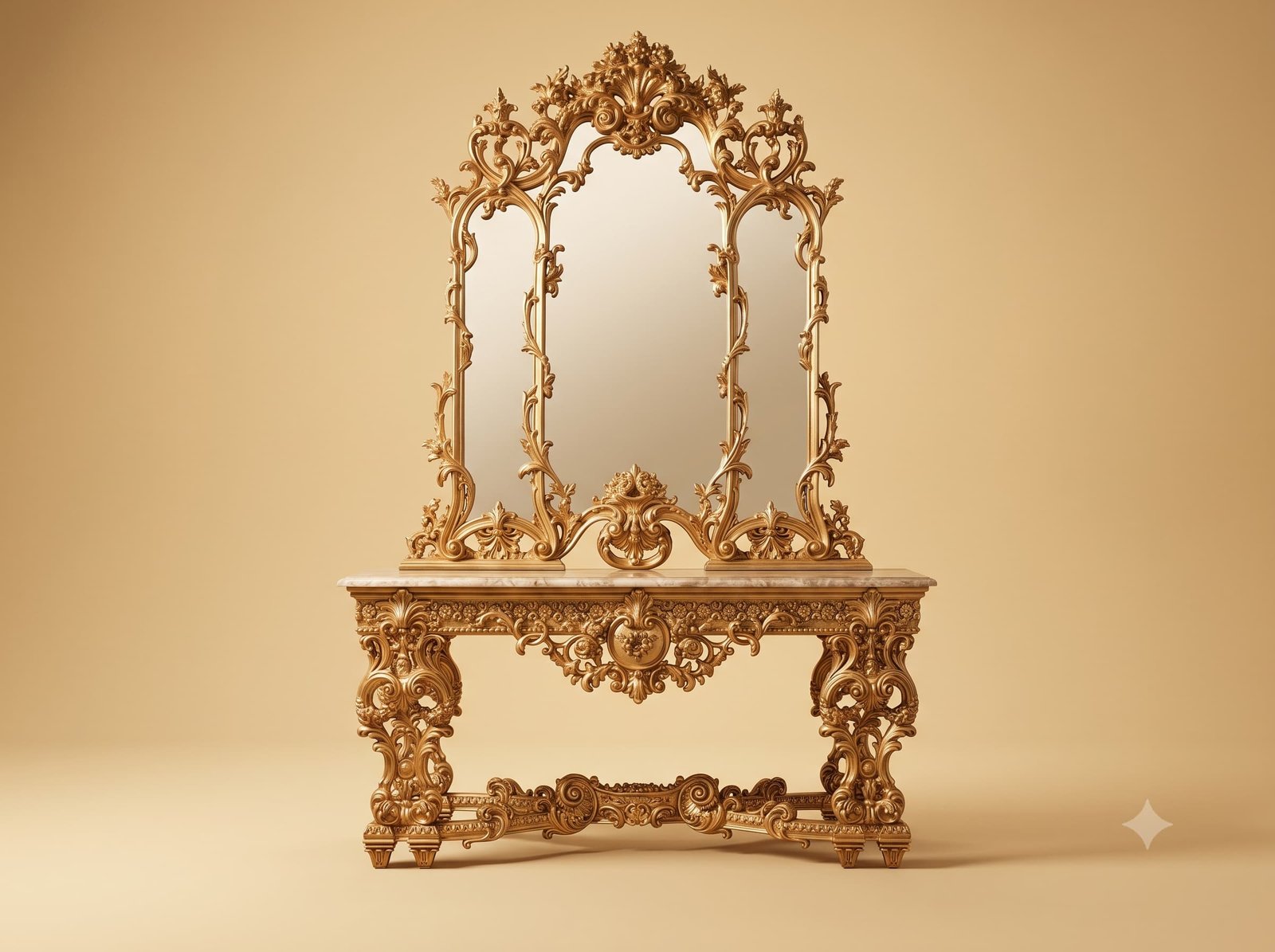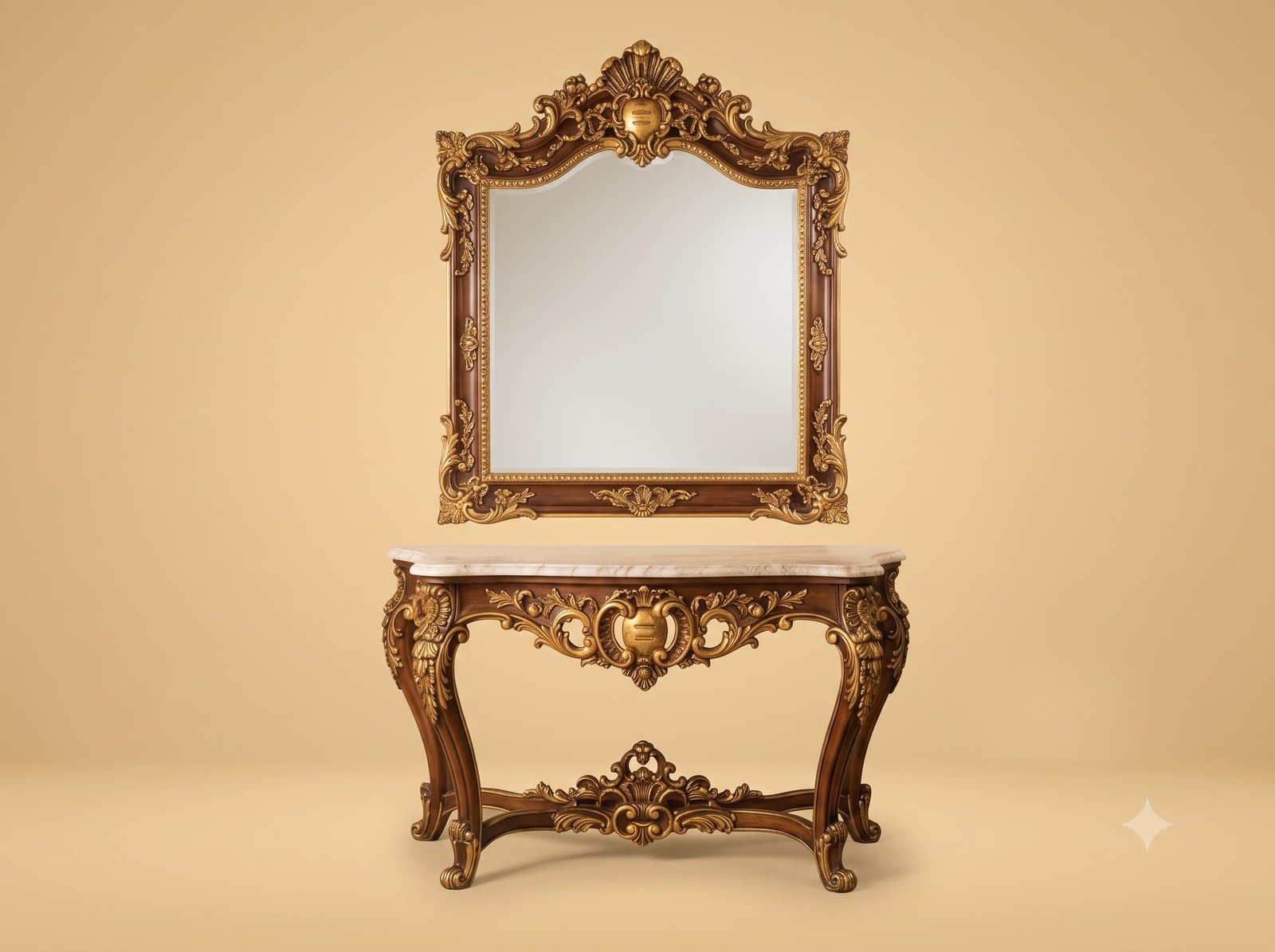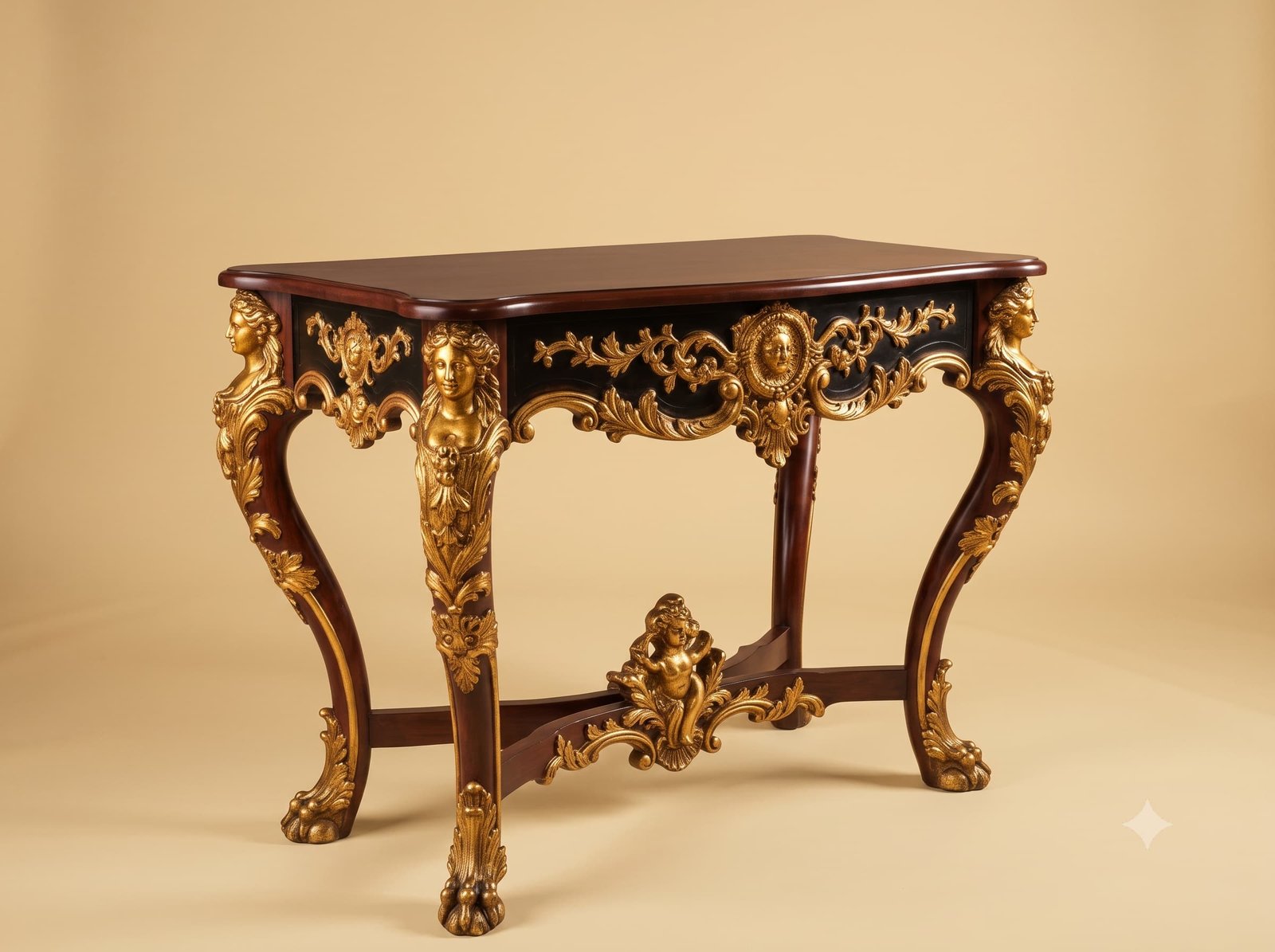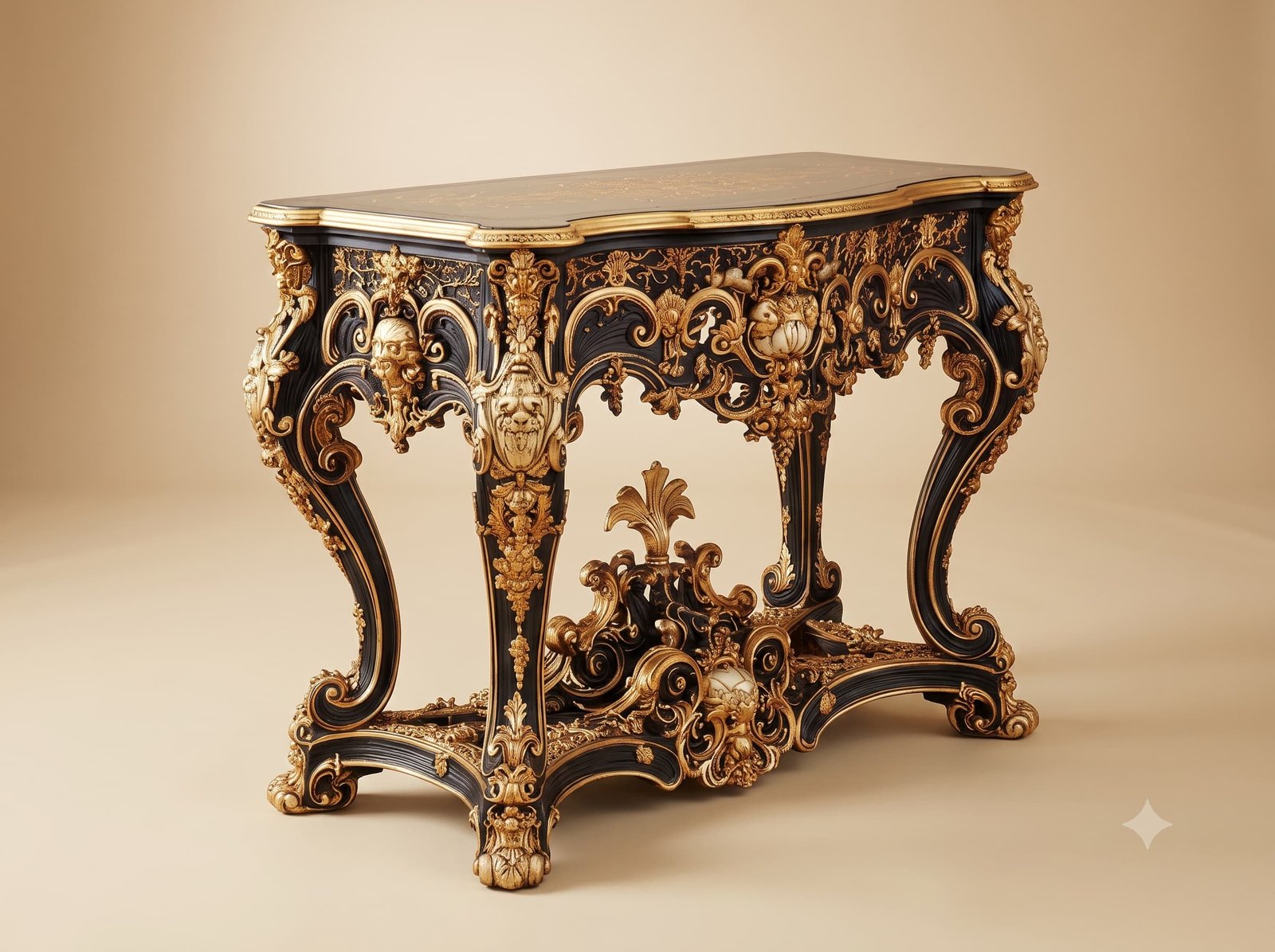
Putting gold next to black is not a finishing decision, it is a carving decision, and it is made long before any colour goes on. A boundary between two strong tones is only as good as the line it follows. Painted across a flat surface, that line wavers - the eye reads every tremor in it, and on a piece this size there are metres of it.
So our master Indian artisans carve the boundary before they colour it. Every gilded element is left standing proud of its background by a clean cut, so the change from black to gold happens on a physical edge in the timber rather than on a flat. The edge does the work: it holds the line dead straight or dead true to a curve, and it also catches light, which is why a gilded scroll on a black ground looks like it is lifting off the surface.
The order of work follows from that. Carve, then cut the arris crisply all the way round each gilded shape, then lay the black into every recess, then gild. Gilding last means the gold overlaps onto its own carved edge and stops there, at a boundary the wood itself is holding.
 Ask Price On WhatsApp