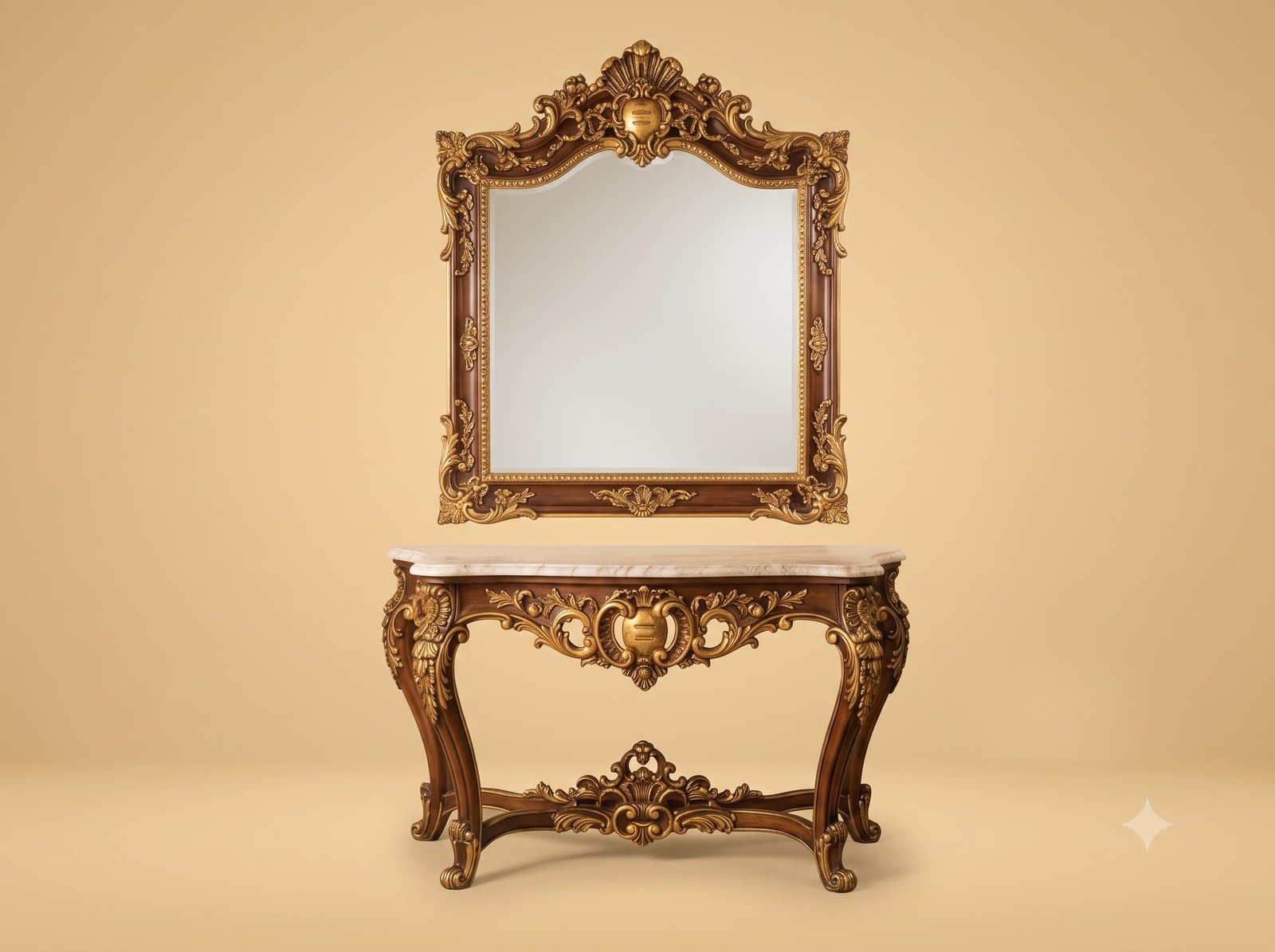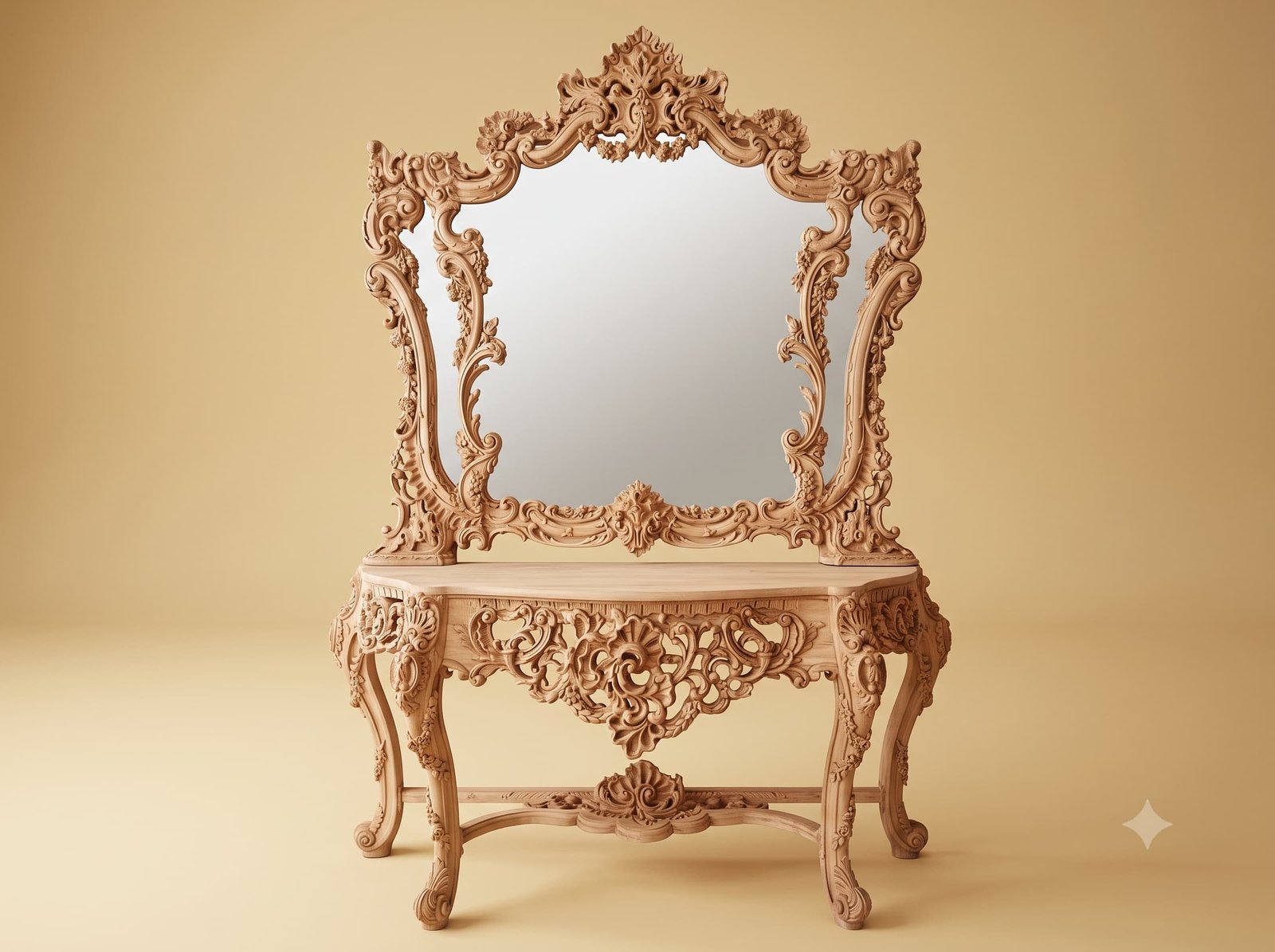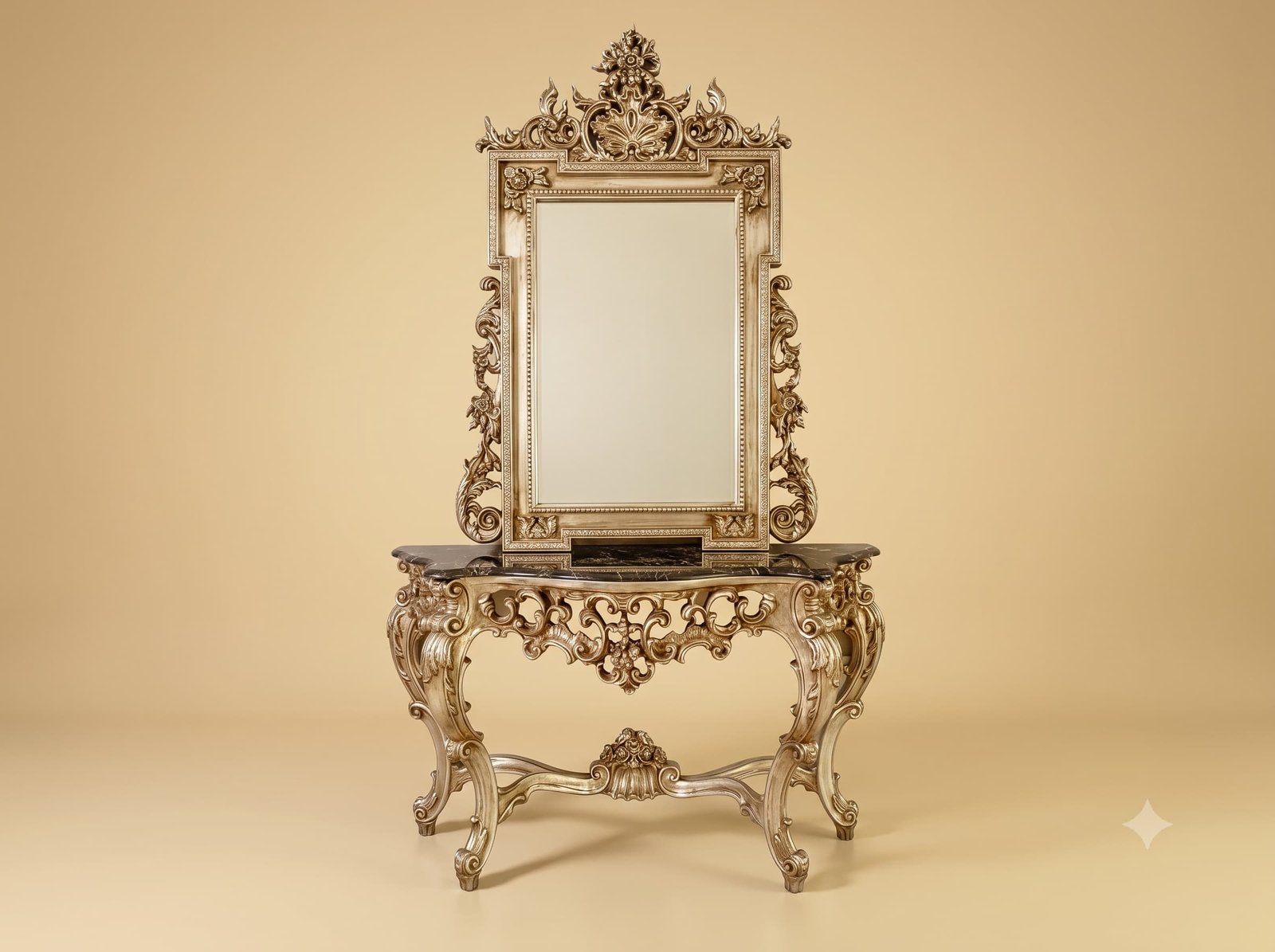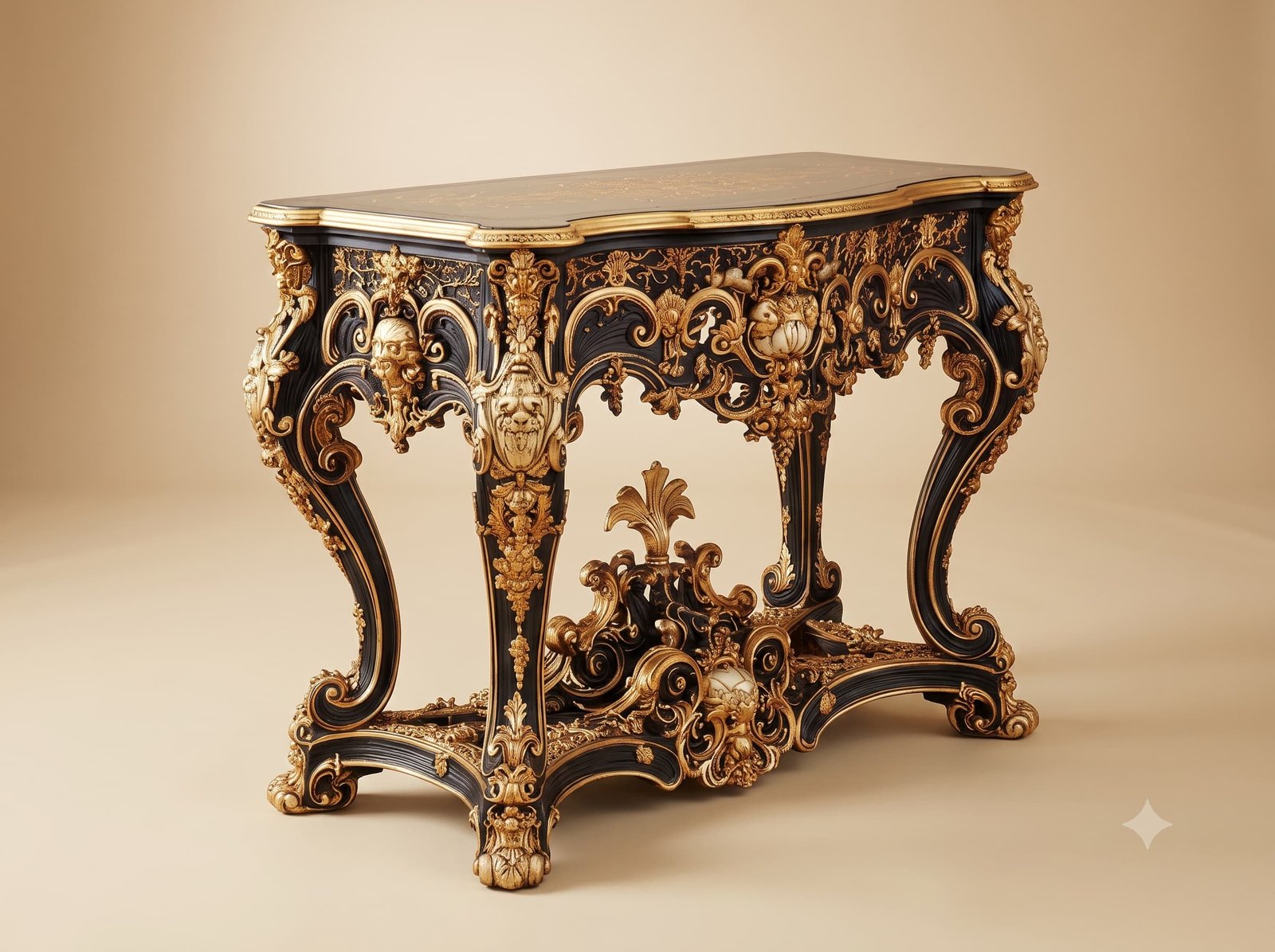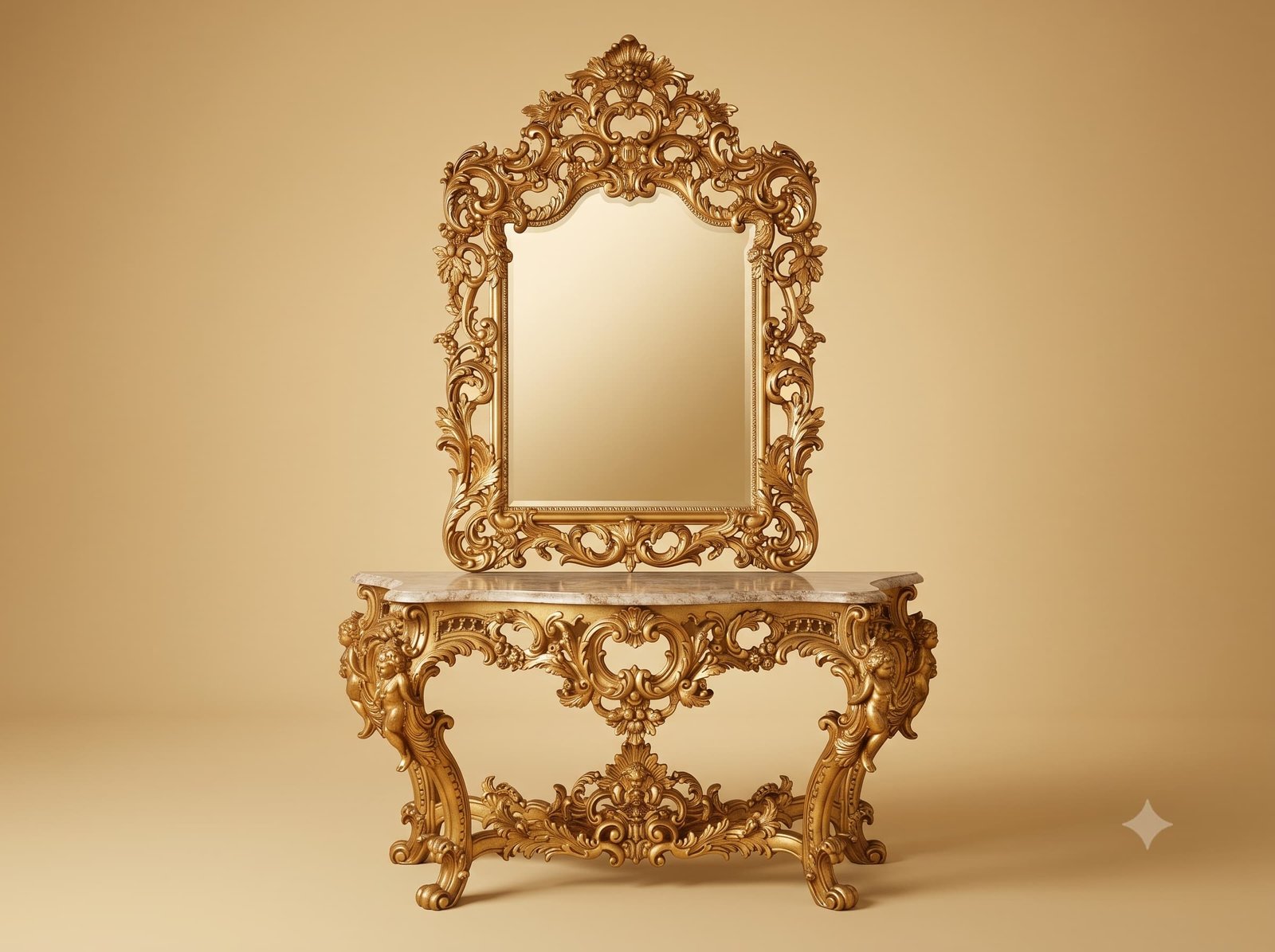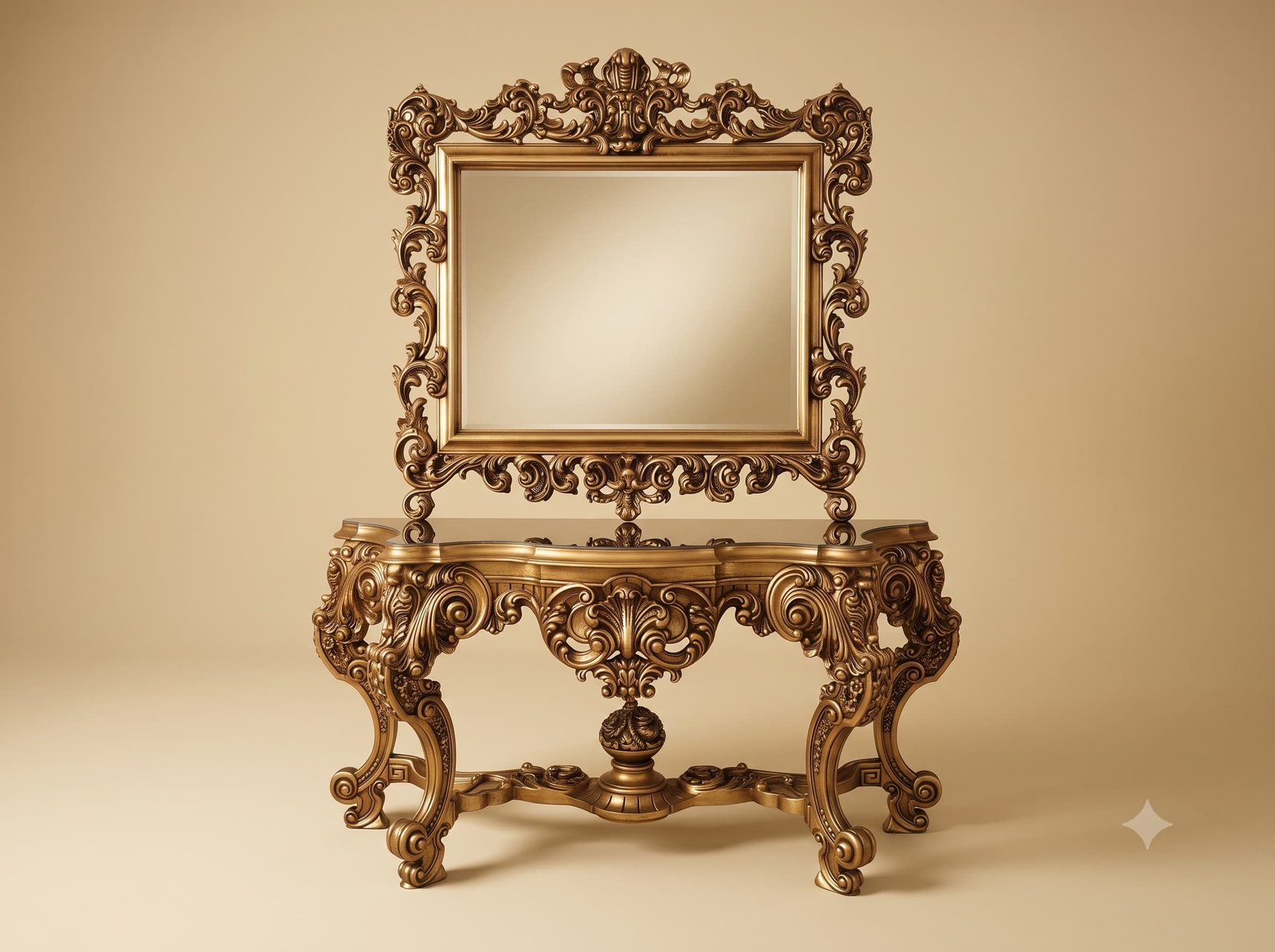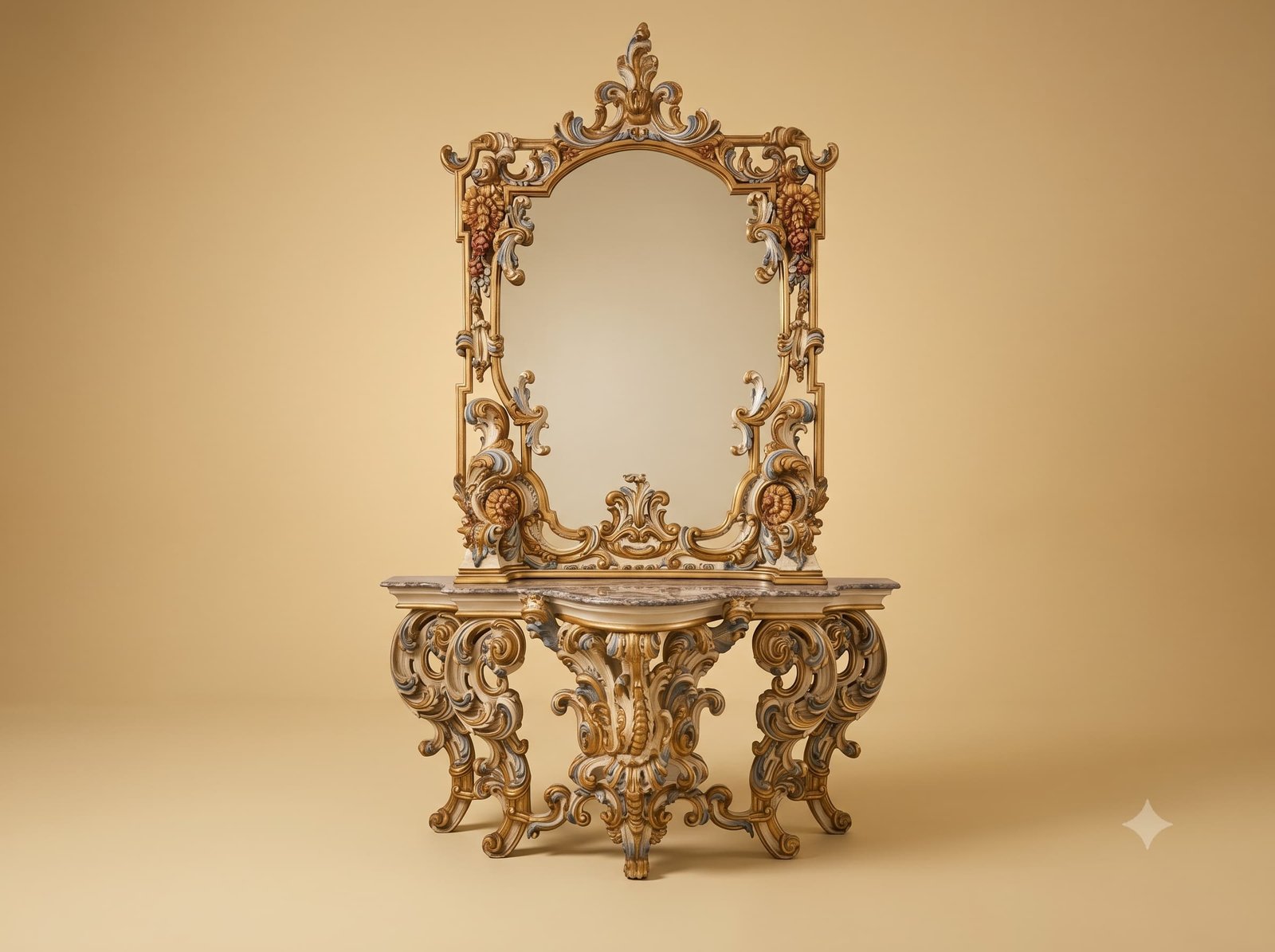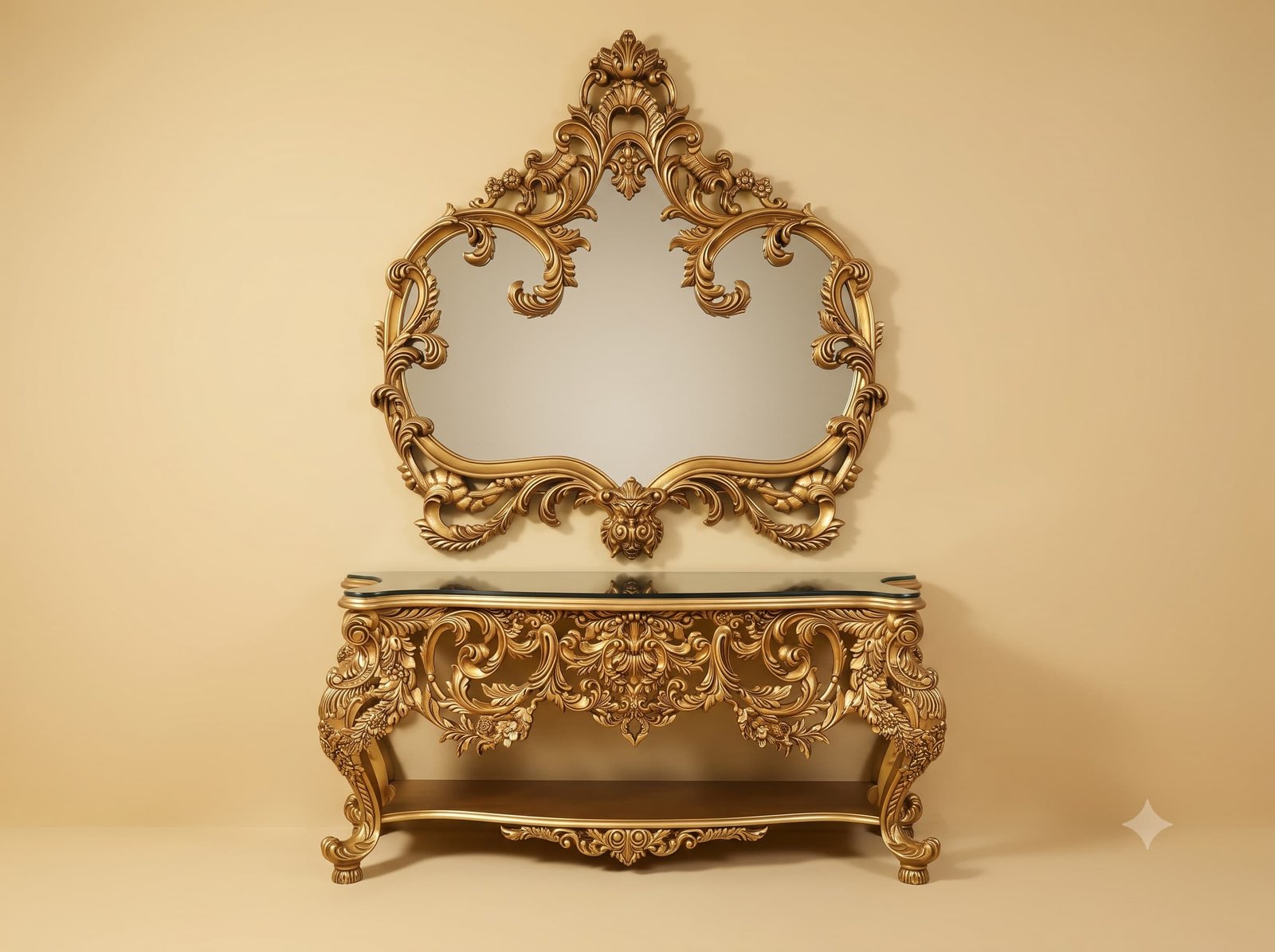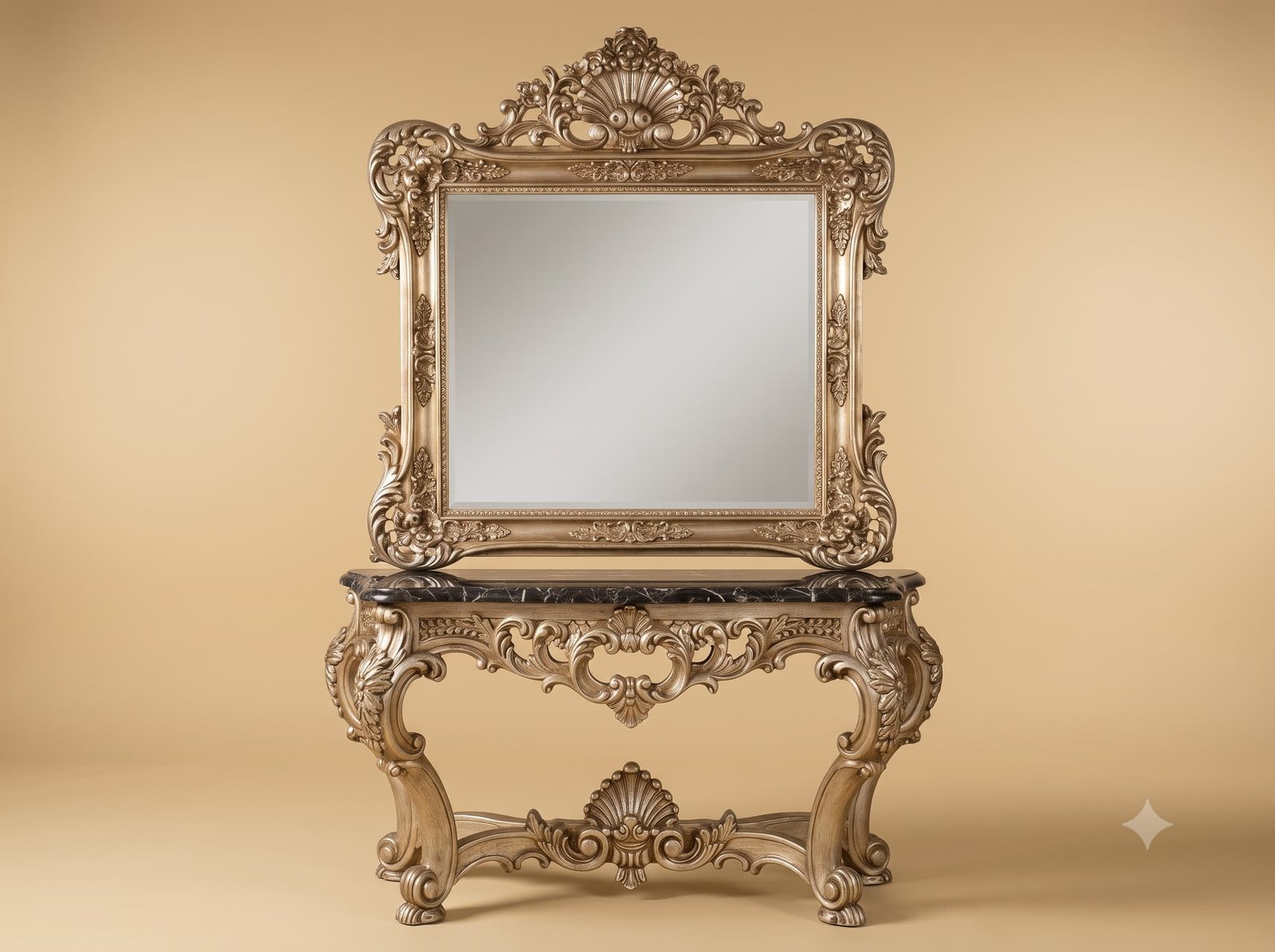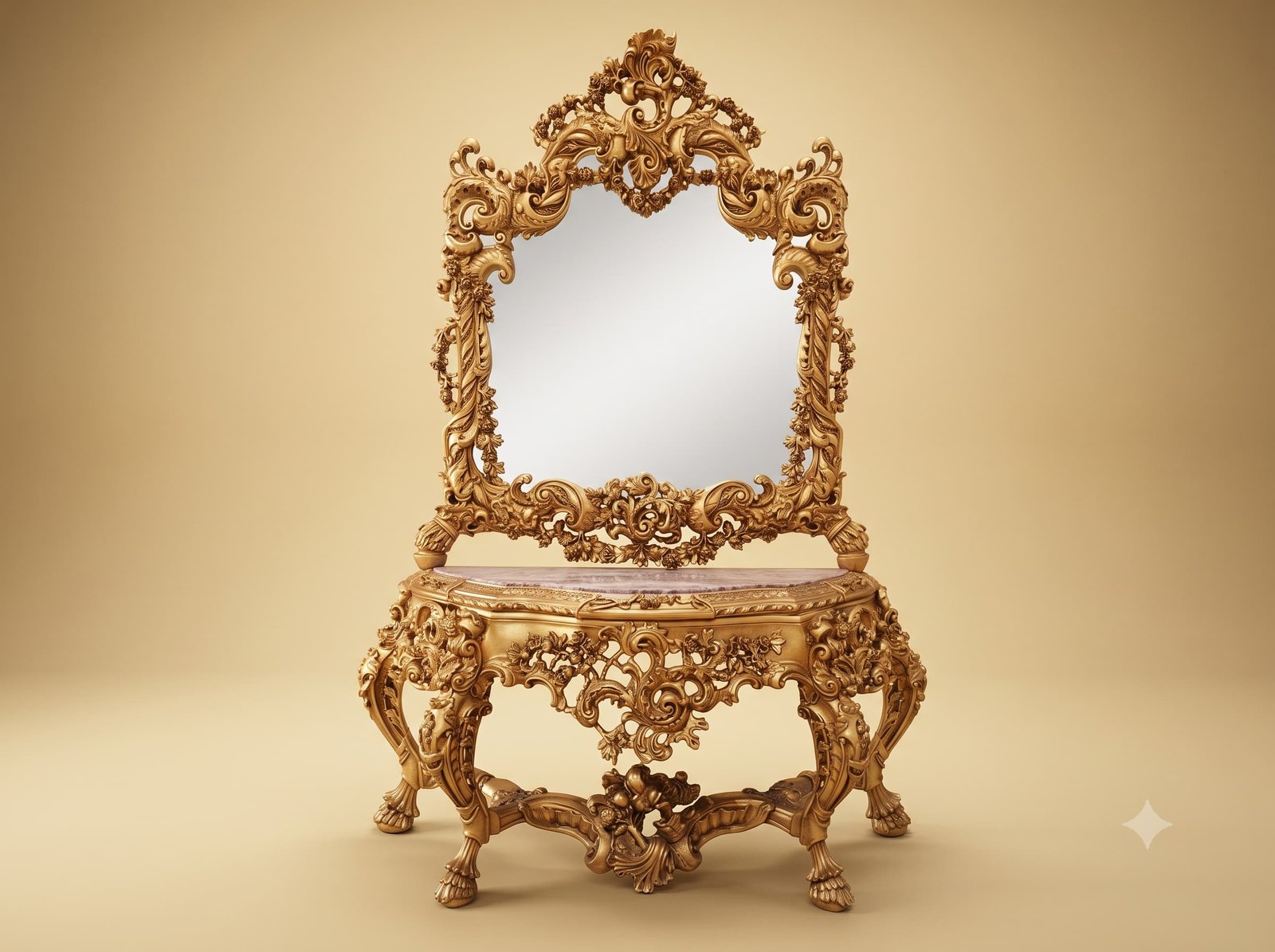
This mirror does not hang. It stands on the console, and that changes what has to be built into both pieces.
A hanging mirror puts its weight into the wall and its own frame; the console below it is simply furniture. A standing mirror puts everything onto the console top - the weight, and more importantly the leverage, because the frame is tall and its centre of gravity is well above the surface it sits on. Push the top of a mirror like this and it wants to pivot on its own back edge.
So two things are built in. The mirror foot locates into a shallow rebate in the back of the console top, so it cannot slide forward at the base - which is how a standing mirror usually starts to go over. And a discreet stay fixes the frame back to the wall at high level, taking the tipping load into masonry rather than into the console.
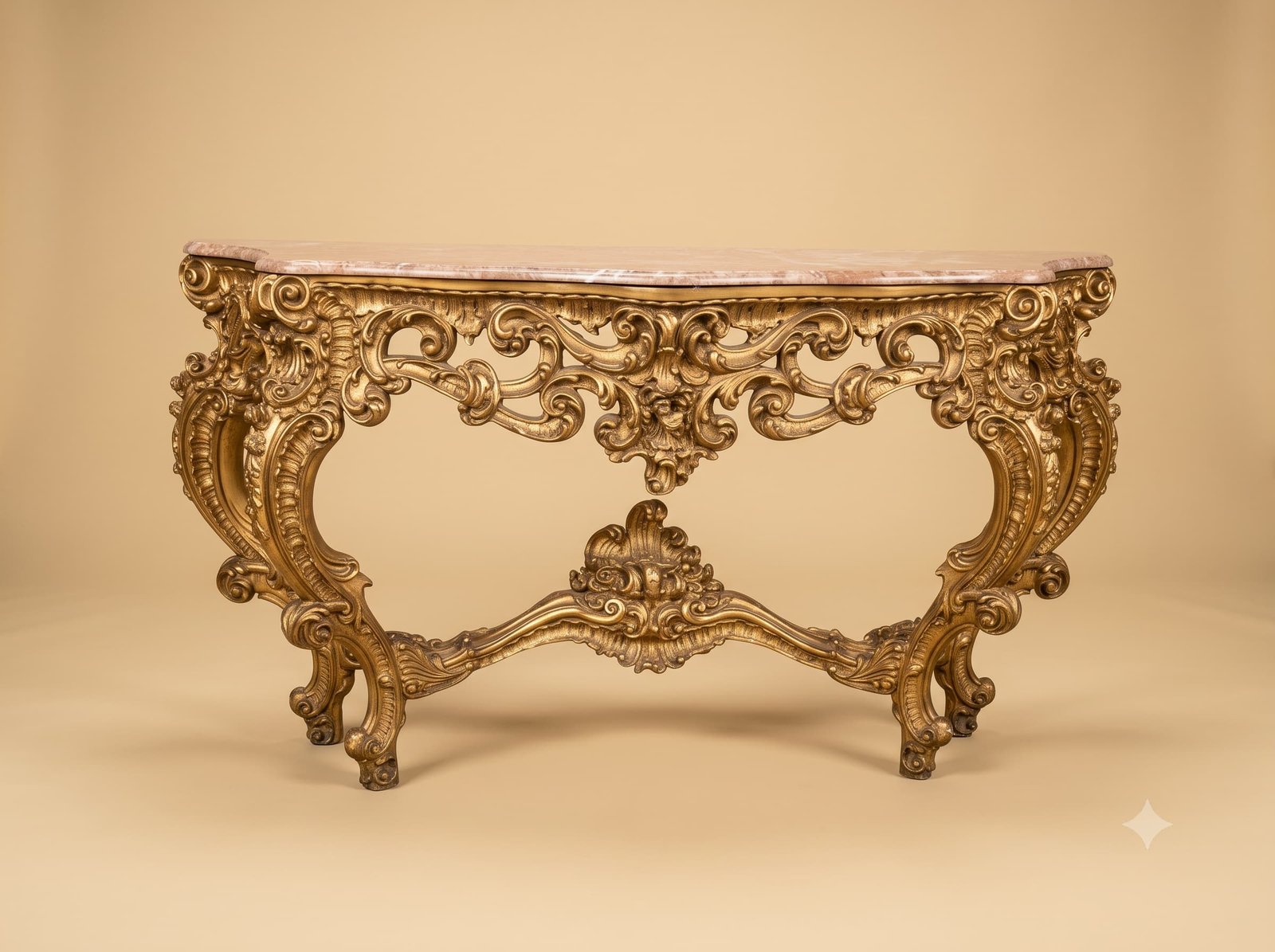
The console itself is made deeper front to back than a plain one would be, so the mirror's weight sits over the frame rather than behind it. None of that is visible. It is the difference between a mirror that stands and one that leans.
 Ask Price On WhatsApp