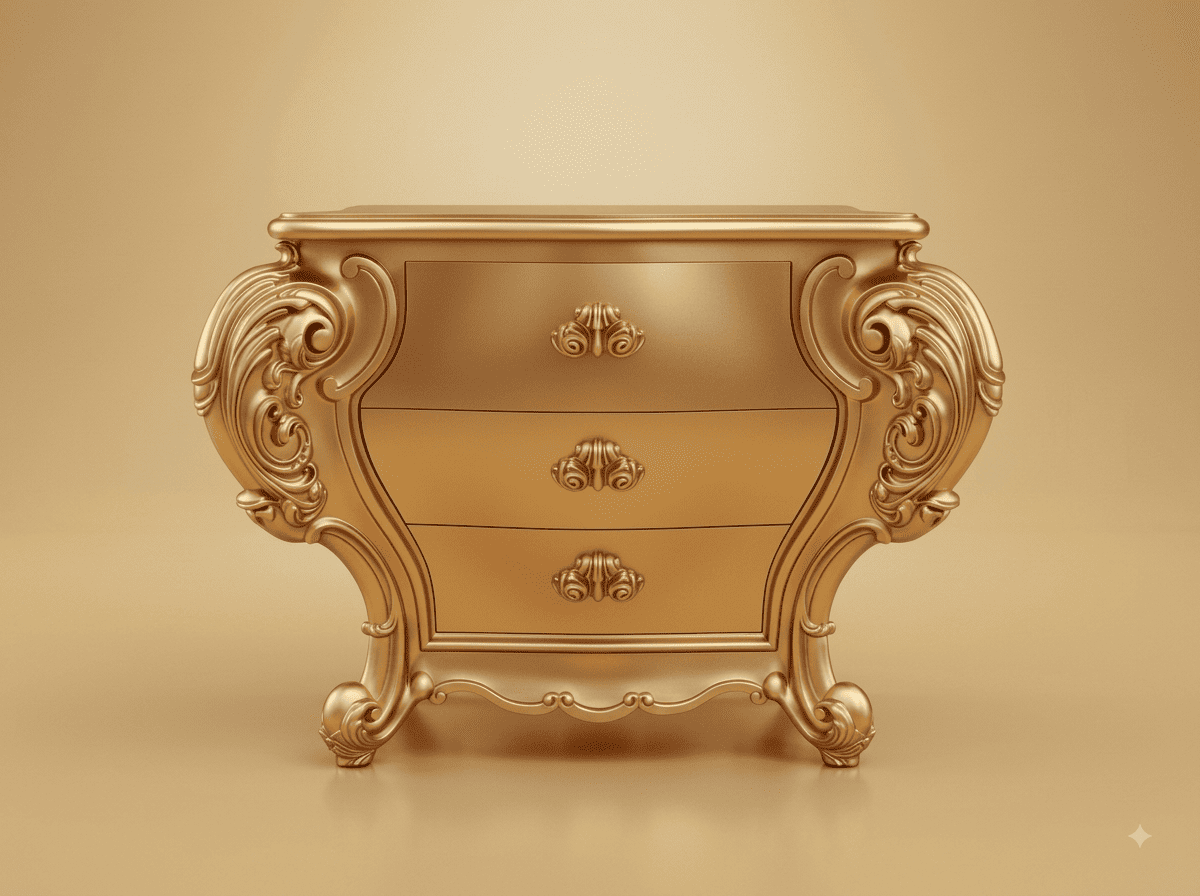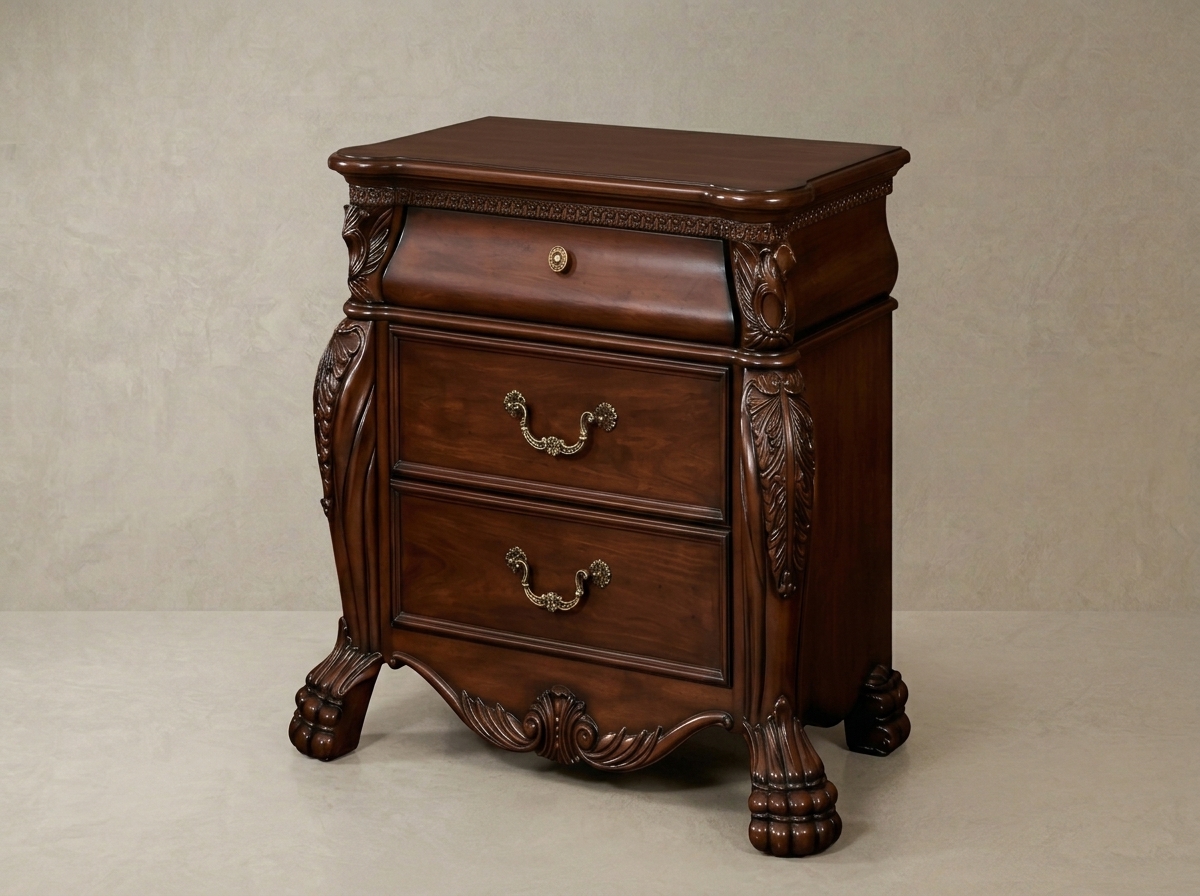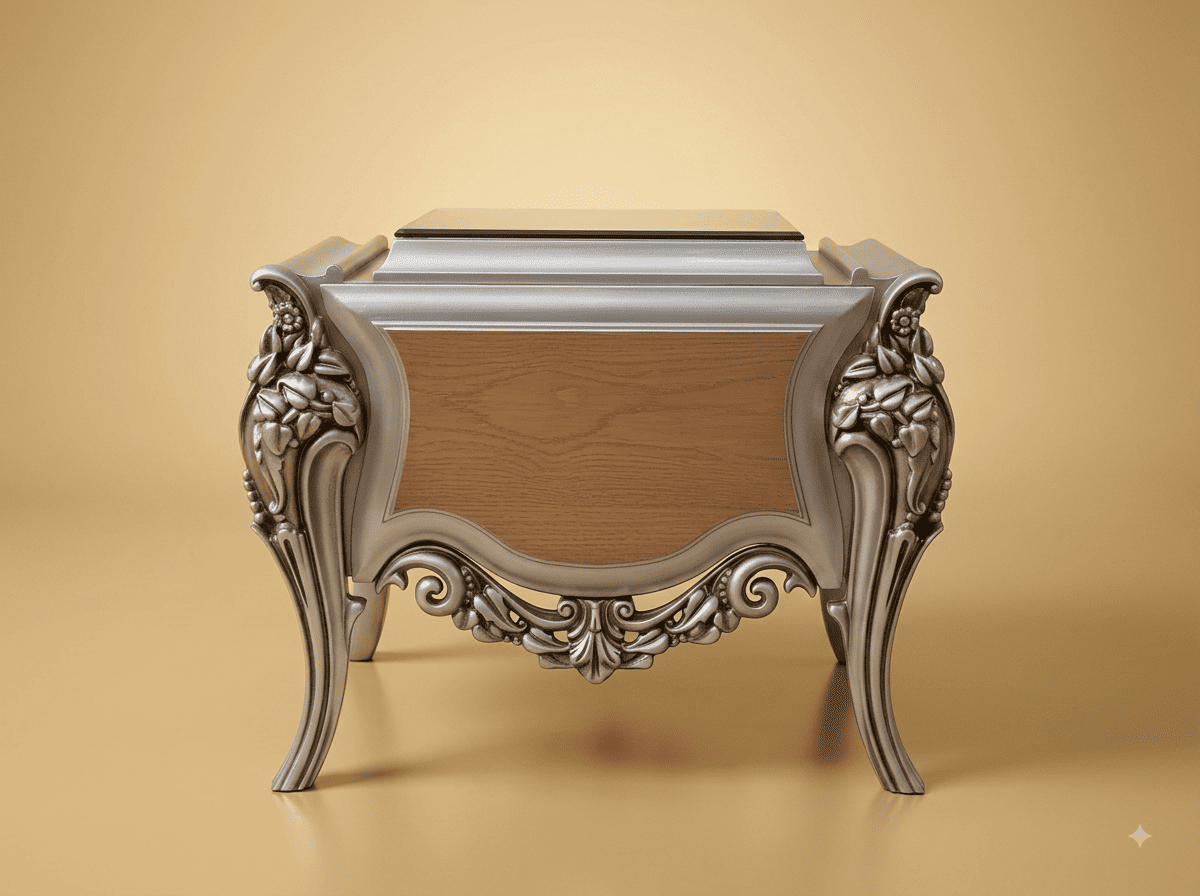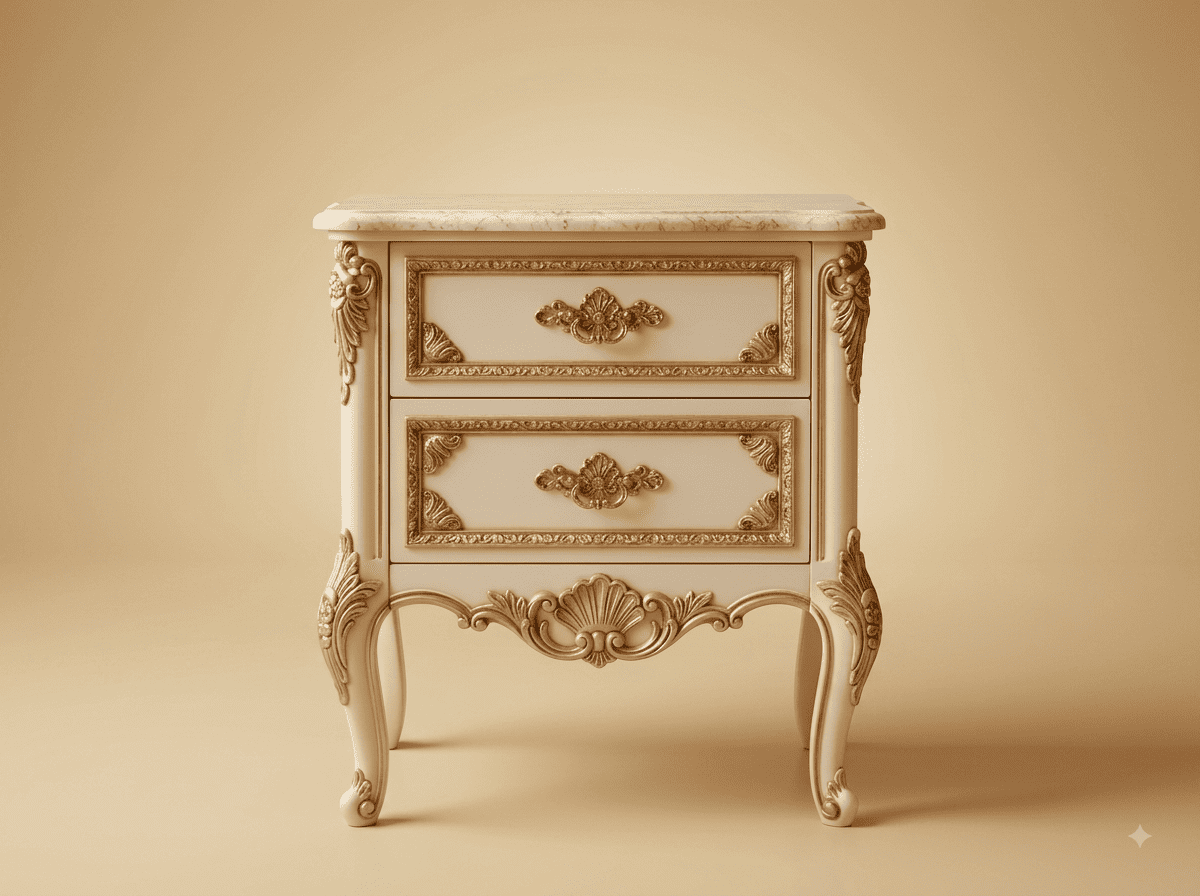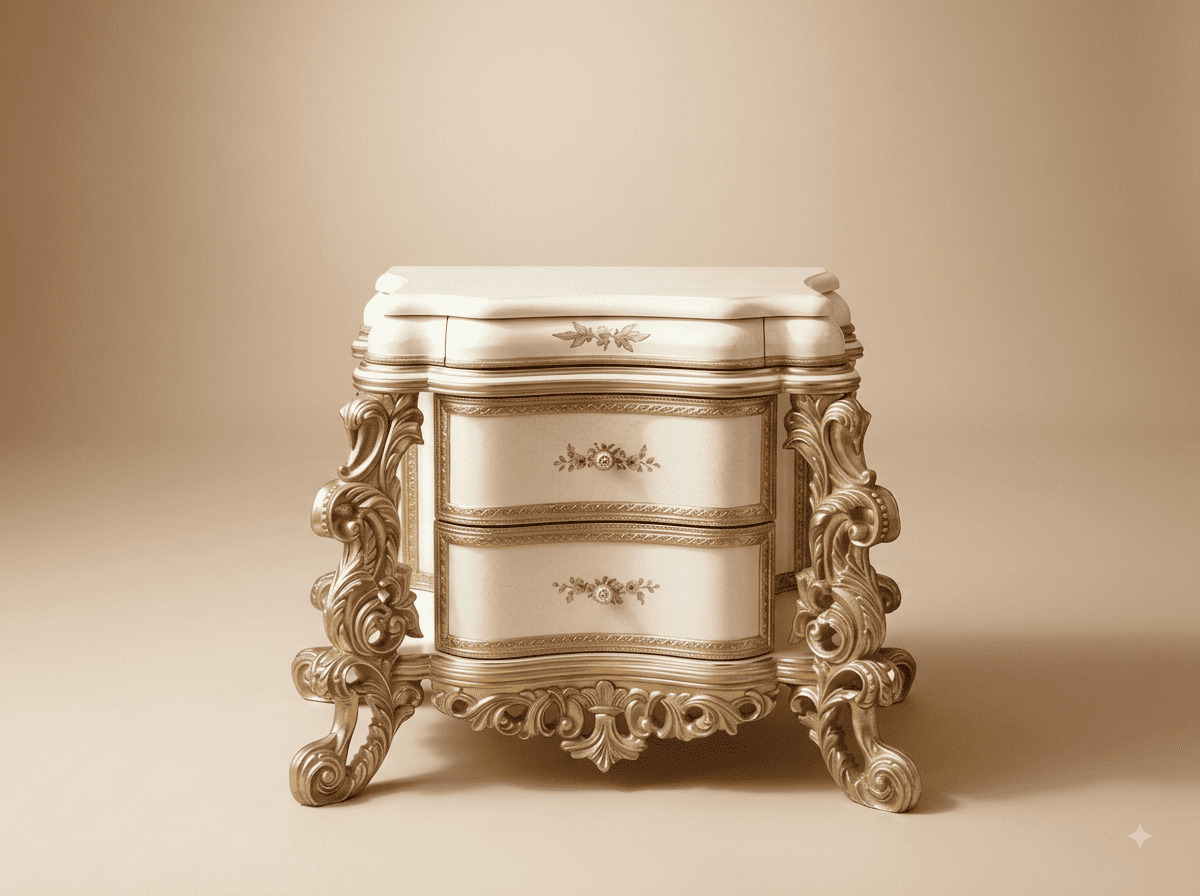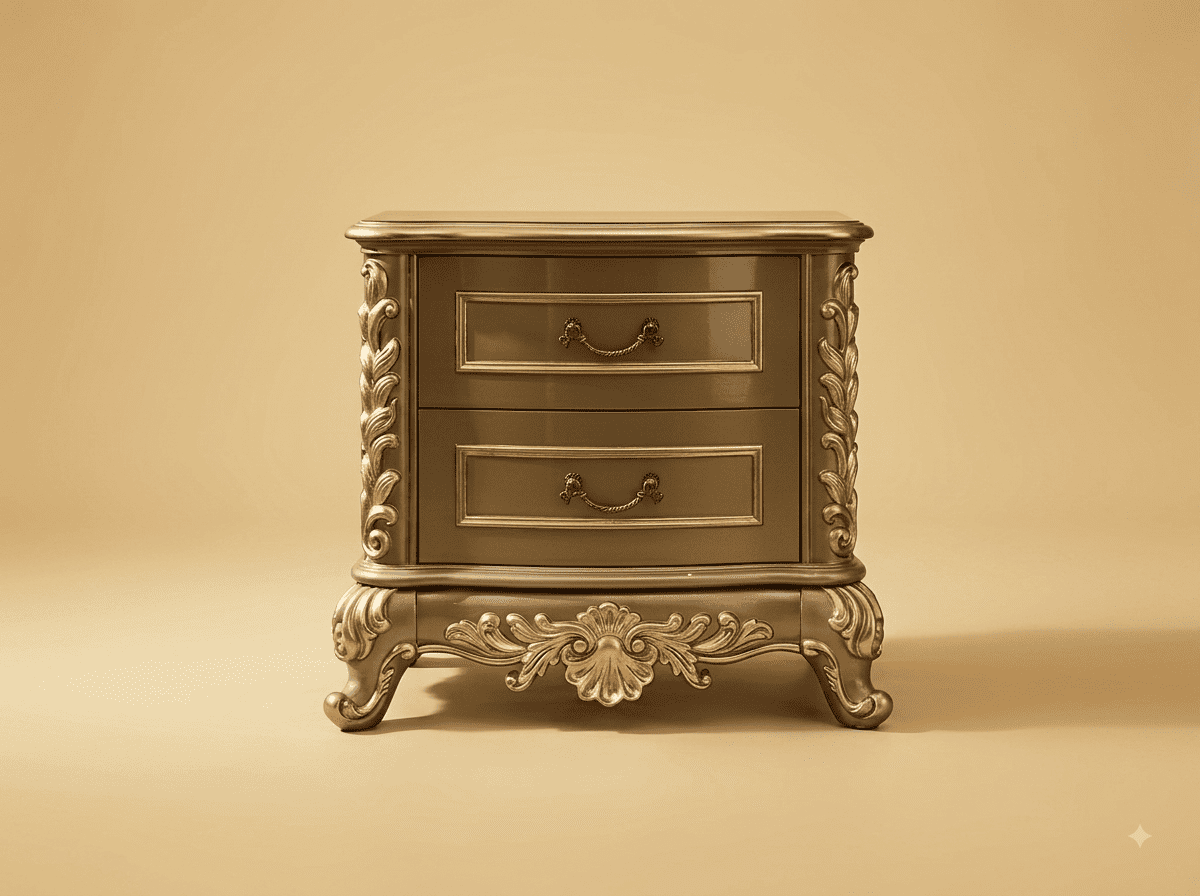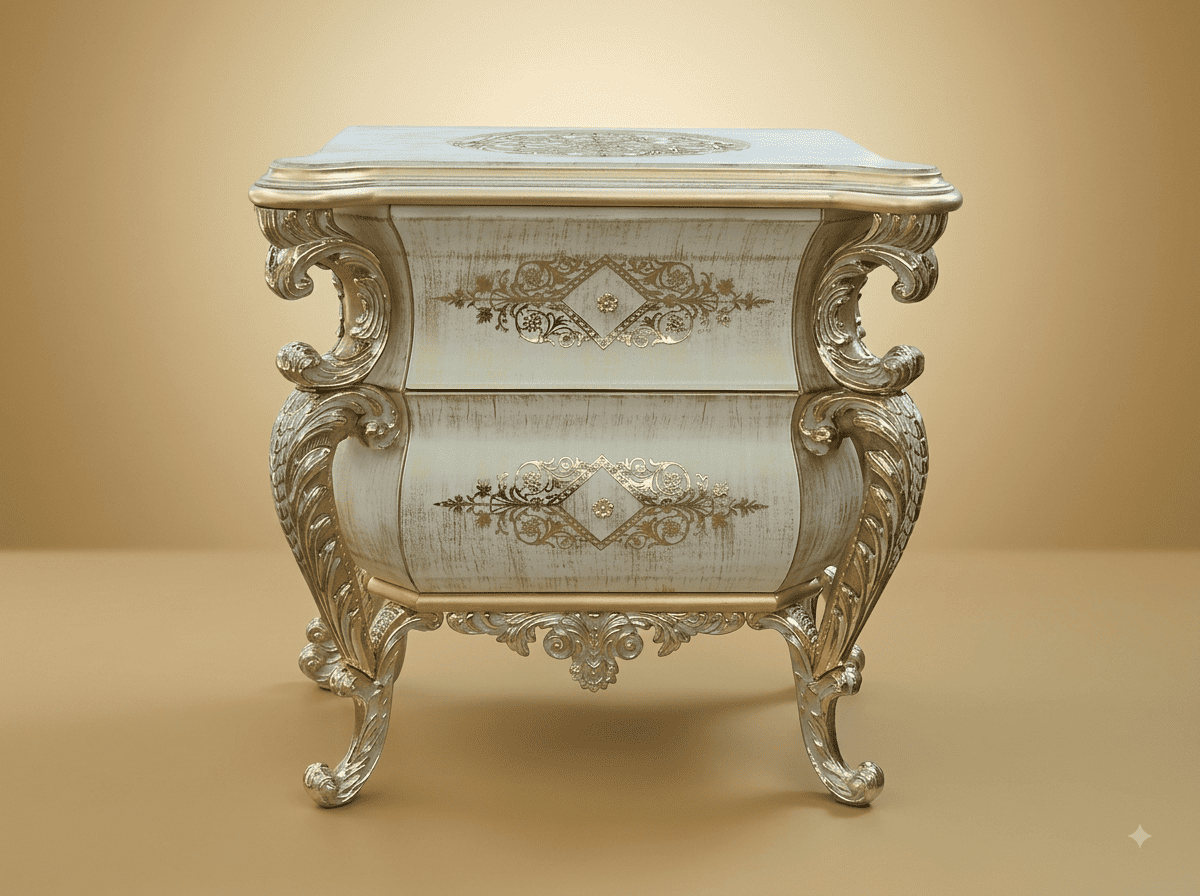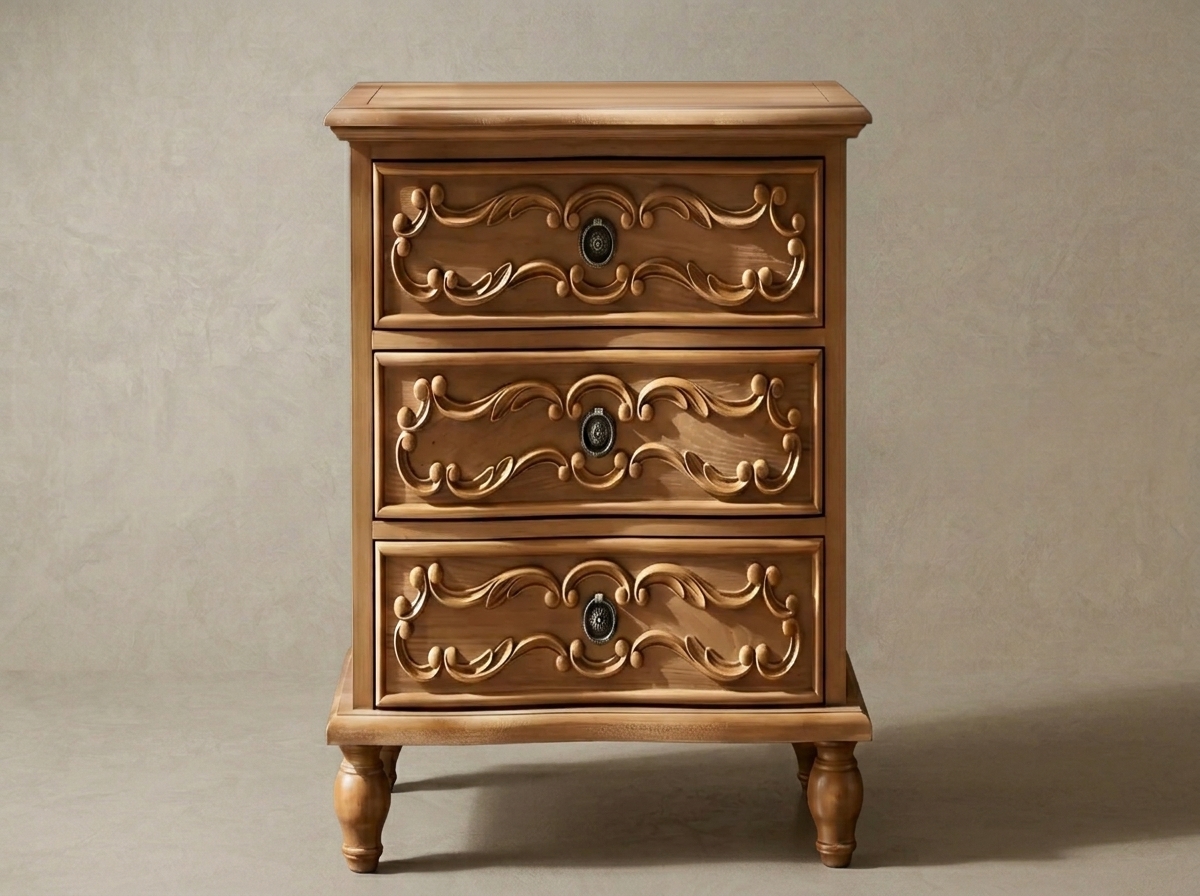
The three drawer fronts on this chest are cut from one board, in order, and put back in the same order.
On a painted or gilded chest it would not matter - colour covers everything. On a natural finish it matters a great deal. Timber varies along its length: the figure changes, the colour shifts slightly, one part is straighter-grained than another. Take three drawer fronts from three unrelated boards and you get three different faces stacked on top of each other, and the chest reads as assembled from parts.
So a single board is chosen long enough to give all three fronts, and it is cut across in sequence. The pieces are numbered as they come off the saw, and they go into the chest in that order, top to bottom. The grain then steps down the front of the chest continuously, as though the drawers were one panel that had been sliced.
The carving is set out afterwards, and it is set out on each front individually rather than traced from a template, so the scrollwork sits with the grain of its own piece rather than fighting it.
 Ask Price On WhatsApp