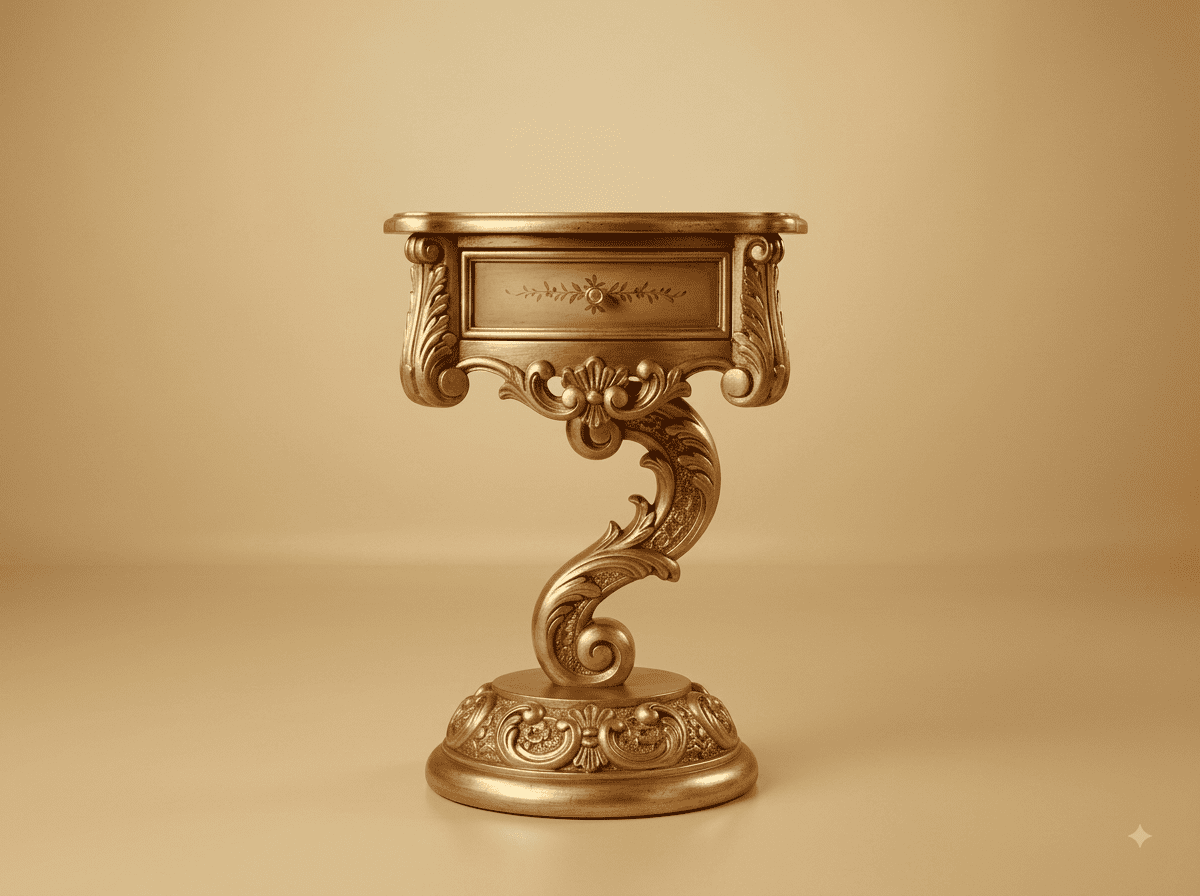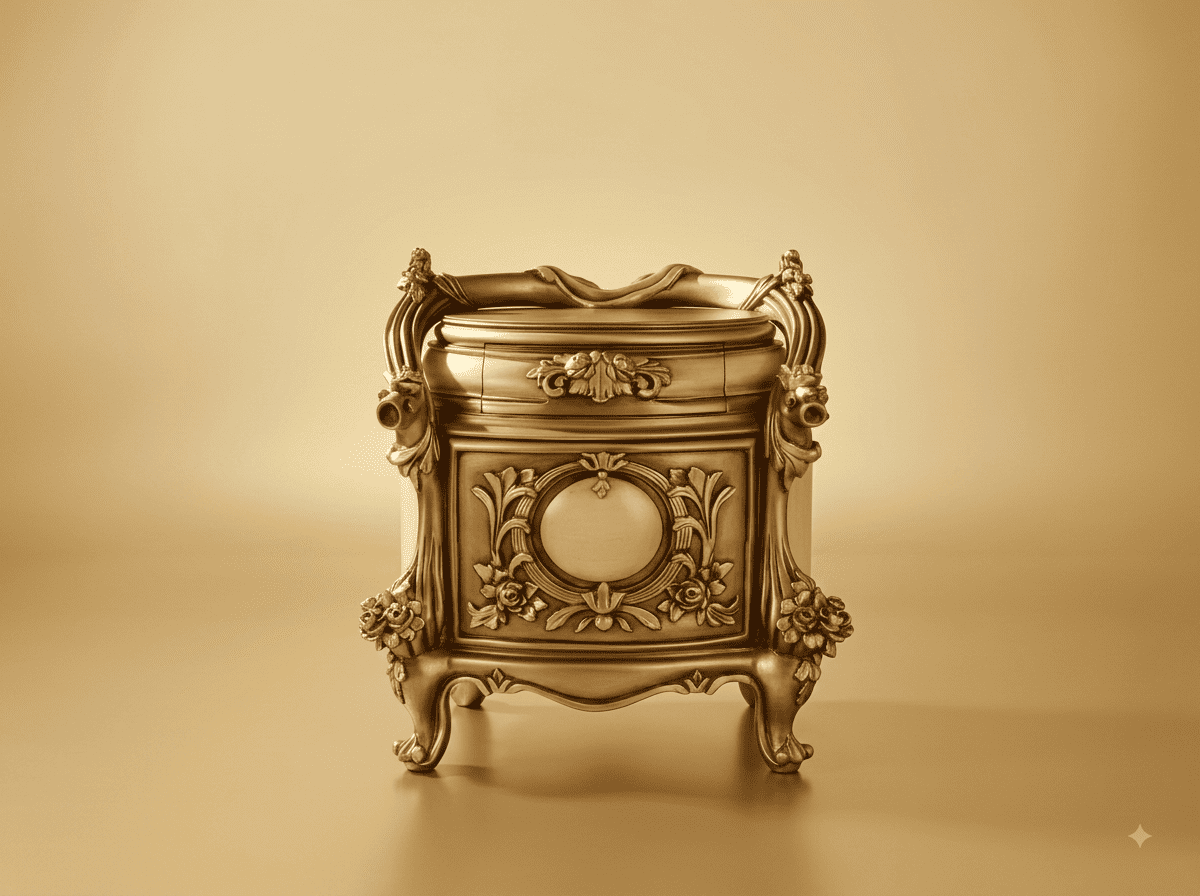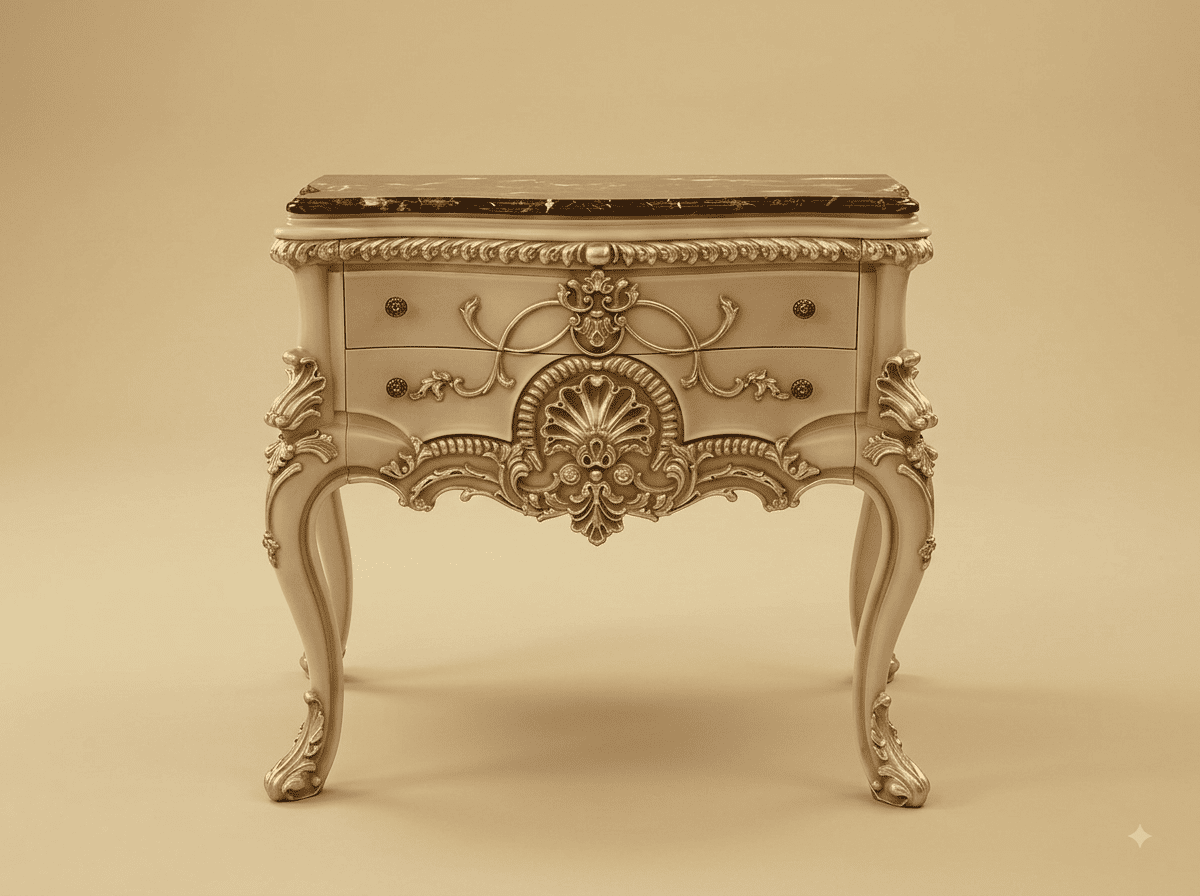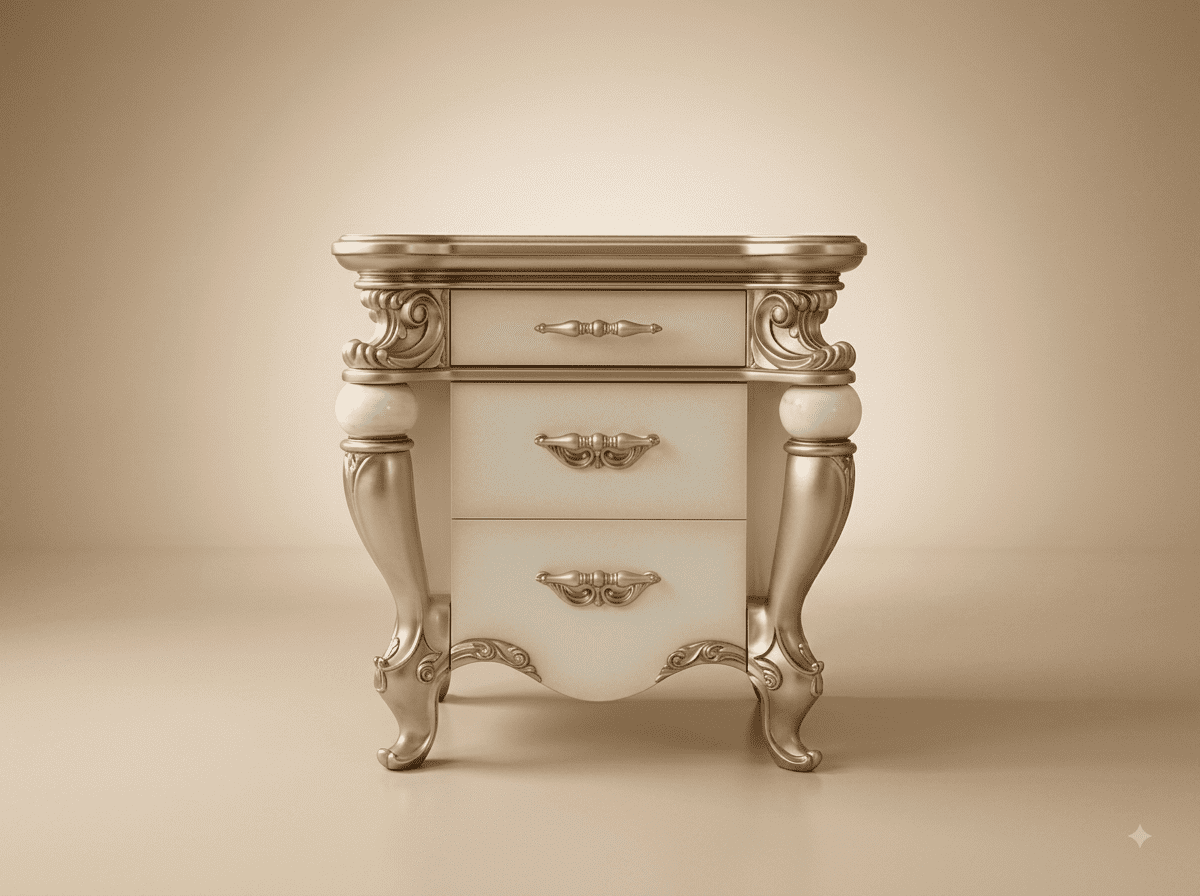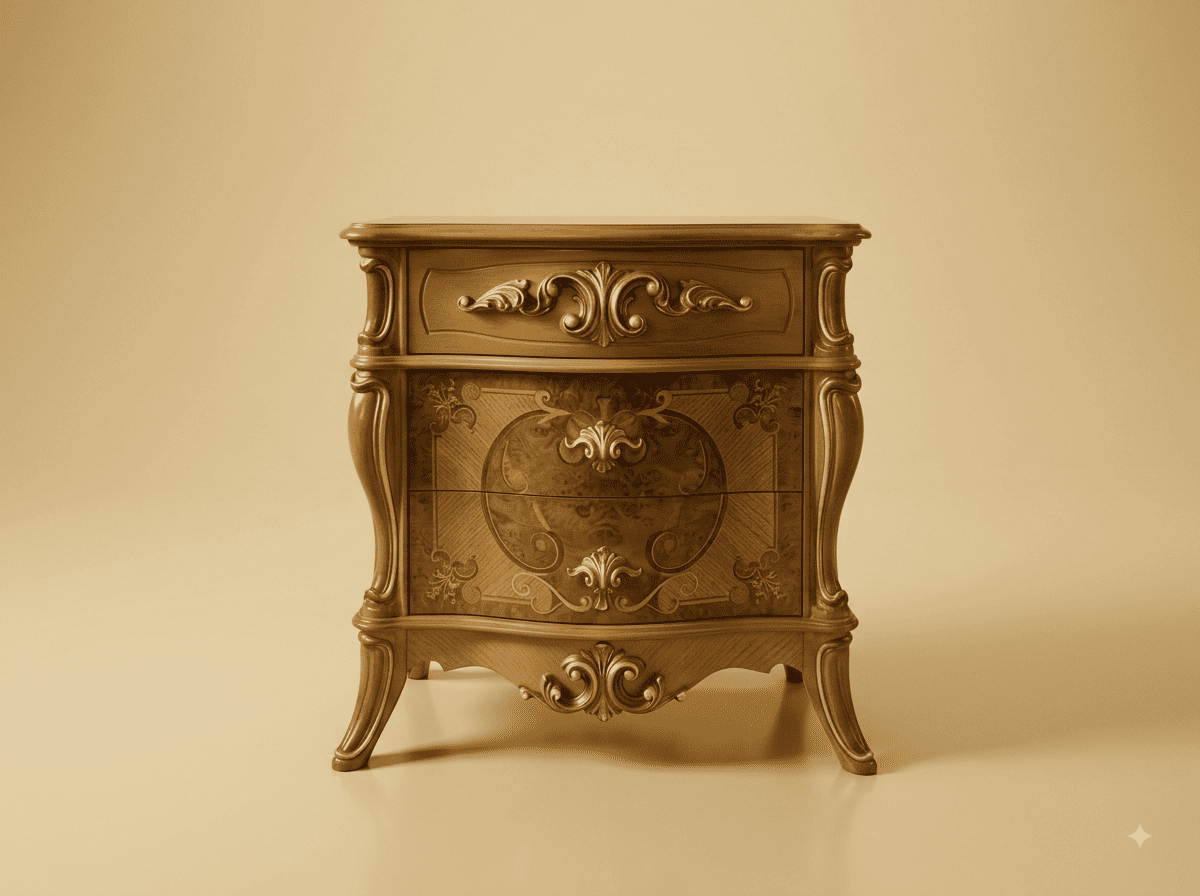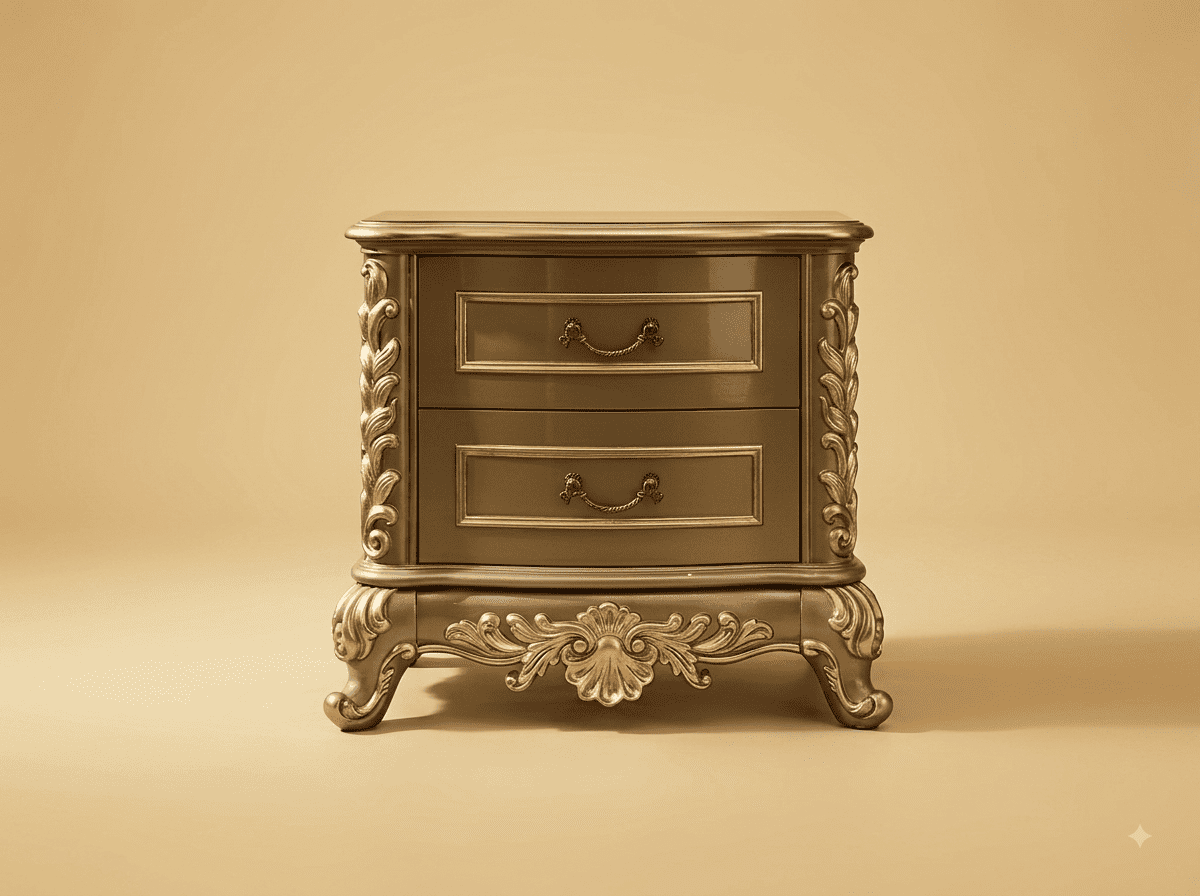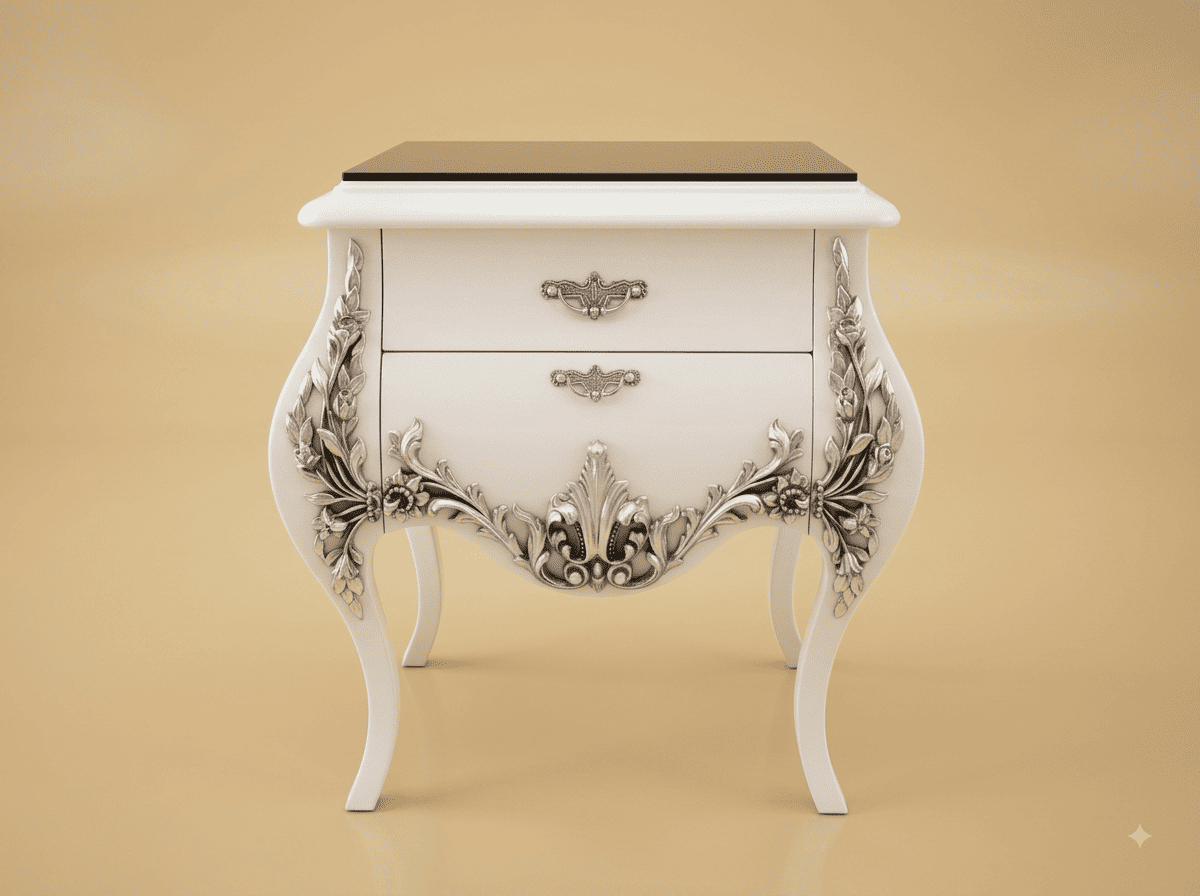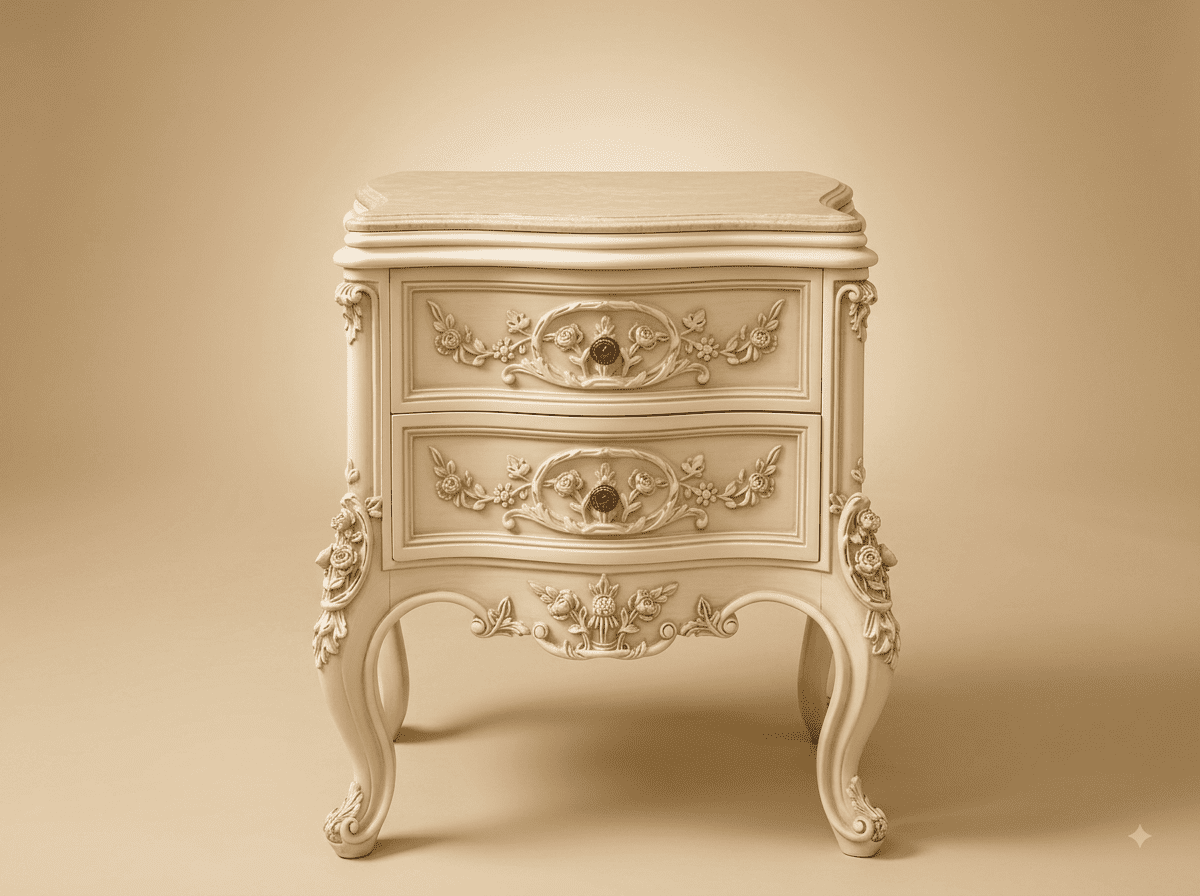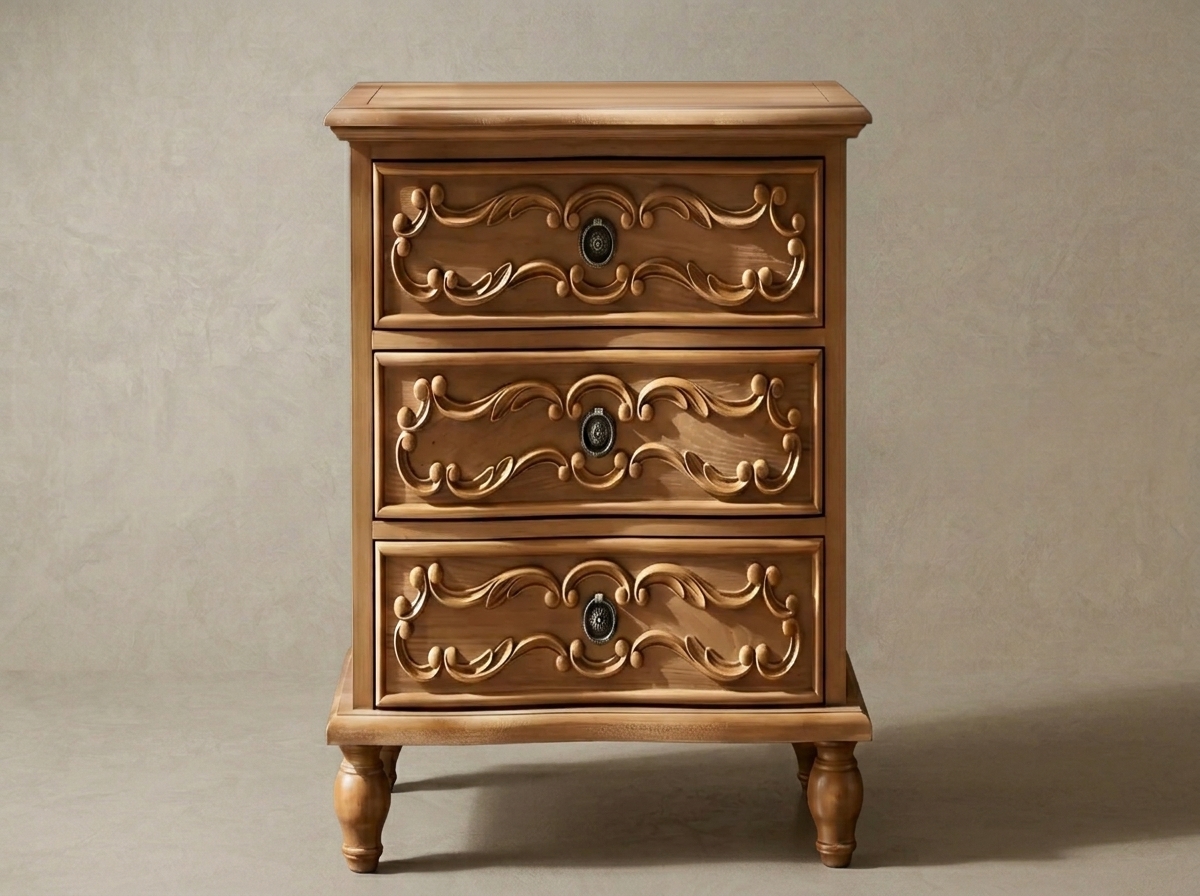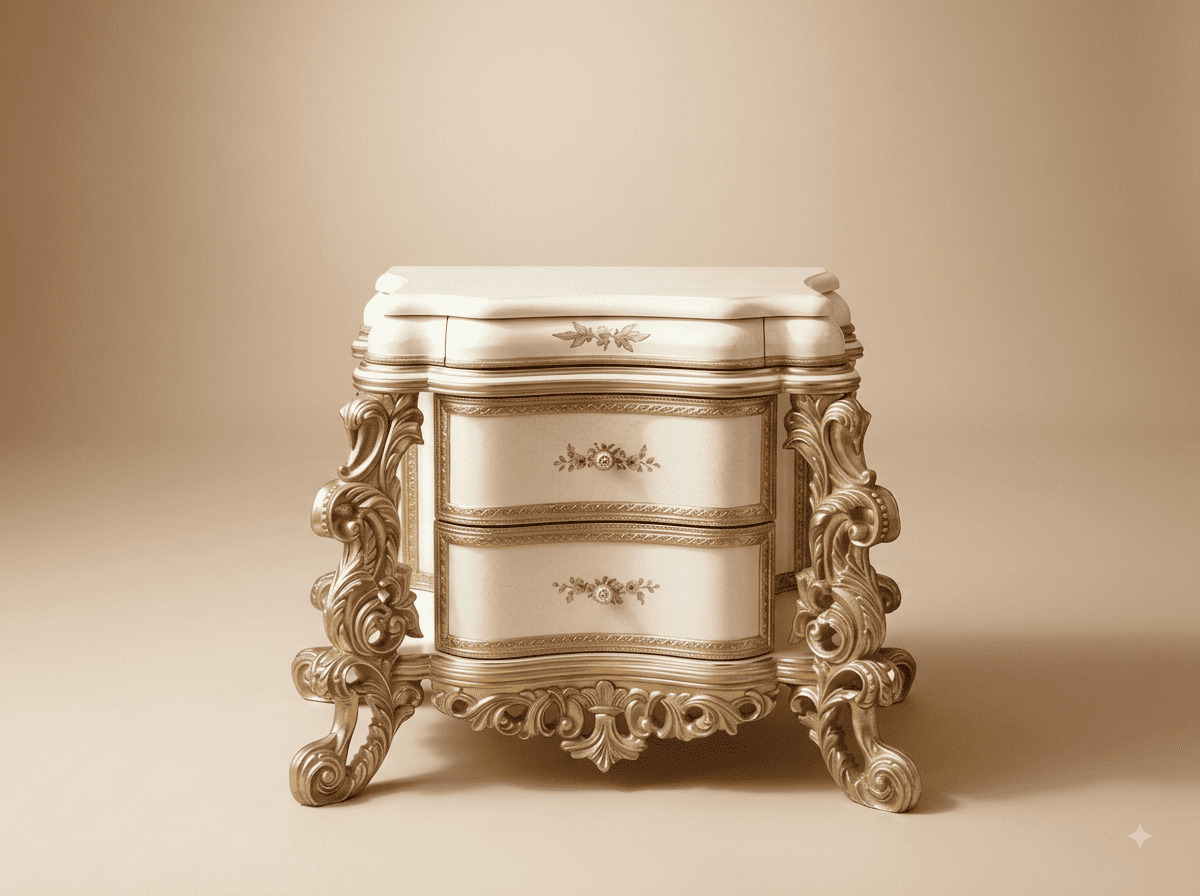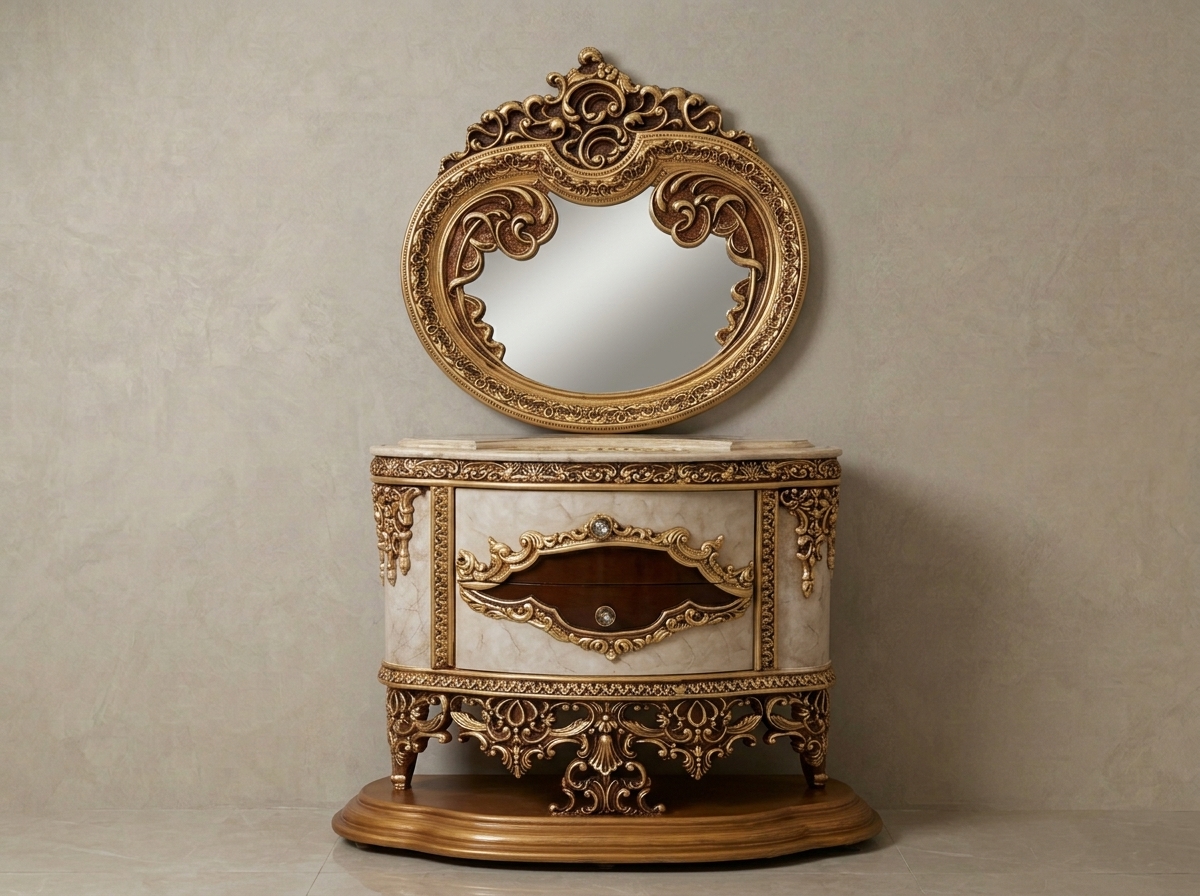
The drawer on this table opens easily, and the reason is a small decision made where the carving meets the drawer edge.
The drawer front sits inside a shaped surround that stands proud of the carcass. That surround is what gives the front its frame and its shadow - but a drawer front set inside raised carving has an obvious practical question attached: where do your fingers go?
The answer is built in at the setting-out stage. The carving is stopped short and set back at both ends of the drawer front, leaving a clear reveal along each edge deep enough for a hand to take hold of the front comfortably. The eye does not register the setback, because the carved surround still reads as continuous; the hand finds it immediately.
The drawer itself runs on side runners with a stop, so it comes out its full length and holds there rather than tipping - which matters on a bedside drawer that is usually opened in the dark, one-handed, with the other hand on a lamp.
 Ask Price On WhatsApp