The Problem With Circles
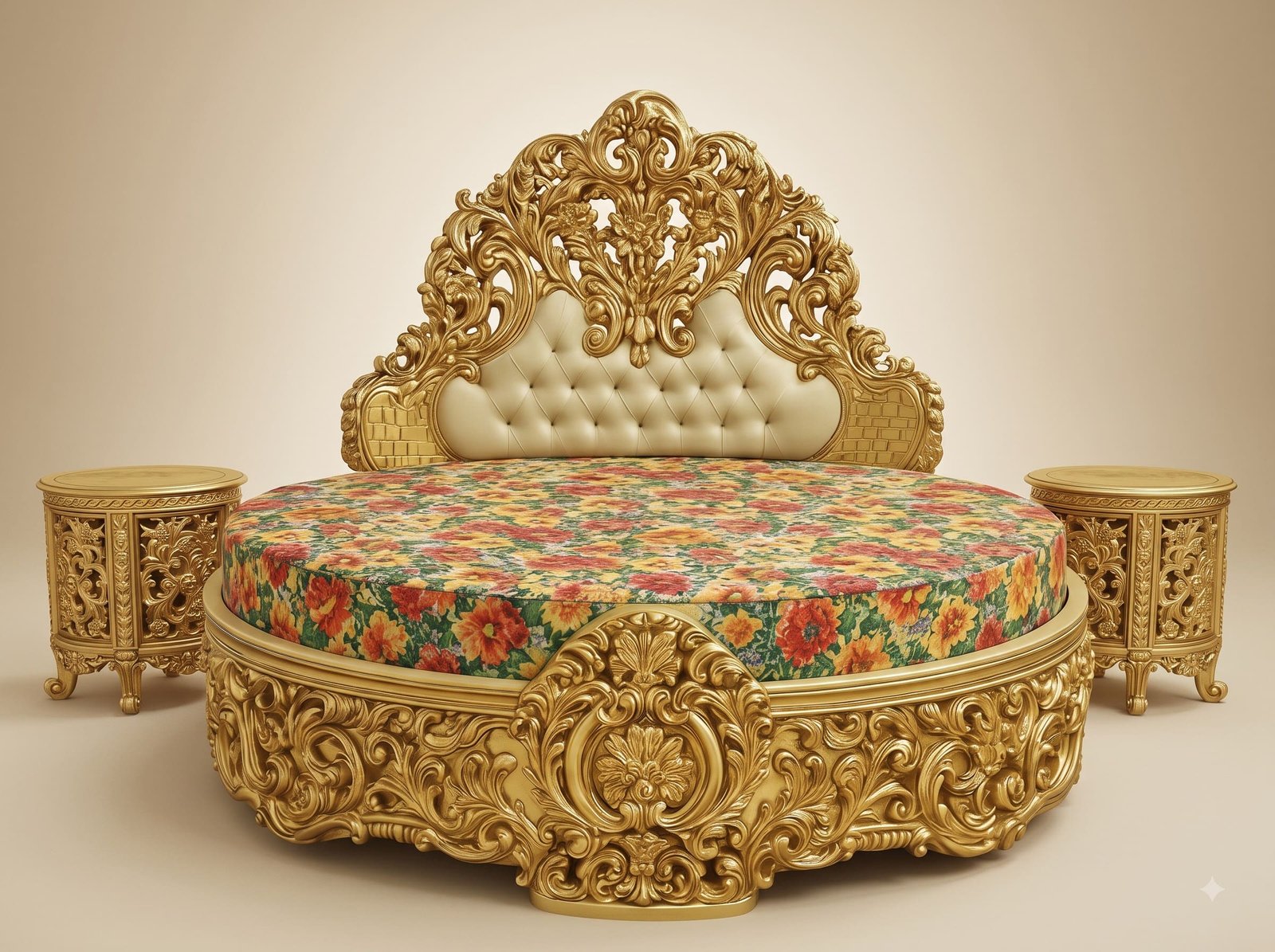
Every ornament on a straight rail can be laid out with a ruler. On a circle it cannot. The carved band around this base has to have its scrollwork set out so the repeat closes perfectly after 360 degrees, with no compressed or stretched section where the layout ran out, and the whole band has to be built from segments cut to the radius and jointed so the grain and the ornament run through the joints without announcing them. That layout work happens before any carving starts, and it is where a badly made round bed gives itself away: look at the back of the circle, opposite the mask, and you will usually find the repeat has been fudged.
The lion mask exists for a related reason. A circle has no natural front, which can leave a round bed looking oddly unresolved in a room, as though it has been set down at random. Placing a single strong carved element at one point on the circumference fixes an orientation and tells the eye where the bed faces. It also gives the carver a datum: the layout of the band is set out from the mask outward in both directions so the repeat meets itself cleanly at the rear. It is carved from solid teak by hand by master Indian artisans, like the rest of the piece, and the photographs here show the actual bed.
 Ask Price On WhatsApp