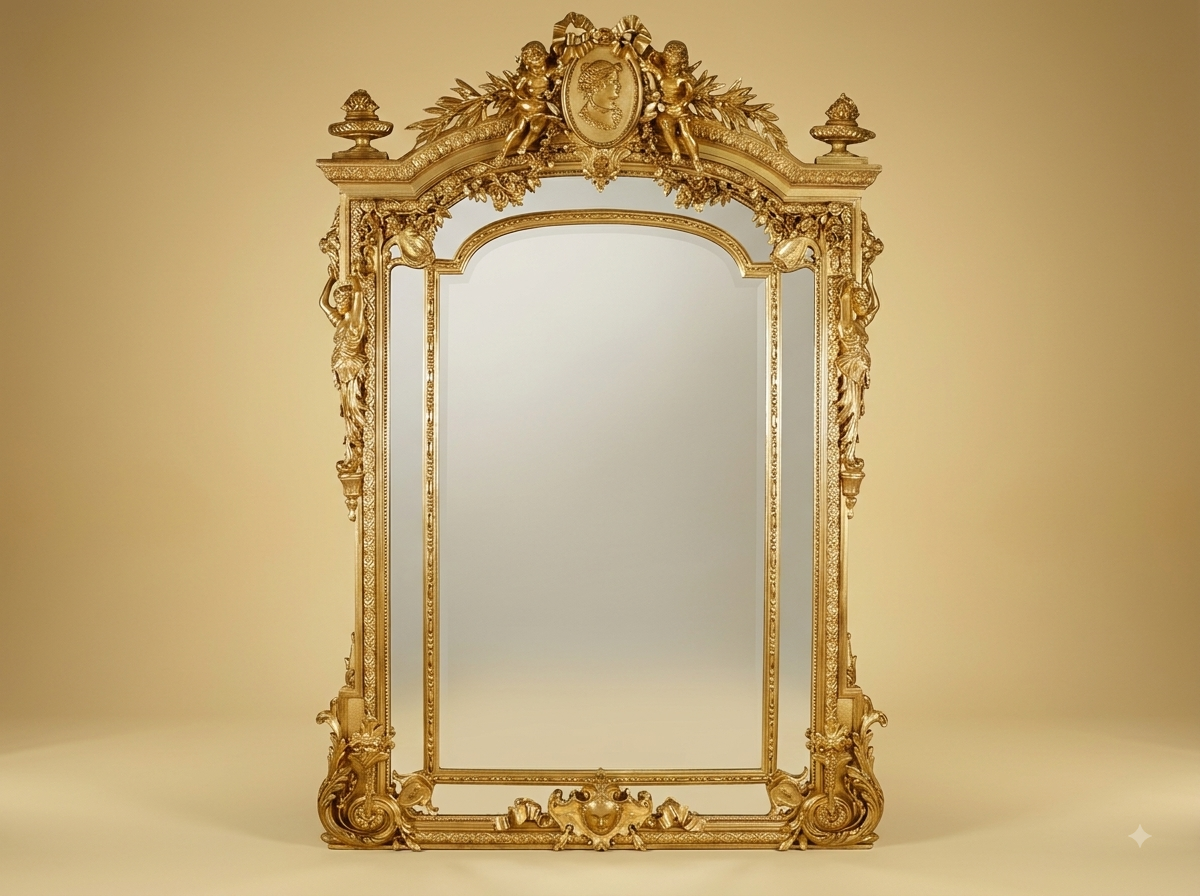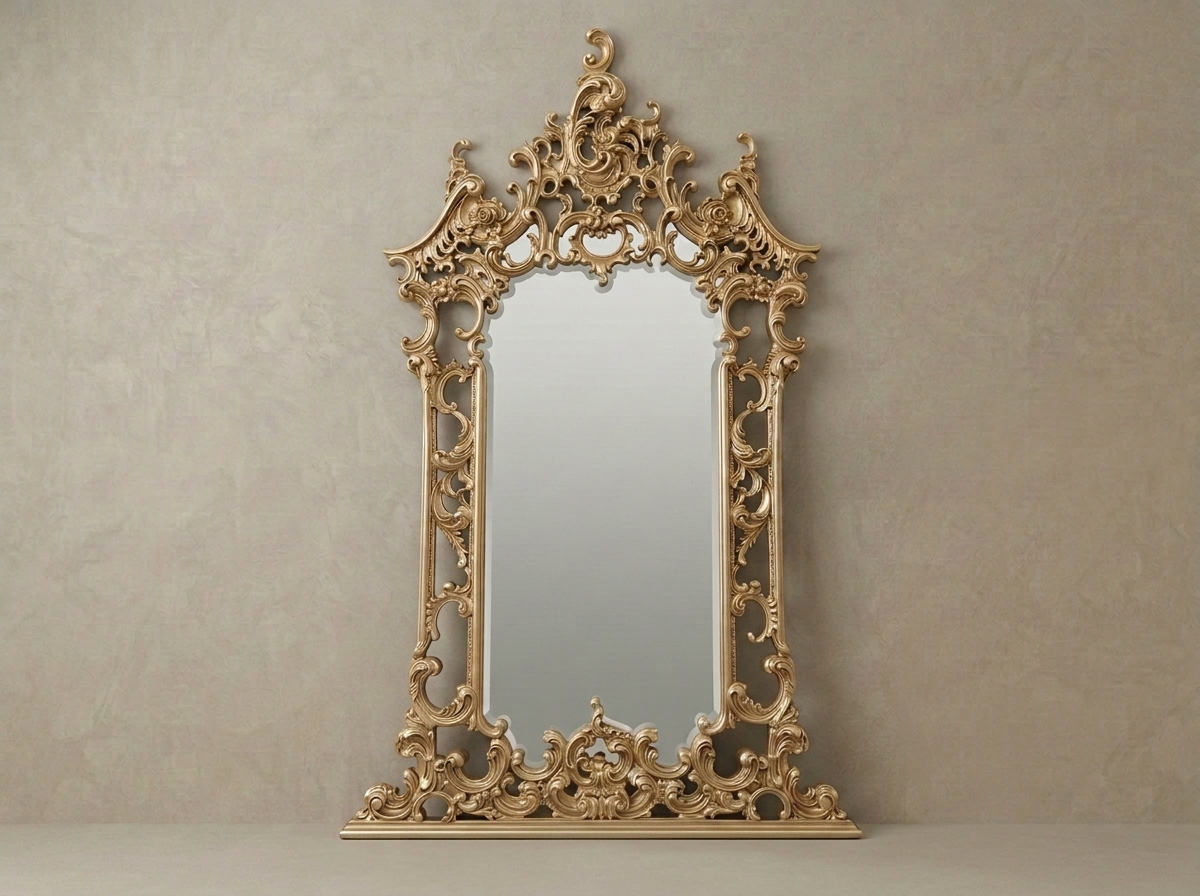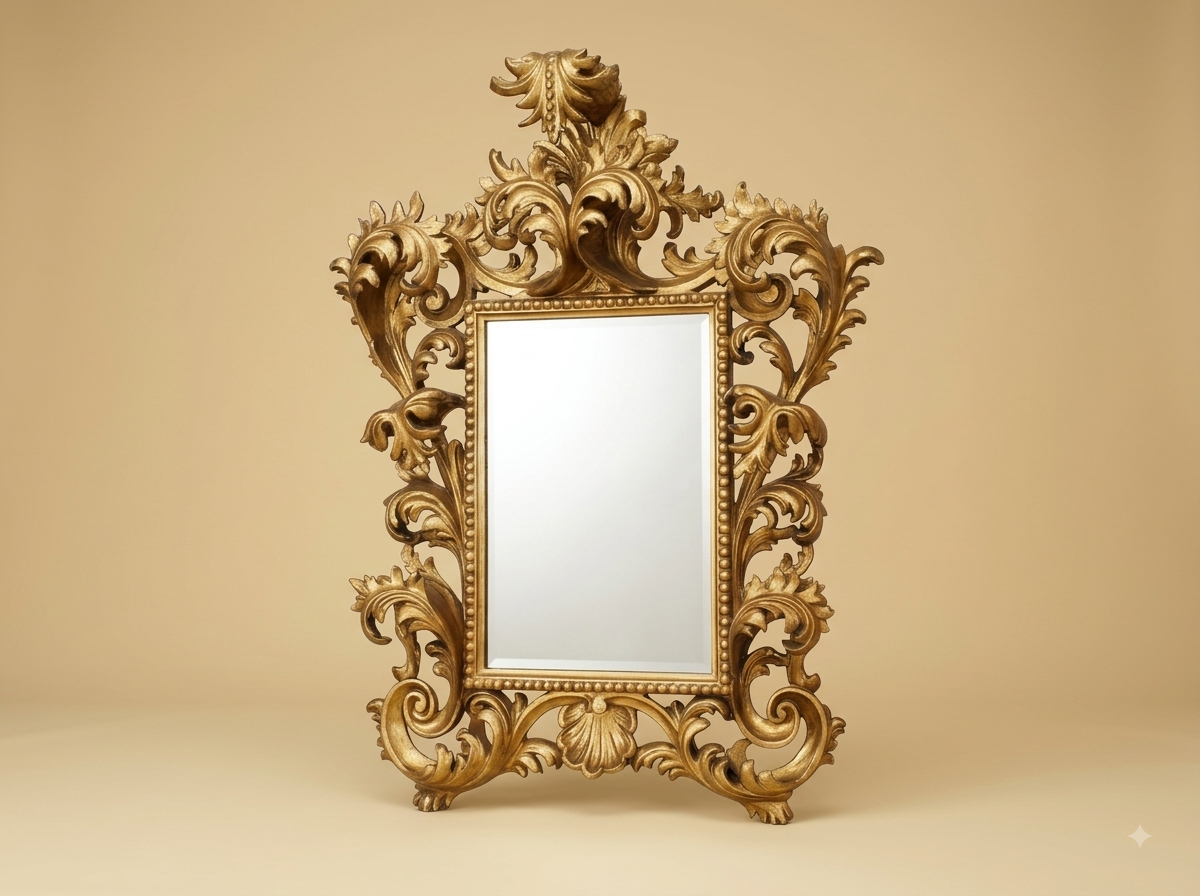
The Story Behind This Mirror
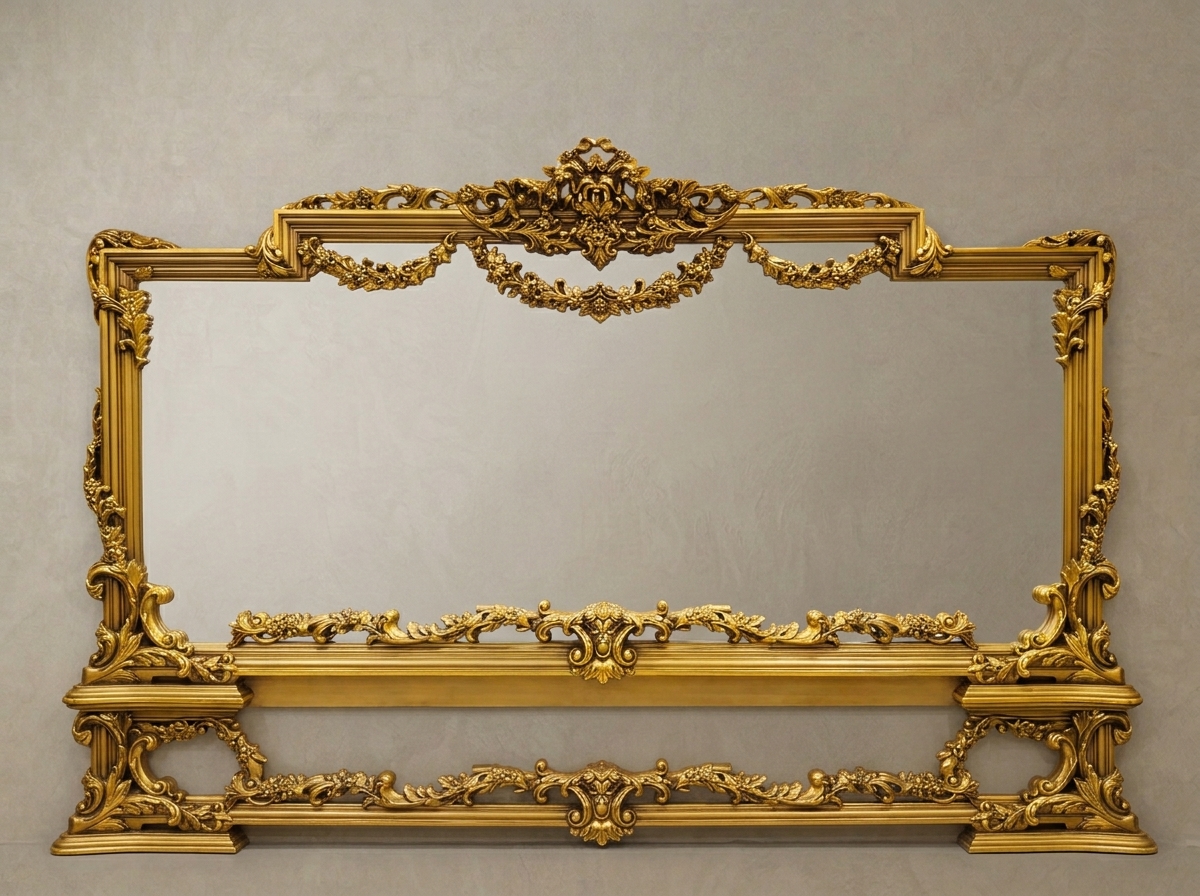
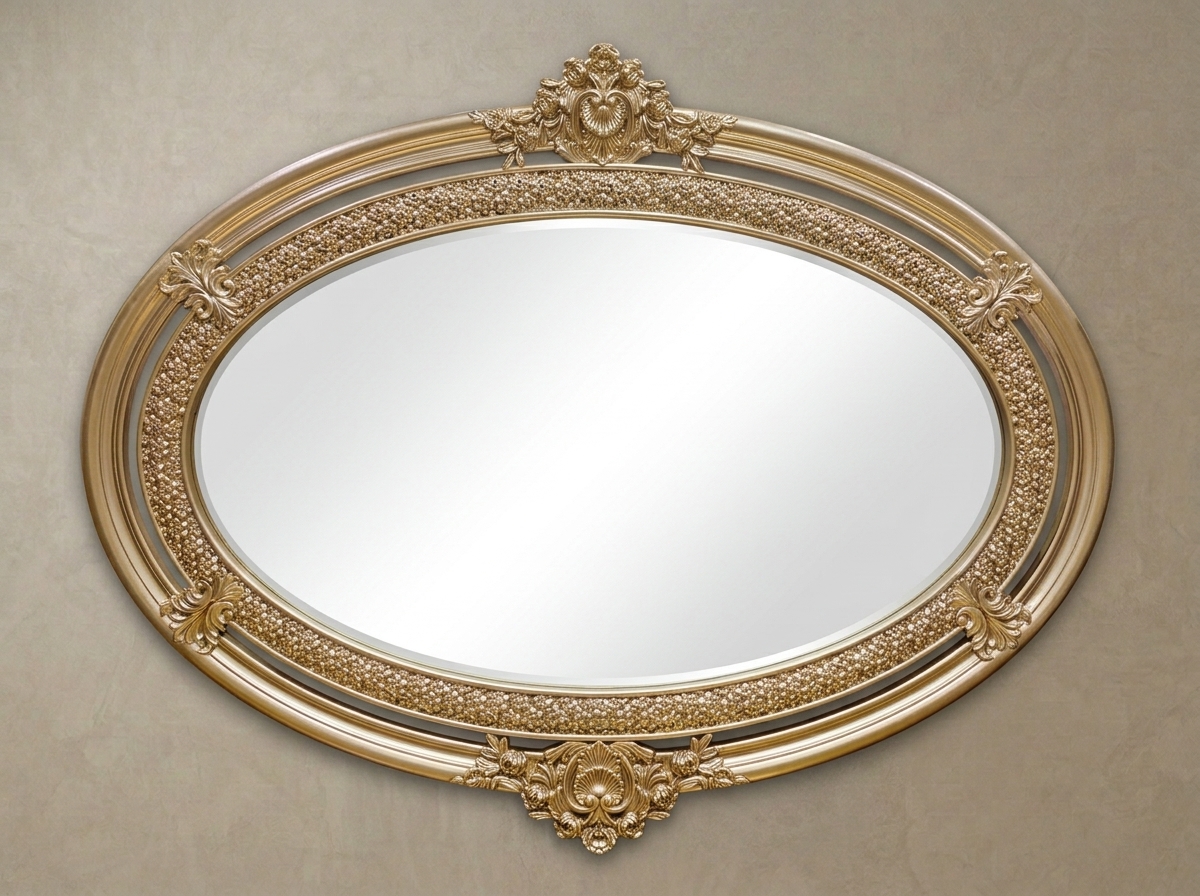
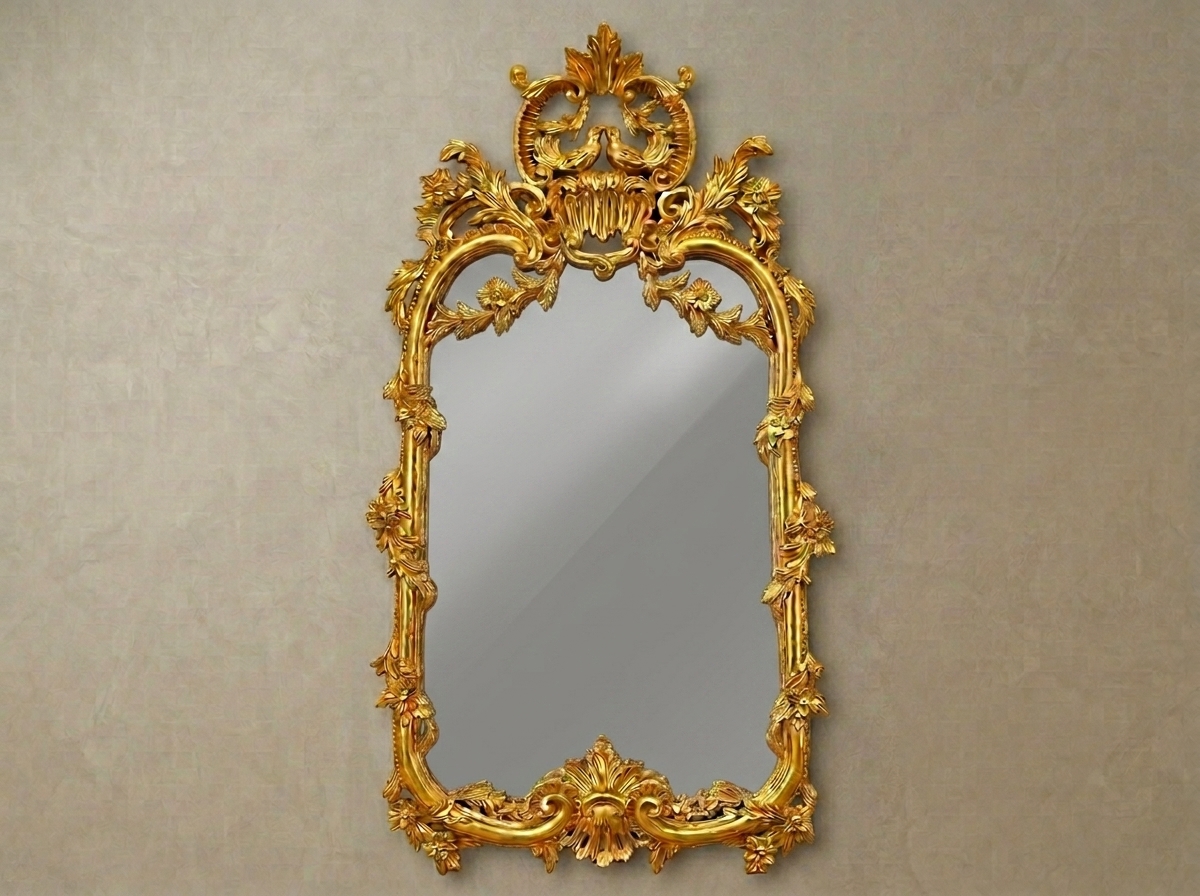
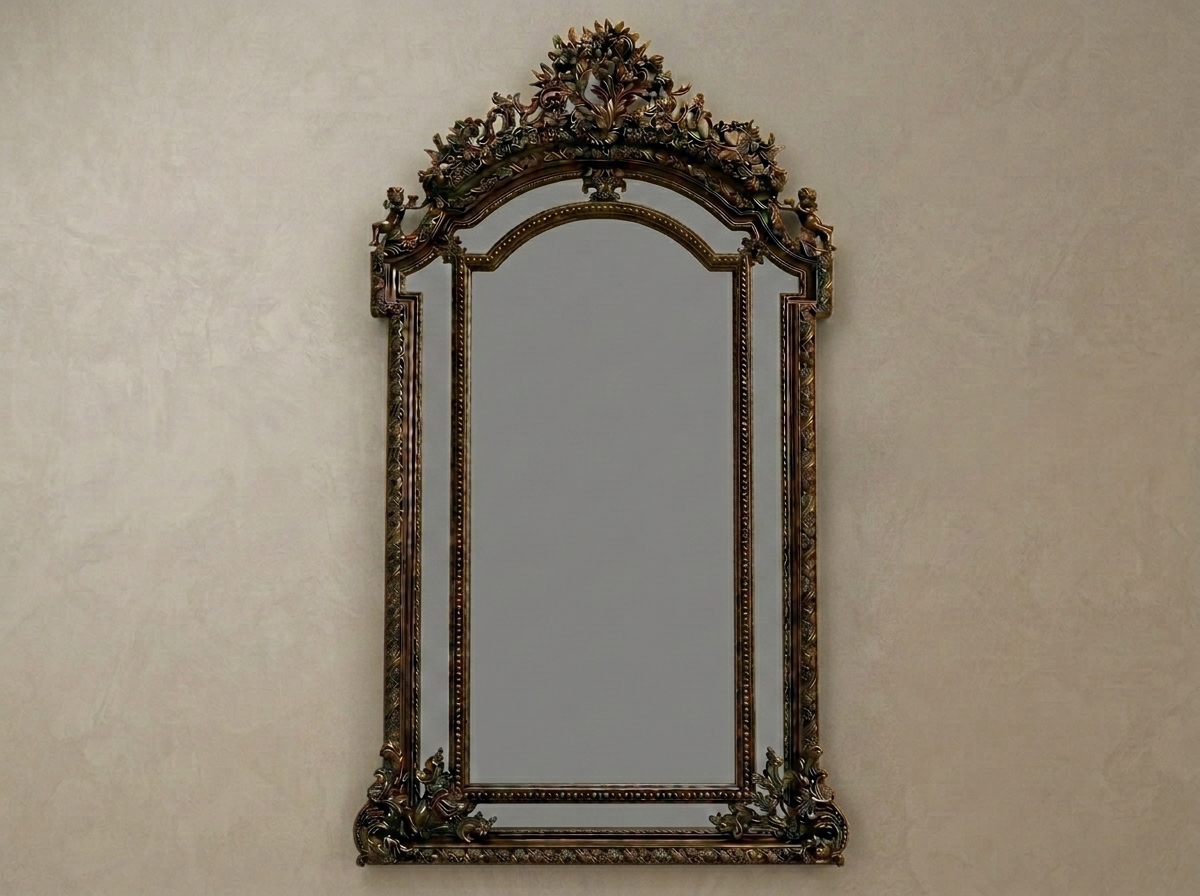
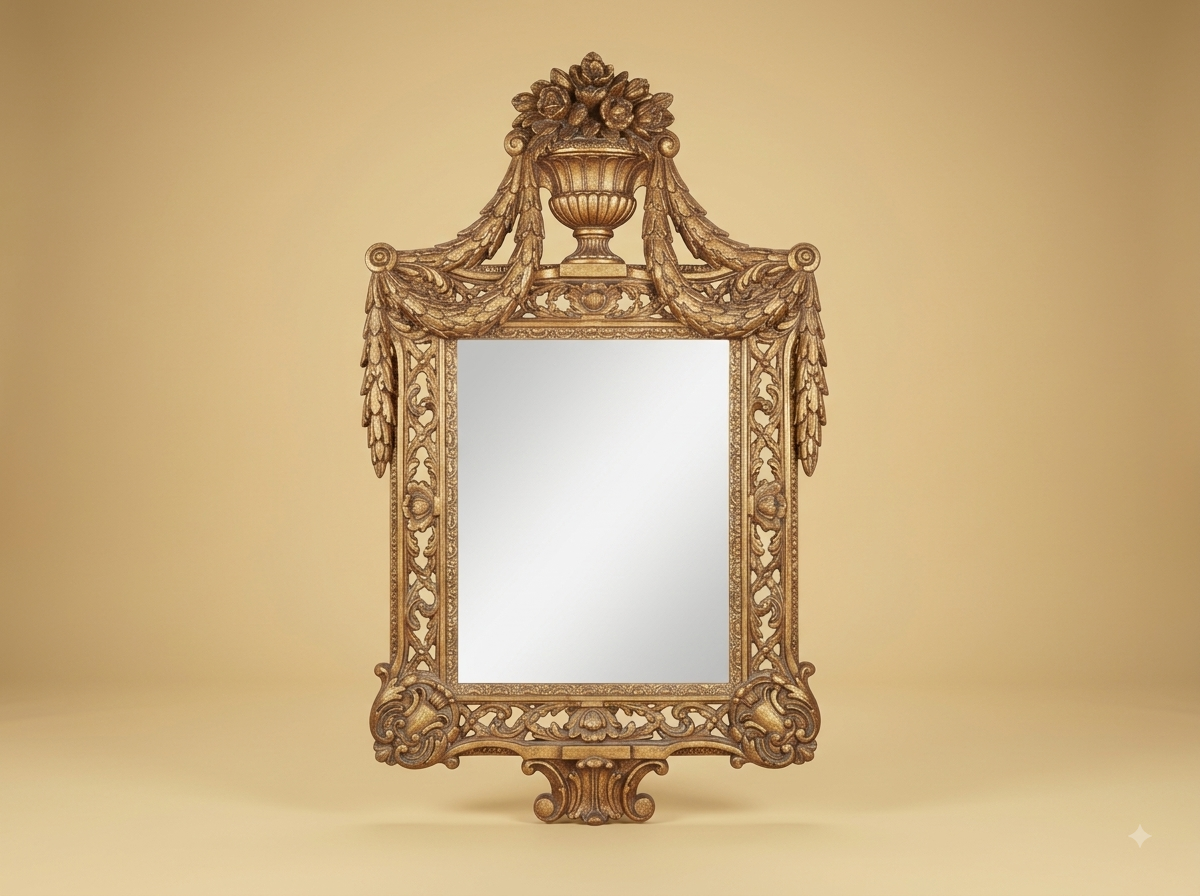
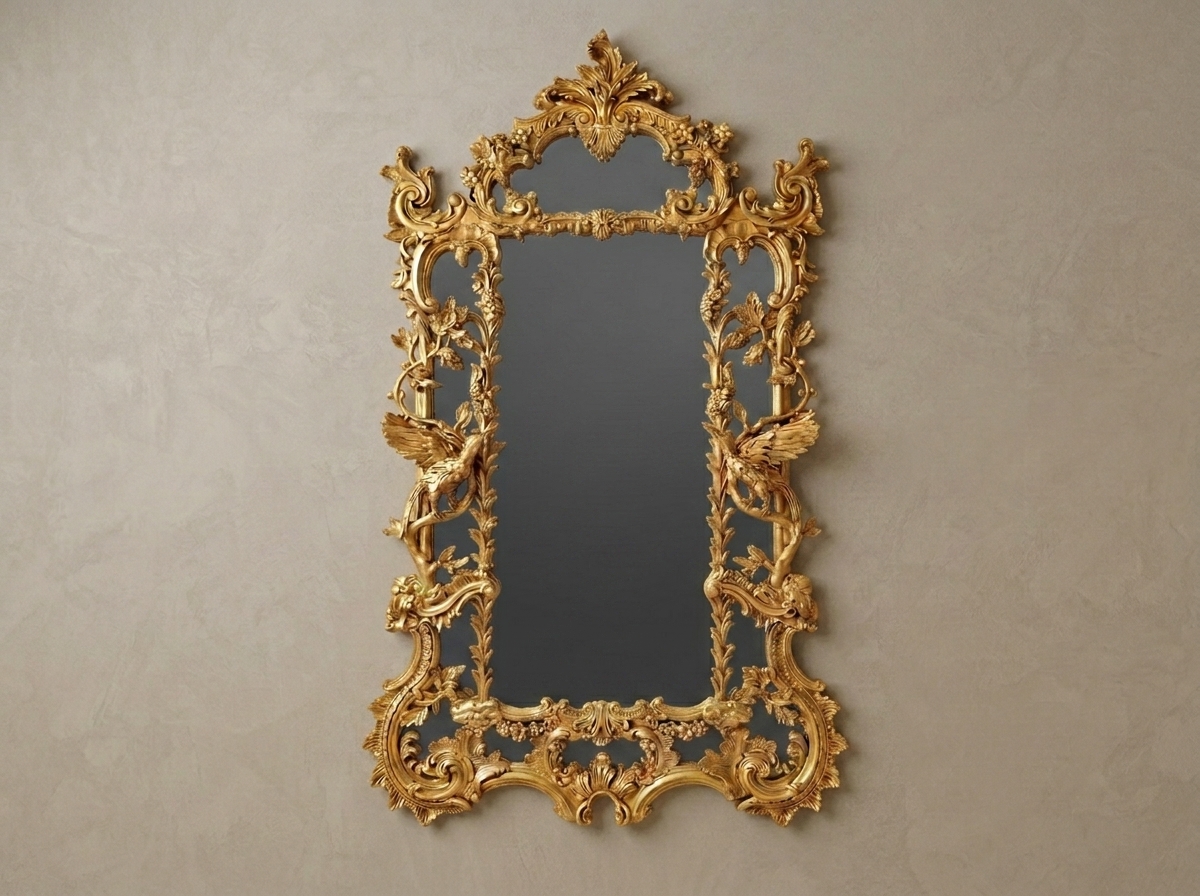
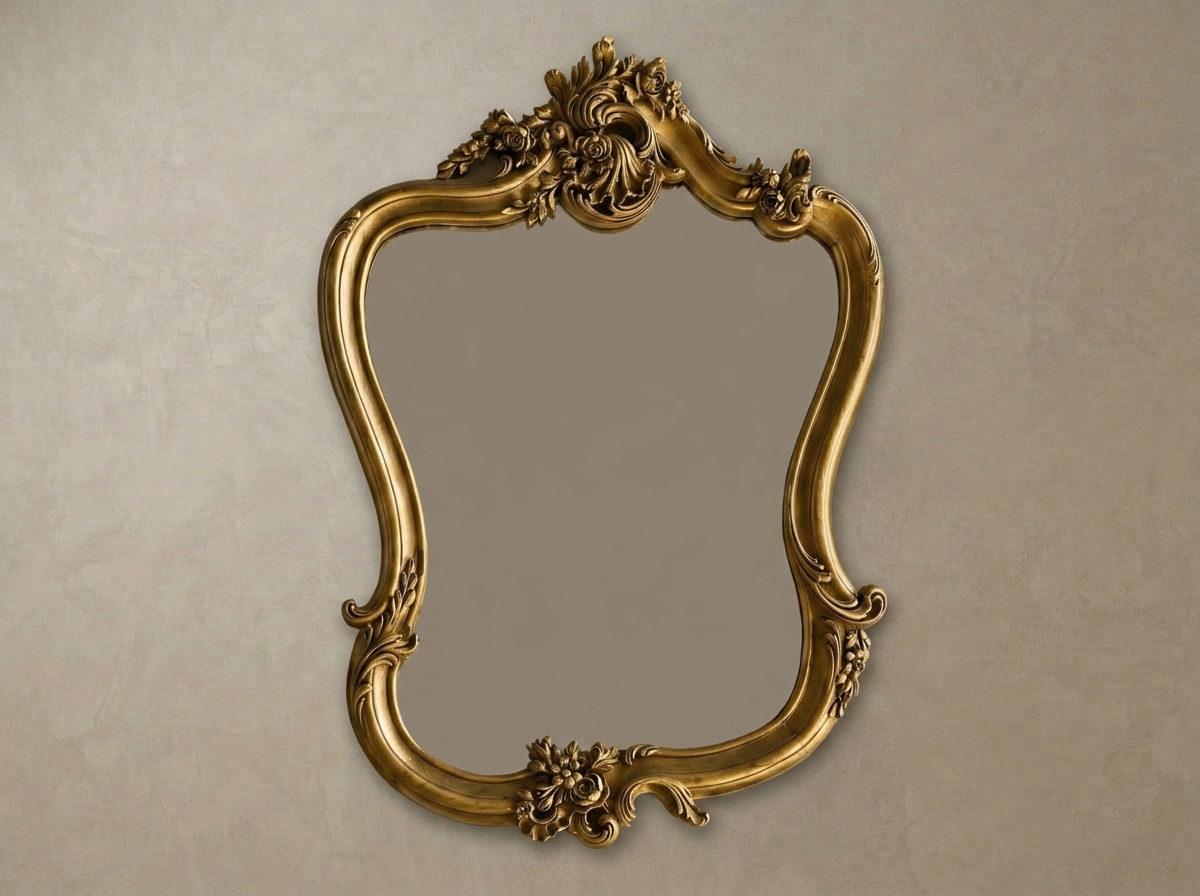
It starts with timber. Teak logs are seasoned for months before a chisel touches them, because green wood moves and moving wood cracks carving. Only after the moisture has settled does the carver mark the frame out - the crest first, then the scroll runs down each side, then the shell at the foot. From there the work is entirely by hand: gouges of a dozen widths, cutting the acanthus in layers so the leaves lift away from the ground and the eye can travel behind them.
Piercing the frame is the slow part. Openwork means removing wood the piece depends on for strength, so the carver has to read the grain constantly and leave the load where the timber is strongest. A frame of this density takes weeks, not days. Once the carving is closed, the surface is hand-sanded through progressive grits until the tool marks disappear, then the antique gold is built up in coats and rubbed back by hand at the high points so the finish looks aged rather than sprayed. The bevelled plate goes in last. What leaves the workshop is a piece meant to outlive the room it was bought for.
 Ask Price On WhatsApp