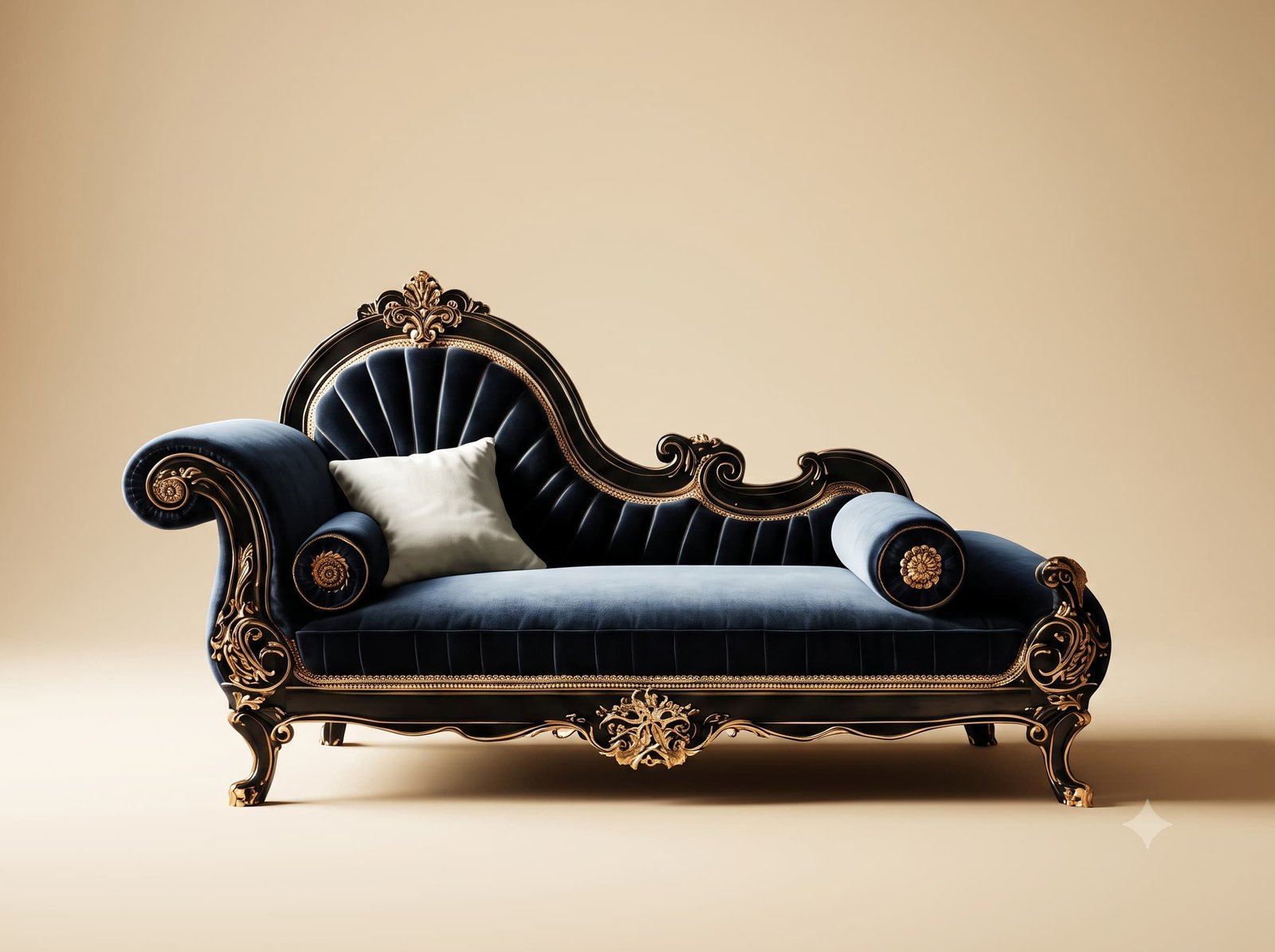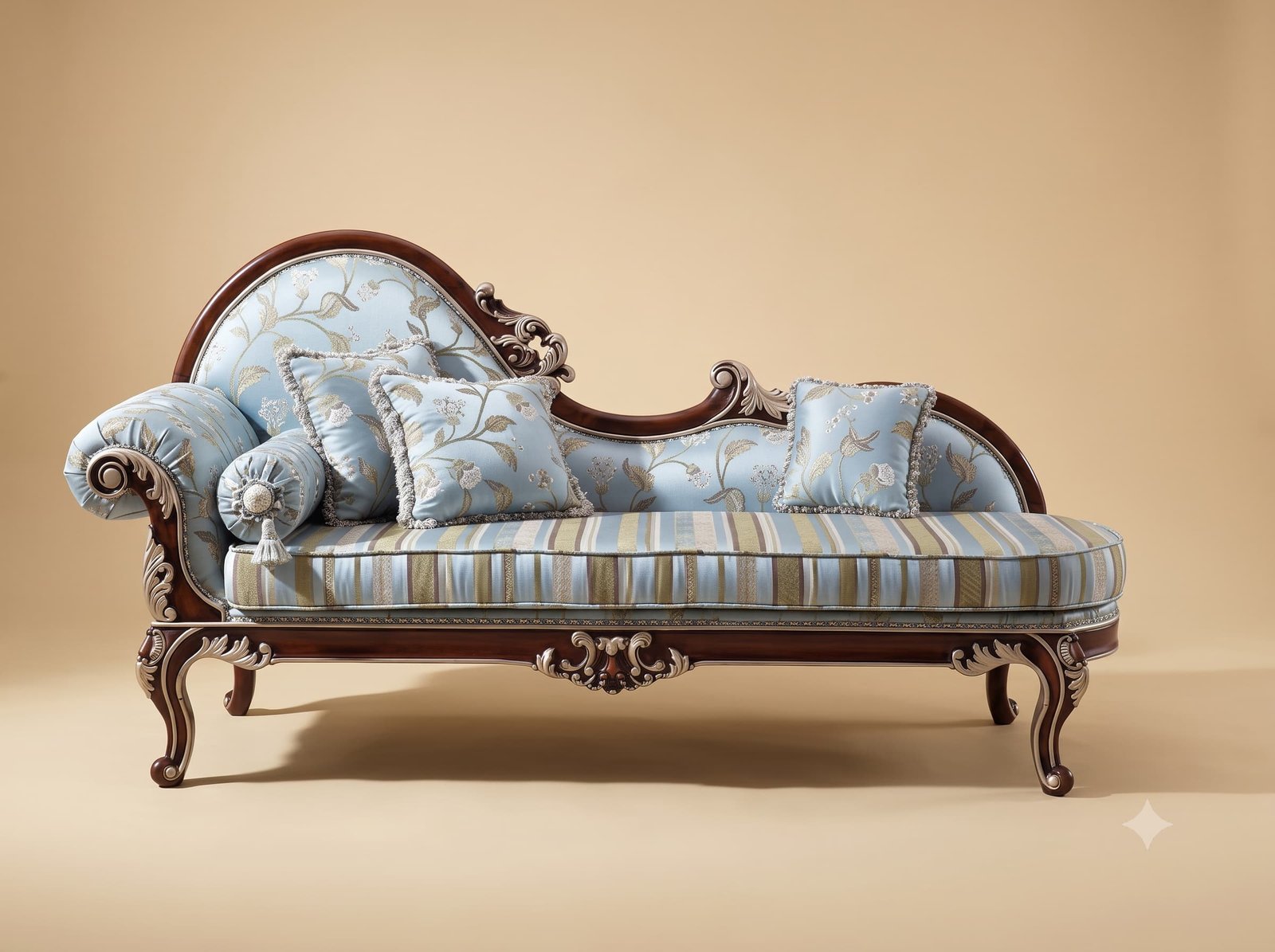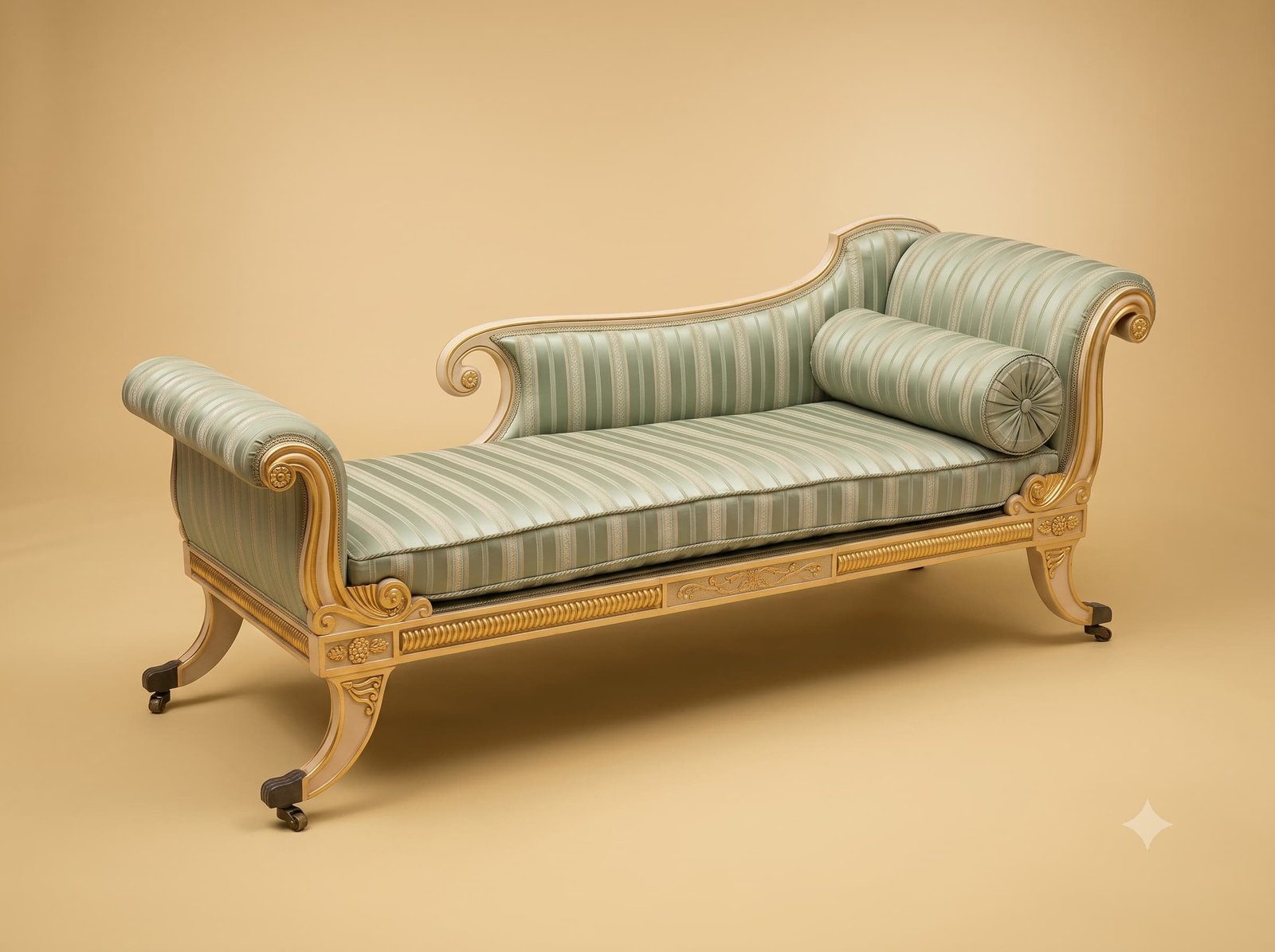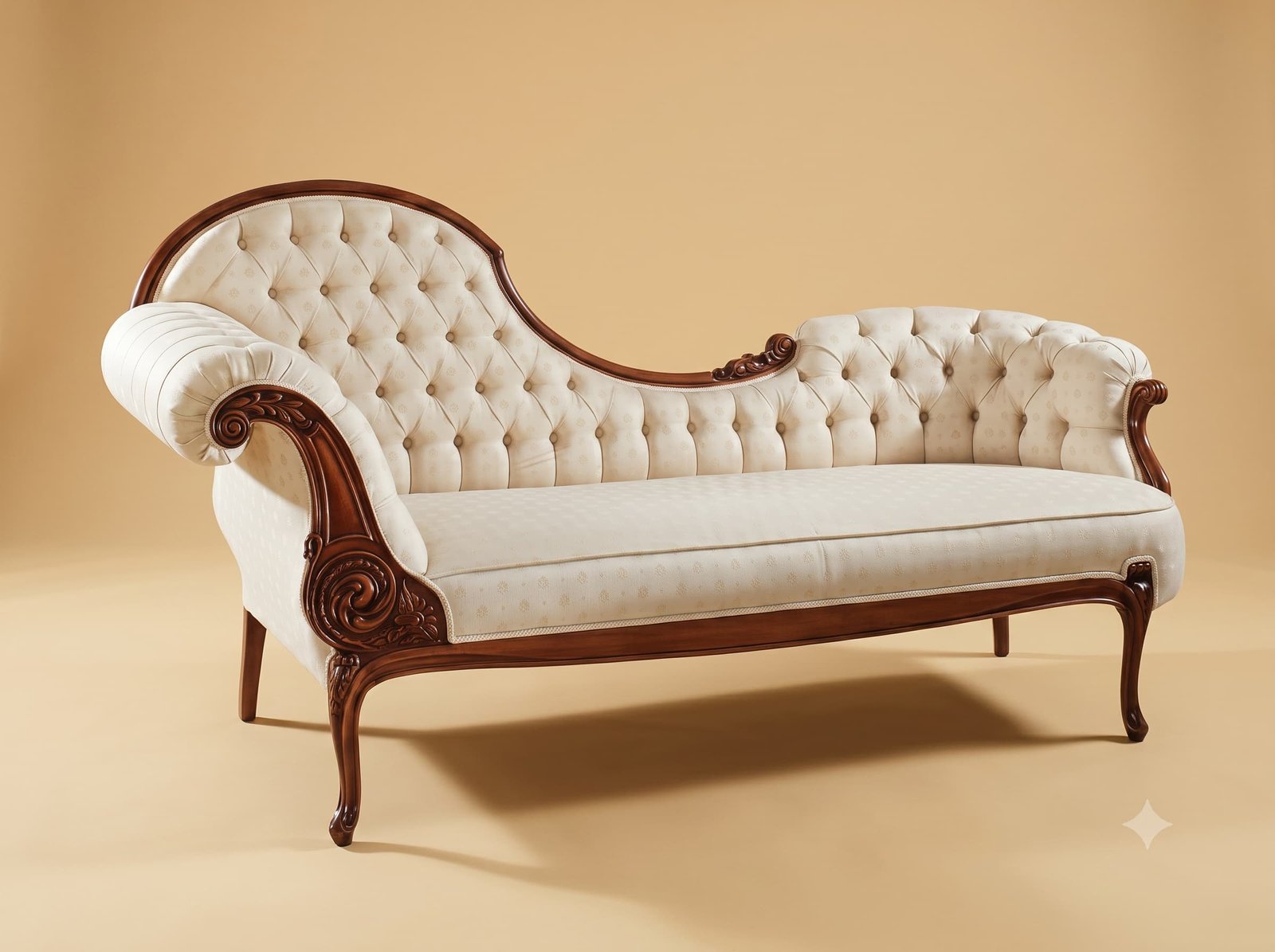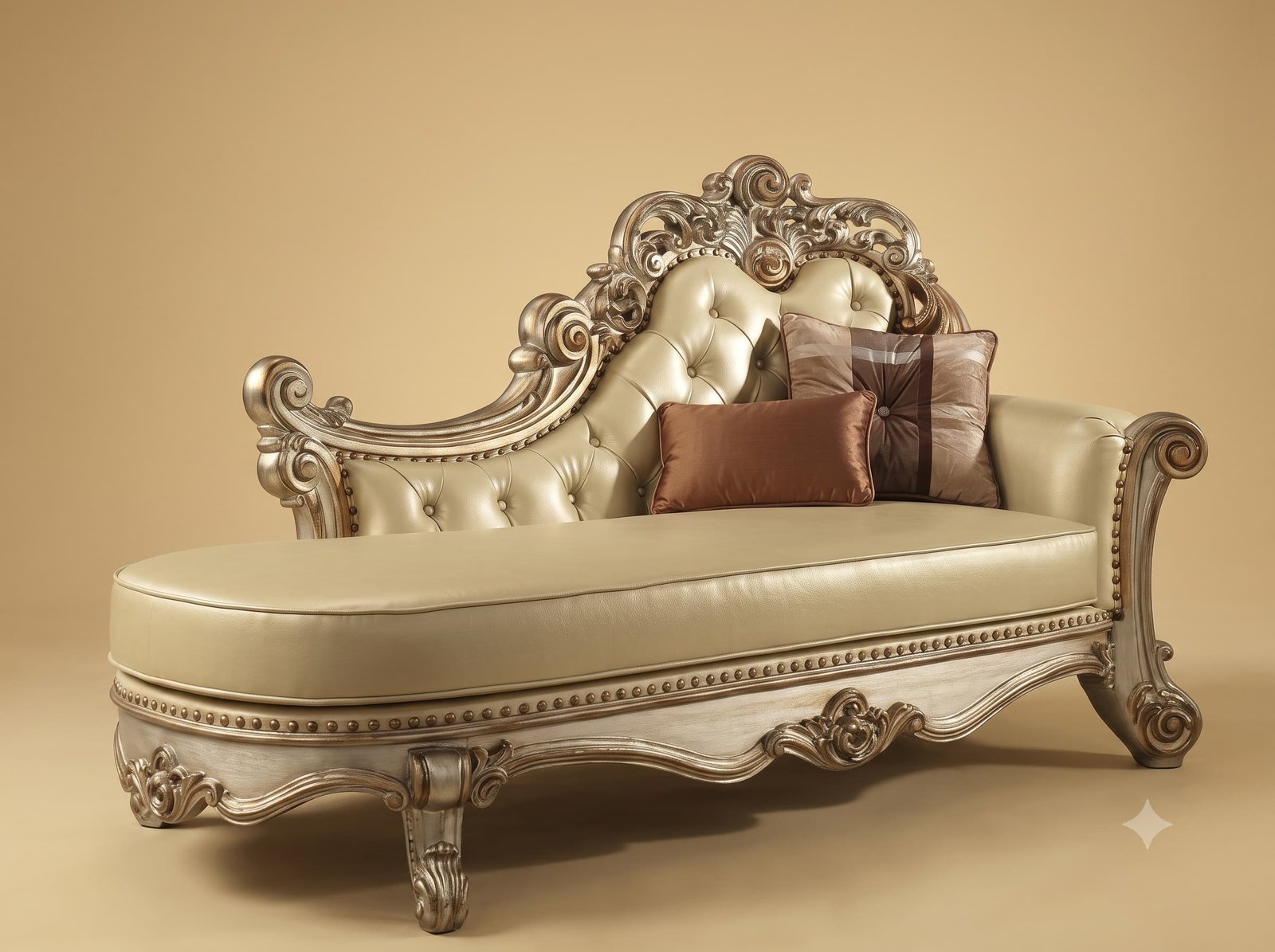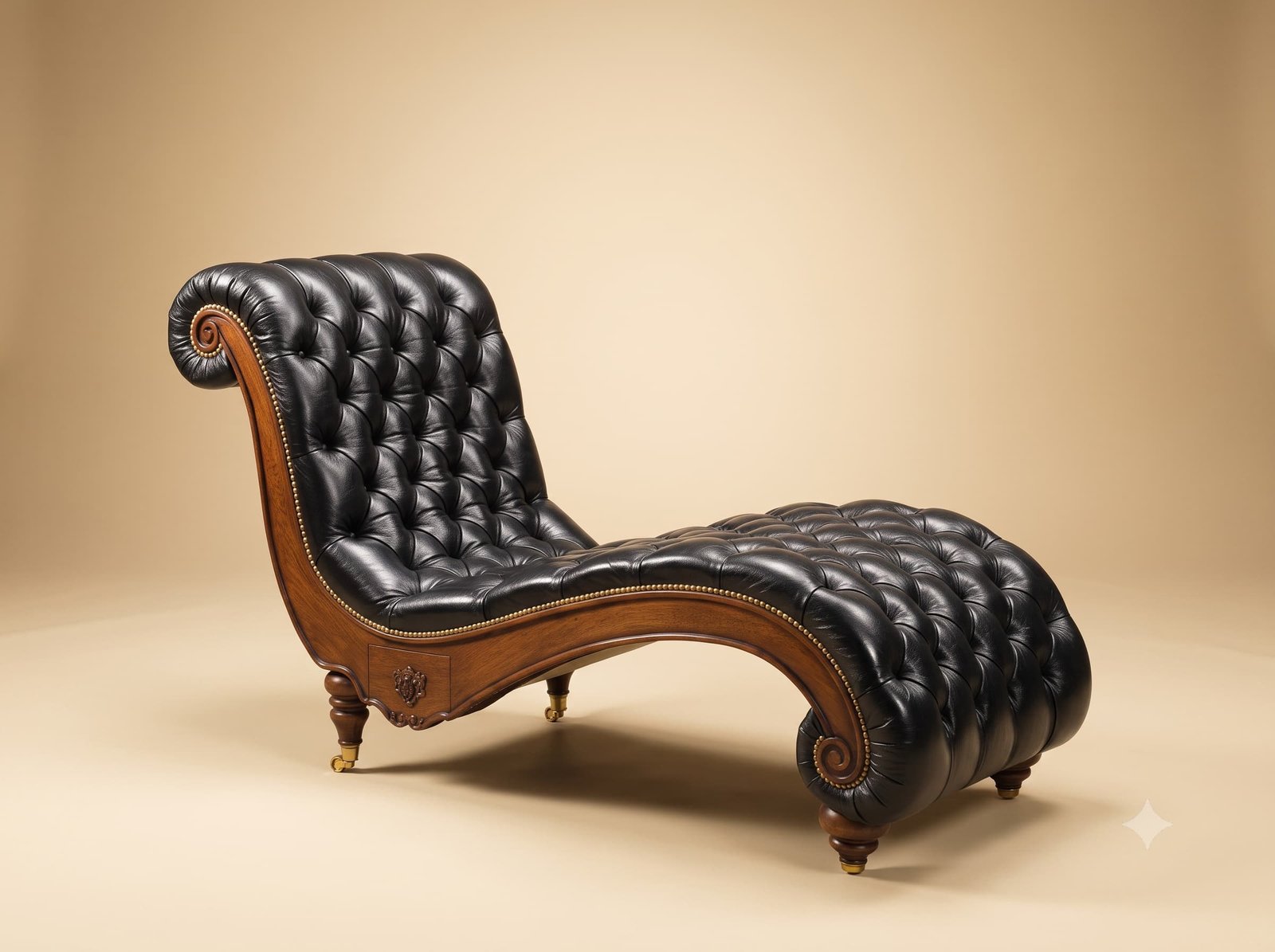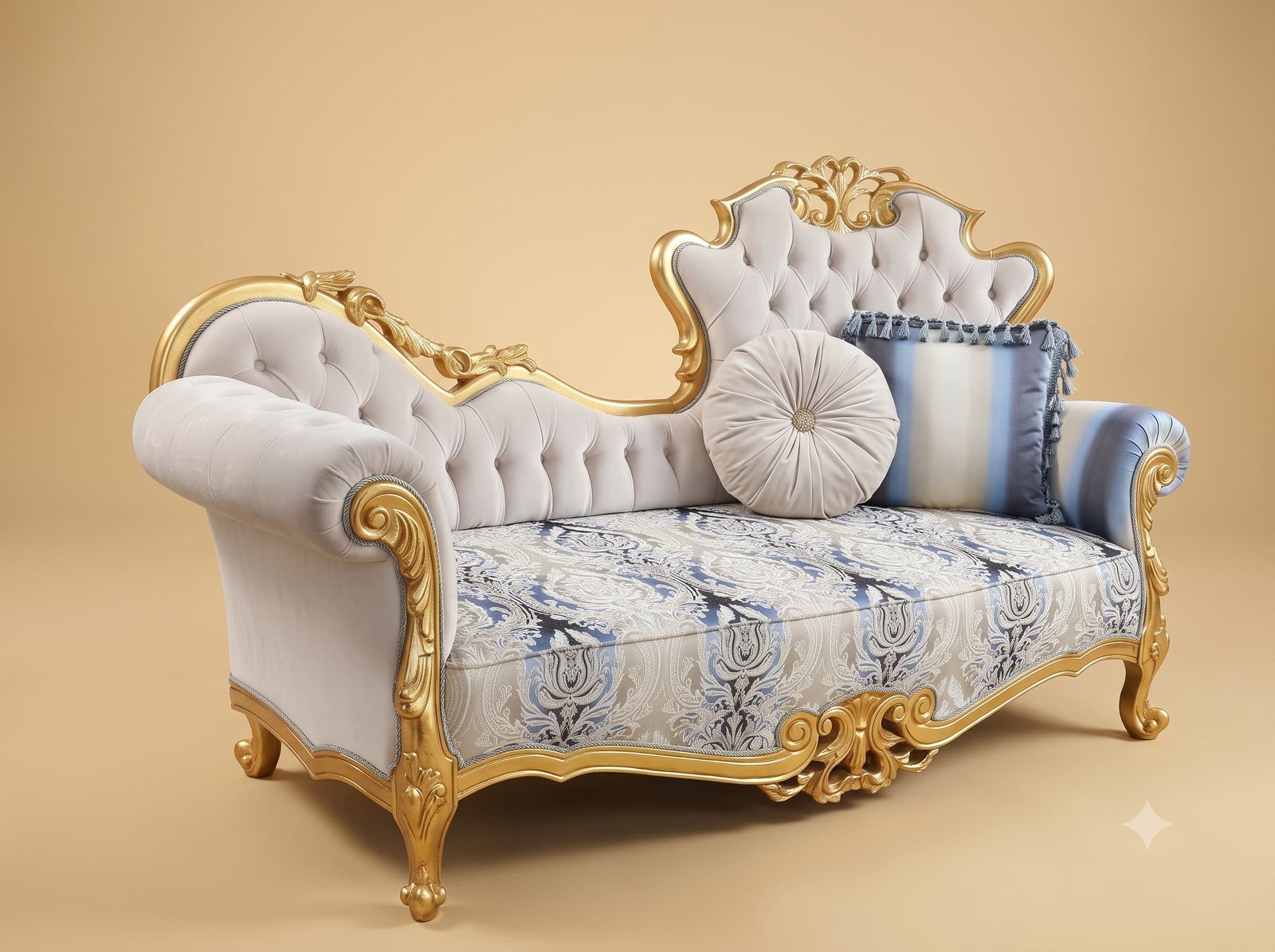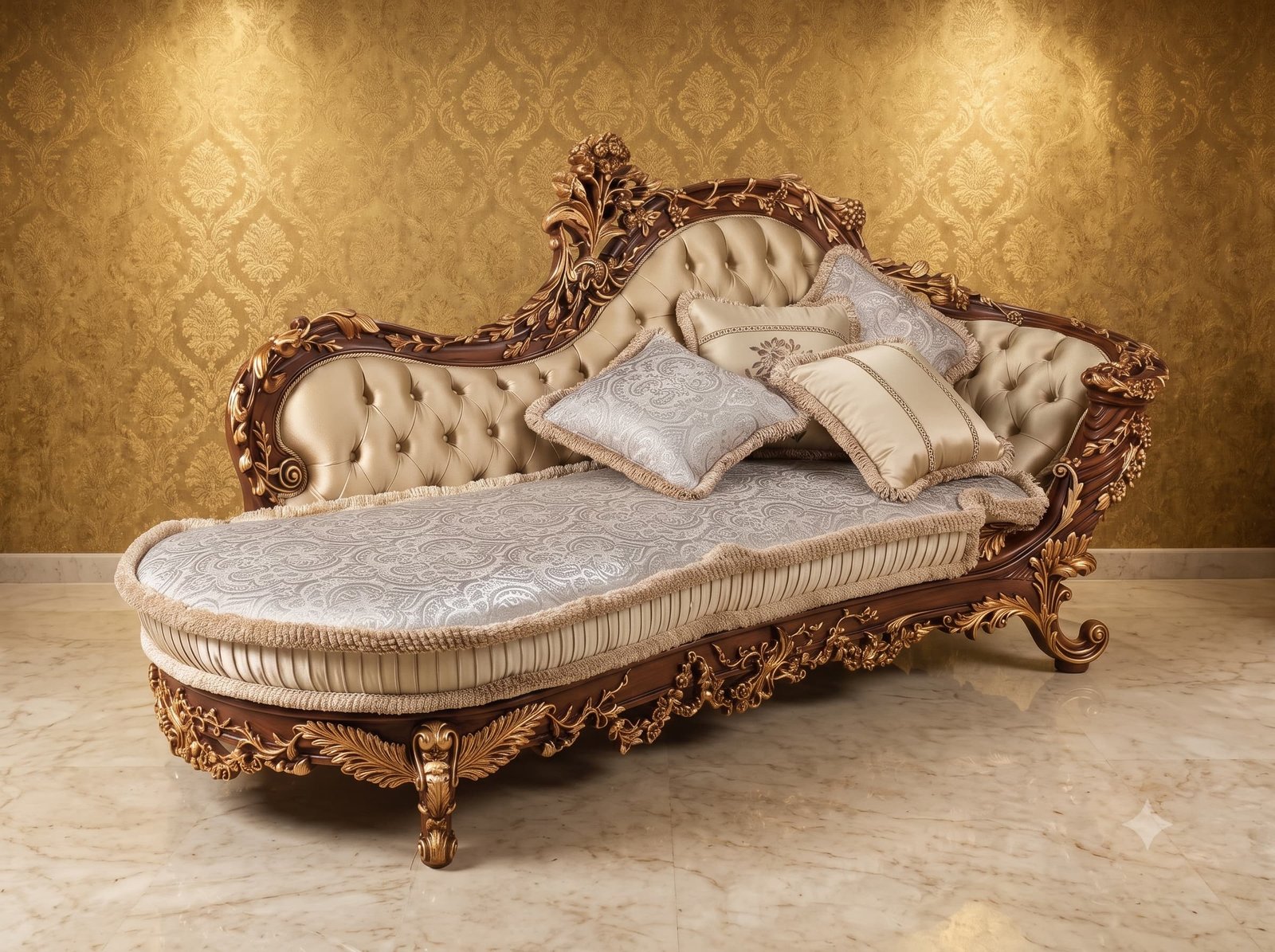
A ruched border is a band of cloth gathered into pleats, and whether it looks generous or mean comes down to one number decided before cutting: the fullness ratio.
The band is cut longer than the distance it has to cover, and the surplus becomes the pleats. Cut it only slightly longer and the pleats are shallow and spaced far apart - the border looks starved, as though the cloth ran short. Cut it much longer and the pleats crowd into each other, the band thickens, and the seat edge looks padded rather than dressed.
There is a proportion that works, and it is fixed as a ratio of finished length rather than as a pleat count - so a longer diwan gets proportionally more cloth and the border looks identical on a piece of any size.
Every pleat is then formed by hand at its marked position and folded in the same direction, so light runs consistently along the band, and the pleating is set out from the centre of the front so it resolves symmetrically at both ends.
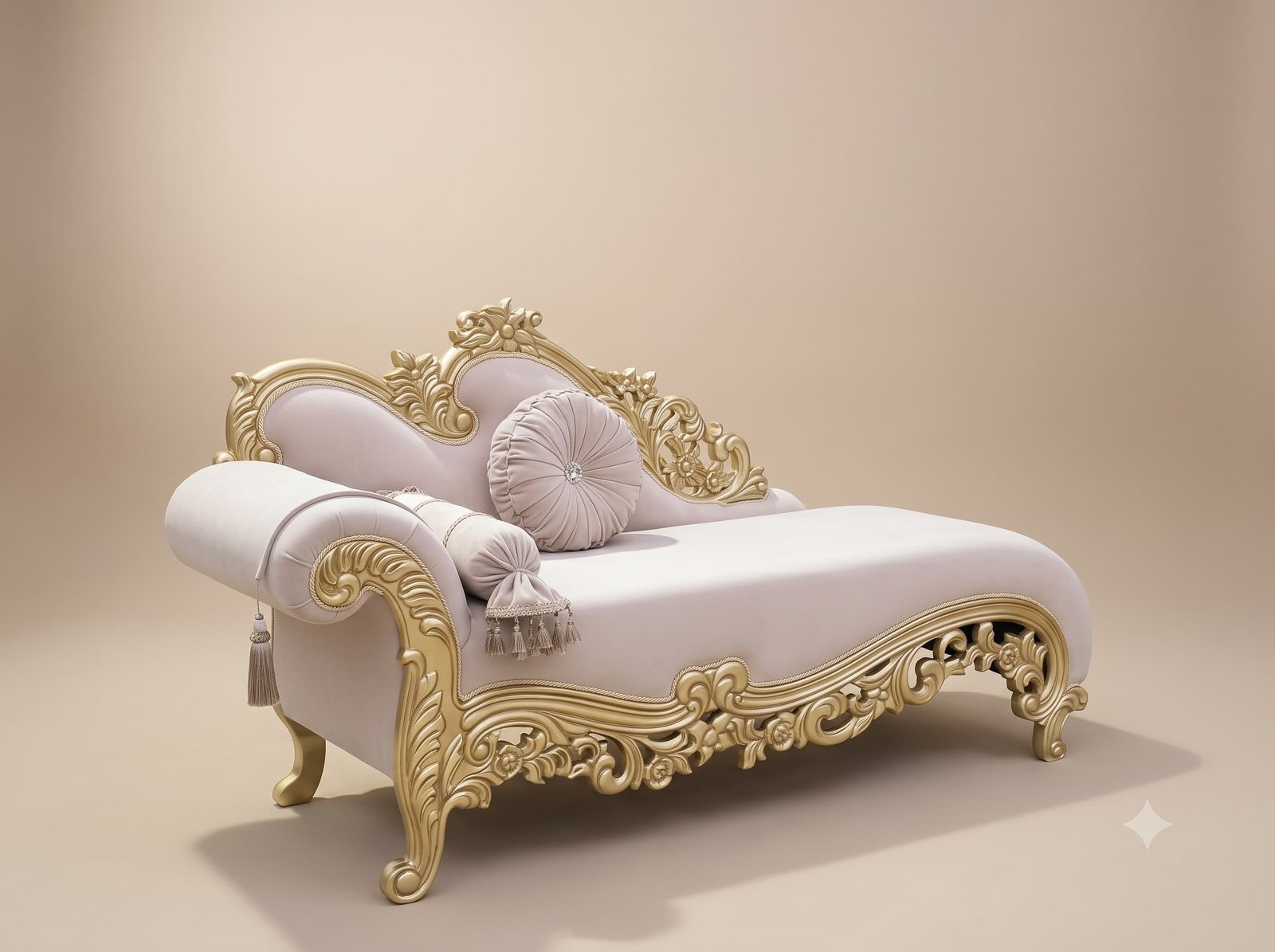
Where the band turns the rounded end of the seat, the pleats are opened very slightly - the outer edge travels further round a curve than the inner one, and unless the pleats are allowed for that, they close up and the band tightens.
 Ask Price On WhatsApp